
 Worksheets
Cell its structure and Function
Total questions: 52
Worksheet time: 33mins
Plastds
Mitochondria
None of these
It store dead organells
It digest food particles
It keep the cell environment clean
It is responsible for cell dealth
Mitochondria
Plastids
Nucleus
Golgi Body
Endoplasmic reticulum
Golgi Body
Lysosomes
Nucleus
Name the organelles which show the analogy written as under (b) Power house of the cell——
Mitochondria
Gogli Body
Plastids
Chromsome
Chromosome
Lysosomes
Cell membrane
Cytoplasm
Chromosome
Vacuole
Ribosome
Plastids
Chloroplast
ATP - stands for
Adenosine tri phosphate
Adenosine di phosphate
Adenosine phosphate
Add triple phosphate
Which organelle provide turgidity and rigidity to the cell
Endoplasmic Redticulum
Centriole
Mitochondria
Vacuole
The colourless plastids are known as
Chromoplasts
Chloroplasts
Leucoplasts
Protoplasts
Which of the following are examples of Prokaryotes
Algae
Fungi
Bacteria
Protozoa
The barrier between the protoplasm and the outer environment in an animal cell is
Cell wall
Plasma membrane
Nuclear membrane
Cytoplasm
DNA - full form is
Double Nuclic Acid
Dihydrated Nuclic Acid
Double Nucleus Axon
What are unicellular organisms?
Having single cell
Having two cells
Having 3 cells
None of the above
What is the example of unicellular organism?
Amoeba
Bacteria
Paramocium
All of the above

Name the type of cell:
Bone cell
Muscle cell
Heart cell
Nerve cell
Who discovered the nucleus of the cell?
Robert Hooke
Robert Brown
Leeuwenhoek
Purkinje
The term 'cell' was given by:
Leeuwenhoek
Robert Hooke
Flemming
Robert Brown
Bacteria are each composed of one cell that does not have a membrane-bound organelle. What two terms characterize bacteria?
Multicellular and Prokaryotic
Unicellular and Prokaryotic
Which statement is true about cell theory?
Cell theory states that all cells are nonliving.
Cell theory states that cells can come from nonliving
things.
Cell theory states that all cells arise from other cells.
Cell theory says animal cells are the only type of
living cells.
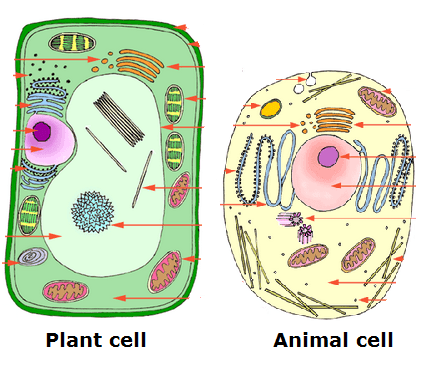
What distinguishes a plant cell from an animal cell? (How do you tell them apart) Hint: There's 3 ways (Check all 3)
Central Vacuole
Mitochondria
Cell Wall
Ribosomes
Chloroplasts
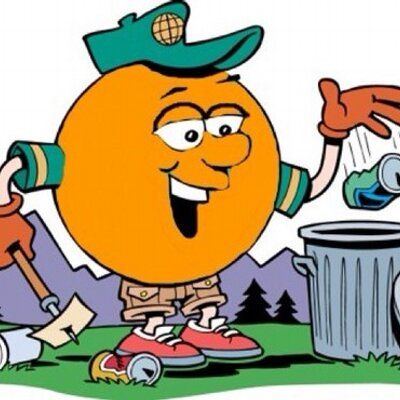
I am the "waste removal expert" within a cell, removing unwanted material. Like a garbage man, I am a...
Waste Management
Nucleus
Ribosome
Lysosomes

I decide what goes in and out of the cell. I am fluid like and found in BOTH plant and animal cells. I am a...
Cell Wall
Cell Membrane
Cytoplasm
Golgi Apparatus
What is the function of chloroplast in a plant cell?
Photosynthesis
Cellular respiration
Protein synthesis
DNA replication
Which organelle is responsible for producing energy in a cell?
Golgi Body
Ribosome
Endoplasmic reticulum
Mitochondria
What is the main function of the cell membrane?
Regulating the movement of materials in and out of the cell
Protein synthesis
Energy production
Waste removal

A
B
C
D

What are these cells classified into?
(a) Multicellular cells, because they all look identical.
(b) Multicellular cells, because they form a part of the plant.
(c) Unicellular cells, because they have simple cell structure.
(d) Unicellular cells, because they perform all the necessary functions of an animal.

Which parts of the plant cell are A and B?
(a) A is nucleus and B is cell wall.
(b) A is cell wall and B is nucleus.
(c) A is chromosome and B is gene.
(d) A is chromosome and B is protoplasm.

Which labelled part of the cell plays a vital role in the transfer of cellular characteristics to its offspring?
A
B
C
D
The cells of plants have a rigid shape unlike those of animals. The absence or presence of which part of the cell causes this difference?
(a) cell wall
(b) vacuoles
(c) chloroplast
(d) nuclear membrane

Based on the image, what can be inferred about the function of the cell wall?
(a) Cell wall retains the shape of plant cell.
(b) Cell wall helps change the shape of animal cell.
(c) Cell wall regulates the size of the vacuole in the plant cell.
(d) Cell wall manages the amount of cytoplasm in the animal cell.

Based on the image what could be the reason for the different shape and size?
(a) to suit their function
(b) as they are formed first or last in the body
(c) as they are all animal cells
(d) as some are plant cells and some animal cells

What can be understood by observing these cells?
(a)All living things made of cells that look similar.
(b)All living things made up of cells that are structurally similar but functionally different.
(c)All living things are made up of cells that are functionally similar but structurally different.
(d)All living things are made of cells that look different from each other.

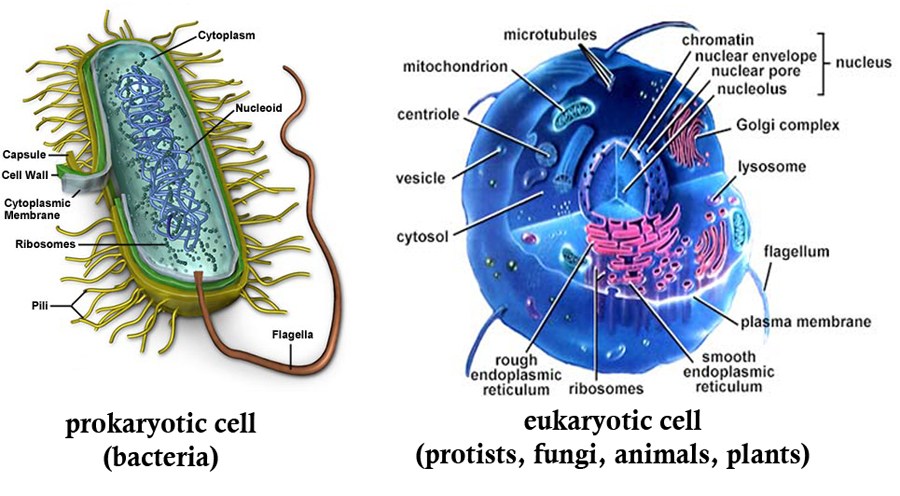
Based on the structures, a student claims that the animal cell contains complex structures that are absent in the bacterial cell. Which statement can the student make to support the claim?
(a)Animal cell contains flagella that aids in locomotion that is absent in case of a bacterial cell.
(b)Nuclear material of the bacterial cell is not enclosed in a nuclear envelope as in case of an animal cell. *
(c)Cytoplasmic content of the bacterial cell is not enclosed in a thick cell wall as in case of an animal cell.
(d)Animal cell contains ribosomes spread across the cell whereas in case of bacterial cell they are clumped together.

Which marked part is responsible for the generation of energy in the cell?
P
Q
R
S
Which of the following function is performed by smooth endoplasmic reticulum?
(a)It helps expel excess water and waste out of the cell.
(b)It helps produced ATP molecules.
(c)It helps digest small foreign particles.
(d)It helps detoxify the drugs.
How endoplasmic reticulum helps transport protein between various regions of the cytoplasm?
(a)by forming a network of membrane-bound tubes in the cytoplasm
(b)by occupying most of the space in the cytoplasm
(c)by generating small transport vesicles throughout the cell
(d)by directing all cell organelles to perform the same biochemical activity
Proteins are synthesized near the endoplasmic reticulum. Where are these proteins transported further in the cell?
(a)to the nucleus
(b)to Golgi body
(c)to mitochondria
(d)to the cell membrane
The function of Golgi body includes:
(a)degradation and elimination of waste substances
(b)storage, modification, and packaging of products in vesicles l
(c)synthesis of lipids and proteins
(d)providing rigidity and turbidity to the cel
What is the main function of mitochondria?
(a)to stop the chemical reaction in the cell and store ATP as energy
(b)to perform all the chemical reactions of the cell using ATP
(c)to use energy currency in the form of ATP
(d)to produce ATP molecules
Which of the following are usually digested or degraded by lysosomes?
(a) ATP molecules
(b)oxygen molecules
(c)old organelles of the cell
(d)carbon dioxide molecules
Anil has bacterial infection. Which part of the cell will help him eliminate bacteria from his body and how?
(a)Vacuoles as they can uptake any material and store it.
(b)Vacuoles as they can expel substance out of the cell.
(c)Lysosomes as they have digestive enzymes to breakdown foreign material.
(d)Lysosomes as they can destroy their own cell.
In plants, cells in the leaves mainly make food for the plant. Which organelle does these cells have that enables them to make food?
(a)These cells have plastids with pigment chlorophyll that helps photosynthesize.
(b)These cells have mitochondria that provides ATP as energy to photosynthesize.
(c)These cells have colorless plastids that absorb sunlight to help plant photosynthesize.
(d)These cells have vacuoles that provide essential nutrients required for photosynthesis.
What is the function of vacuoles?
(a)It digests sugars.
(b)It stores amino acids.
(c)It synthesis proteins.
(d)It encloses nuclear material.
In summers, leaves of a potted plant droops when the soil becomes dry. Which cell organelle makes the leaves to droop?
(a)Nucleus, as it stops making DNA.
(b)Cell wall, as it starts to shrink.
(c)Lysosome, as it is releasing the digestive enzymes.
(d)Vacuole, as it loses all the water.

