Wayground logo

Free Printable Worksheets

Font size

S
M
L
XL
Worksheets

Fossil Record

Total questions: 73

Worksheet time: 59mins

Name
Class
Date
1.

In which kind of rock do we usually find a fossil?

a)

sedimentary rock

b)

metamorphic rock

c)

igneous rock

2.

If you know the age of a fossil, you know the relative age of the ________________ it was found inside.

a)

sticky tar

b)

rock

c)

amber

d)

ice

3.

If you know the age of a rock, you know the relative age of the _________________ that was found inside.

a)

sticky tar

b)

fossil

c)

amber

d)

ice

4.

Which of the following would be an example of absolute age?

a)

Fossil A is older than Fossil B

b)

Fossil A and Fossil B are the same age

c)

Fossil A is 10 million years old

5.
In what way can scientists determine the ages of fossils?
a)
relative dating
b)
radioactive dating
c)
law of superposition
d)
All of the above
6.
Which layer formed first?
a)
Rock Layer W
b)
Rock Layer X
c)
Rock Layer Y
d)
Rock Layer Z
7.

What are the oldest fossils and why?

a)

B, C- because they are closest to the top

b)

A, B- because they are closest to the bottom

c)

They are all the same age- because they are all found on layer 2

d)

A, B- because they are found closest to the top

8.
According to the law of superposition, which layer is the youngest?
a)
A
b)
B
c)
C
9.

Which of the following can be learned by using the fossil record?

a)

When organisms changed or evolved

b)

when organisms appeared on Earth

c)

when organisms became extinct

d)

All the above

10.
By determining the age of fossils, scientists can reconstruct the history of life on Earth
a)
True
b)
False
11.

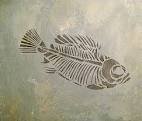
If scientists found this fossil in a desert, what could they infer?

a)

what fish are like today

b)

that this fish lacked oxygen

c)

that water once covered the area where this fossil was found

12.
How do fossils provide evidence that evolution has happened on Earth?
a)
Fossils show how the sizes of certain animals has changed drastically over millions of years
b)
Fossils show that some species have gone extinct
c)
Fossils show how life forms present today are different than those from the past
d)
Different sedimentary rock layers provide evidence for how the environment has changed over time
13.

Fossil A is an ancient mollusk, an organism that needs water to survive. Why do you think that the mollusk went extinct in this particular sample of the fossil record?

a)

When the ocean levels rose in layer 4, the mollusk went extinct because they cannot live in water

b)

For some reason, the ocean disappeared causing the mollusk to thrive

c)

For some reason, the ocean disappeared causing the mollusk to go extinct

d)

When the ocean level rose in layer 4, the mollusk thrived because they need water

14.

When did fossil A become extinct?

a)

Layer 1

b)

Layer 2

c)

Layer 3

d)

Layer 4

15.

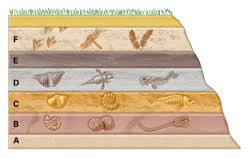
Organisms D and C clearly lived in an aquatic (water) environment. Organism A does not look like it lived in the water. What is the most likely explanation for this?

a)

The fossil in layer A died on land and was carried to the water

b)

The fossils in layer C and D did not live in the same location as the fossil in layer A

c)

The environment changed over a long period of time. It used to be under water, but is not anymore
16.
The millions of fossils that scientists have collected are called
a)
The Geologic Time Scale
b)
The Origin of Species
c)
The Fossil Record
d)
A really neat fossil collection
17.
Which rock layer contains the newest fossils?
a)
F
b)
E
c)
B
d)
C
18.
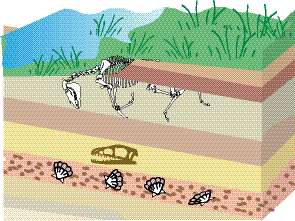
According to the law of superposition, the oldest fossils are found 
a)
At the top of the rock layers
b)
Near the bottom of the rock layers
c)
In the middle of the rock layers
d)
Somewhat near the surface
19.
The best index fossils have which two traits?
a)
widespread geographically, long lifespan
b)
widespread geographically, short lifespan
c)
specific place, long lifespan
d)
specific place, short lifespan
20.
Index fossils help determine relative age through correlating rock layers.
a)
True
b)
False
21.
Which of the following organisms formed last on Earth?
a)
Jellyfish
b)
Shark
c)
Lizards
d)
Horses
22.
To be considered an index fossil, it had to have lived for a relatively short period of time.
a)
True
b)
False
23.

Which of the following can be learned by using the fossil record?

a)

When organisms changed or evolved

b)

when organisms appeared on Earth

c)

when organisms became extinct

d)

All the above

24.
According to the law of superposition, which layer is the youngest?
a)
A
b)
B
c)
C
25.
To be considered an index fossil, it had to have lived for a relatively short period of time.
a)
True
b)
False
26.
The best index fossils have which two traits?
a)
widespread geographically, long lifespan
b)
widespread geographically, short lifespan
c)
specific place, long lifespan
d)
specific place, short lifespan
27.
Which fossil makes the best index fossil?
a)
Fossil 1
b)
Fossil 2
c)
Fossil 3
d)
None follow all of the rules
28.
Does the picture represent relative or absolute dating?
a)
relative
b)
absolute
29.

What is the best reason that fossil #4 is NOT a good index fossil?

a)

It is not widespread

b)

it is not short-lived (in numerous layers)

c)

It is in half of the outcrops

30.
Index fossils CAN tell us the age of a rock layer.
a)
True
b)
False
31.

If you found an index fossil in a layer of rock in Montana and a similar fossil in a layer of rock in Texas, you would know that:

a)

the fossils and rock layers are the same age

b)

the fossils from Montana are older

c)

the fossils from England are older

d)

none of the above

32.

What can the fossil record tell us?

a)

history of life on Earth

b)

groups of organisms changed over long periods of time

c)

Information about the past climate of our Earth

d)

information about the past environments and changes of the Earth's surface

e)

all of these are correct

33.

Which of the follow is INCORRECT about an index fossil?

a)

The fossil must have lived only during a short part of the Earth's history.

b)

Many fossils of the organism must be found in the rock layers.

c)

The fossil must be found over a wide area of the Earth and be unique.

d)

The fossil must only be found in one area.

34.
Which of the following could form a fossil?
a)
Bone
b)
Shell
c)
Seeds
d)
All of the above
35.
Most fossils form when organisms that die become buried in sediments
a)
True
b)
False
36.
Which of the following is true about molds and casts
a)
A mold forms when hard parts of an organism buried by sediments are gradually dissolved
b)
A mold that becomes filled in with hardened materials forms a cast
c)
A cast is a copy of the shape of an organism
d)
All of the above
37.
The formation of any fossil is a common event
a)
True
b)
False
38.
By determining the age of fossils, scientists can reconstruct the history of life on Earth
a)
True
b)
False
39.
In what way can scientists determine the ages of fossils?
a)
relative dating
b)
radioactive dating
c)
law of superposition
d)
All of the above
40.
In layers of sedimentary rock, the _________ layer is usually at the bottom. Each higher layer is _________ than the layers below it.
a)
oldest, younger
b)
youngest, older
c)
youngest, younger
d)
oldest, older
41.
Relative dating can only help scientists determine whether one fossil is older than another.
a)
True
b)
False
42.
Scientists use unstable elements that decay, called _________ elements, to determine the actual age of a fossil.
a)
radioactive
b)
cation
c)
anion
d)
petrified 
43.
What is the half-life of a radioactive element?
a)
How old it is when it is middle aged
b)
The time it takes for half of the atoms to decay
c)
The time it takes for half of the atom to form
d)
How old it is when the Earth is middle aged
44.
Potassium-40 breaks down into __________ over time
a)
Argon-40
b)
Neon-40
c)
Helium-40
d)
Radon-40
45.
The millions of fossils that scientists have collected are called
a)
The Geologic Time Scale
b)
The Origin of Species
c)
The Fossil Record
d)
A really neat fossil collection
46.
What is the largest span of time in the Geologic Time Scale?
a)
Eras
b)
Periods
c)
Years
d)
Precambrian Time
47.
What is NOT a name of one of the three eras on the Geologic Time Scale?
a)
Jurassic 
b)
Paleozoic
c)
Mesozoic
d)
Cenozoic
48.
What is a mass extinction?
a)
the extinction of all of Earth's species at ones time
b)
the extinction of many types of organisms at the same time
c)
the end of days
d)
the creation of many species at one time
49.
What is the difference between gradualism and punctuated equilibria?
a)
Gradualism is slowly but surely and P.E. are rapid changes preceeded followed by long periods of little or no change
b)
P.E. is slowly but surely and Gradualism are rapid changes preceeded followed by long periods of little or no change
c)
Gradualism had no intermediate forms of species
d)
punctuated equilibria has intermediate forms of species
50.
The butterfly diagram on the right refer which model?
a)
Selection
b)
Gradualism
c)
Punctuated Equilibrium
d)
Adaptive
51.
What is slow change over a long period of time in a species called?
a)
Punctuated equilibrium
b)
Phylogeny
c)
Stasis
d)
Gradualism
52.
How do fossils provide evidence that evolution has happened on Earth?
a)
Fossils show how the sizes of certain animals has changed drastically over millions of years
b)
Fossils show that some species have gone extinct
c)
Fossils show how life forms present today are different than those from the past
d)
Different sedimentary rock layers provide evidence for how the environment has changed over time
53.
Which statement best describes a relationship between these organisms?
a)
Organism A was probably more primitive than Organisms B and C
b)
Organism A was probably more complex than organism B and C
c)
All of these organisms probably lived at the same time
54.

Which of the following could lead to the gradual extinction of a species? (Choose 2)

a)

Meteor Strike

b)

Rising Sea Levels

c)

Massive Volcanic Eruption

d)

Glaciation

55.

An example of a catastrophic event that could lead to mass extinction.

a)

Large Meteor Strike

b)

Rising Sea Levels

c)

Global Warming

d)

Falling Sea Levels

56.

Scientist believe that the extinction of the dinosaurs was caused in part by a large meteor strike. What is the most likely sequence of events following the meteor strike?

a)

Global Warming, Rising Sea Levels, Dinosaurs Drown

b)

Sun cannot penetrate the atmosphere, photosynthesis stops, dinosaurs starve

c)

Hurricanes, flooding, dinosaurs go extinct

d)

Earthquakes, ice age, dinosaurs freeze.

57.

Global cooling and glaciation would lead to _______________.

a)

Rising sea levels

b)

Falling sea levels

c)

Hurricanes

d)

Earthquakes

58.

Which two events could lead to mass extinction?

a)

An ice age

b)

Hurricane

c)

Massive volcanic eruption

d)

Tsunami

59.

True or False: Evidence from the fossil record shows that species change gradually over time.

a)

True

b)

False

60.

How do most fossils form?

a)

An insect becomes trapped in amber.

b)

An entire organism becomes frozen in ice.

c)

A dead organism becomes buried in sediment.

d)

A dead organism becomes buried in tar.

61.

What evidence is most important when using relative dating?

a)

the half-life of a radioactive element

b)

the position of sediment in petrified rock

c)

the types of minerals in a petrified fossil

d)

the position of fossils in sedimentary rock layers

62.

How do scientists determine the actual age of fossils?

a)

relative dating

b)

sedimentary dating

c)

radioactive dating

d)

mold and cast dating

63.

What theory proposes that evolution occurs steadily in tiny changes over long periods of time?

a)

gradualism

b)

relative dating

c)

natural selection

d)

punctuated equilibria

64.

Index fossils must meet two criteria, they must have existed for a short period of time and ...

a)

be few in numbers

b)

lived for a long time

c)

be widely distributed

d)

be really old in age

65.

How does the fossil record help to support the theory of evolution?

a)

the fossil record shows that organisms slowly change over time

b)

The fossil record shows that species evolve very quickly

c)

The fossil record does not support the theory of evolution

66.

What can scientists learn from studying the relationships between fossils?

a)

how old all rock layers are

b)

how life changed over time

c)

how many relatives fossils had

67.

Which rock layer most likely contains fossils of the oldest organisms?

a)

1

b)

2

c)

3

d)

4

68.

If scientists found this fossil, what could they infer?

a)

what fish are like today

b)

that this fish lacked oxygen

c)

that water once covered the area where this fossil was found

69.

According to the law of superposition, the oldest fossils are found

a)

At the top of the rock layers

b)

Near the bottom of the rock layers

c)

Somewhat near the surface

70.

Which rock layer contains the newest fossils?

a)

B

b)

C

c)

D

d)

E

e)

F

71.
In what kind of rock can fossils be found?
a)
Sedimentary Rocks
b)
Igneous Rocks
c)
Metamorphic Rocks
d)
Granite
72.
Finding the fossils of trees in an area that is currently a desert without much life might tell us that the area, millions of years ago - 
a)
was heavily eroded by strong winds
b)
received enough rain to support a forest
c)
suffered very powerful earthquakes
d)
was destroyed by the impact of meteorites
73.
What event marks the end of each geologic area?
a)
1 million years
b)
burst of new life forms
c)
mass extinction
d)
ice age