wayground logo

Free Printable Worksheets

Font size

S
M
L
XL
Worksheets

H.Chem Unit 3 Review

Total questions: 60

Worksheet time: 10hrs 0mins

Name
Class
Date
1.

Which of the following shapes has an unshared pairs of electrons (lone pairs) on the central atom? 

a)

Trigonal pyramidal

b)
Bent
c)
Trigonal Planar
d)
Tetrahedral
2.
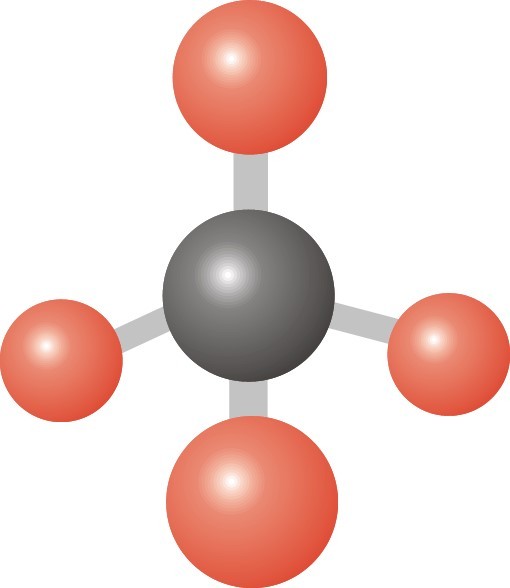
Who could this molecule be?
a)
CH4
b)
CO2
c)
PCl5
d)
BF3
3.

What molecular geometry would PH3 have?

a)

Trigonal Pyramidal

b)

Trigonal Bipyramidal

c)

Bent

d)

Linear

4.
What molecular shape is the structure shown here? (BCl3)
a)
linear
b)
trigonal planar
c)
tetrahedral
d)
trigonal pyramidal
5.

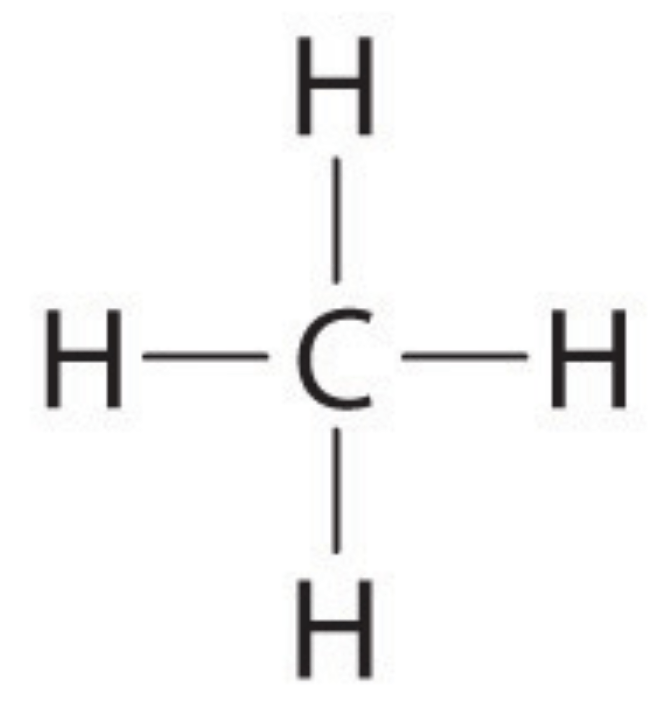
What geometry will this molecule have?

a)

trigonal pyramidal

b)

tetrahedral

c)

trigonal planar

d)

bent

6.

What geometry will this molecule have?

a)

bent

b)

tetrahedral

c)

linear

d)

pyramidal

7.

What geometry will this molecule have?

a)

linear

b)

bent

c)

trigonal planar

d)

tetrahedral

8.
Choose the correct shape for this molecule:
a)
Trigonal planar
b)
Trigonal pyramidal
c)
Tetrahedral
d)
Linear
9.
How many lone pairs of electrons are on the P atom in PF3?
a)
1
b)
2
c)
3
d)
0
10.

What is the molecular shape of OCl2?

a)

linear

b)

bent

c)

tetrahedral

d)

trigonal planar

11.
What is the molecular shape of CCl4?
a)
trigonal bipyramidal
b)
tetrahedral
c)
trigonal pyramidal
d)
bent
12.
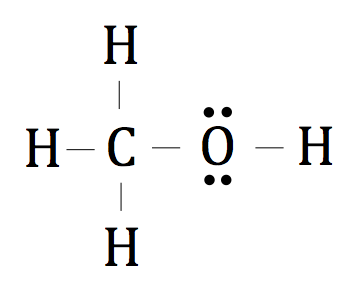
What is the MOLECULAR geometry of the central oxygen?
a)
Linear
b)
Trigonal Planar
c)
Bent
d)
Tetrahedral
13.
What is the name of the CaF2?
a)
Calcium Fluoride
b)
Calcium Difluoride
c)
Monocalcium Difluoride
d)
Calcium (II) Fluoride
14.
What is the name of SO3?
a)
Sulfur Oxide
b)
Sulfur trioxide
c)
Monosulfur trioxide
d)
Sulfur (VI) Oxide
15.
What is the name of TiF3?
a)
Titanium Fluoride
b)
Titanium Trifluoride
c)
Titanium (III) Fluoride
d)
Monotitanium Trifluoride
16.
What is the chemical formula for Phosphorus Pentachloride?
a)
PCl
b)
PCl3
c)
PCl5
d)
P5Cl
17.
What is the chemical formula for Sodium Sulfide?
a)
NaS
b)
Na2S2
c)
Na2S
d)
NaS2
18.

Classify the following molecule.

a)

polar

b)

nonpolar

19.

Classify the following molecule as polar or nonpolar: HF (hydrogen fluoride)

a)

Polar

b)

Nonpolar

20.

Classify the following molecule as polar or nonpolar: F2

a)

Polar

b)

Nonpolar

21.

Is the following molecule polar or nonpolar?

a)

polar

b)

nonpolar

22.

Which of the following formulas represents a polar molecule?

a)

H2

b)

NI3

c)

CO2

d)

CCl4

23.

Classify the following molecule as polar or nonpolar: NCl3 (nitrogen trichloride) (Hint: draw the Lewis structure)

a)

polar

b)

nonpolar

24.

Classify the following molecule.

a)

polar

b)

nonpolar

25.

Classify the following molecule.

a)

polar

b)

nonpolar

26.

A weak IMF will result in a

a)

high melting point

b)

high viscosity

c)

high surface tension

d)

low surface tension

27.
Liquids with weak intermolecular forces
a)
contain a lot of kinetic energy
b)
easily evaporate
c)
cannot diffuse
d)
freeze easily
28.

Which type of IMF is responsible for the attraction pictured above?

a)

Dipole-Dipole Interaction

b)

Ion-Dipole Interaction

c)

Hydrogen Bonds

d)

Covalent Bond

e)

Ionic Bond

29.
H2S has what kind of intermolecular force?
a)
dipole dipole
b)

london dispersion

c)
H-bond
d)
ionic
30.
Intermolecular forces are the forces
a)
within molecules
b)
between molecules
31.
When forming an ionic bond, a metal atom
a)
Gains electrons to form a cation
b)
Loses electrons to form a cation
c)
Gains electrons to form an anion
d)
Loses electrons to form an anion
32.
What elements generally make a covalent bond?
a)
metal and nonmetal
b)
2 or more nonmetals
c)
metal
d)
none of the above
33.
In chemical compounds, covalent bonds form when
a)
the electronegativity difference between two atoms is very large.
b)
electrons are completely transferred between two metals.
c)
pairs of electrons are shared between two nonmetal atoms.
d)
two nonmetal atoms are attracted to each other by opposite charges.
34.
An ionic bond forms when 
a)
Valence electrons are shared
b)
a sea of mobile electrons surround the cations
c)
valence electrons are transferred between atoms
d)
none of the above
35.
Predict the bond that will form between Be and F.
a)
Ionic
b)
Covalent
36.
Predict the bond that will form between Se and Cl.
a)
Ionic
b)
Covalent
37.
A chemical bond between oppositely charged ions.
a)
compound
b)
ion
c)
covalent bond
d)
ionic bond
38.

A metallic bond is a bond between ________.

a)

nonmetals

b)

metals

c)

transition metals

d)

metalloids

39.

Which of the following is NOT a property of metals?

a)

Hard

b)

Can conduct electricity

c)

Very brittle (breaks easily)

d)

Malleable (can bend without breaking)

40.

What is meant by the term "sea of electrons"?

a)

It's what we call all the free floating electrons in a metal.

b)

It's what we call electrons that are floating in a liquid.

c)

It's the total number of electrons in a metal atom.

d)

It's the total number of electrons in the ocean.

41.

What do we call electrons that move freely in a metallic bond?

a)

sea of electrons

b)

lone electrons

c)

unpaired electrons

d)

covalent electrons

42.

What is the name of Group 1 elements?

a)

Alkali Metals

b)

Alkaline Earth Metals

c)

Transition Metals

d)

Halogens

43.

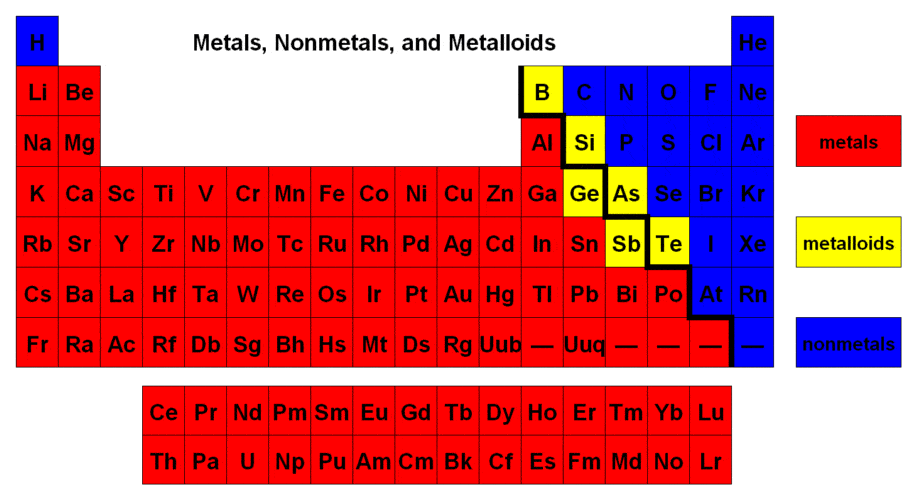
What family is highlighted in the picture?

a)

Alkali Metals

b)

Alkaline Earth Metals

c)

Halogens

d)

Noble Gases

44.

What family is highlighted in the picture?

a)

Alkali Metals

b)

Alkaline Earth Metals

c)

Halogens

d)

Noble Gases

45.

What family is dark purple in the picture?

a)

Boron Group

b)

Halogens

c)

Transition Metals

d)

Noble Gases

46.

Name the following: NO2

a)

Nitrogen oxide

b)

Mononitrogen dioxide

c)

Nitrogen dioxide

d)

Nitrogen (II) oxide

47.

Name the following: MgO

a)

Magnesium Oxide

b)

Monomagnesium monoxide

c)

Magnesium monoxide

d)

Magnesium (II) oxide

48.

Name the following: CF4

a)

Carbon fluoride

b)

Monocarbon tetrafluoride

c)

Carbon tetrafluoride

d)

Carbon fluorate

49.

Name the following: N2O5

a)

Nitrogen oxide

b)

Dinitrogen pentoxide

c)

Nitrous oxide

d)

Nitrogen pentoxide

50.

Name the following: CuO

a)

Copper oxide

b)

Copper (II) oxide

c)

Monocopper monoxide

d)

Copper monoxide

51.

Name the following: NH3

a)

Nitrogen hydrogen

b)

Nitrogen trihydrogen

c)

Mononitrogen trihydride

d)

Nitrogen trihydride

52.
An ionic compound of calcium and chlorine would be named
a)
calcium chlorine.
b)
calcium chlorite.
c)
calcium chloride.
d)
chlorine calcium.
53.
A covalent compound made of one sulfur and two oxygen atoms would be named
a)
sulfur dioxide.
b)
sulfur oxide.
c)
disulfur oxide.
d)
sulfide oxygen.
54.
The chemical formula for an ionic compound of aluminum and chlorine is
a)
AlCl.
b)
ClAl.
c)
AlCl3.
d)
Al3Cl.
55.
The chemical formula for an ionic compound of potassium and oxygen is
a)
KO.
b)
K2O.
c)
K2O2.
d)
KO2.
56.

Name the compound: MgCl2

a)

magnesium chloride

b)

magnesium dichloride

c)

monomagnesium chloride

d)

manganese chloride

57.

Name the compound: Zn3P2

a)

zinc phosphide

b)

trizinc diphosphide

c)

zinc phosphate

d)

zinc phosphite

58.
Which of the following is a property of an ionic compound?
a)
high melting point
b)
soft
c)
malleable
d)
liquid at room temperature
59.

What properties does an ionic compound have?

a)

A low boiling point and it conducts electricity when dissolved in water

b)

A high melting and it conducts electricity when liquid

c)

A high boiling point and it conducts electricity when solid

60.

What properties does a covalent bond have?

a)

High melting point and dissolves

b)

High melting point and doesn't dissolve

c)

Low melting point and dissolves

d)

Low melting point and doesn't always dissolve