wayground logo

Free Printable Worksheets

NEW

Font size

S
M
L
XL
Worksheets

MP1 Review TEST GRADE

Total questions: 71

Worksheet time: 3hrs 40mins

Name
Class
Date
1.

What is the common name for the umbilical?

a)

stomach

b)

belly button

c)

thigh

d)

pelvis

2.

What is the anatomical term for the armpit?

a)

sternal

b)

axillary

c)

acromial

d)

brachial

3.

Give the anatomical term for the thigh

a)

popliteal

b)

patellar

c)

crural

d)

femoral

4.

What region represents the ankle?

a)

Carpal

b)

Tarsal

c)

Patellar

d)

Axillary

5.

What region represents the knee?

a)

Patellar

b)

Tarsal

c)

Carpal

d)

Buccal

6.

What region represents behind the knee?

a)

Patellar

b)

Axillary

c)

Antecubital

d)

Popliteal

7.

What region represents the fingers and toes?

a)

Tarsal

b)

Carpal

c)

Digital

d)

Axillary

8.

Mouth

a)

Oral

b)

Nasal

c)

Buccal

d)

Cephalic

9.

What is the anatomical term for the the lower back?

a)

deltoid

b)

scapular

c)

vertebral

d)

lumbar

e)

sacral

10.

What is the anatomical term for the the lower back?

a)

deltoid

b)

scapular

c)

vertebral

d)

lumbar

e)

sacral

11.

Upper arm area

a)

Antebrachial

b)

Brachial

c)

Antecubital

d)

Cubital

12.
My nose is ______________ to my shoulders
a)
inferior
b)
superior
13.
My toes are _________________ to my femur
a)
proximal
b)
distal
14.
My elbow is ______________ to my fingers
a)
proximal
b)
distal
15.

The sternum (chest bone) is __________ to the shoulder.

a)

Distal

b)

Lateral

c)

Medial

d)

Superior

16.

The Pelvic Cavity is _____ to the Abdominal Cavity.

a)

Superior

b)

Proximal

c)

Inferior

d)

Lateral

17.

the nose is ____ to the forehead

a)

posterior

b)

anterior

c)

inferior

d)

distal

18.

the arms are _____ to the chest

a)

distal

b)

posterior

c)

superficial

d)

lateral

19.

the heart is ____ to the arm

a)

lateral

b)

inferior

c)

superior

d)

medial

20.

Toward the front of the body.

a)

Superficial

b)

Anterior

c)

Inferior

d)

Proximal

21.

Toward the back of the body.

a)

Superficial

b)

Distal

c)

Superior

d)

Posterior

22.

Wrist area

a)

Tarsal

b)

Carpal

c)

Lumbar

d)

Sacral

23.

What is the anatomical term for the base of the skull?

a)

occipital

b)

cephalic

c)

orbital

d)

frontal

24.

In which layer of the skin would I find sebaceous glands?

a)

dermis

b)

epidermis

c)

hypodermis

25.

The hypodermis is also referred to as...

a)

subcutaneous

b)

subdermis

c)

lower epidermis

26.

The pigment that gives skin its color and protects from UV radiation is

a)

keratin

b)

melanin

c)

chromatin

d)

dermatin

27.

What are the main layers of the skin from superficial to deep?

a)

epidermis, dermis, hypodermis

b)

dermis, hypodermis, epidermis

c)

dermis, epidermis, hypodermis

d)

hypodermis, dermis, epidermis

28.

Which cells create the pigment that gives skin its color?

a)

melanocytes

b)

keratinocytes

c)

erythrocytes

d)

adipocytes

29.

What is the first layer of the skin?

a)

Epidermis

b)

Dermis

c)

Hypodermis

d)

Locodermis

30.
Oil glands that are found all over the skin, except on the palms and soles, are called _____.
a)
merocrine glands
b)
sebaceous glands
c)
apocrine glands
d)
sweat glands
31.
Goosebumps are caused by contractions of the ______ muscle
a)
Arrector pili
b)
Apocrine
c)
Eccrine
d)
Sebaceous
32.
The sweat gland that produces "stinky" sweat is the 
a)
Apocrine gland
b)
Eccrine gland
c)
Sudoriferous gland
d)
Sebaceous gland
33.

Sudoriferous Glands refer to

a)

Exocrine glands

b)

Oil glands

c)

Sweat glands

d)

Hair glands

34.

Which layer contains accessory structures such as sweat glands and sebaceous glands?

a)

epidermis

b)

dermis

c)

hypodermis

d)

hyperdermis

35.

Produce secretions of fatty acids and protein.

a)

Sebaceous Gland

b)

Apocrine Gland

c)

Merocrine Gland

d)

Sweat

e)

Sebum

36.
a)
First Degree Burn
b)
Second Degree Burn
c)
Third Degree Burn
d)
Fourth Degree Burn
37.
A sunburn might be an example of a:
a)
1st degree burn
b)
2nd degree burn
c)
3rd degree burn
d)
4th degree burn
38.
What is NOT a function of the skin?
a)
Eliminates Waste
b)
Produces Calcium
c)
Protects Body
d)
Maintains Body Temperature
39.

Skin color is the result of

a)

The quantity of melanin in the skin

b)

The number of keratinocytes in the skin

c)

The amount of fat in the hypodermis

d)

The number of melanocytes in the skin

40.
With the help of the sun, what vitamin is produced by our skin?
a)
Vitamin A
b)
Vitamin B
c)
Vitamin C
d)
Vitamin D
41.
A 3rd degree burn affects which layers of the skin?
a)
Epidermis
b)
Epidermis, Dermis
c)
Epidermis, dermis, and hypodermis
d)
Epidermis dermis, and cutaneous layer
42.
a)
mandible
b)
skull
c)
scapula
d)
spine
43.
a)
rib
b)
spine
c)
scapula
d)
clavicle
44.
a)
clavicle
b)
ribs
c)
humerus
d)
ulna
45.
a)
ulna
b)
radius
c)
humerus
d)
clavicle
46.
a)
tibia
b)
femur
c)
fibula
d)
pelvis
47.
a)
tibia
b)
fibula
c)
radius
d)
calcaneus
48.
a)
metacarpals
b)
phelanges
c)
tarsals
d)
metatarsals
49.
a)
cranium
b)
ribs
c)
mandible
d)
vertebrae
50.
a)
ulna
b)
humerus
c)
radius 
d)
vertebrae
51.
a)
vertebrae
b)
tibia
c)
pelvis
d)
femur
52.
What is the name of the flat bone that makes up the shoulder blade?
a)
scapula
b)
stapes
c)
sternum
d)
cranium
53.
What bones make up the wrist?
a)
tarsals
b)
carpals
c)
phalanges
d)
ribs
54.
What is the scientific term for the fingers and the toes?
a)
extensors
b)
flexors
c)
phalanges
d)
metacarpals
55.
a)
metacarpals
b)
metatarsals
c)
tarsals
d)
carpals
56.
a)
pelvis
b)
tibia
c)
sternum
d)
sacrum
57.
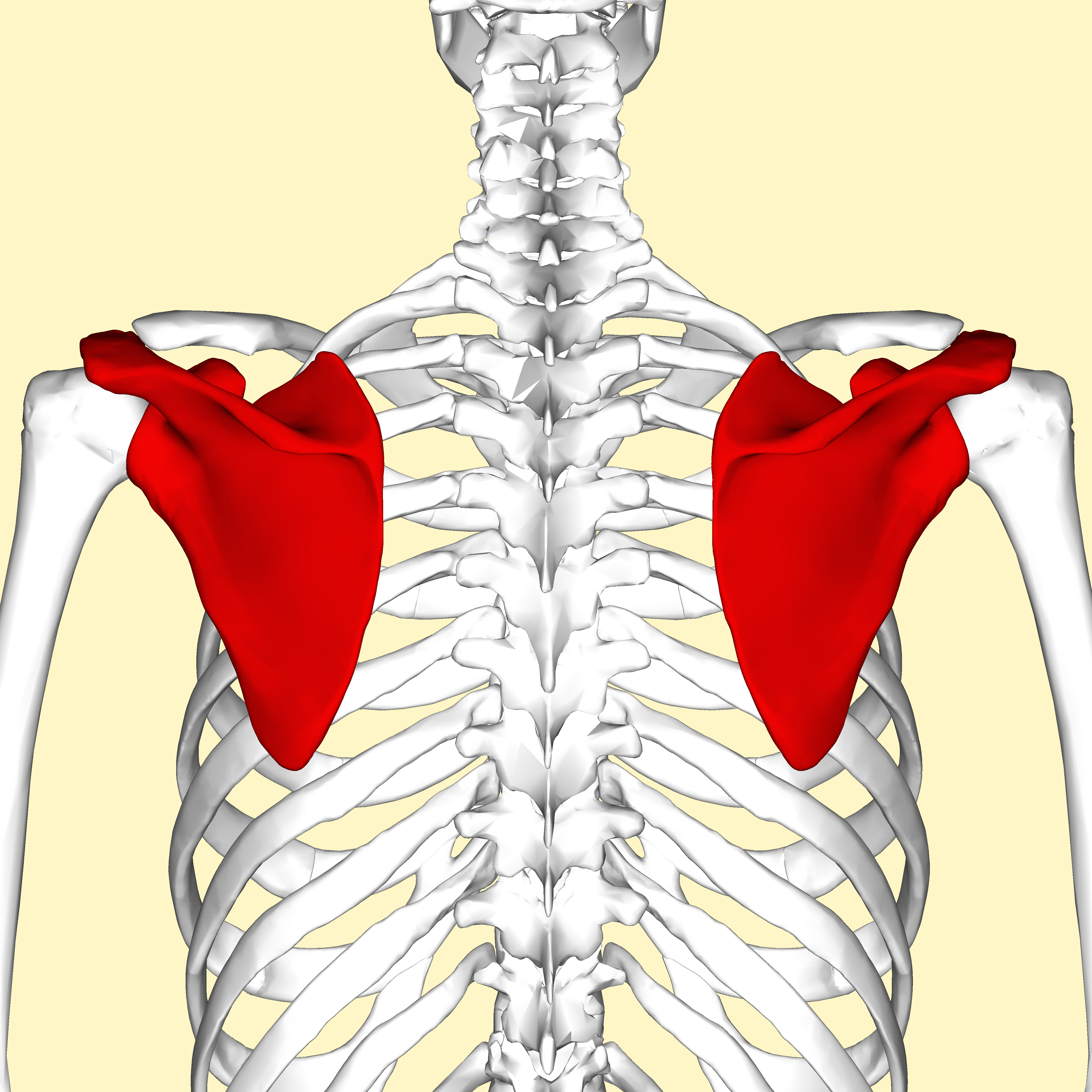
What bones is represented in the  picture?
a)
Clavicle
b)
Scapula
c)
Sternum
d)
Carpals
58.
Also known as the kneecap
a)
Patella
b)
Tibia
c)
Fibula
d)
Femur
59.
Also known as the shin bone
a)
Femur
b)
Tibia
c)
Fibula
d)
Metatarsals
60.

What is the root word meaning skin?

a)

hepat/o

b)

nephr/o

c)

derm/o

d)

cephal/o

61.

A disease- causing microorganism

a)

Bactirea

b)

Bacteria

c)

Pathogen

d)

Covid

62.

Gastro-

a)

Small Intestines

b)

Stomach

c)

Gas

63.

Athero-

a)

Artery

b)

Plaque or fatty substance

c)

Joint

64.

-plasty

a)

Surgical repair

b)

Plastic

c)

Pus

65.

-rrhea

a)

Rupture

b)

Excessive flow

c)

Flow or discharge

66.

-sclerosis

a)

Spine

b)

Abnormal hardening

c)

abnormal narrowing

67.

Hypo-

a)

Below, under, decrease

b)

Above, increase

c)

Cold

68.

Neuro-

a)

Nose

b)

New

c)

Nerve

69.

Myo-

a)

Muscle

b)

Memory

c)

Fungus

70.

Intra-

a)

Within or inside

b)

Entrance

c)

To enter

71.

Erythr-

a)

Red

b)

Ear

c)

Natural