
 Worksheets
Module 3 - Energy and Matter in Ecosystems
Total questions: 44
Worksheet time: 51mins
Which type of organism(s) perform cellular respiration?
all living things
plants only
animals only
animals, fungi, bacteria and protists
Which process REMOVES carbon from the atmosphere?
Combustion
Respiration
Photosynthesis
Death and decomposition
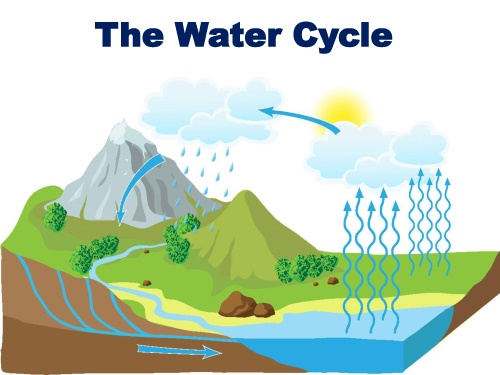
What part of the water cycle do clouds represent?
evaporation
precipitation
condensation
runoff

Part of the equation for photosynthesis is shown. A substance cycled throughout an ecosystem and released during cellular respiration is missing. What substance belongs in place of the question mark?
Carbon
Carbon dioxide
Nitrogen dioxide
Hydrogen

What gas do leaves absorb during the day?
Oxygen
Carbon dioxide
Nitrogen
Hydrogen

In the energy pyramid here, which organisms have the MOST energy available to them?
Producers
Carnivores
Herbivores
Top Predator

Which organism has the LEAST amount of energy available to it from the producer in this diagram?
Owl
Grasshopper
Lilypad
Mouse

During photosynthesis, plants produce a food called ______.
ATP
glucose (sugar)
oxygen
chlorophyll

Which activity does NOT release carbon into the atmosphere?
dead organisms decompose
fossil fuels burn during combustion
water cools and condenses to form clouds
humans exhale during respiration
What is an ecosystem?
a man-made place where an organism grows and lives
a natural place where an organism grows and lives
a community of only living factors that interact and work together
a community of living and nonliving factors that live and work together

Is this an example of a producer, consumer, or decomposer?
producer
consumer
decomposer

Is this an example of a producer, consumer, or decomposer?
producer
consumer
decomposer

Is this an example of a producer, consumer, or decomposer?
producer
consumer
decomposer

Is this an example of a producer, consumer, or decomposer?
producer
consumer
decomposer

Is this an example of a producer, consumer, or decomposer?
producer
consumer
decomposer
Organisms that use an outside energy source, such
as the Sun to produce their own food are called _____.
Consumers
Herbivores
Heterotrophs
Producers
Organisms that cannot make their own food are called _____. They obtain energy and nutrients from other organisms.
autotrophs
consumers
chemosynthesizers
producers
Organisms that eat only producers are called _____.
autotrophs
carnivores
herbivores
scavengers
Organisms that eat both producers and consumers are called _____.
carnivores
decomposers
omnivores
saprophytes
Organisms that eat herbivores, omnivores, and other carnivores are called _____.
autotrophs
carnivores
parasites
producers
Organisms that consume the bodies of dead organ-
isms or wastes produced by living organisms are called _____.
detritivores
herbivores
hosts
producers
Microscopic organisms that cause the decay of dead organisms or wastes produced by living organisms are called _____. Most are fungi and bacteria.
autotrophs
decomposers
composers
insectivores
A(n) _____ is a model of energy transfer that shows how the food chains in a community are interconnected.
biosphere
energy pyramid
food link
food web
The nitrogen cycle describes how nitrogen, which is used by living things to make _____, moves from the atmosphere to the soil into the bodies of living organisms and back to the atmosphere.
carbohydrates
lipids
proteins
water
In a process known as _____, water vapor in the atmosphere condenses to form clouds and then falls back to earth as rain or snow.
exhalation
evaporation
precipitation
transpiration
As part of the carbon cycle, organisms release carbon dioxide into the atmosphere during _____. It can then be taken in by plant leaves and used to make food.
cellular respiration
chemosynthesis
photosynthesis
transpiration

Identify the energy model shown in the image.
Food Chain
Food Web
Energy Pyramid
Classification Chart
A(n) _____ is a model that shows the amount of energy avail-
able in each link of a food chain.
biograph
diorama
energy pyramid
food web

Identify the energy model shown in the image.
Food Web
Food Chain
Energy Pyramid
Population Graph

Identify the energy model shown in the image.
Energy Pyramid
Food Web
Food Chain
Cladogram
A(n) _____ is a simple model that shows how energy moves from a producer to one or more consumers through feeding relationships.
ecosystem
energy pyramid
food chain
food web
True or False: Less energy is available for organisms higher up in an energy pyramid.
True
False
Animals put water vapor back into the atmosphere through _____.
cellular respiration
photosynthesis
chemosynthesis
transpiration
The black bear eats roots, berries, meat, fish, insects, larvae, grass, and other plants. The black bear is a(n) _____.
omnivore
producer
carnivore
detritivore
What gas makes up 78% of Earth's atmosphere?
Nitrogen
Carbon Dioxide
Oxygen
Methane

This diagram shows the movement of matter between some living and non-living things in a forest ecosystem. Which part of the food chain is nonliving?
sun
berry plant
. jackrabbit
bobcat
Sara made a model of a food chain. The living things in her food chain were a cricket, frog, and snake. Which is missing from the model?
Prey
Consumer
Producer
Food Source

Producers get energy by capturing what from the sun?
Chemical Energy
Big Energy
Light energy
No Energy

