
 Worksheets
Matter and Energy Post Test
Total questions: 60
Worksheet time: 3600secs

Look at the picture. Which state of matter is in beaker A?
Solid
Liquid
Gas
Blue thingys
Look at the picture. Which state of matter is in beaker C?
Solid
Liquid
Gas
Blue thingys

True or False: Atoms/ molecules in solids do not move or vibrate at all.
True
False

What causes states of matter to change?
Magnetic Energy
Thermal Energy
Gravitational Energy
Electrical Energy

When changing a substance from liquid to gas, the energy has to...
INCREASE
DECREASE
When changing a substance from liquid to solid, the energy has to...
INCREASE
DECREASE

What needs to happen for matter to melt?
Heat energy must increase.
Heat energy must stay the same.
Heat energy must decrease.

Phase change from liquid to gas is called:
Freezing
Condensation
Vaporization
Sublimation
Phase change from liquid to solid is called:
Melting
Freezing
Deposition
Condensation
Phase change from gas to liquid is called:
Melting
Freezing
Deposition
Condensation

TRUE or FALSE: Liquids have a definite volume but NOT a definite shape.
TRUE
FALSE
All solids have a closely packed, fixed arrangement of particles.
True
False
The _______ is a measure of the average speed of the particles in a substance.
temperature
density
volume
mass
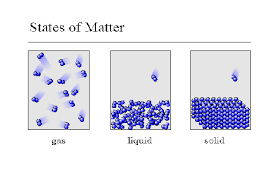
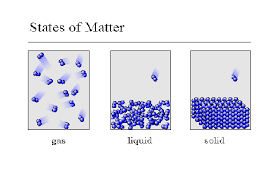
This state of matter the particles "slip past" each other and take the shape of it's container
Solid
Gas
Liquid
Hot coffee is stirred with a spoon, the spoon gets hot due to
conduction
radiation
convection
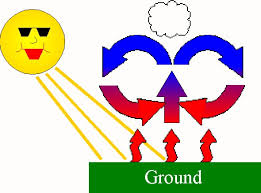
To check if an iron is hot, you place your hand near the iron and feel that it is warm without touching it. What type of heat transfer is this?
Conduction
Convection
Radiation

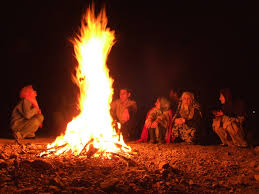
A material that allows energy to flow through easily
Conductor
Insulator
A material that does not allow energy to flow through easily
Conductor
Insulator
Which of the following is a conductor?
Paper straw
Aluminum can
Log
Which of the following is an insulator?
Glass
Copper
Human body
Gold is a conductor.
True
False
Rubber
Conductor
Insulator
Metal pan
Conductor
Insulator
Your coat is an insulator.
True
False

Conductor
Insulator

Conductor
Insulator

Conductor
Insulator
What type of matter makes good conductors?
Gases
Nonmetals
Metals

Which type of heat transfer is shown?
convection
conduction
radiation
hot air balloon

What type of heat transfer is shown here?
convection
conduction
radiation
boiling water

After holding an ice pack against his skin for 20 minutes, the man notices the ice pack is melting. Why is this happening?
radiation - the ice pack is now all melted
conduction - body heat transferred to the cold ice pack
convection - the water in the ice pack flowed in a circle pattern
conduction - heat came from the bigger object to the smaller

If an insulator is doing it's job well, the temperature of an object over time should...
rise slowly
lower quickly
show very little change
rise quickly

If you were going to use this pan to cook, what do you notice could be a problem?
it is made of metal, a good conductor
the handles are all metal and will be HOT
the sides are all metal and will be HOT
there is no food in the pan to cook

Heat transfers from an area of ________ temperature to an area of _______ temperature.
high to low
low to high
high to high
low to low

Josh did an experiment recording the changes in temperature in sand and water when exposed to a light source, and then when the light source was removed. Josh noticed that the sand heated up faster than the water and then cools faster than the water. Josh concludes that
sand is the better insulator.
water is the better conductor.
water is the better insulator.
sand has a higher heat capacity.
Which statement best classifies how particles move during radiation?
The transfer of heat by particles with higher energy moving from one location to another.
The transfer of heat by particles as they come in contact with each other.
The transfer of heat through space WITHOUT particles of matter colliding or moving to transfer the energy.
The transfer of heat from an object of cooler temperature to an object of a higher temperature.
What is the type of heat transfer that occurs between particles as they collide within a substance or between two substances that are in contact?
conduction
convection
radiation
solar energy
Which particles have the most energy?
liquid
gas
solid
Which particles have the least energy?
liquid
gas
solid
What happens to the particles in a solid when heat is added?
the particles have less energy and slow down
the particles have more energy and speed up
there is no change
the particles stop moving

