
 Worksheets
Yr7 Earth & Space
Total questions: 212
Worksheet time: 4hrs 40mins

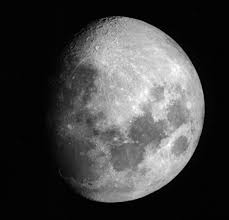
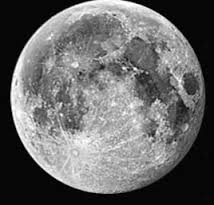
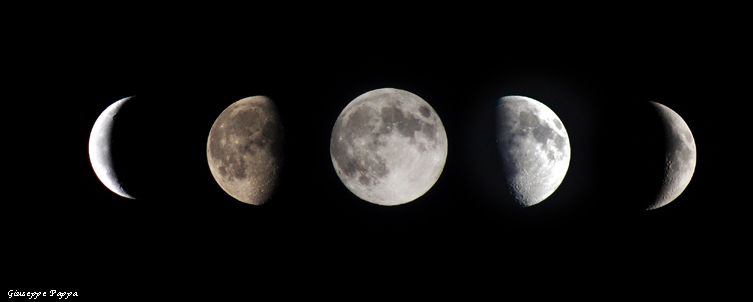
Which phase of the Moon is this
Waning Gibbous
Waxing Gibbous
Full Moon
First Quarter
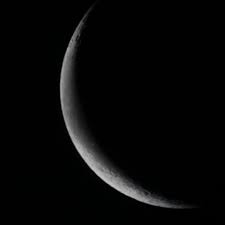
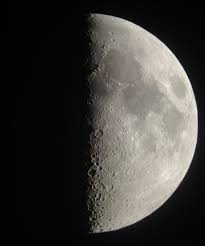
Which phase of the Moon is this
Waning Gibbous
Waxing Gibbous
Full Moon
First Quarter

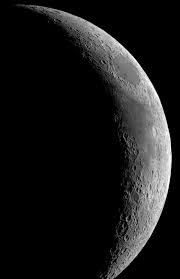
Which phase of the Moon is this?
Waning Crescent
New Moon
Waxing Crescent
Waning Gibbous

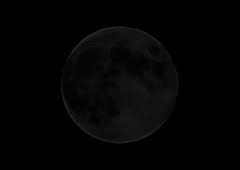
Which phase of the Moon is this?
Full Moon
New Moon
Waxing Crescent
Waning Crescent

How long would it take the Moon to go from a New Moon to a Full Moon?
3.5 days
14 days
21 days
30 days
How many high tides occur each day?
0
1
2
4
When does a spring tide occur?
When the Earth, Sun and Moon are aligned and on a quarter Moon
When the Earth, Sun and Moon are aligned and on a full or new Moon
When the Earth, Sun and Moon are unaligned and on a full Moon

Which has more of an impact on the Earth's tides?
Sun
Moon
Both equally
Neither

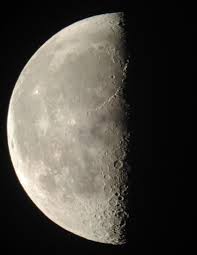
Which phase of the moon is this?
First Quarter
Half Moon
Third Quarter
Side Moon

Which phase of the moon is this?
Full moon
New moon
Happy moon
Waning Gibbous

Which phase of the moon is this?
New moon
Full moon
Hidden moon
Missing moon

Which phase of the moon is this?
Third Quarter
First Quarter
Half Moon
Side Moon

Which phase of the moon is this?
Waning Crescent
Waxing Crescent
Waning Gibbous
Waxing Gibbous

Which phase of the moon is this?
Waning Gibbous
Waxing Gibbous
Waning Crescent
Waxing Crescent

Which phase of the moon is this?
Waxing Crescent
Waning Crescent
Waxing Gibbous
Waning Gibbous

Which phase of the moon is this?
Waxing Gibbous
Waning Gibbous
Waxing Crescent
Waning Crescent


Ocean tides are the result of
the rotation of Earth.
the sun’s gravitational pull on Earth.
changes in Earth’s orbital position around the sun.
differences in both the sun’s and moon’s gravitational pull on Earth.
The orbit of a planet around the sun is a(an)
ellipse.
straight line.
circle.
parabola.


As the moon's shape appears to get smaller, we say that the moon is _.
Swelling
Waxing
Waning
Shrinking

What moon phase is at position K?
waxing crescent
waxing gibbous
new moon
waning crescent
What causes day and night on Earth?
the orbit of the sun
the moon
the rotation of the earth on its axis
lights
What is the term used to describe the wobble of the earth during its orbit
Garycenter
Barycenter
The axis
An eclipse
How many high & low tides do we have each day?
Hint: the answer is the total number of tides
1
4
2
7
Mass is....
A measure of how much matter is in an object
Something you calculate
Your weight plus gravity
How tall you are
Identify the two factors that influence gravity.
Gravity & Mass
Weight & Mass
Distance & Mass
Weight & Distance
Copernicus believed _______ was the centre of the universe
Earth
Moon
Himself
Sun
Galileo used what instrument to help discover objects in space?
Protractor
Microscope
Telescope
Horoscope
Rotation
the action of one object moving completely around another in an orbital path
an imaginary line that runs through both poles of a planet
turning or spinning on an axis
the path an object, such as a planet, takes as it revolves around another object
Revolution
turning or spinning on an axis
an imaginary line that runs through both poles of a planet
the path an object, such as a planet, takes as it revolves around another object
the action of one object moving completely around another in an orbital path
axis
an imaginary line that runs through both poles of a planet
an object that orbits another object in space
the path an object, such as a planet, takes as it revolves around another object
the air that surrounds Earth
orbit
the action of one object moving completely around another in an orbital path
the path an object, such as a planet, takes as it revolves around another object
turning or spinning on an axis
the rising and falling of the ocean's surface
satellite
an object that orbits another object in space
a large hole in the ground caused by an asteroid
the air that surrounds the Earth
a science tool used for observing very distand objects in space
solar system
each of the four divisions of the year marked by particular weather patterns and daylight hours
the shape of the lit part of the moon as seen from Earth
the eight planets, the moons, and other objects that orbit the Sun
the partial or total blocking of light of one object by another
eclipses
the rising and falling of the ocean's surface
the partial or total blocking of light of one object by another
the shape of the lit part of the moon as seen from Earth
the air that surrounds Earth
moon phases
the shape of the lit part of the moon as seen from Earth
a large hole in the ground caused by an asteroid
the air that surround the Earth
an object that orbits another object in space
crater
the rising and falling of the ocean's surface
an object that orbits another object in space
a large hole in the ground caused by an asteroid
the partial or total blocking of light of one object by another
How long does it take for Earth to do one full rotation?
An hour
Less than one second
24 hours
Around 30 days
How long does it take for Earth to do one full rotation?
An hour
Less than one second
24 hours
Around 30 days
The moon is a source of light.
True
False
How long does it take for the Earth to complete a full orbit of the sun?
24 hours
It never completes an orbit
365/366 days
Around 30 days

The moon is a natural ______ of Earth.
satellite
Axis
comet
space probe
The moon is a natural ______ of Earth.
satellite
Axis
comet
space probe
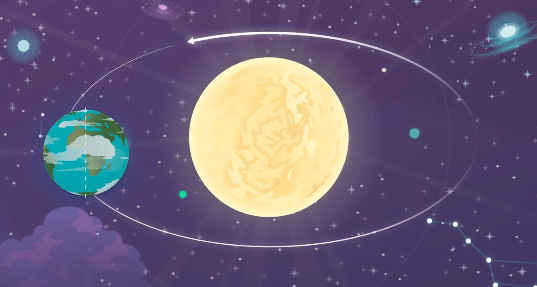
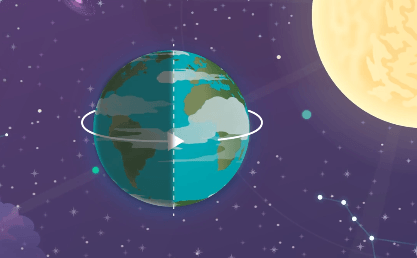
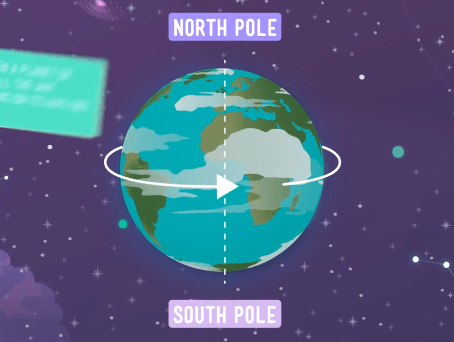
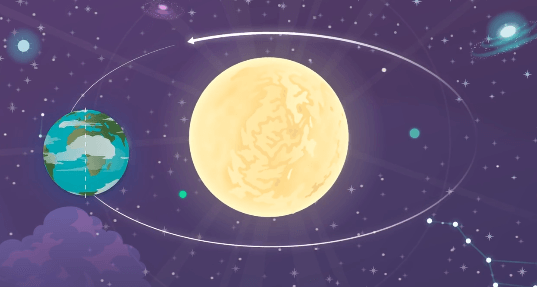


Which statement best compares the length of Earth’s rotation to the length of Earth’s revolution?
Rotation is equal to 28 days, and revolution is equal to 365 days.
Rotation is equal to 365 days, and revolution is equal to 28 days.
Rotation is equal to 24 hours, and revolution is equal to 365 days.
Rotation is equal to 28 days, and revolution is equal to 24 hours.

A teacher demonstrates the day and night cycle to a group of students using a globe and a lamp. Students are asked to write a valid conclusion about how the day and night cycle occurs naturally on Earth.
The sun rotates on its axis once approximately every 30 days.
The sun revolves around the Earth approximately every 365
days.
The Earth rotates on its axis once approximately every 24 hours.
The moon revolves around the Earth once approximately every
28 days.

The diagram shows the earth orbiting the Sun. Letters A and B
show two locations in Earth’s orbit around the Sun.
How long will it take for Earth to travel from point A to point B?
1 month
3 months
6 months
9 months
What hemisphere do we live in?
Northern Hemisphere
Southern Hemisphere

What season is the northern hemisphere experiencing in the photo?
Fall
Spring
Winter
Summer
Which of the following correctly shows rotation?


The illustration represents which of the following?
Revolution of Earth
Swimming Earth
Bicycle wheel
Roation of Earth
Which month has a day added because of a leap year?
February
January
March
April

What season is being experienced in the Southern Hemisphere?
Spring
Fall
Winter
Summer
Identify the cause of Earth's seasons
tilt of the earth's axis
Identify the result of Earth's rotation on its axis
Identify season that will occur when the north pole is tilted toward the sun.

The earth's axis is tilted (a) degrees off center.
Recall the effect that the tilt has on Earth.
Identify the effect on Earth if it was not tilted on its axis.
Identify the effect on Earth if it was not tilted on its axis.

Based on the model in the diagram, which season is point X most likely experiencing?
spring
summer
winter
fall or autumn

Identify the location that has the greatest number of hours of daylight
A
B
C
D
E

In the diagram, identify the season that the Northern hemisphere would be in at position A
Fall or Autumn
Spring
Winter
Summer
Which planet is the smallest?
Jupiter
Neptune
Mercury
Pluto
Which planet is the largest?
Jupiter
Saturn
Neptune
Pluto
Which planet is farthest from the sun?
Pluto
Saturn
Uranus
Neptune
Which planet is Red in color?
Earth
Mars
Venus
Mercury
Choose the correct order of the first 4 planets
Mercury, Earth, Venus, Mars
Mars, Earth, Venus, Mercury
Mercury, Venus, Earth, Mars
Mercury, Mars, Venus, Pluto
Choose the correct order of the outer gas giants
Jupiter, Saturn, Uranus, Neptune
Jupiter, Saturn, Neptune, Uranus
Uranus, Neptune, Saturn, Jupiter
Jupiter, Saturn, Neptunr, Pluto
This is the only planet with liquid water on it (so far as we know)
Mercury
Earth
Mars
Pluto
Which object used to be the 9th planet, but isn't any more.
Comet
Pluto
Ceres
Sedna
Which information could help you decide that a planet is an inner planet?
It is made of gases.
It is made of solid rock.
It has lots moons.
It is giant.
____________ is closer to the sun and usually hotter.
Saturn
Mercury
Jupiter
Neptune
Mars is also known as the ________ because of its color.
Red Planet
Blue Planet
Yellow Planet
Purple Planet
Earth has a shorter year than Jupiter because Earth ___________.
is farther from the Sun
spins faster as it rotates
has shorter days
is closer to the Sun
Which planets have similar rocky surfaces to Mercury’s? Choose TWO
Earth
Saturn
Jupiter
Venus

The diagram shows the first five planets in the solar system with Earth labeled. Which planet is represented by the letter P?
Mercury
Venus
Jupiter
Neptune
How many moons does Earth have?
1
0
2
23
Which planet orbits between Venus and Mars?
Jupiter
Earth
Saturn
Neptune

What is the name of this planet?
EARTH
MERCURY
MARS
VENUS

This planet has rings.
SATURN
MERCURY
MARS
VENUS

The biggest planet is...
JUPITER
EARTH
MARS
VENUS

This planet is also called "The Red Planet"
JUPITER
EARTH
MARS
VENUS

The hottest planet is...
JUPITER
EARTH
MARS
VENUS


What is a meteoroid that has hit Earth's surface?
Meteor
Asteroid
Comet
Meteorite

Which planet is NOT one of the
"Gas Giants"?
Uranus
Venus
Neptune
Saturn

Only during a solar eclipse is this outer layer of the Sun's atmosphere visible from Earth.
core
photosphere
corona
chromosphere

People once believed in a geocentric arrangement for the solar system. This means the planets and stars orbited around ______.
Sun
Earth
Milky Way
Universe

Name the planet described below: liquid ocean of hydrogen and helium, colorful bands, huge 300 year old storm, so large all the other planets in our solar system would fit inside of it, may have a rocky core.
Uranus
Neptune
Saturn
Jupiter

The ______ is the major source of heat not only for Earth but our entire solar system.
Sun
volcanoes
greenhouse effect
hot cores of the planets

Which of the following is the correct order for the inner planets from the asteroid belt to the Sun?
Earth, Mercury, Venus, Mars
Mercury, Venus, Earth, Mars
Mars, Earth, Venus, Mercury
Jupiter, Saturn, Pluto, Ceres

The dark area's in diagram (a) are darker because they are cooler than other places on the Sun's surface. What are they?
photosphere
prominences
Sun spots
Solar winds

Most planets rotate counterclockwise. There are two planets that scientists believe were hit by large objects in the past causing them to rotate differently. Name the OUTER planet that rotates on its side.
Venus
Uranus
Pluto
Asteroid

Planets formed from _______ left over from the formation of the Sun at the center of the cloud as the solar system was beginning to form.
ice
gas
dust
all three of these

Which of the following is the order of the OUTER PLANETS from Pluto into the asteroid belt?
Uranus, Saturn, Jupiter, Neptune
Saturn, Jupiter, Uranus, Neptune
Jupiter, Saturn, Uranus, Neptune
Neptune, Uranus, Saturn, Jupiter
Which of the following is the order of the OUTER PLANETS from Pluto into the asteroid belt?
Uranus, Saturn, Jupiter, Neptune
Saturn, Jupiter, Uranus, Neptune
Jupiter, Saturn, Uranus, Neptune
Neptune, Uranus, Saturn, Jupiter
Which of the following is the order of the OUTER PLANETS from Pluto into the asteroid belt?
Uranus, Saturn, Jupiter, Neptune
Saturn, Jupiter, Uranus, Neptune
Jupiter, Saturn, Uranus, Neptune
Neptune, Uranus, Saturn, Jupiter

When solar winds from the Sun's corona reach the poles of Earth, charged particles in the solar winds cause gases in Earth's atmosphere to glow creating _______.
auroras
sun spots
magnetic storms
eclipses

The orbits of ______ lie closer to the Sun than Earth's orbit.
Mercury and Venus
Venus and Mars
Asteroids and Comets
Mars and Asteroids
The orbits of ______ lie closer to the Sun than Earth's orbit.
Mercury and Venus
Venus and Mars
Asteroids and Comets
Mars and Asteroids

The planet pictured here is not the only planet with rings made of floating chunks of ice and rocks but they are the only ones easily viewed from Earth with simple telescopes.
Neptune
Uranus
Saturn
Jupiter

Although water can be found on several planets and even on asteroids, ________ is the only planet that has solid, gas AND liquid water.
Pluto
Mars
Earth
Jupiter
Although water can be found on several planets and even on asteroids, ________ is the only planet that has solid, gas AND liquid water.
Pluto
Mars
Earth
Jupiter


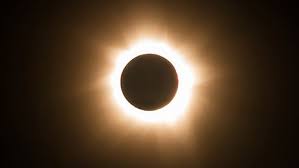




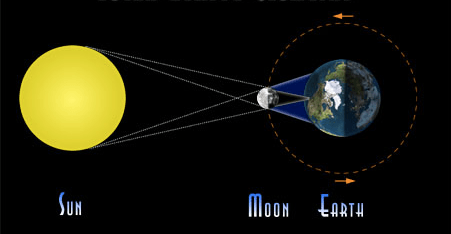
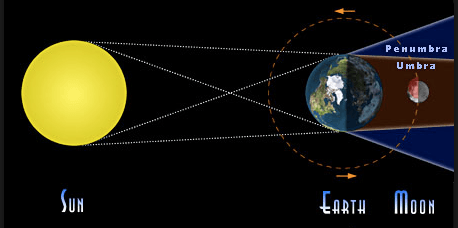


What type of tide would this arrangement of earth-moon-sun create?
What type of tide would this arrangement of earth-moon-sun create?



