
 Worksheets
medical practitioner part 1
Total questions: 84
Worksheet time: 58mins

The purpose of the ____________ system is turn the food you eat into something useful for the body.
Respiratory
Circulatory
Digestive
Integumentary

The system containing the hair, skin, nails and exocrine glands.
It acts as a barrier against disease, as a temperature regulation system and as a waterproofing system to prevent dehydration.
Nervous System
Circulatory System
Integumentary System
Digestive System
What body system removes the waste from your body?
Circulatory
Excretory
Muscular
Respiratory
Lungs
Small blood vessels where materials are exchanged between the blood and the body’s cells (oxygen and carbon dioxide)
Where the exchange of gas occurs. Oxygen enters and carbon dioxide exits.
Muscular tube connecting the mouth to the stomach
Force pathogens out of the body
Neurons
Attached to bone and move bones using tendons
Water absorbed into the bloodstream, remaining material is readied for elimination from the body.
Produce chemical called antibodies to destroy pathogens
Nerve cell specialized to transfer messages in the form of fast-moving electrical energy
Large dome-shaped muscle used in breathing
Diaphragm
Heart
Kidney
Smooth Muscles
Mucus and Cilia
White blood cells that engulf and destroy pathogens
Waste material is compressed into solid form
Trap and remove pathogens that enter the respiratory system
Mechanical and chemical digestion start here
Sneezing and coughing
is bad for you.
forces pathogens out of your body.
destroys pathogens using antibodies.
is gross.
Which body system protects the organs of the body?
digestive
respiratory
skeletal
muscular
Which of the following is a component of the circulatory system?
heart
blood vessels
blood
all answers
Viruses
Non-living pathogen
Bacteria
Living pathogen that can move
Pathogen
Disease causing agent
Fungi
Pathogen that has a nucleus
Name some common types of pathogens
Virus, Bacteria, Fungi
Virus, Sugar, Bacteria
Bacteria, Amino Acids
Dogs, Bacteria

TRUE or FALSE:
Viruses are smaller than the hosts they infect.
True
False
Bacteria are unicellular (made of one cell)
True
False
All bacteria are harmful.
True
False
Bacteria are a living thing.
True
False
A (a) is living. A (b) is nonliving.

Based on the picture, what type of tissue is it?
Plant
Bacteria
Nerve
Muscle

Based on the picture, what type of tissue is it?
Nerve
Muscle
Plant
Fungi

This picture under a microscope is showing...
Nerve Tissue
Plant Tissue
Muscle Tissue
Which pathogen is treated with antibiotics?
virus
bacteria
parasite
fungi
Athlete's Foot is caused by:
fungus
bacteria
parasite
virus
Diabetes
Tetanus
Measles
Sabrina has the flu. Her neighbor suggests she get a prescription for an antibiotic, but Sabrina's mothers says that antibiotics would not help in this situation. Why?
the flu is caused by a virus, and it cannot be treated with an antibiotic.
the flu is caused by a fungus, and it must be treated with antifungal medication
the flu is caused by a parasitic worm, and must be treated with an anti-parasitic medication
the flu is caused by a bacterium, and it cannot be treated with an antibiotic.
Ten people became sick with the flu after attending a school dance. What is the scenario that could best explain how the people got sick?
contact with environmental sources
contact with an infected animal
contact with a contaminated object
contact with an infected person

Pathogens can be spread by drinking contaminated water or eating raw or undercooked food.
Yes, this is true
No, this is not true
Which pathogen does NOT have DNA?
fungi
protist/parasite
bacteria
virus
they all have DNA
Vaccines are used to prevent diseases by which type of pathogen?
virus
bacteria
parasite
fungi


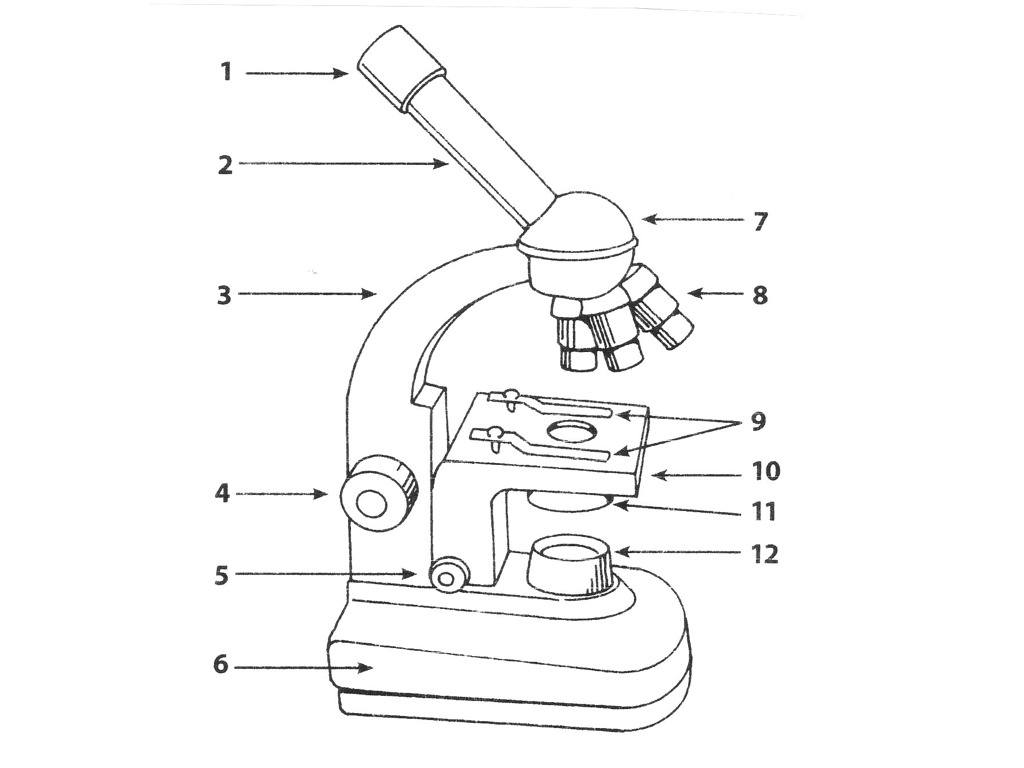

Which objective lens should you start on to locate an image?
medium power
low power
high power

What is the name of part A?
lens
eyepiece
objective lens
coarse adjustment know
What is the name of part K?
objective lens
illuminator
eyepiece
nosepiece
What is the function of the mitochondria?
control exit and entry of substances in and out of the cell
aerobic respiration of glucose to release energy
conversion of light energy to chemical energy
synthesis of proteins
What is the function of red blood cell?
Transport nutrients
Transport oxygen
What makes blood cells appear red?
They contain red dye
They contain red pigment (haemoglobin)
They reflect red light
All of the above

What cell is this?
Animal cell
Plant cell
What is present in plant cells but not in animal cells?
Vacoules
Cell membrane
Nucleus
Chloroplast
Nerve cells work as a mean of
Transportation
Communication
Excretion
Capturing
Where can you find fat cells in your body?
Beneath the skin
Surrounding the organ
In between muscles
All of the above
Chemical used to stain animal cells
Methylene blue
Iodine
Chemical used to stain plant cells
methylene blue
iodine
What is the meaning of the word 'acid'?
Sour
Bitter
The ashes
burn

Where does the sour taste of vinegar comes from?
nitric acid
lactic acid
ethanoic acid
hydrochloric acid
What colour does litmus paper turn when added to an alkali?
Blue
Red
Green
Colourless
What colour does litmus paper turn when added to an acid?
Blue
Red
Green
Colourless
What other laboratory substance can you use to test if colourless substance is an acid or an alkali?
Catalyst
Salt
Universal Indicator
Water
What happens to the pH of an acid during neutralisation?
It stays the same
It moves toward pH 1
It moves towards pH 7
It moves towards pH 14
A wasp sting is alkali. Which substance would neutralise the sting?
Vinegar
Bleach
Baking soda
Distilled water
Which substance is an acid?
Water
Bleach
Orange juice
Washing powder
Which pH levels indicated a strong acid?
1-3
4-6
8-11
12-14
Which pH level indicates a weak alkali?
1-3
4-6
8-11
12-14
Which pH level indicates a weak acid?
1-3
4-6
8-11
12-14
Which pH level indicates a strong alkali?
1-3
4-6
8-11
12-14
Strong acids and alkalis are...
Sour
Sweet
Corrosive/Caustic
Burn litmus paper

PH scale
pH ruler
pH scale
pH statistical tables

What is the meaning of the above hazard warning symbol?
Corrosive
Explosive
Toxic
Radioactive
Acid in our stomach:
Hydrochloric acid
Sulfuric acid
Acetic acid
Carbonic acid
Which substance is alkali?
Toothpaste
Vinegar
Lemon juice
Soft drink
Reaction between acid and alkali producing salt and water:
Combustion
Neutralization
Precipitation
Decomposition

Alkali are ------- to touch
Sticky
Soapy
Soft
The lower the pH number the -------the acid
Stronger
Weaker
What is the pH of Neutral solution
14
5
7
1
What is the pH of acid
1-7
4-14
1-6
7-14
What is the pH of alkali
7-14
8-14
1-6
1-10

