
 Worksheets
Honors Biology Semester Final
Total questions: 100
Worksheet time: 1hrs 29mins
The following ROOT WORD means "life or living"
physio
chemo
bio
eco
Words with the root "AUTO" means they have to do with
self
people
size
shapes
sub means
under, below
par
equal
the same
What does the root word 'photo' mean?
light
sound
heat
movement
What does the root word 'hydro' mean?
earth
water
air
fire
The variable in an investigation that you are measuring is the _________________?
control variable
independent variable
dependent variable
research variable
Strength
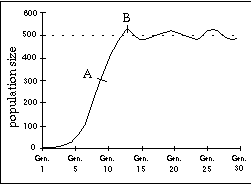
What is the carrying capacity of the graph?
around 500
more than 800
less than 300
around 700
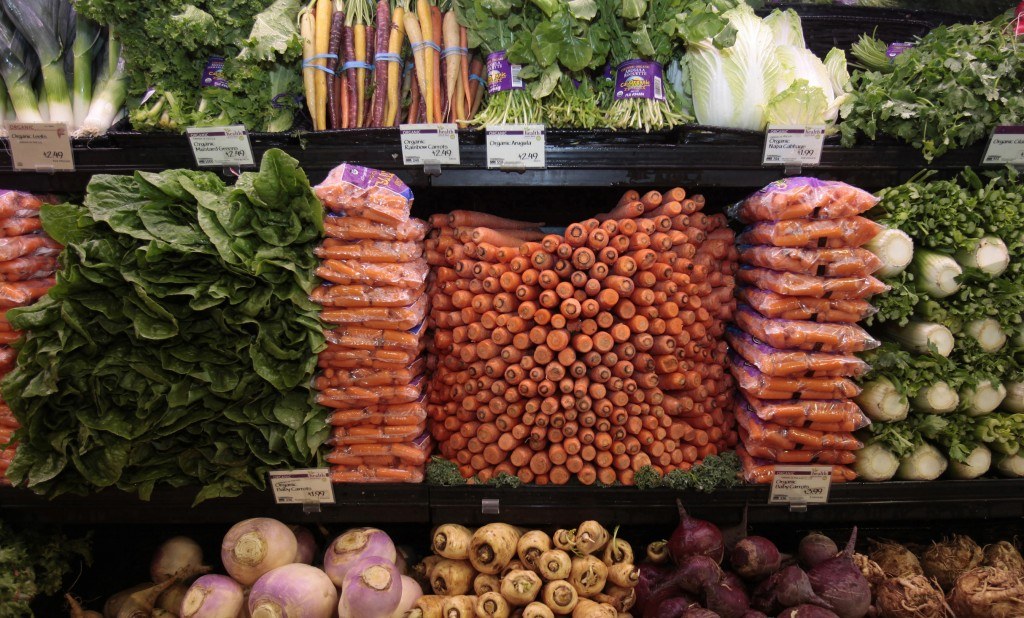
In a large Maine forest with many animals and lots of space, there are only a small number of bears. Which of these most likely limits the population of bears in the forest?
Supply of food
Space
Cloud cover in the atmosphere
Types of trees in the area


Which of the following correctly lists the flow of matter in the food web above?
plants, animals, nematodes, arthropods
animals, nematodes, arthropods, plants
plants, nematodes, arthropods, animals
nematodes, plants, arthropods, animals
Tell if the item is an abiotic factor or biotic.....
TREE
Abiotic
Biotic
Tell if the item is an abiotic factor or biotic.....
Water
Abiotic
Biotic
In the mid 1900's, the wolves of Yellowstone were deeply affected by humans and their population significantly decreased-- making them endangered, and eventually removing them completely from the Yellowstone ecosystem. The removal of wolves, the top predator, caused what to happen to the biodiversity within Yellowstone?
A trophic cascade affected the entire food web in Yellowstone, causing some organisms to experience decreases, and others to grow rapidly.
Biodiversity increased when the wolves disappeared and more species were able to flourish without the wolves.
A trophic cascade irreversibly ruined the ecosystem in Yellowstone--destroying biodiversity forever.
The biodiversity of the park was not affected when the wolves were removed.
Young dolphins watching adults stir up food along the ocean floor and mimicking the behavior.
Learned
Innate
Gazelle running away from a cheetah.
Learned
Innate
Which behavior is genetically based and NOT linked to past experiences?
innate behavior
habituation
operant conditioning
classical conditioning
A _________ is defined as a way an animal responds to a stimulus.
response
instinct
attitude
behavior
The primary source of energy for life on Earth is __
ATP Energy
Kinetic Energy
Oxygen
Sunlight
First stage of cellular respiration in which glucose is broken down into two molecules of pyruvate.
Glycolysis
Anaerobic Process
Aerobic Respiration
Aerobic Process
Oxygen is used to break down glucose molecules and releases energy in a process called
photosynthesis
cellular respiration
cytokinesis
fermentation
C6H12O6 + 6O2 --> 6CO2 + 6H2O + ATP
is the equation for which of the following processes?
6CO2 + 6H2O + Sunlight --> C6H12O6 + 6O2
is the equation for which of the following processes?
How are photosynthesis and cellular respiration related?
the products of one are the reactants for the other
they both have the same reactants
they both have the same products
They are not related to one another in any way.
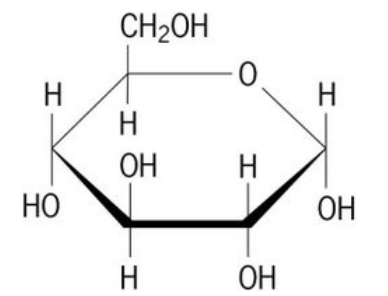
What type of biomolecule is glucose?
carbohydrate
lipid
protein
nucleic acid

What two products does a plant make during photosynthesis?
Cellular respiration is...
the process by which cells break down glucose into energy.
the process by which cells break light down into energy.
the process by which cells communicate with other cells.
Which organelle does aerobic cellular respiration happen in?
Nucleus
Mitochondria
Chlorophyll
Chloroplast
Which of the below is a consequence of lactic acid production?
Increased flexibility of muscles
Increased strength
Increased muscular pain & fatigue
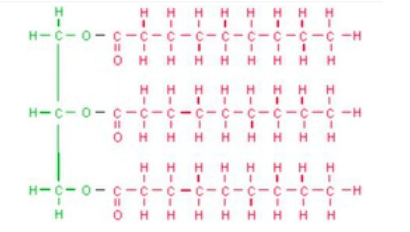
Lipids have which of the following monomer:
Glycerol & fatty acids
amino acids
monosaccharide
nucleotide
Which biomolecule has amino acids as their monomer?
Carbohydrate
Nucleic acid
lipid
protein
Select the biomolecules that contain the elements C,H,O
Lipid
Protein
Carbohydrate
Nucleic acid
C,H,O,N,P are the elements in
Nucleic acid
Protein
Carbohydrate
Lipid
Which biomolecules contain the element Nitrogen?
Carb
Protein
Lipid
Nucleic acids
Which biomolecule is a source of quick energy for cells?
carbohydrates
lipids
proteins
nucleic acids
Which biomolecule is involved in long term energy storage?
carbohydrates
lipids
proteins
nucleic acids
Which type of biomolecule makes up cell membranes?
carbohydrates
lipids
proteins
nucleic acids
DNA and RNA belong to this biomolecule group.
carbohydrates
lipids
proteins
nucleic acids

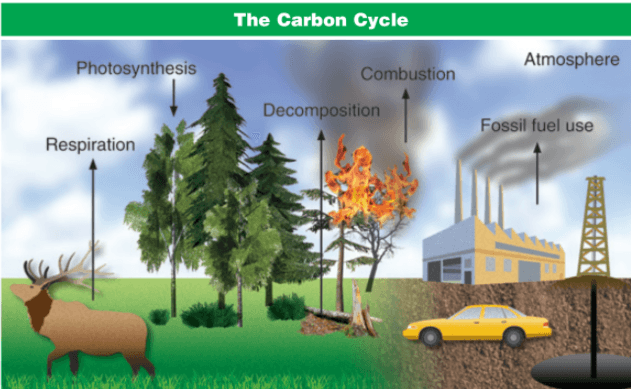
Which process(es) release carbon dioxide into the atmosphere?
respiration
combustion
photosynthesis
feeding
If a forest fire occurs, what will happen to the carbon in the forest?
It will go into the soil
It will go into the atmosphere
It will runoff into nearby streams and rivers
It will be destroyed
What are the two main reservoirs for carbon dioxide?
Ocean, fossil fuels
Ocean, atmosphere
Atmosphere, fossil fuels
Calcium Carbonate, ocean
Humans burn fossil fuels and wood, releasing carbon dioxide into the atmosphere. This carbon dioxide is then absorbed by trees for photosynthesis. These processes are contributory to which chemical cycle?
The carbon cycle
The water cycle
The nitrogen cycle
The phosphorous cycle

As living systems use energy, they also transform matter. All of these matter transformations are the result of living systems
recombining elements in different ways to form new products
changing inorganic elements into new elements that are useful.
removing the electric charge on large molecules to gain energy.
using energy to break the bonds of organic compounds
The early atmosphere of Earth had no oxygen, while the modern atmosphere contains significant amounts of this gas. What is the primary reason for this change?
Outgassing associated with volcanic activity
The erosion of carbonate rocks by water
The evolution of plants and other organisms
The process of hydrolysis in the oceans
Which of the following provides the best evidence that living things use and recombine carbon, hydrogen, and oxygen to form molecules for new cells?
The elements carbon, hydrogen, and oxygen are among the most common elements in the universe, but are not the most common elements on Earth.
The cells of living things contain molecules made of the elements carbon, hydrogen, and oxygen, the same elements found in the glucose consumed by living things.
The elements carbon, hydrogen, and oxygen are able to bond with each other to form complex molecules that are chains of repeating structures.
The relative amounts of carbon, hydrogen, and oxygen found in the earth's atmosphere have changed over the history of the planet during which living things evolved.
Reactants
The ending materials in a reaction
The ability of a system to do work or produce heat
The process by which autotrophs use sunlight, carbon dioxide, and water to make glucose
The starting materials in a reaction
Consumers
Organisms that break down the remains of dead plants and animals
Organisms that must consume other organisms for nutrients
Organisms that are capable of performing photosynthesis
Material derived from living things
Which of the following statements is true?
Heterotrophs produce their own food.
Autotrophs take in nutrients from outside themselves.
Consumers are heterotrophs.
Consumers are autotrophs.
As energy is transferred between trophic levels, only a small fraction of the available energy is transferred. How can this observation be explained, taking into account the law of conservation of energy?
Organic systems do not demonstrate the conservation of energy.
Organisms, even after death, continue to store energy in organic molecules.
Since biomass increases at higher levels, the concentration of energy is the same.
The unused energy is lost as heat through metabolic processes.
Limiting factors
The living components of an ecosystem
When two or more organisms compete for the same resources within an ecological community
The nonliving components of an ecosystem
The environmental conditions that limit population growth in an ecosystem
What is a claim?
Answers a question or problem
long and detailed paragraph
Explains why something happened
What is reasoning?
Answers a question
Explaining how evidence supports a claim
Used to prove something true or false
What is an example of evidence?
Football players are 33% more likely to get injured than baseball players.
Football is more dangerous than baseball.
Baseball is a fun sport.
What makes evidence good evidence?
It must be specific and supports the claim
It has to include data or numbers
It must be a quote from an article
It has to be a sentence in length
Which sentence is the claim?
Which evidence could best prove this claim: Student should eat school lunch each day.
School lunch average calories = 550
Home lunch average = 850.
I heard that In one school students refused to eat school lunch for 3 weeks.
Students do not like the taste of some school lunches.
School lunches cost families money.

You do an experiment about how healthy a food is. Which piece of evidence would NOT work?
color of the food
calories in the food
sodium (salt) in the food
fat in the food

