
 Worksheets
Benchmark Review 7th
Total questions: 125
Worksheet time: 1hrs 23mins
_____________ refers to all the different kinds of living organisms within a given area.
Biodiversity
Biology
Biome
Ecology
An organism that gains its energy from consuming producers and consumers is a(n) _________.
Producer
Consumer
Decomposer
Omnivore
Herbivores only gain their energy by consuming animals.
True
False

What is this diagram know as?
Food Web
Energy Pyramid
Biomass Chart
Biome
An organism that gains its energy from consuming producers is what level consumer?
Producer
Primary Consumer
Secondary Consumer
Tertiary Consumer

What level consumer is the hawk?
Primary
Secondary
Tertiary
Quaternary
Why is the sun so important to life?
It allows animals to see and play.
It provides the original source of energy it most ecosystems.
It gives off heat that causes things to energize.
Life doesn't need the sun.
As a rule, about _____% of energy makes it to the next trophic level in any given energy pyramid.
10
20
40
80

Which organism has the most energy stored in their cells?
Grass and Wildflowers
Mouse
Snake
Hawk

In the food web pictured, which organism is sometimes a secondary consumer and sometimes a tertiary consumer?
Mouse
Rabbitt
Snake
Hawk
Algae --> Shrimp --> Snapper --> Shark. There are 25 calories available to the shrimp. How many of those calories will make it to the sharks?
250
25
2.5
0.25

Which organisms should have the largest populations?
sharks
mackerel
herring
small crustaceans
plankton
What are the products of photosynthesis?
Oxygen and Hydrogen
Oxygen and ATP
Oxygen and Glucose
Oxygen and Carbon Dioxide
What are the products of Cellular Respiration?
Oxygen and Glucose
Oxygen, Water, ATP (energy)
Carbon Dioxide, Water
Carbon Dioxide, Water, ATP (energy)

What would happen if the gazelle population did not rebound (go back up)?
The lion population would stay high.
The lion population would not rebound (go back up).
The lion population would be out of control.
The lion population would not be affected.
Which of the following is an abiotic factor in the environment? Choose all that apply.
Sun
Water
Plants
Weather
A park is home to a large number of robins, squirrels, and rabbits. The robins and squirrels live in the park’s trees. The robins feed on earthworms and insects that live on the ground. The squirrels eat the acorns produced by the park’s oak trees. The rabbits hide in the bushes and feed on the grass. Which factor would directly limit the number of robins and squirrels that could live in this park?
number of acorns
number of robins
number of squirrels
number of trees

What organelle contains your genes?
DNA
Genomes
Proteins
Alleles

The process of which plants intake energy from the sun and convert it to glucose (sugar)
Solar conversion
Energy intake
Photosynthesis
I don't know

What is the main control center of cells?
Nucleolus
Nucleus
Golgi Body
Lysosomes

This picture shows a desert environment, which is home to many lizards, small mammals, and cacti and other plants with short roots. This environment allows some plants and animals to live there because the soil in the desert is
dry and hard, allowing small animals to lay on the hard soil to get sunlight while allowing plants with short roots to sit on top of the soil and hold onto water.
dry and sandy, allowing small animals to burrow and hide from the Sun while allowing plants with short roots to reach and hold onto water.
wet and hard, allowing small animals to rest and stay cool on the wet soil while allowing plants with short root systems to push through the hard soil to soak up water.
cold and wet, allowing small animals to remain cool when it rains while allowing plants with short root systems to easily push through sandy soil to soak up water

The picture below shows a scoop of soil that a student dug up from her school yard. How does the soil environment support the earthworm in the student's hands?
It is moist and cool with decaying debris
It gets a lot of sunlight so the earthworm can see
It has excessive oxygen for the earthworm to breath
It has clay for the earthworm to form holding tunnels
Tropical rain forests have the greatest biodiversity of any type of land ecosystem. How does biodiversity contribute to the sustainability of an ecosystem?
All of the above
The presence of a variety of herbivore species that can feed on a large number of different producer species helps ensure abundant prey for predators in the ecosystem.
Greater genetic variation within species makes it more likely that some individuals will survive a disease outbreak.
The presence of more species with different adaptations makes it more likely that some organisms will survive an ecological disaster.
An ecosystem's sustainability is most dependent on?
warm temperatures.
the amount of water there.
having a large number of a single plant species.
the number and variety of organisms that live there.

Which ecosystem would most likely survive if the grasses were destroyed by a plant virus?
Ecosystem 2, because there are not many predators.
Ecosystem 2, because the grasses could grow back quickly.
Ecosystem 1, because there is a variety of producers that support the ecosystem
Ecosystem 1, because there are fewer primary consumers.
Both primary and secondary succession begin with pioneer species that
use up all the existing resources and prevent establishment of non-native organisms
modify the area and allow larger and more complex organisms to appear
change the area and make it safer from predatory organisms
invade the area so that new organisms cannot be established
Frederick is studying how ecological succession will change a freshly-plowed piece of land. Which data table represents what Frederick is most likely to record about the plant life in each stage of ecological succession?


After pioneer plants begin their role in the process of ecological succession, what are the least likely organisms to follow? Select three correct answers.
Trees
Moss
Shrubs
Weeds
An organelle is a part of a (a)
______ are ONLY in plant cells.
Chloroplasts
Nucleus
Chloroplasts are only found in plant cells. Their function, or job, is to capture and absorb ______________. This is where photosynthesis happens.
water
food
sunlight
Photosynthesis is when plants turn (a) into sugars, or food.
What is the function of the xylem?
to carry food
to carry water
to capture sunlight
Where in the plant does gas exchange take place? (where Carbon Dioxide goes in and Oxygen comes out)
xylem
phloem
stomata
(a) goes in the stomata and oxygen goes out.
Is burning a chemical reaction?
Yes
No

Which is the structure that we can't find in animal cells?
Mitochondria
Nucleus
Cell membrane
Cell wall

The organelle in charge of transforming the energy of the sunlight into chemical energy (glucose)?
Mitochondria
Golgi bodies
Chloroplast
Nucleus
What is the main control center of cells?
Nucleolus
Nucleus
Golgi Body
Lysosomes
An animal’s liver is very important. It cleans the blood while also playing a key role in digestion. To which level of biological organization does the liver belong?
Organ
Cell
Tissue
Organ system
Which of the following represents the correct order for the levels of organization of plants and animals?
cell → organ → tissue → organism → organ system
cell → organ system → organ → tissue → organism
cell → tissue → organism → tissue → organ system
cell → tissue → organ → organ system → organism
Which cellular structure regulates the movement of substances in and out of plant and animal cells?
Cytoplasm
Cell wall
Cell membrane
Nucleus

The graphic above shows an unlabeled animal cell. Which organelle is also found in plant cells and stores cell's genetic material?
1
2
3
4
The cell organelle responsible for providing energy for cell processes in plant and animal cells is the —
ribosome
chloroplast
mitochondria
nucleus

Based on the functions in the table, which system is the skeletal system?
System W
System X
System Y
System Z


Give an example of a physical change.
Melting ice
Mixing salt and water
Burning wood
Boiling water
What is a chemical change?
A chemical change is a process that results in the formation of new substances with opposite properties from the original substances.
A chemical change is a process that results in the formation of new substances with no properties.
A chemical change is a process that results in the formation of new substances with different properties from the original substances.
A chemical change is a process that results in the formation of new substances with the same properties as the original substances.
Provide an example of a chemical change.
Cutting a piece of paper
Mixing of salt and water
Burning of wood
Melting of ice
Define physical change.
A physical change is a change in which the substance's physical properties remain the same.
A physical change is a change in which the substance's chemical composition is altered.
A physical change is a change in which the substance's physical properties are altered, and its chemical composition remains the same.
A physical change is a change in which the substance's physical properties, such as shape, size, or state of matter, are altered, but its chemical composition remains the same.
The basic unit of life is
an atom
an element
an organelle
a cell
An organism that creates its own food is
a plant
an animal
an autotroph
a heterotroph
The cytoplasm in a cell is most like
bones
the heart
lungs
blood
If a cell has a cell wall, it is more than likely a
prokaryote
eukaryote
plant cell
animal cell
How can you tell that wood ashes are a different substance than wood? (Select all that apply).
Different colors
Because it was burnt
Because it has got smaller
It has turned to dust

What is the abiotic factor in the picture?
deer
water
fish
plants

This picture shows what type of biome?
rain forest
tundra
desert
deciduous forest

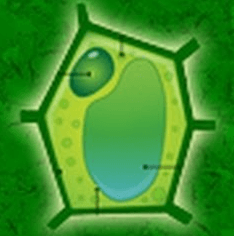
This is a plant cell because it has a --
chloroplast
vacuole
nucleus
cytoplasm

Look at the food chain. What is the producer?
cat
flower
bird
butterfly
A species is a group of _________ that all share the same characteristics.
organisms
offspring
variation
animals

These fox's adaptations help them to live in the hot desert and hunt at night are...
Thick fur
Eyes can see in the dark
Fins
Large ears
Weak legs

Who was the Scientist most famous for his study of natural selection and evolution?
Theodor Schwann
Robert Hooke
Charles Darwin
Rudolf Virchow

What is the process in which populations CHANGE gradually over time?
evolution
species
variation
competition
The start of the food chain
Soil
Producer
Consumers
wait wha-
Example of biotic components are:
Virus (s)
Producer (s)
Consumer (s)
Sunlight (s)

Which ones are abiotic factors?
rainfall
wind speed
birds using leaves for nesting materials
animals eating leaves
Community consist of...
organisms
ecosystem
habitat
Antartica
If we arrange the number of organisms according to each ___ in the food chain, then we have a pyramid of numbers
population
trophic level
habitat
tropical

Biome with many different species of cacti and reptiles and very little rainfall.
Desert
Temperate Rainforest
Tropical Rainforest
Arctic Tundra

Which biome contains large populations of grazing herbivores, few species of birds, and deep, rich soil?
tropical rain forest
desert
deciduous forest
grassland

Which biome is represented by the rainfall amounts in letter C?
desert
prairie
deciduous forest
tropical rain forest

Animals that live in the desert have adapted to live with little water since the desert gets little rainfall.


What biome is this
tundra
deciduous forest
desert
grassland

What biome is this?
Tundra
Grassland
Rain Forest
Desert

What biome is this?
Taiga
Desert
Tundra
grassland

What biome is this?
rain forest
deciduous forest
Taiga
tundra

What biome is this?
deciduous forest
taiga
desert
grassland
TRUE or FALSE?
Each biome also has a characteristic set of organisms that are adapted to living there.
true
false
Identify an a example of an abiotic factor
Hair
Dead squirrel
Grass
Sunlight
Which two biomes have the least inches of precipitation (snow and rainfall)?
temperate grassland and desert
savanna and desert
tundra and desert
taiga and desert

Which biome?
Taiga
Savanna
Temperate Deciduous Forest (Temperate Forest)
Tundra
Tropical Rainforest


After a volcanic eruption, lava covers the land. What is the order that plants grow to repopulate the area?
Lichens → Shrubs → Grasses → Trees
Lichens → tree → shrubs→Grasses
Grasses → Lichens → Shrubs → Trees
Lichens → Grasses → Shrubs → Trees
what is an example of a physical change?
brownies
Cutting paper
cupcakes
cookies
Is making cupcakes considered a chemical change or a physical change?
Physical
Chemical



