wayground logo

Free Printable Worksheets

Font size

S
M
L
XL
Worksheets

6th ADV Q2 QSE

Total questions: 120

Worksheet time: 4hrs 23mins

Name
Class
Date
1.

How many parents does it take to do asexual reproduction?

a)

none

b)

2

c)

1

d)

3

2.

How many parents does it take for sexual reproduction?

a)

1

b)

2

c)

3

d)

Depends on the organism

3.
Where, in the eukaryotic cell, is DNA located?
a)
ribosomes
b)
nucleus
c)
E.R.
d)
cytoplasm
4.

What are traits passed on from parents to children?

a)

inherited traits

b)

acquired traits

c)

no traits

d)

invisible traits

5.

What type of reproduction results in offspring looking identical to the parent(s)?

a)

sexual reproduction

b)

asexual reproduction

c)

heredity

d)

genotype

e)

phenotype

6.

What type of reproduction results in offspring looking different to the parent(s).

a)

sexual reproduction

b)

asexual reproduction

c)

heredity

d)

genotype

e)

phenotype

7.

What are examples of inherited traits?

a)

eye color

b)

tattoos

c)

knowlege

d)

ideas

8.
Emily has brown hair. Which is most likely a true statement about Emily?
a)
Emily’s favorite color is brown.
b)
Emily has a parent with brown hair.
c)
Emily’s older brother has brown hair. 
9.
Which characteristic would a child not inherit from one or both of its parents?
a)
freckles
b)
hair style
c)
eye color
d)
dimples
10.
Which trait does a puppy inherit from its parents?
a)
fur color and pattern
b)
obedience to commands
c)
food brand preferences
d)
affection for a specific home
11.

What are the products of photosynthesis?

a)

water and carbon dioxide

b)

oxygen and glucose

c)

oxygen and carbon dioxide

d)

oxygen and water

12.

Plants need ________ for photosynthesis

a)

oxygen

b)

soil

c)

carbon dioxide

d)

sugar

13.
What is photosynthesis?
a)
The process in which humans eat their food
b)
When a photographer takes a photo.
c)
To get your pictures from the photo lab.
d)
The process in which plants make their food.
14.

What process is the diagram representing?

a)

Photosynthesis

b)

Soil development

c)

Plant reproduction

d)

Nitrogen Cycle

Nitrogen cycle

15.
Heredity is the passing of traits from _____________________ to _____________________
a)
predators to prey
b)
water to rain
c)
parents to offspring
d)
fungi to protists
16.
___________________________ is the study of how traits are passed on, or inherited.
a)
dominant traits
b)
ratio
c)
phenotype
d)
genetics
17.
Offspring receives two sets of _____________ (one from each parent)
a)
blue jeans
b)
genes
c)
machines
d)
pedigree
18.
An asexually reproducing organism usually has
a)
one parent and identical offpsring
b)
two parents and identical offspring
c)
one parent and varied offpsring
d)
two parents and varied offspring
19.

What type of reproduction needs and egg and sperm cell?

a)

asexual reproduction

b)

sexual reproduction

c)

budding

d)

binary fission

20.
When a starfish grows a new body off a broken arm, what kind of reproduction is this?
a)
Sexual
b)
Differentiation
c)
Asexual 
d)
Specialization
21.
Where does an off spring get its traits in asexual reproduction?
a)
From both parents
b)
From only one parent
c)
From neither parent
d)
There are no traits handed down
22.

All of the offspring of an organism have the same genetic material, which is identical to the parent organism. From this, we can conclude that this organism -

a)

makes its own food

b)

is unicellular

c)

live in a marine habitat

d)

reproduces asexually

23.
When comparing the offspring of sexually and asexually reproducing organisms, we would expect the genetic material (DNA) of the sexually reproducing organism to -
a)
contain fewer mutations
b)
be lesser in quantity
c)
be simpler overall
d)
show more variation
24.
In the energy pyramid here, which organisms have the most energy available?
a)
Producers
b)
Carnivores
c)
Herbivores
d)
Top Predator
25.

A cat has 8 kittens, 5 females and 3 males. Which statement best describes the characteristics of these kittens?

a)

All of the kittens will look exactly like their mother.

b)

All of the kittens will look exactly like their father.

c)

The male and female kittens will look like both the mother and the father.

d)

The male kittens will look like the father, and the female kittens will look like the mother.

26.
Heterozygous is when...
a)
the alleles are the same
b)
the alleles are different
c)
the alleles are absent
d)
the alleles are present
27.
G = green, g = yellow
The genotype for a yellow plant is...
a)
GG
b)
Gg
c)
gg
d)
all of the choices result in yellow
28.
Aa, DD, bB, yy are all examples of
a)
genotypes
b)
phenotypes
29.
Which of the following genotypes is homozygous dominant?
a)
A
b)
Aa
c)
AA
d)
aa
30.
Which of the following genotypes is heterozygous?
a)
Bb
b)
BB
c)
bb
d)
B
31.
What you see, or the physical appearance.
a)
Genotype
b)
Phenotype
c)
Homozygous
d)
Heterozygous
32.
How many alleles (letters) do each person carry for a trait?
a)
1
b)
2
c)
3
d)
4
33.
How many alleles (letters) does a child get from each parent for each trait?
a)
1
b)
2
c)
3
d)
4
34.
One form of a gene is called_______________
a)
a DNA
b)
a Phenotype
c)
a trait
d)
an allele
35.

The genetic material is found

a)

in the nucleus on ribosomes.

b)

in the nucleus on chromosomes.

c)

in the cytoplasm.

d)

in the cytoplasm on the nucleus.

36.

The building blocks of life; also referred to the smallest functioning unit of living organisms.

a)

Atom

b)

Organic compound

c)

Cell

d)

Carbohydrates

37.

This organelle is found in eukaryotic cells. It contains the DNA and controls the functions.

a)

Vacuole

b)

Cytoplasm

c)

Cell membrane

d)

Nucleus

38.

Often called the powerhouse of the cell because it converts energy for cell use.

a)

Mitochondria

b)

Ribosomes

c)

Chloroplast

d)

nucleus

39.

This part is the jelly-like fluid that surrounds or cushions the organelles.

a)

Cytoplasm

b)

Cell membrane

c)

Ribosomes

d)

Cell wall

40.
Each cell has a specific job. Whatever job a cell does is called its ______________.
a)
Structure
b)
Function
c)
Career
d)
Jobanelle
41.

This organelle regulates what goes in and out of the cell.

a)

Vacuole

b)

Mitochondria

c)

Cell membrane

d)

Cell wall

42.

This plant cell organelle contains the chlorophyll and is the site of photosynthesis (makes the food).

a)

Cell wall

b)

Large central vacuole

c)

Mitochondria

d)

Chloroplast

43.

All plant and some animal cells have this organelle to store water (and sometimes food), but plants have a large, central ________.

a)

Ribosomes

b)

Vacuole

c)

Mitochondria

d)

Nucleus

44.

This part gives plant cells a rigid structure.

a)

Cell wall

b)

Organelle

c)

Chloroplast

d)

cell membrane

45.

How a cell looks and what it is made of is called its _________________.
a)
Structure
b)
Function
c)
Organelle
d)
Religion
46.

The packaging center for proteins that can be compared to FedEX or UPS. It is found in both the plant and animal cells.

a)

Golgi complex (apparatus, bodies)

b)

Endoplasmic reticulum

c)

Cell Theory

d)

Organic compounds

47.

This organelle is found in animal cells. It digests for the cell and will take care of viruses or bacteria that have entered into the cell.

a)

nucleus

b)

lysosome

c)

chloroplast

d)

cell wall

48.

These organelles are free-floating or attached to the rough ER. They are made of proteins. What organelle is this?

a)

cell membrane

b)

ribosomes

c)

cytoplasm

d)

vacuole

49.

DNA is the genetic code of the cell and is found in which organelle for eukaryotic cells?

a)

mitochondria

b)

chloroplast

c)

cytoplasm

d)

nucleus

50.

The _______ _______ modifies proteins and transports them to other cell parts. It has both a smooth and a rough structure within the cell. Sometimes it's called the Emergency Road!

a)

Cell membrane

b)

Endoplasmic reticulum

c)

Golgi complex (apparatus, bodies)

d)

cytoplasm

51.
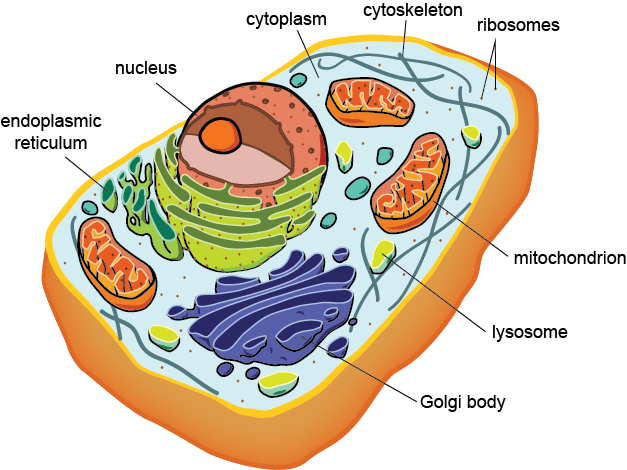
What type of cell is shown below?
a)
Prokaryotic
b)
Eukaryotic
c)
Awesomekaryotic
d)
Lamekaryotic
52.

What type of cells have a cell wall and chloroplasts?

a)

Plant cells

b)

Animal cells

c)

Plant and animal cells

d)

Neither plant NOR animal cells

53.

There are two parts that a plant cell has that animal cells don't.

a)

Cell Membrane & Cell Wall

b)

Cell Wall & Chloroplasts

c)

Chloroplasts & Cell Membrane

d)

Chloroplasts & Nucleus

54.

A cell membrane would allow all of the following in EXCEPT-

a)

Oxygen

b)

Water

c)

Food

d)

proteins

55.

The tiniest structure in a plant or animal cell that carries out a specific function is a(n)-

a)

cell

b)

organelle

c)

nucleus

d)

prokaryote

56.
Which statement is a part of the cell theory?
a)
all cells come from preexisting cells
b)
bacteria are prokaryotic cells
c)
eukaryotic cells are complex
d)
humans are multicellular
57.
The Cell Theory states...
a)
atoms create all matter
b)
living things evolve
c)
the cell is the backbone of all matter
d)
cells are the basic unit of structure and organization of organisms
58.
"All animals are made of cells". This fact was discovered by...
a)
Matthias Schleiden
b)
Theodor Schwann
c)
Robert Hooke
d)
Rudolf Virchow
59.
Robert Hooke, Anton van Leeuwenhoek, Theodor Schwann, Rudolf Virchow, and Matthias Schliden were all responsible for what theory?
a)
The Theory of Gravity
b)
The Theory of Relativity
c)
The Cell Theory
d)
The Theory of Continental Drift
60.
Which of the following is NOT a cell theory.
a)
All non-living things are made of cells
b)
All cells come from pre-existing cells
c)
Cells are the basic unit of structure and function of all living things
61.
Rocks are not living because
a)
they never move
b)
they aren't needed for humans
c)
they are not made of cells
d)
they don't break down
62.
Which of the following scientists concluded that all animals are made of cells?
a)
Rudolf Virchow
b)
Matthais Schleiden
c)
Robert Hooke
d)
Theodor Schwann
63.

The 3 parts of the Cell Theory are...?

a)

All living things are composed of cells

Cells are the basic units of structure and function in living things

All cells are produced from other cells

b)

All living things are composed of cells

Cells are the basic units of dance and vibes in living things

All cells are destroyed from other aliens

c)

All living things are composed of Jell-O

Cells are the basic units of structure and function in living things

All cells are produced from factories in Canada

d)

All living things are composed of cells

Cells do karate and practice eating whole pies in their free time

All cells are produced from other cells

64.

Cellular Respiration occurs within me and I am in BOTH plant and animal cells. I am a....

a)

Nucleus

b)

Golgi Body

c)

Cytoskeleton

d)

Mitochondria

65.

I like to be thought of as the "storage bubble" for both plant and animal cells. I am a...

a)

Cell Membrane

b)

Cytoskeleton

c)

Vacuole

d)

Endoplasmic Reticulum

66.

I am the "brain" of the cell or the "control center" for everything happening within the cell. I am a...

a)

Golgi Body/Apparatus

b)

Nucleus

c)

Ribosome

d)

Lysosome

67.

Photosynthesis takes place within me. I am a...

a)

Mitochondria

b)

Cell Wall

c)

Chlorine

d)

Chloroplast

68.

I decide what goes in and out of the cell. I am fluid like and found in BOTH plant and animal cells. I am a...

a)

Cell Wall

b)

Cell Membrane

c)

Cytoplasm

d)

Golgi Apparatus

69.

I am found in a plant cell and I provide a "central" and LARGE amount of storage. I am a...

a)

Central Vacuole

b)

Cytoplasm

c)

Central Membrane

d)

Mitochondria

70.
Which of the following statements is not part of the cell theory?
a)
Cells are the basic unit of structure and function in all living things.
b)
All cells are produced from other cells.
c)
Only animal cells are composed of cells.
d)
All living things are composed of cells.
71.
This organelle is a gel-like fluid that takes up most of the space inside the cell. 
a)
Cytoplasm
b)
Cell Membrane
c)
Vacuole
d)
Golgi Body
72.
Where is the genetic material found in the cell? 
a)
Nucleolus
b)
Cytoplasm
c)
Nucleus
d)
Chloroplast
73.
In many cells, this is the structure that controls the cell's activities.
a)
Cell membrane
b)
Organelle
c)
Nucleolus
d)
Nucleus
74.
Which two organelles are not present in animal cells? Choose the best answer. 
a)
Vacuole and Nucleus
b)
Cell wall and Cell Membrane
c)
Cytoplasm and Mitochondria 
d)
Cell Wall and Chloroplast
75.
Both plant AND animal cells have .....
a)
cell membrane, cell wall, nucleus
b)
cell membrane, cytoplasm, nucelus
c)
cell membrane, chloroplast and nucleus 
d)
cell wall, vacuole, nucleus 
76.
The outer layer of the plant cell is called the ....
a)
cell membrane 
b)
nucleus
c)
cell wall 
d)
the skin 
77.
The ______ cell is a rectangular shape. 
a)
animal
b)
plant
78.

Which organelle is much larger in plant cells than animal cells and is used to store food and waste?

a)

Nucleus

b)

Vacuole

c)

Ribosomes

d)

Chloroplasts

79.

What are organelles?

a)

Parts that come together to make an organ system.

b)

A group of similar cells that perform similar functions.

c)

A group of organs that perform similar functions

d)

Tiny structures within a cell that allow the cell to live, grow, and reproduce.

80.

What is the function of a chloroplast?

a)

Control center of the cell

b)

Makes food (sugar) from sunlight

c)

Protects the cell

d)

Makes ribosomes

81.

The hereditary material in a cells is...

a)

Cytoplasm

b)

ATP

c)

DNA

d)

ER

82.

A plant's green color is due to the presence of which organelle?

a)

Nucleus

b)

Chloroplast

c)

Vacuole

d)

Mitochondrion

83.
Directs all cell activities and the DNA is located there. "The brain"
a)
Lysosomes
b)
Nucleus
c)
Cell Wall
d)
Cytoplasm
84.
Which describes structure 3? 
a)
It serves as the site for protein synthesis. 
b)
It contains genetic information. 
c)
It transforms the sun's energy. 
d)
It stores water and nutrients. 
85.
Which number represents the chloroplasts? 
a)
7
b)
2
c)
8
d)
5
86.
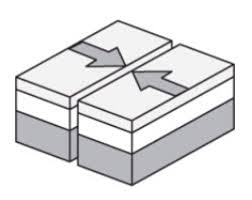
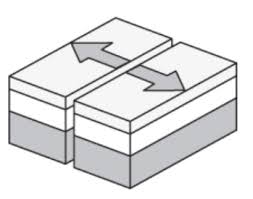
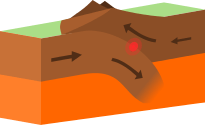
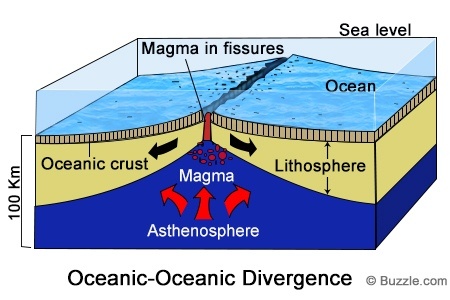
Name the boundary
a)
convergent boundary
b)
divergent boundary
c)
transform boundary
d)
sergent boundary
87.
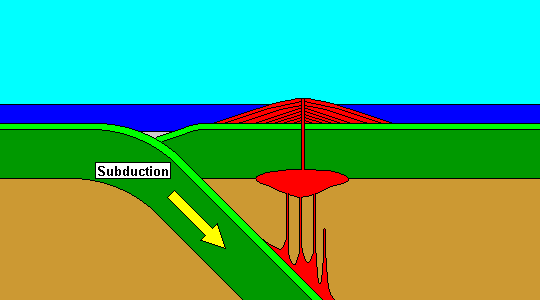
Name the boundary
a)
convergent boundary
b)
divergent boundary
c)
transform boundary
d)
sergent boundary
88.
Name the boundary
a)
convergent boundary
b)
divergent boundary
c)
transform boundary
d)
sergent boundary
89.
A subduction zone is formed...
a)
when one tectonic plate sinks below another
b)
at every type of convergent plate boundary
c)
at every type of divergent plate boundary
d)
at transform boundaries
90.
Plate movement is caused by ______________.
a)
the rotation of the Earth
b)
ocean tides
c)
convection currents in the mantle
d)
the moon's gravity
91.
What are mid-ocean ridges?
a)
A chain of underwater waterfalls 
b)
A chain of underwater volcanos
c)
A chain of underwater mountains
d)
A chain of underwater rocks
92.
What does the theory of continental drift state?
a)
The continents were once joined in a super-continent and have moved over time
b)
Continents are stationary and do not move
c)
The Earth is broken into lithospheric plates that move due to convection currents
d)
none of the above
93.
Who is the person credited with developing the theory of continental drift?
a)
Harry Hess
b)
Galileo
c)
Alfred Wegener
d)
Newton
94.
Which of the following occurs because of convection currents?
a)
Tectonic plates on the crust move.
b)
The mantle increases in size.
c)
Pressure in the crust increases.
d)
Pressure in the crust decreases.
95.
Where does the heat come from that drives this convection current in the mantle? 
a)
The sun
b)
The crust
c)
the mantle
d)
the core
96.
During sea floor spreading, molten material rises up from the mantle...
a)
along the continents
b)
at the mid ocean ridges
c)
deep ocean trenches
d)
at north and south poles
97.
Which of the following is where one plate slides under another plate?
a)
submarine zone
b)
divergence zone
c)
subduction zone
d)
lower zone
98.
Associated with transform boundaries.
a)
Volcanoes
b)
mountains
c)
trenches
d)
earthquakes
99.
This land formation occurs at a divergent continental/ continental boundary.
a)
mid ocean ridge
b)
deep ocean trench
c)
pacific hot spot
d)
rift valley
100.
Mountains form from ...
a)
plates sliding past one another
b)
collision of plates
c)
plates moving away from each other
101.
Earth's plates are...
a)
constantly moving and changing the face of the earth
b)
Never moves
c)
Moves seldom and very fast
d)
Moves when it feels like it
102.
The mantle of Earth is made partly of magma. When magma rises and sinks, this is called ______________. 
a)
a conduction current
b)
a hot spot
c)
a volcanic eruption
d)
a convection current
103.
Which of the following did not support continental drift?
a)
magnetic striping on the ocean floor
b)
identical fossils on continents
c)
mountain ranges
d)
coastlines fit like a puzzle
104.
What type of plate boundary is this?
a)
Plate
b)
Divergent
c)
Convergent
d)
Transform
105.
Which of the following is NOT evidence to support the theory of plate tectonics?
a)
Fossils
b)
Mountains
c)
Glaciers
d)
Sand Erosion
106.
Oceanic Trenches are formed by _______ plate boundaries
a)
Convergent
b)
Transform
c)
Plate
d)
Divergent
107.
Islands can from from magma which is pushed up at a __________ plate boundary
a)
Divergent
b)
Convergent
c)
Transform
108.
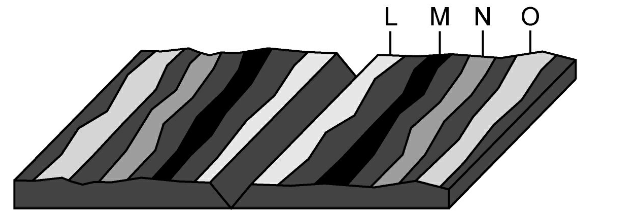
Where would the oldest rock be found?
a)
L
b)
M
c)
N
d)
O
109.
How is it possible for new crust to be formed without increasing the surface area of the Earth?
a)
Crust is destroyed at the same time it is created
b)
New crust is underwater where it sinks
c)
New crust breaks more easily than old crust
110.
What process is occurring at Z?
a)
Convection currents       
b)
 Subduction 
c)
Two plates moving apart
d)
New ocean floor forming
111.
Name the boundary
a)
Divergent
b)
Convergent
c)
Transform
112.
Name the boundary
a)
Divergent
b)
Convergent
c)
Transform
113.
Name the boundary
a)
Divergent
b)
Convergent
c)
Transform
114.
What would you be most likely to find at a convergent boundary between two pieces of oceanic crust?
a)
Mountains
b)
Rift
c)
Mid-Ocean Ridge
d)
Island Arc
115.
What would you be most likely to find at a divergent boundary between two pieces of oceanic crust?
a)
Rift
b)
Mid-Ocean Ridge
c)
Island Arc
d)
Flat land
116.
What would you be most likely to find at a convergent boundary between two pieces of continental crust?
a)
Volcanic Mountains
b)
Folded Mountain
c)
Rift
d)
Island Arc
117.
A subduction zone is formed...
a)
when one tectonic plate sinks below another
b)
at every type of convergent plate boundary
c)
at every type of divergent plate boundary
d)
at transform boundaries
118.
Where is the youngest rock found?
a)
Close to a mid ocean ridge
b)
near a subduction zone
c)
closer to the north pole
d)
closer to the south pole
119.
American Scientist who proposed the theory of Sea Floor Spreading
a)
Hess
b)
Hubble
c)
Richter
d)
Wegener
120.
How do we explain that Antarctica has fossils of tropical plants and animals on it?
a)
The plants were made for the cold
b)
Antarctica was closer to the equator at one time
c)
Wegener lied about this information