
 Worksheets
HBS Semester 1 Final Review 1.1-2.1.6
Total questions: 80
Worksheet time: 2hrs 0mins
Your lungs are ________ to your heart.
lateral
superior
The eyes and nose are on the _______ surface of the body.
posterior
anterior
inferior
Your mandible bone is also known as your
forehead
back of head
jaw
nose
Your scapula is your
chest bone
thigh
neck
shoulder blade
The ________ nervous system consists of the brain and spinal cord.
central
peripheral
The motor cortex is located in the _______ lobe.
parietal
temporal
frontal
occipital
When sodium rushes into a nerve cell and causes the inside to become more positive, that is called _____.
depolarization
repolarization
Which type of reflex is faster?
voluntary
involuntary
If you have a neurological disorder/disease, you MUST have an issue with the neurons in your brain.
True
False
Words that describe the location of one structure in relation to another. These terms are also used to indicate specific locations on organs or bones.
Body Planes
Body Cavities
Directional terms
Words that act like a coordinate system to describe a human in the anatomical position.
Body Cavities
Body planes
toward or at the front of the body
anterior
dorsal
deep
distal

Toward the head end of upper part of body
Medial
Inferior
Lateral
Superior
toward the midline of the body
distal
lateral
medial
inferior

Away from the midline
Medial
Lateral
Distal
Proximal

Toward a structure's origin or point of attachment to the trunk
Lateral
Proximal
Distal
Medial
The thigh is ____ to the shoulder.
distal
inferior
superior
posterior
A ____________ wound might require medical attention whereas a ________________ cut or scratch would just need basic bandages, a band aid, or a hug.
A: Superficial, Deep
Deep, Superficial


Which anatomical plane is the ONLY horizontal plane?
sagittal
transverse
frontal

This type of tissue relays messages
epithelial
connective
muscular
nervous

What type of tissue is this?
connective tissue
nervous tissue
epithelial tissue
muscle tissue

What type of tissue is this?
epithelial
muscle
nervous
connective

What type of tissue is this?
nervous tissue
muscle tissue
epithelial tissue
connective tissue


The only freely moveable bone in the skull is the ______.
frontal
maxilla
occipital
mandible
How many vertebrae are in the thoracic region?
12
20
10
7
How many vertebrae are in the neck?
2
4
7
12
Which is the correct order of ribs from superior to inferior?
floating, true, false
true, false, floating
true, floating, false
false, floating, true

Identify bone "F"
Temporal
Parietal
Sphenoid
Zygomatic


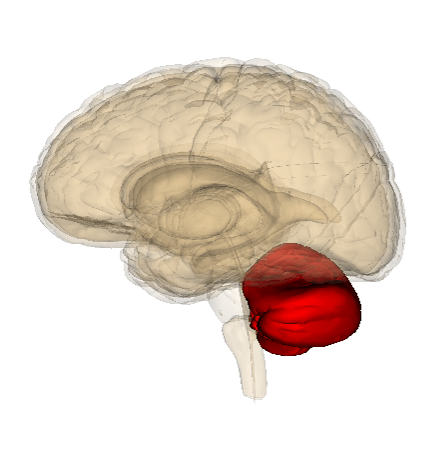
What is the red lobe?
pariteal
occipital
cerebellum
temporal

What is the blue lobe?
temporal
frontal
parietal
cerebellum
This area is in charge of balance and coordinating movements.
Thalamus
Reticular Formation
Hypothalamus
Cerebellum


What is this green part of the brain stem?
Pons
Medulla Oblongata
Cerebellum
Hypothalamus

This portion of the brain is responsible for language understanding.
Motor Cortex
Sensory Cortex
Broca's Area
Wernicke's Area

What is the importance of gyri and sulci of the brain?
Decreased surface area
Increase brain size
Decrease neuron connections
Increased surface area

Area of Phineas Gage's brain that was damaged
Frontal lobe
Parietal lobe
Temporal lobe
Occipital lobe

What functions are associated with the pons and medulla oblongata?
Hearing and body sensations
Breathing, heart rate, respiration
Vision and color processing
Memory and reasoning

Carries information from sensory receptors to CNS
Sensory neuron
Association neuron
Interneuron
Motor neuron

Which nerve cells are found in the central nervous system?
Sensory neurons
Association neurons
Interneurons
Motor neurons

Carries info from CNS to muscles
Sensory neurons
Interneurons
Association neurons
Motor neurons

An automatic response to a stimulus that often does not pass through the brain
Sense
Reaction
Reflex
Contraction

Part of the neurons which conducts impulses away from the cell body
Axon
Axon terminal
Dendrites
Synapse
Part of the neurons which conducts impulses away from the cell body
Axon
Axon terminal
Dendrites
Synapse

The place at which a nerve impulse passes from one neuron to another
Axon
Synapse
Schwann cell
Neurotransmitter

Insulating coat of cell membrane from Schwann cells
Nucleus
Neurotransmitter
Myelin sheath
Nodes of Ranvier

Disturbance in the electrical activity of the brain, resulting in seizures
Epilepsy
Huntington's
Multiple sclerosis
Parkinson's

Momentary reversal in electrical potential across a plasma membrane
Reflex response
Reaction
Impulse conduction
Action potential

Membrane protein responsible for restoring original concentration of ions in neurons
Na+ channel
Na+/K+ pump
K+ channel
Ca++ channel

What is the structure labeled 1?
Dendrite
Axon Terminal
Axon
Myelin Sheath
What is the structure labeled 3?
Dendrite
Axon Terminal
Axon
Myelin Sheath

Examine the image. If you see a bug, what type of neuron does the SEEING?
Sensory Neuron
Interneuron
Motor Neuron
Examine the image. If you see a bug and decide to step on it, what neuron does the DECIDING?
Sensory Neuron
Interneuron
Motor Neuron



