
 Worksheets
Macromolecules Review
Total questions: 78
Worksheet time: 50mins
Which of the following elements are found in all macromolecules? (Select all that apply).


Which macromolecule is used as our main source of quick energy?
Lipids/Fats
Nucleic Acids
Proteins
Carbohydrates
Nucleic acids make up which of the two molecules listed below?
FDA
RNA
DNA
FDR
This is one job proteins do not have in the body.
structure for tissues and organs
transport things through cell membranes
speed up chemical reactions
insulation
This macromolecule breaks down into sugars such as glucose.
Lipids/Fats
Nucleic Acids
Protein
Carbohydrates

amino acids

The building blocks or monomers of carbohydrates (sugars) are?
amino acids
fatty acids
monosaccharides
nucleotides
What are the building blocks or monomers for proteins?
monosaccharides
fatty acids
DNA
amino acids
The three main parts of a nucleotide are the sugar (made up of carbon, hydrogen, and oxygen), the phosphate group, and the _____________ base.
carbon
oxygen
nitrogen
hydrogen
What are the building blocks or monomers for nucleic acids?
monosaccharides
amino acids
nucleotides
fatty acids

Which of the following are almost always hydrophobic?
carbohydrates
lipids
proteins
nucleic acids
What kind of macromolecule is hemoglobin?
carbohydrate
lipid
protein
nucleic acid
Most enzymes are composed of .....
Lipids
Carbohydrates
Proteins
Nucleic Acids
How how carbohydrates and lipids similar?
both contain C, H, O, N, P and store energy
both contain C, H, O, N and give energy
both contain C, H, O, N, S and store energy
both contain C, H, O and give energy
What is the key role (function) of carbohydrates?
energy storage
immunity, muscles, structure for tissues, cell metabolism
instant energy for cells and body functions
genetic information (heredity)

Identify the macromolecule in the picture.
protein
nucleic acid
carbohydrate
lipids
Proteins are made up of...
CHO
CHON
CHONP
CHOP
Lipids are made up of...
CHO
CHON
CHONP
CHOP

Identify the macromolecule in the picture. Hint: Amino Group
proteins
carbohydrates
lipids
nucleic acid

Which is an example of a protein?
Glucose
Enzymes
DNA, RNA
Cell Membrane

Makes up hemoglobin, hair, muscles etc.
What does "bilayer" mean?
one layer
two layers
virus
antibiotic

Hydrophobic region of the cell membrane?
E
B
C
A

Hydrophilic portion of cell membrane?
D
C
B
A
A ______________ is composed of a phosphate and glycerol head and 2 fatty acid chain tails.
cholesterol
glycoprotein
phospholipid
glucose

The _________ of the phospholipids in a cell membrane face inward towards each other because they are ___________.
heads, hydrophobic
heads, hydrophilic
tails, hydrophobic
tails, hydrophilic
The _________ of the phospholipids in a cell membrane face outward because they are ___________.
heads, hydrophobic
heads, hydrophilic
tails, hydrophobic
tails, hydrophilic

This molecule is a
monosaccharide
disaccharide
lipid
starch
glycogen

What type of molecules are shown in this model?
starch
phospholipids
triglycerides
cellulose
glycogen
Short-term CARBOHYDRATE energy storage in animals
cellulose
starch
glycogen
triglyceride
disaccharide
Highly branched polysaccharide found in animals
cellulose
starch
glycogen
triglyceride
unsaturated fat

Which Major Class of Bio-molecule is this?
Carbohydrate
Lipid
Protein
Nucleic Acid

Which Major Class of Bio-molecule is this?
Carbohydrate
Lipid
Protein
Nucleic Acid
Macromolecules are built from ____ which link together to form ____.
polymers, monomers
monomers, polymers
monomers, macromolecules
polymers, compounds
The four main types of macromolecules are:
acids, bases, enzymes, and nucleic acids.
carbohydrates, lipids, acids, and bases
nucleic acids, proteins, chemical reactions, and bases
carbohydrates, lipids, proteins, and nucleic acids.
____ are the building blocks, or monomers, that make up proteins.
nucleic acids
fatty acids
amino acids
lipids
A DNA nucleotide consists of a _____, _____ and ____.
deoxyribose, nucleic, acid
5-carbon sugar, salt, water
5-carbon sugar, base, phosphate
water, base, sulfur
How do any two types of amino acids (monomer of proteins) differ from one another?
The number of amino groups in the molecule
The number of carboxyl groups in the molecule
The chemical structure of the R group in the molecule
The number of chemical bonds formed by the central carbon atom.
Polymers are made up on individual subunits called
monomers
sugars
saccharides
nucleotides
This molecules is a LONG term energy storage molecule.
lipid
carbohydrate
nuclein acid
protein
simple sugar that is a monomer of carbohydrates
monosaccharide
disaccharide
polysaccharide`
macromoleci;e
Enzymes are. made of ______ which are made of ____ ______.
proteins, nucleic acids
proteins, amino acids
lipids. fatty acids
carbohydrates.nucleic acids
What is the smallest unit of a macromolecule?
micromolecule
glucose
monomer
polymer

The image below shows a polymer. What type of macromolecule is this?
carbohydrate
protein
lipid
nucleic acid
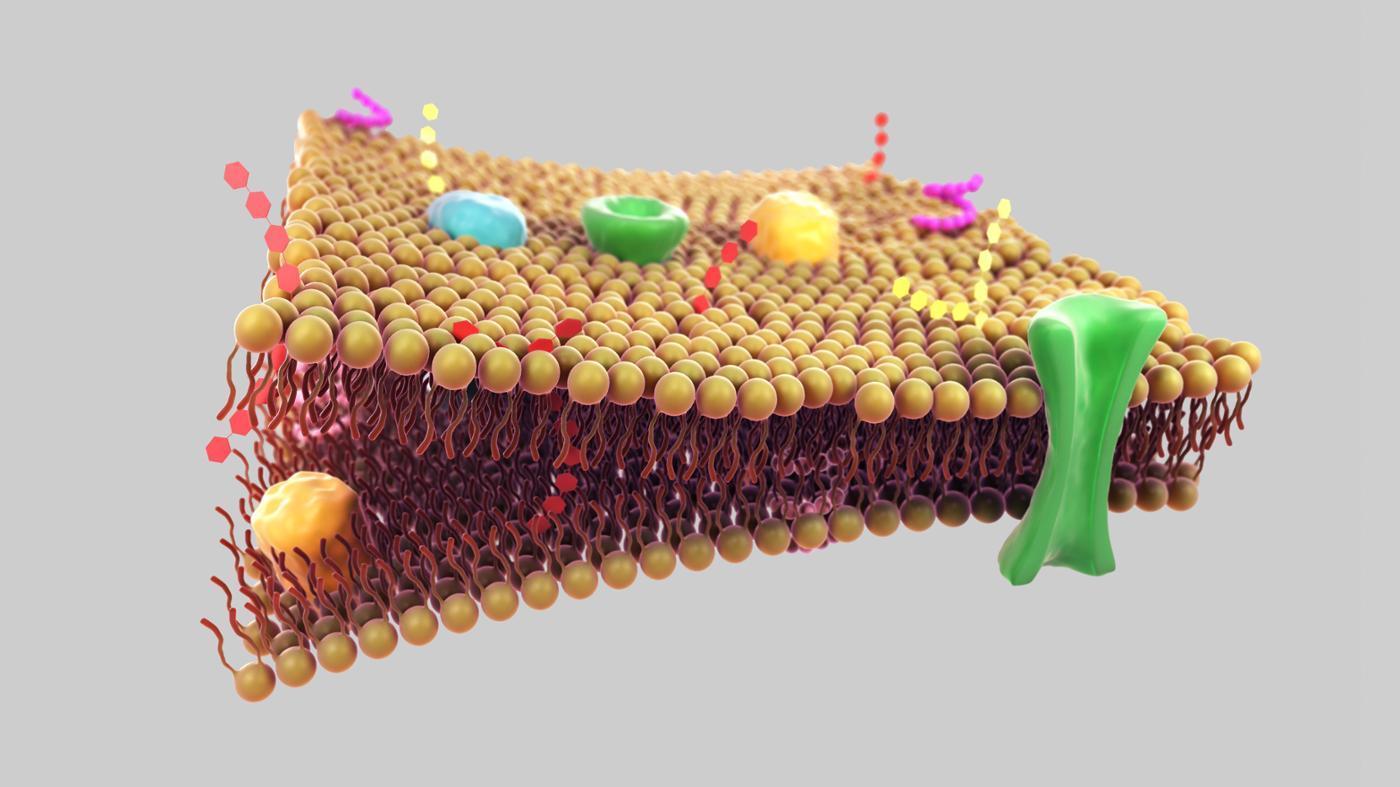

Lipids are composed of which atoms?
Hydrogen, Oxygen, Nitrogen
Hydrogen, Oxygen, Carbon
Oxygen, Nitrogen, Carbon
Oxygen, Nitrogen, Hydrogen
True or False: Lipids are insoluble
True
False

The repeating units of protein are
Amino acids
Glucose
Fatty acid
Peptides
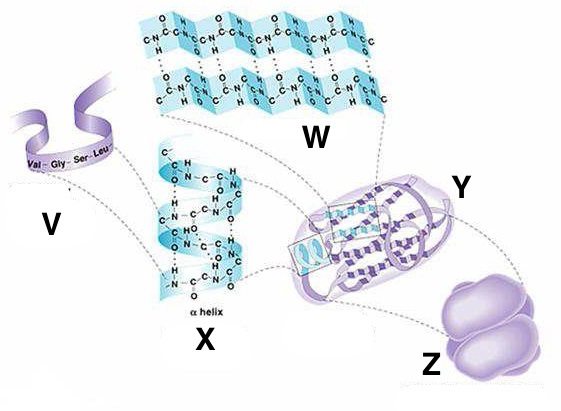
What is one of the functions of a protein?
cell energy
enzymes
long term energy storage
contain genetic information

Why is folding so important in proteins?
It gives them a unique, functional shape
It makes them look tidier
It makes every protein molecule different from the next even if they are the same type
The folding is random so is not that important at all

