
Font size
 Worksheets
Quiz
Total questions: 90
Worksheet time: 45mins

The brain and spinal cord
Nervous System
Central Nervous System
Peripheral Nervous System
An electrical message that passes along a neuron
Gland
Thymus
Pancreas
Impulse

A collection of organs that gather and interpret information about the body's internal and external environment
Endocrine System
Muscular System
Nervous System
Digestive System

A specialized cell that transfers messages throughout the bodyin the form of fast moving electrical energy.
Neuron
Gland
Blood
Thyroid

Made up of the nerves branching off of the spinal cord.
Nervous System
Central Nervous System
Peripheral Nervous System

Located above the kidneys. Help the body respond to stress and danger.
Ovaries
Pituitary Gland
Thymus
Adrenal Gland

A collection of glands that control the body fluid balance, growth and sexual development.
Circulatory System
Endocrine System
Digestive System
Nervous System
A group of cells that make special chemicals called hormones.
Gland
Muscles
Blood
Brain

Produce hormones involved with female reproductive development
Testes
Uterus
Ovaries
Pancreas

Regulates blood sugar levels by producing insulin
Pancreas
Parathyroid
Liver
Neurons

Regulates calcium levels in the blood
Pituitary Gland
Adrenal Gland
Thyroid
Parathyroid

Secretes hormones that affect other glands and organs. Also affects growth.
Pancreas
Parathyroid
Pituitary Gland
Thymus

Produce hormones involved with male reproductive development
Thymus
Testes
Thyroid
Parathyroid

Regulates the immune system t help the body fight disease
Thymus
Pancreas
Adrenal Gland
Ovaries

Affects the rate at which you use energy
Parathyroid
Thymus
Pituitary Gland
Thyroid

The system of the body responsible for ridding the body of unwanted waste products.
Circulatory System
Respiratory System
Digestive System
Excretory System

Excrete water, urea and salts in the form of urine.
Lungs
Kidneys
Skin

Excrete carbon dioxide as well as small amounts of heat and water
Kidneys
Lungs
Skin

Excretes most of the waste heat from the body as well as small amounts of water, salts and urea in the form of perspiration.
Kidneys
Lungs
Skin
Heat, water, carbon dioxide, salts and urea
Waste Products
Excretory System
Kidneys
Lungs
Where is urine stored before it leaves the body?
liver
urethra
kidneys
bladder
Blood is pumped into the kidneys where it is filtered is an example of which two systems working together?
excretory & muscular
circulatory & digestive
skeletal & excretory
circulatory & excretory
Homeostatic Mechanisms
keep living systems at a static point
help to keep a relatively constant internal environment in organisms
usually operate by positive feedback
allow organisms to operate under extreme conditions
Which of these conditions indicate positive feedback has occurred?
The production of a particular product continues its production
The production of a particular product stops its production
Sweat evaporates from a person's skin
Which of these conditions indicate negative feedback has occurred?
The production of a particular product continues its production
The production of a particular product stops its production
Sweat evaporates from a person's skin
Osmoregulation happens when organisms regulate
temperature
blood glucose
oxygen
water and solutes
Thermoregulation happens when organisms regulate
temperature
blood glucose
oxygen and carbon dioxide
water and solutes
Gas exchange occurs to regulate
temperature
blood glucose
oxygen and carbon dioxide
water and solutes
Diabetes is a disease where some mammals cannot properly regulate
temperature
blood glucose
oxygen and carbon dioxide
water and solutes
When blood glucose levels get too high, the pancreas stimulates the release of
glucose
glycogen
insulin
glucagon
If mammals get too warm, their blood vessels
constrict to release heat more easily
dialate to release heat more easily
constrict to prevent heat loss
dialate to prevent heat loss
If mammals get too cold, their blood vessels
constrict to release heat more easily
dialate to release heat more easily
constrict to prevent heat loss
dialate to prevent heat loss
Gas exchange in mammals happens in the _______ of the _______.
mouth - person
avioli - lungs
spaces - gills
In osmoregulation, a hypertonic solution
has a lower solute concentration than the cell, causing water to flow into the cell
has a higher solute concentration than the cell, causing water to flow out of the cell
has an equal solute concentration with the cell
In osmoregulation, an isotonic solution
has a lower solute concentration than the cell, causing water to flow into the cell
has a higher solute concentration than the cell, causing water to flow out of the cell
has an equal solute concentration with the cell

This animal cell is in a _____________ solution.(the arrows indicate the net movement of water)
hypertonic
hypotonic
isotonic
When a red blood cell is in a very salty solution, the cell will
explode
shrink
go surfing
What carries oxygen around the body?
Plasma
Red Blood Cells
Platelets
White Blood Cells
What makes up around 55% of the blood?
Plasma
Red Blood Cells
White Blood Cells
Platelets
What causes the blood to be the distinct red colour?
Haemoglobin
Glucose
Hormones
Oxygen
What is the function (job) of the platelets?
To form clots (i.e. scabs) when you have cuts and grazes.
To transport oxygen to the muscles
To carry dissolved sugars.
To produce antibodies
What is the function (job) of the white blood cells?
To transport oxygen around the body.
To carry dissolved sugars.
To clot and cover wounds like cuts and grazes.
To release antibodies to help destroy infections.
What is the function (job) of the plasma?
To release antibodies to fight infections.
To transport oxygen around the body.
To carry dissolved nutrients and sugars.
To transport oxygen around the body.
What is the function (job) of the red blood cells?
To transport oxygen around the body and to the muscles.
To release antibodies to fight infections.
To carry dissolved nutrients and sugars.
To clot and form scabs if there is a wound on the body.

What is blood made of?
oxygen and plasma
red blood cells and white blood cells
plasma, red blood cells, white blood cells, and platelets.
plasma and platelets

What is plasma?
only white blood cells
only red blood cells
fluid part of blood
hemoglobin
Which cell engulfs and digests bacteria/pathogens?
lymphocytes
phagocytes
platelets
Which cell releases antibodies to the blood?
phagocytes
lymphocytes
platelets

How much blood does an adult have?
5 liters
10 liters
8 liters
20 liters

What are the most common blood cells?
red blood cells
white blood cells
platelets
plasma

Which cells receive oxygen from red blood cells?
all cells
only skin cells
only muscle cells
only bone cells

Where are platelets made?
plasma
hemoglobin
bone marrow
Pottery Barn

What attaches to oxygen as you breathe and carries oxygen on red blood cells?
plasma
hemoglobin
platelets
bone marrow

Why do platelets clump together?
to produce oxygen
to reduce oxygen
to produce blood loss
to reduce blood loss

What destroys pathogens?
antibodies
red blood cells
platelets
plasma

What part of the blood destroys dead and damaged cells?
White blood cells
red blood cells
platelets
pathogens

What does a transfusion replace?
lost body temperature
lost blood
lost antibodies
lost pathogens
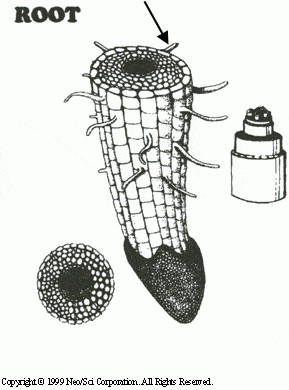
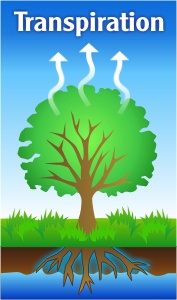
Water and minerals move in which direction within the plant
Upward
Down
Where does sugar transport begin?
Roots
Leaves
Root hairs
Vascular bundles
Sense organs are _____ in number in human beings.
2
3
4
5
Sensation is_____.
Physical process
Chemical process
Both
None
Eye ball is located in____
Eye jacket
Eye socket
Skull
All the above
Your eyes are being protected by_____.
Eye lashes
Eye brows
Eye lids
All the above
Eye brows protect us from_____.
Dust particles
Water droplets slide down from forehead
Both
None
Eye lids and eye lashes protect us from_____
Dust particles
Light
Both
Water droplets
Outermost layer that covers eye__.
Sclera
Chorion
Retina
All the above
Cornea is____.
Opaque layer that covers eye in outermost region
Transperent layer that cover front part of eye
Black coloured layer that supply blood to eye
All the above
Pupil dialates according to the ________.
Size of object
Intensity of light
Both
None
Biconvex lens present in the eye is moved by the movement of _-muscles.
Circular
Longitudinal
Ciliary
Papillary
Retina is____.
Innermost layer of eye
Sensory in function
Posses receptor cells
All the above
The part of eye doesn't have any blood supply____.
Cornea
Pupil
Lens
All the above
The chambers present in front of lens is calked____.
Aquous chamber
Viterous chamber
Both
None
Part of eye useful for identification of human beings__
Pupil
Iris
Lens
Cornea
_______ membrane starts as optic nerve.
Sclera
Chorion
Retina
All the above
Fovea means____.
Part of retina absence of receptor cells.
Part of retina with the presence of abundant number of receptor cells.
Part of retina starts as optic nerve
All the above
Binocular vision means_____.
To visualise two objects at the same time.
To visualise one object with one eye at a time.
To visualise two objects with two eyes.
To visualise one object at a time with two eyes.
_____ part of the eye is visible to outside while the remaining part lo ated in eye socket.
1/3rd
1/4 th
1/5 th
1/6 th
Sense organs help us____
To direct us towards stimukus
To survive in the surroundings
To get knowledge from surroundings
All the above
The nerve that sends sensation to the brain from eye is called_____.
Claocal nerve
Audible nerve
Optic nerve
All the above

