
 Worksheets
States of Matter
Total questions: 50
Worksheet time: 47mins
A solid is a state of matter that has a(n)
indefinite volume and indefinite shape
definite volume and a definite shape
definite volume and an indefinite shape
indefinite volume and a definite shape

In which state of matter are the particles least able to move?
A
B
C
Matter is made up of particles. Which of the following statements is true about these particles?
The particles that make up solids do not move
The particles that make up liquids do not move
The particles that make up all matter are constantly in motion
Only the particles that make up gases are constantly in motion
Kinetic energy is...
energy carried in ultraviolet waves
energy stored in food
energy in motion
energy from splitting an atom
What two factors affect an object's kinetic energy?
area and volume
mass and weight
weight and height
mass and speed
Increasing an object's mass will increase its kinetic energy.
true
false
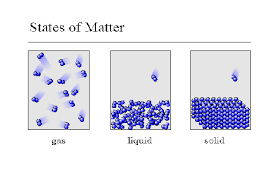
At higher temperatures
particles in an object have less kinetic energy
particles in an object move faster
a gas contracts
Which of the following states of matter has the LOWEST level of kinetic energy?
Solid
Liquid
Gas
Plasma
Which of the following states of matter can easily be compressed (made to fit into a small volume)?
Solid
Liquid
Gas
The state of matter with definite (fixed) volume but not definite (fixed) shape.
solid
liquid
gas
Measure of the average kinetic energy of the particles in an object
thermal energy
temperature
kinetic energy
What are attractive forces?
The irresistible gravitational pull that stylish and trendy individuals
forces between particles that pull them towards one another
magnetic force between liquids and solids
gravity
Solids have ...
high attractive forces, low PE, low KE
medium attractive forces, low PE, Low KE
low attractive forces, high PE, high KE
high attractive forces, high PE, Low ke
Liquids have
high KE, Low PE
medium KE, medium PE
low KE, Low PE
no KE or PE
gasses have
low KE, low PE
medium KE, medium PE
high KE, high PE
none they hate PE + KE
potential energy in terms of particles is related to
potential for a particle to split in half
potential for a particle to move or change position
potential for particle to stop moving
potential for particles to have potential energy
At a molecular level, which substance typically possesses the highest kinetic energy?
A block of ice at 0°C
Liquid water at 25°C
A solid block of iron at 75°C
Steam at 100°C
Among the following substances, which is expected to have the highest potential energy per particle
Gasoline in solid form
Gasoline in liquid form
Gasoline in gaseous form
Gasoline at absolute zero temperature
which substance has particles moving at a higher speed if all the substances have the same temperature of 50 degrees F
substance that has avg particle mass of 2g
substance that has avg particle mass of 4g
substance that has avg particle mass of 30g
substance that has avg particle mass of 12g
Everything has thermal energy
False
True
Thermal energy is the __________ _________ energy of moving particles
total potential
average potential
average kinetic
total kinetic
Temperature is the __________ _________ energy of moving particles
average potential
average kinetic
total potential
total kinetic
Objects with MORE MASS have______________
lower potential energy
lower number of atoms
higher thermal energy
higher temperature
Cold things often have a _________ kinetic energy because_______
lower; particles are moving around less
lower; particles are moving around more
higher; particles are moving around the same
higher; particles do not move
Potential energy is the _________
energy of movement
same as kinetic energy
stored energy inside of something
potato
For objects that have the SAME mass, which object will have a HIGHER thermal energy?
the object with the higher temperature
the object with the lower temperature
the objects will have the same temperature
the objects have no temperature
Which will have the HIGHEST thermal energy?
Hot cup of tea
Cold bathtub water
Huge lake
Warm bowl of soup
Which will have the LOWEST thermal energy?
Large mug of hot coffee
Baby bottle with warm milk
Gatorade jug of cold Gatorade
Large frozen puddle


Nash puts his cold Coke Slurpee on to the metal roof of his mom's car. Describe the heat transfer that takes place.
Heat is transferred from the car's roof into the Slurpee and increases the temperature of the Slurpee.
Heat is transferred from the Slurpee into the roof and increases the temperature of the roof.
The Slurpee stays the same temperature until it is completely gone.
The roof doesn't change temperature due to the fact that it sits in the sun all day.
As temperature increases, molecules _____________
move slower
move the same
move faster
stop moving
When heat is passed on by direct contact of particles, this occurs
conduction
condensation
convection
radiation
Transfer of energy by electromagnetic waves is called
conduction
convection
radiation
infrared proton rays (sounds cool, but I made it up so don't pick this one)
Movement that transfers heat in a fluid is called
conduction
convection
radiation
specific heat
Transfer of thermal energy, in a liquid or gas, in which the warmer substance risesand the cooler substance sinks; forms a current.
Thermal Energy
Conduction
Convection
Radiation
Two objects have different temperatures. Object A has a temperature of 42 degrees and Object B is 37 degrees. Which direction should the energy transfer between Objects A and B?
From Object A to Object B
From Object B to Object A
Energy will not transfer
Energy will transfer both directions
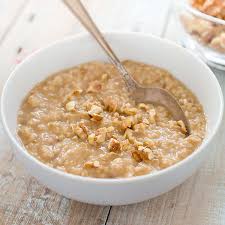
You leave your cold spoon in a hot bowl of oatmeal. What happens after an hour?
The temperature of both the oatmeal and the spoon stay the same
The spoon and the oatmeal become the same temperature
Only the temperature of the oatmeal will change
Only the temperature of the spoon will change
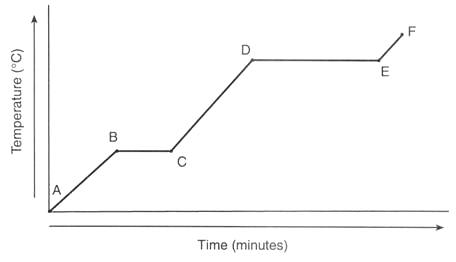
Between which points is the temperature of the substance remaining constant?
A-B only
A-B, C-D, and E-F
B-C only
B-C and D-E

The melting point of the sample is
-60 ºC
20 ºC
60 ºC
100 ºC

In which region(s) does temperature increase?
Region C only
Regions B and D
Regions A, C, and E
Regions A and B

Describe the substance at letter A.
Solid
Liquid
Melting
Evaporating
In a heating curve, diagonal lines indicate temperature is __________, while flat lines indicate temperature is __________.
Constant, changing
Changing, constant

At which letter is the substance changing its state of matter?
A only
A, C, and E
D and E
B and D

NaCl was heated starting at an initial temperature of 0°C. The heating curve is shown in the picture. What is the melting point of this substance?
0°C
801°C
1000°C
1465°C

