
 Worksheets
23-24 1st Sem Life Science Review
Total questions: 111
Worksheet time: 2hrs 43mins
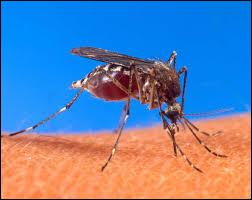
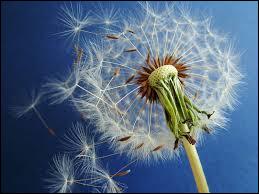
multi-cellular, having cells that grow into living or once living material and digest the nutrients
protists
bacteria
fungi
animal
archaea and bacteria are domains that are...
plantae
eukaryotes
protists
prokaryotes
How many kingdoms of life fall under the domains of life?
3
6
8
5
A cell that contains a nucleus and other membrane bound organelles
autotroph
heterotroph
prokaryote
eukaryote
A "two word naming system" how we get the scientific name (Genus and Species)
phylogeny
taxonomy
binomial nomenclature
Carl Linnaeus
An organism that makes its own food, usually through photosynthesis.
autotroph
heterotroph
prokaryote
eukaryote
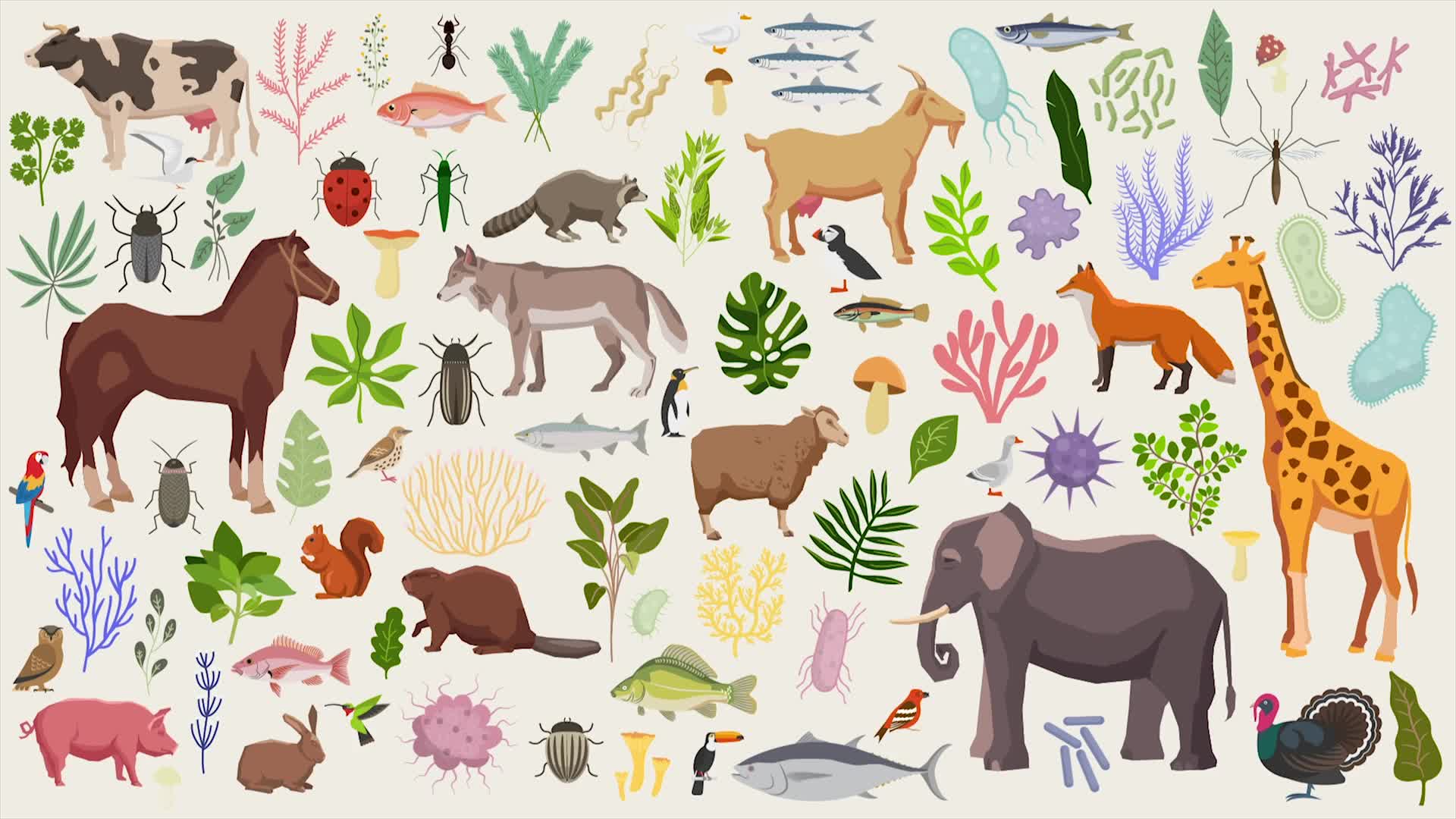


An organism’s ability to maintain stable internal conditions is called
taxonomy.
evolution.
development.
homeostasis.
The process of changing into a more complex organism is called
response.
evolution.
development.
growth.
The one of the two kingdoms that contain only heterotrophs are animals and
archaea.
fungi.
protists.
bacteria.
Which of the following is NOT one of the four kingdoms of eukaryotes?
fungi.
archaea.
protists.
plants.
A structure that is found in plant cells but not in animal cells is a
cell wall.
nucleus.
cell membrane.
nuclear envelope.
A group of organisms that can mate with each other and produce offspring that can also mate and reproduce is called a(n)
order.
phylum.
kingdom.
species.
A change in an organism’s environment that causes a reaction is called a(n)
response.
classification.
stimulus.
variable.
The scientific study of how things are classified is called
________________________.
phylum
genus
taxonomy
classification
Why do scientists classify and organize organisms?
To keep a list of all living things on earth
Because it is fun
So that they can note similarities and differences in different organisms and to avoid confusion when studying them
So that each organism know their name
Which of these is NOT apart of the 3 domains?
Archaea
Protista
Bacteria
Eukarya
What are the 7 levels in order used to classify organisms?
Domain, Kingdom, Species, Class, Order, Family, Genus, Phylum
Kingdom, Domain, Order, Class, Genus, Species, Family, Phylum
Phylum, Order, Kingdom, Species, Domain, Class, Family, Genus
Domain, Kingdom, Phylum, Class, Order, Family, Genus, Species
Over time scientists have used this to classify organisms more accurately.
The Force
DNA
Golgi Apparatus
ATP
How can Scientists classify animals? Select all that apply.
How they get energy
How they reproduce
Who they are friends with
Whether or not they have a backbone
What color they are
What is an Omnivore?
An animal that gets its energy by eating both plants and meat
An animal that gets its energy by eating only meat
An animal that gets its energy by eating only plants
An animal that gets its energy by the sun
What are some characteristics of mammals? Check all that apply.
They produce milk for their offspring
They have hair on their body
They lay eggs
They have scales
They are warm-blooded
Which of the 3 domains can live world wide? Check all that apply.
Bacteria
Archaea
Eukarya
What is the largest Classification
Domain
Kingdom
Order
Family
What is the lowest level of Classification?
Species
Genus
Why
Stop
Who is credited with creating scientific naming?
EINSTEIN
ARISTOTLE
DARWIN
LINNEAUS
Scientist known as the Father of taxonomy is
Robert Hooke
Aristotle
Carolus Linneaus
Mathias Schleiden
Every living organism is made up of one or more cells
True
False
Only ____________ cells have a cell wall instead of a cell membrane.
plant
animal
white blood
living
Genes are made of the molecule ______________________.
hydrogen
DNA
oxygen
chromosome
A person has ____________ pairs of chromosomes.
46
23
26
48

What is the Function and Structure of the Nucleus?
Structure: The Jelly-like material that is within the cell and is enclosed by the cell membrane.
Function: Converts light energy into chemical energy
Structure: A large, oval-shaped structure that is enclosed in a membrane.
Function: Contains the genetic material responsible for controlling the activities of the cell

What is the Function and Structure of the Vacuole?
Structure: Large, round sac that is filled with fluid
Function: Stores water, food, or waste materials for the cell
Structure: Bean- or peanut-shaped with internal membranes
Function: Gives support to the organelles within the cell

What is the Function and Structure of the Mitochondria?
Structure: Bean- or peanut-shaped with internal membranes.
Function: Breaks down sugars to release energy in a form usable by the cell; the powerhouse of the cell.
Structure: Green, oval-shaped structure that contains chlorophyll
Function: Regulates the passage of materials in and out of the cell, protects and gives some structure.

What is the Function and Structure of the Cell Membrane?
Structure: A porous, thin tissue that forms the outer surface of the cytoplasm.
Function: Converts light energy into chemical energy.
Structure: A porous, thin tissue that forms the outer surface of the cytoplasm.
Function: Regulates the passage of materials in and out of the cell, protects and gives some structure.

What is the Function and Structure of the Cytoplasm?
Structure: The Jelly-like material that is within the cell and is enclosed by the cell membrane.
Function: Gives support to the organelles within the cell.
Structure: A porous, thin tissue that forms the outer surface of the cytoplasm.
Function: Contains the genetic material responsible for controlling the activities of the cell

What is the Function and Structure of the Chloroplast?
Structure: Green, oval-shaped structure that contains chlorophyll
Function: Converts light energy into chemical energy.
Structure: Bean- or peanut-shaped with internal membranes.
Function: Contains the genetic material responsible for controlling the activities of the cell.
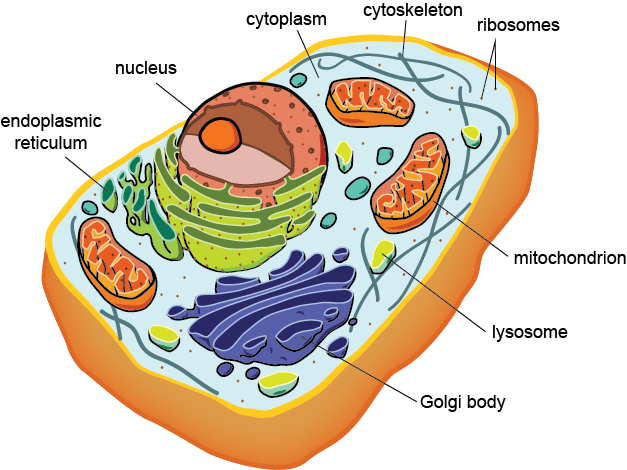
Which model is a Animal Cell?


Which model is a Plant Cell?


Check mark all that apply. How can you tell the difference between a Plant Cell and an Animal Cell? (Hint there's more than one right answer)
Plants Cells have Mitochondria and Animal Cells do not
Plant cells have a Cell Wall and Animals cells do not
Animal cells have many, small Vacuoles. Plant cells have one large Vacuole.
Animal cells do not have Chloroplast, but Plant cells do.
Plant cells have a square shape and Animal cells have a circle shape.

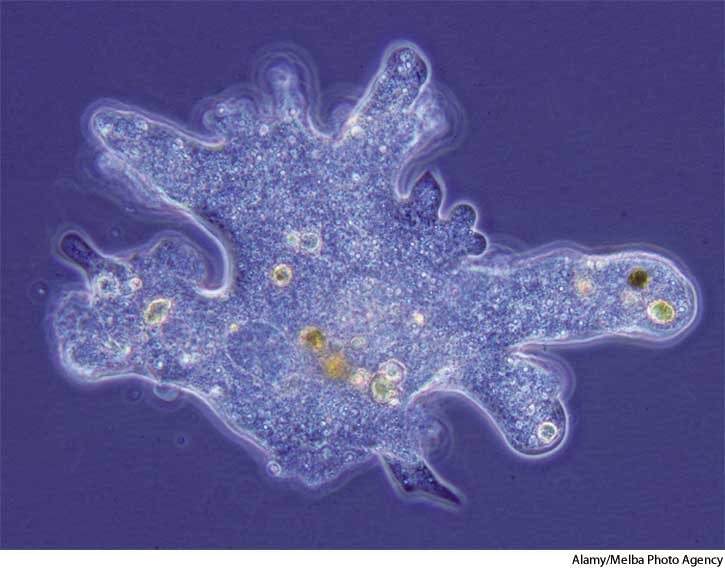

____ is credited with being the first scientist to observe cork cells.
Leewenhoek
Shleidon
Hooke
Which of the following statements is true?
Plants and animal cells have cell walls for protection.
Animal cells have one large vacuole; the plant cell has tiny ones.
Plant cells contain chlorophyll; animal cells have lysosomes.
Animal cells are box shaped; plant cells are circular.
Bacteria is classified as a what?
Prokaryote
Eukaryote

The structure labeled "D" has the function of
Controls all activity in the cell (the brain) and stores DNA.
Fluid that fills the cell and keeps the organelles in place.
Stores water and nutrients for the cell to survive.
Breakdown and detoxify waste material within the cell.

The structure labeled "A" has the function of
A rigid exterior which protects and supports the cell.
Outer lining the cells. Controls what goes in and out.
Power plant of the cell. They create energy called ATP
Fluid that fills the cell and keeps the organelles in place.

The genotype for a yellow plant is...
The B stands for bud.
w= non-white hair
If you cross a horse with WW and a horse with ww what fraction of the offspring would be expected to have white hair?
Who studied different characteristics of pea plants by cross-pollinating plants?
Gregor Mendel
Albert Punnett
Sir Isaac Newton
David Kuster
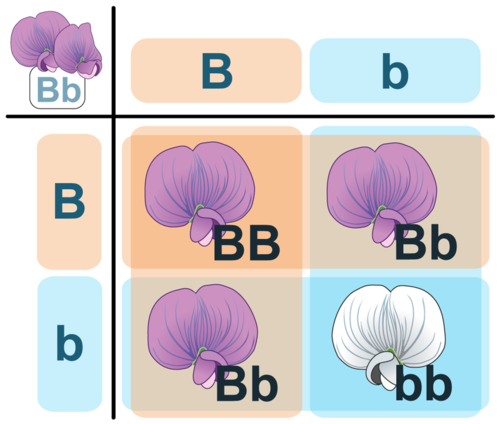
What is the probability of producing a tall pea plant from a cross between two hybrid tall pea plants?
25%
50%
75%
100%
What does a Punnett Square determine?
all of Mendel's discoveries about genetic crosses
all the outcomes of a genetic cross
only the recessive allele combinations
only the dominant allele combinations
Genotype is
stem height
feather color
physical appearance
genetic makeup
The term that relates to physical characteristics that are studied in genetics.
traits
offspring
generations
hybrids
Factors that control traits are
purebreds
genes
recessives
parents
If a homozygous black cat (BB) is crossed with a homozygous white cat (bb), what is the probability of having a cat with white fur?
100%
0%
75%
25%
What does RR mean
two dominant alleles
heterozygous alleles
at least one dominant allele
one dominant and one recessive allele
In a Punnett square, a lower case letter stands for a ____________ allele.
dominant
recessive
homozygous
heterozygous

In animals, shaggy fur is dominant to short fur. The Punnett Square shows the genotypes of the offspring of a shaggy fur animal and a short fur animal. What were the genotypes of the parents?
FF and FF
Ff and ff
ff and ff
Ff and Ff

T = tall and t = short
In the punnett square shown, what belongs in the missing square
tt
Tt
Bb
TT
In a heterozygous genotype, the ___________ allele takes over in the phenotype.
recessive
dominant
The genotypes AA and Aa always show up as the __________ phenotype.
dominant
recessive
A recessive allele is represented by a ______ letter.
lower-case
capital
A dominant allele is represented by a ______ letter.
lower-case
capital
Blue-eyed is a ______.
genotype
phenotype
Bb is a ______.
genotype
phenotype

