wayground logo

Free Printable Worksheets

NEW

Font size

S
M
L
XL
Worksheets

Particles and Energy Quiz - Entry

Total questions: 49

Worksheet time: 35mins

Name
Class
Date
1.
How do gases behave in a container?
a)
Cluster together
b)
form a solid
c)
They take the shape of their container
d)
leak out 
2.
Which states allow easy flow of particles
a)
Gas and Solid
b)
Gas and Liquid
c)
Solid and Liquid
d)
Gas only
3.
which of the following would be most stolid?
a)
Ice
b)
Jelly
c)
Honey
d)
Tomato Sauce
4.
How do materials change from one state of matter to another?
a)
They gain or lose energy
b)
They break appart
c)
The particles get stickyer
d)
They are magnetised to themselves
5.
What sorts of things are made of particles?
a)
Everything in the universe
b)
Anything solid
c)
Water 
d)
Most solids, liquids and gases. 
6.
Which of the following is a property of a liquid
a)
Can't be compressed
b)
Can be compressed
c)
Particles are far appart
d)
Particles hold the object's shape 
7.
Can Solids be compressed?
a)
No
b)
Yes
c)
Sometimes (it depends what it's made of)
d)
Generally no
8.
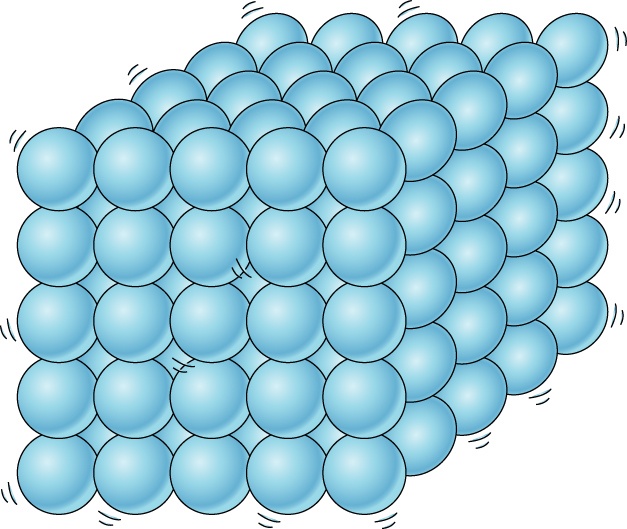
Which description best matches this particle model?
a)
Closely packed and can't move a lot. 
b)
Particles are close together but can move a little. 
c)
Particles have lots of energy and can move around. 
9.
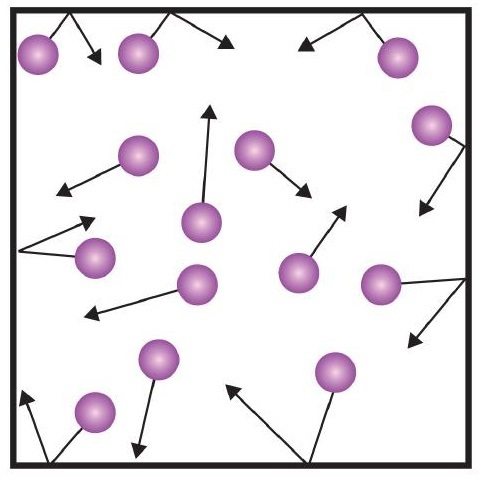
Which description best matches this particle model?
a)
Closely packed and can't move a lot. 
b)
Particles are close together but can move a little. 
c)
Particles have lots of energy and can move around. 
10.
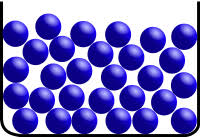
Which description best matches this particle model?
a)
Closely packed and can't move a lot. 
b)
Particles are close together but can move a little. 
c)
Particles have lots of energy and can move around. 
11.
Which description best describes what a particle model shows?
a)
How many particles are in a solid, liquid or gas.
b)
How the particles in a solid, liquid or gas are arranged. 
c)
If there are any particles in a solid liquid or gas. 
12.
Which state of matter can be compressed?
a)
Solid
b)
Liquid 
c)
Gas
13.

What is energy?

a)

moving energy

b)

stored energy

c)

renewable energy

d)

The ability to do work.

14.

What is potential energy?

a)

moving energy

b)

stored energy

c)

renewable energy

d)

non renewable energy

15.

What is energy?

a)

moving energy

b)

stored energy

c)

renewable energy

d)

The ability to do work.

16.

What is potential energy?

a)

moving energy

b)

stored energy

c)

renewable energy

d)

non renewable energy

17.

What is kinetic energy?

a)

moving energy

b)

potential energy

c)

stored energy

d)

renewable energy

18.
According to the Law of Conservation of Energy...
a)
energy changes form
b)
energy can be created and destroyed
c)
energy flows from one material to the next
d)
energy cannot be created or destroyed
19.
As a pendulum swings from its highest to lowest position, what happens to its kinetic and potential energy? 
a)
Both the potential energy and kinetic energy decrease
b)
The potential energy decreases while the kinetic energy increases 
c)
The kinetic energy decreases while the potential energy increases 
d)
Bothe the potential energy and kinetic energy increase 
20.
a.  Energy stored in the nucleus of an atom.
a)
A. Sound Energy
b)
B. Potential Energy
c)
C. Nuclear Energy
d)
D. Thermal energy
21.

Which energy pathway is being used when a person pushes heavy boxes across the floor?

a)

Electrical energy

b)

Mechanical energy

c)

Heat energy

d)

Sound energy

22.

Four balls are thrown at the same velocity, with different masses. Which ball has the most kinetic energy?

a)

The 20g ball

b)

The 50g ball

c)

The 24g ball

d)

The 40g ball

23.

Which is the correct equation to calculate work done?

a)

force/distance

b)

force applied x distance moved

c)

time/power

d)

distance x power

24.

Which factors affect the amount of gravitational potential energy an object has?

a)

weight, height and gravitational field strength

b)

force, distance and power

c)

mass, weight and time

d)

mass, gravitational field strength and height

25.

What is energy measured in?

a)

joules

b)

newtons

c)

kilograms

d)

metres

26.

Which is the correct equation to calculate kinetic energy?

a)

mass x distance

b)

0.5 x mass x speed2

c)

0.5 x weight x speed2

d)

mass x speed x distance

27.

Which is the correct definition of elastic potential energy?

a)

the energy created when an elastic object bounces

b)

the energy an object has when it is released from a slingshot

c)

the energy stored in an elastic object when work is done on the object

d)

the energy in an elastic band

28.

Which is the correct definition of specific heat capacity?

a)

the energy needed to heat a substance

b)

how quickly a substance will get warm

c)

the amount of energy needed to heat up a substance

d)

the energy needed to change the temperature of 1kg of a substance by 1oC.

29.

How would you convert 1000J to KJ

a)

times by 1000

b)

divide by 1000

c)

times by 100

d)

divide by 100

30.
What is the definition of CONDUCTION?
a)
When heat is transferred from objects like rays of light or electromagnetically.
b)
a  hot liquid or air that  expands, becomes less dense, and rises or becomes more dense, and sinks.
c)
When heat transfers from objects that are touching.
d)
When heat transfers through the heater or AC in your house.
31.
What is the definition of CONVECTION
a)
When heat transfers through waves.
b)
When heat transfers from objects that are touching.
c)
a  hot liquid or air that  expands, becomes less dense, and rises or becomes more dense, and sinks.
d)
Heat traveling from the sun
32.
What kind of heat transfer happens when the sun is heating your body?
a)
Conduction
b)
Radiation
c)
Convection
d)
Density
33.
Which of the following is needed for convection to happen?
a)
Fluid/s
b)
Light in the form or rays
c)
Electromagnetic waves
d)
Fire
34.
The baby chickens are kept warm from the heat lamps demonstrates this type of heat transfer. 
a)
conduction
b)
convection
c)
radiation
35.
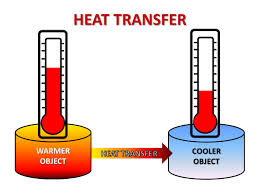
Heat transfers from an area of ____temperature to an area of ___ temperature.
a)
high to low
b)
low to high
c)
high to high
d)
It can travel high to low and low to high. 
36.
Walking on the warm sand sand with your bare feet demonstrates this type of heat transfer. 
a)
conduction
b)
convection
c)
radiation
37.
Warm air is __________ dense than cold air and rises creating convection currents.
a)
more
b)
less
38.
Calculate work: A 100 Newton force is applied to move a 15 kg object a distance of 5 meters?
a)
20 Joules
b)
75 Joules
c)
500 Joules
d)
1500 J
39.
A 5000N block is lifted 10 m. How much work was done?
a)
50000 J
b)
5000 J
c)
500 J
d)
50 J
40.
The unit used to measure work is the 
a)
Watt
b)
Newton
c)
Joule
d)
meter
41.
What is the unit for mass?
a)
Kilogram (Kg)
b)
Newton (N)
c)
Joule (J)
d)
Watt (W)
42.
The handle of a frying pan is often coated in rubber because rubber provides...
a)
Heat insulation
b)
Heat conduction
c)
A low melting point
d)
A nonstick surface
43.
Is iron a conductor or insulator?
a)
Conductor
b)
Insulator
44.
Which of the following is NOT an insulator?
a)
Wool
b)
Plastic
c)
Copper
d)
Styrofoam
45.
Is wood a conductor or insulator?
a)
Conductor
b)
Insulator
46.
What is the definition for RADIATION? 
a)
The transfer of energy along electromagnetic waves
b)
The transfer of heat between objects that are in direct contact. 
c)
Transfer of heat through a liquid or gas. As it heats, it rises and as it cools, it sinks.
d)
None of the above 
47.
Through which part of a house does most heat escape?
a)
Walls
b)
Roof
c)
Doors
d)
Windows
48.
What can be utilsed if a lot of heat is found to be leaving a house through the windows?
a)
Thick curtains
b)
Cavity wall insulation
c)
Underlay
d)
Loft insulation
49.

What insulation stops heat conducting through a roof of a building?

a)

Draught excluder

b)

Cavity wall insulation

c)

Loft insulation

d)

Central heating