
 Worksheets
Cell Bio Quiz Questions
Total questions: 123
Worksheet time: 31hrs 45mins
Mitochondria and chloroplasts are about the same size as typical bacteria.
True
False
The cell components that move materials from one organelle to another are called.
Transport Vesicles
Lysosomes
Mitochondria
Cytosol
All living cells
Have the same overall shape
Need to replicate within another cell
share the same basic chemistry
Are nearly the same size
Ribosomes are membrane-bound organelles found in both prokaryotes and eukaryotes.
True
False
The defining property that differentiates prokaryotic cells from eukaryotic cells is their…
small size
presence of a flagellum
cell division
lack of nucleus
The main function of the nucleus is to
convert light energy into chemical energy
make proteins using the genetic material
House the DNA in a separate cell compartment
Provide energy for the cell
One piece of evidence indicating that chloroplasts evolved from engulfed photosynthetic bacteria is
That mitochondria were already present in the cell
That they contain their own DNA
The folded membranes
The presence of chlorophyll
The following sentence is good evidence for the endosymbiont origin of Mitochondria: Mitochondria have a single membrane.
True
False
Which of the following accurately matches the types of filaments in the cytoskeleton with their cellular function.
Microtubules-cell movement; intermediate filaments- strength/support; actin filaments-chromosomes segregation
Microtubules-strength/support; intermediate filaments-cell movement; actin filaments-chromosome segregation
Microtubules-cell movement; intermediate filaments-chromosome segregation; actin filaments- strength/support
Microtubules-chromosome segregation; intermediate filaments-strength/support; actin filaments-cell movement
After a protein is made by ribosomes, it may be modified in the nucleus.
True
False
how many neutrons does a Se atom have? (atomic weight is atomic mass)
79
47
45
46
A readily available of energy that cells use to drive reactions is stored in the _________ bond.
Hydrogen
Phosphoanhydride
Ester
Phosphodiester
Long polymers are made from single subunits in cells using a _________ reaction, which _______ water.
Condensation; breaks down
Condensation; uses
Hydrolysis; uses
Condensation; releases
All carbohydrates have the general formula (CH2O)n
True
False
Mark the one statement that is true.
A ribonucleotide (building block of RNA) may contain any contain anyone of 5 bases – A, G, C, T or U.
A deoxyribonucleotide (building block of DNA) may contain any one of 5 bases – A, G, C, T or U.
A ribonucleotide (building block of RNA) may contain any one of 4 bases – A, G, C, or T.
A deoxyribonucleotide (building block of DNA) may contain any one of 4 bases – A, G, C, or T.
Which of the following statements is true regarding amino acids?
Amino acids are identical except for their R-group
All amino acids have sulfhydryl group
Some amino acids do not a carboxylic group
Amino acids are identical except for their amino group
Only some amino acids have an R-group or side-chain
What is one of the main differences between DNA and RNA?
DNA does not contain the base adenine
DNA has three phosphate groups, RNA has one
RNA has two hydroxyl groups on the sugar, DNA has one
RNA does not contain the base cytosine
DNA uses four different bases than RNA does
1. Which of the following is unlikely to be hydrophilic?
A salt that is held together with ionic bonds
A molecule with a lot of polar covalent bonds
A molecule with primarily nonpolar covalent bonds
A molecule that forms hydrogen bond with water
Both starch and cellulose are energy-storage polysaccharides
True
False
All monosaccharides have the general formula (CH2O)n
True
False
Beta sheets are formed mainly by hydrophobic interactions among amino acid side chains.
True
False
Secondary structures are created by hydrogen bonding.
True
False
Which of the following levels of protein structure involves the interaction of more than one polypeptide chain into a three-dimensional structure?
Tertiary
Quaternary
Primary
Secondary
All amino acid side chains are hydrophobic.
True
False
The peptide bond is the most important bind in tertiary structure formation because it is non-covalent
True
False
A stretch of amino acids in a polypeptide chain that is capable of independently folding into a defined structure is called a
Backbone
Ligand
Domain
Side Chain
Peptide
Alpha helices are formed by hydrogen bonding between side chains of non-adjacent amino acids.
True
False
If an amino acid with a hydrophobic side chain were to be changed to an amino acid with a charge side-chain, it is likely to change the function of the protein.
True
False
Van der Waal’s forces are the only ones involved in forming tertiary structures.
True
False
Hydrogen bonding between N-H and C=O groups of every fourth amino acid within a polypeptide chain results in which type of folding patterns?
Parallel B sheet
a helix
amyloid structure
Antiparallel B sheet

The figure below shows a depiction of an antibody. Which label correctly identifies the regions of the antibody that contains variable amino acids for binding of specific antigen?
B
D
C
A
How does phosphorylation of a protein affect its activity?
Always increases activity
Always decrease activity
Could increase or decrease activity
Never affects activity
Antibodies are carbohydrate with proteins attached to them.
True
False
The 2 heavy chains of an antibody are held together by a disulfide linkage.
True
False
Fab regions of the antibody bind to an epitope on an antigen.
True
False
The function of feedback inhibition of an enzymatic pathway is to
Accumulate large amounts of important biological molecules
Turn off synthesis of a product when it is in abundance
Increase concentrations of intermediates to drive the reaction forward
Irreversibly shut down a biosynthetic pathway
Antibodies are made of 2 light chains that form the Fc region and 2 heavy chains that form the Fab region.
True
False
Antibodies only have primary, secondary and tertiary structures, not quaternary structures.
True
False
Energetically favorable reactions are found in anabolic pathways.
True
False
What is the value of delta G at equilibrium?
Negative
Postive
It depends on the concentration of substrates and products
Zero
When a reaction is said to be “spontaneous,” it does not necessarily mean that the reaction occurs instantaneously; it just means the reaction is energetically favorable.
True
False
Catalysts do not change the delta G of a reaction; they only affect the rate at which a reaction occurs.
True
False
Which of the following is a reason why ATP hydrolysis has a negative delta G?
ATP has a high concentration in cells.
The removal of the phosphate is energetically favorable
The reverse reaction is extremely fast
The products have more free energy than the reactants.
Energy unfavorable reactions
Release energy
Have a negative delta G
Can only occur if there is an input of energy
occur spontaneously
have products with less free energy than the reactants
If the products of a reaction have more free energy than the reactants, then that reaction is
Spontaneous
Energetically unfavorable
Energetically favorable
Hydrolysis reaction
Physically impossible
Activation energy refers to the energy required to “complete” an energetically unfavorable reaction.
True
False
Evaluate energetic favorability of condensation and hydrolysis reactions and state which type of reaction requires coupling to ATP breakdown to occur.
Hydrolysis reaction
Condensation reaction
The 2 polynucleotide chains in DNA are
Parallel
Semiconservative
Antiparallel
Semicontinuous
Continuous
How are the primers from which DNA synthesis starts different from the DNA itself?
The primers are not properly based paired so they can be removed
The primers are made up of RNA not DNA
The primers do not have a 3' -OH
The primers are DNA itself
Which of the following statements are DNA replication is true?
The leading strand is replicated continuously, while the lagging strand is replicated discontinuously
The leading stand is replicated discontinuously, while the lagging stand is replicated continuously
Both the leading and lagging stands are replicated discontinuously
Both the leading and lagging stand are replicated continuously
What is the name of the DNA sequence where replication begins?
Replication origin
Complementary DNA sequence
DNA template
Initiator
a. Replication fork
Which of the following includes only pyrimidines?
Adenine and cytosine
Thymine and adenine
Adenine and guanine
Uracil and adenine
Thymine and cytosine
The bond that links two DNA stands together are….
Electrostatic interactions
Phosphodiester bonds
Ester bonds
Hydrogen bond
Phosphoanhydride bonds
Which of the following describes the chromosomal makeup of somatic cell of a human biological male?
23 pairs of autosomes
22 pairs of autosomes + 1 Y chromosome + 1 Y chromosome
23 pairs of autosomes + 1 X chromosome + 1 Y chromosome
22 pairs of autosomes + 1 X chromosome + 1 Y chromosome
22 pairs of autosomes + 1 X chromosome + 1 X chromosome
After sequencing a stand of DNA, you found out that there are 23% of cytosine bases. How many are adenine?
27%
50%
46%
23%
If one end of a DNA stand has a phosphate group on it, the chemical group on the other end must be
Carboxyl
Amino
Phosphate
Methyl
Hydroxyl
Which of the following is a function of the protein component of chromatin?
It helps to translate the genetic message.
It contains the enzymes that replicate the DNA.
It carries a portion of the genetic information.
It packages the DNA stands
Okazaki fragments are generated discontinuously on the leading stand.
True
False
What is the name of the type of damage caused by an improperly paired base in the DNA?
Thymine dimer
Depurination
Double-strand break
Deamination wrong
Mismatch
Synthesis of the leading stand of DNA…
Involves DNA polymerase
Occurs on ribosomes in the cytosol
Proceeds in the 3' to 5' direction
Occurs long before the synthesis of the lagging strand of DNA
a and d are both correct
What is a specific name for a mutation that results in early STOP codon?
Nonsense
Silent
Missense
Deletion
If you look at DNA as a twisted ladder, then what are the "sides" if the ladder made up of?
Phosphate groups
Sugars
Paired bases
a and b are correct
b and c are correct
What is the initial step that must occur to repair damage on one strand of the double helix?
The DNA backbone must be sealed
The damaged region must be recognized and removed
The gap caused by the damage must be filled
The DNA backbone on both strands must be cut to make a double-strand break.
This gene (1000 bp long) is known to possess 300 Guanine nucleotides, how many Thymine nucleotides can be found in this gene?
300
400
600
200
500
All of the following statements about DNA are true except:
The 2 strands are arranged in a parallel orientation with each other
Each strand of nucleotides has a 5'-phosphate end and a 3'OH end
The 2 strands of DNA form a twisted ladder configuration called a double helix
Its 2 stands are held together by interchain H-bonding between bases
It has an invariant repeating sugar-phosphate-sugar-phosphate backbone
Which of the following is difference between the mechanisms of DNA polymerase and RNA polymerase?
DNA polymerase uses DNA as a template for making DNA copies; RNA polymerase uses RNA as a template for making RNAs.
The direction of polymerization for DNA polymerase is 5’ to 3’, but RNA polymerase is 3’ to 5’.
DNA polymerase needs a primer to start polymerization process, RNA polymerase does not need a primer.
DNA polymerase catalyzes the formation of hydrogen bonds
The purpose of gene expression is to make multiple copies of the same gene.
True
False
RNA polymerase
Reads DNA in the 5’ to 3’ direction and makes mRNA in the 3’ to 5’ direction
Reads DNA in the 5’ to 3’ direction and makes mRNA in the 5’ to 3' direction
Reads DNA in the 3' to 5' direction and makes mRNA in the 5' to 3' direction
Reads DNA in the 3’ to 5’ direction above the replication fork and 5’ to 3’ below it
Reads DNA in the 3’ to 5' direction and makes mRNA in the 3' to5’ direction
Which of the following would be transcribed into mRNA
TATA box sequence
Promoter
Coding sequence
Ribozyme
Terminator
The product of transcription is a protein
True
False
During transcription, before RNA polymerase can make the new RNA, helicase must unwind the DNA double helix.
True
False
The stand of DNA that RNA polymerase reads when making mRNA is known as the
a Coding strand
b sense strand
c antisense strand
d template strand
both c and d
Gene expression is the process by which an mRNA is made based on an amino-acid sequence.
True
False
What recognizes the stop codons in mRNA?
The 5’ cap
A specialized tRNA linked to tryptophan
Release factor
A specialized tRNA linked to methionine
a. The 3’ poly-A tail
The catalytic site for peptide bond formation during translation is found in which part of the ribosome?
Large subunit
Small subunit
it is found on mRNA
The reading frame to use for translating an mRNA into functional protein is determined by the
5’ cap.
Location of the TATA box
Location of the replication origin.
Location of the promoter sequence.
Location of an AUG
Which nucleic acid often base pairs with itself to fold into complex three-dimensional shapes in the cell?
mRNA
rRNA
both mRNA and rRNA
tRNA
neither
Which of the benefit of protein synthesis in polyribosomes
More protein can be produced from a single RNA
Uncharged tRNAs can be used
Protein translation is more accurate
Ribosomes can stay in the nucleus
Which of the benefit of protein synthesis in polyribosomes
More protein can be produced from a single RNA
Uncharged tRNAs can be used
Protein translation is more accurate
Ribosomes can stay in the nucleus
Which of the following processes does not take place during translation?
Release of polypeptide from the ribosome
Growth of a polypeptide chain
Attachment of ribosome to mRNA
Binding of tRNA molecules on a ribosome
Production of mRNA
The genetic code is redundant because some amino acids are coded by more than one codon.
True
False
Which type of RNA is converted into protein for performing its cellular function?
mRNA
both tRNA and rRNA
tRNA
rRNA
snRNP
Export of RNA from the nucleus requires the RNA to have which characteristic(s)
5' cap
Poly-A tail
5' cap and poly-A tail
Introns and poly-A tail
introns
Which is responsible for the process of “charging” tRNAs?
RNA polymerase
Translation initiation factors
Transcription factors
Aminoacyl-tRNA synthetases
The CRISPR system can be used to activate a gene by altering the CAS9 enzyme in what way?
Inserting the Cas9 gene into the activation region
Fusing an inactive Cas9 to a transcriptional activator
Replacing the Cas9 with a fluorescent reporter gene
Fusing an in active Cas9 to a transcriptional repressor
Removing the Cas9 protein from the system
The DNA polymerase enzyme used in PCR is different from the one used in human cells because it is able to
Unwind DNA on its own
Function without primers
Withstand the high temperatures needed for denaturation
Replicate itself
Polymerize DNA stands more rapidly and efficiently
PCR reaction
Enables researchers to determine the sequence of complementary strand of DNA when they have only single-stranded DNA
Enables researchers to create huge number of copies of tiny pieces of DNA
Utilizes RNA polymerase to build strands of DNA
Can create mRNA molecules from tiny DNA pieces
All of the above are correct
Restriction enzymes cut DNA
At a specific sequence in bacteria cells only
At any sequence in DNA, whether in cells or in a test tube
At any sequence in DNA in bacterial cells only
At a specific sequence, whether in cells or in a test tube
At a specific sequence, only in cells, not in a test tube
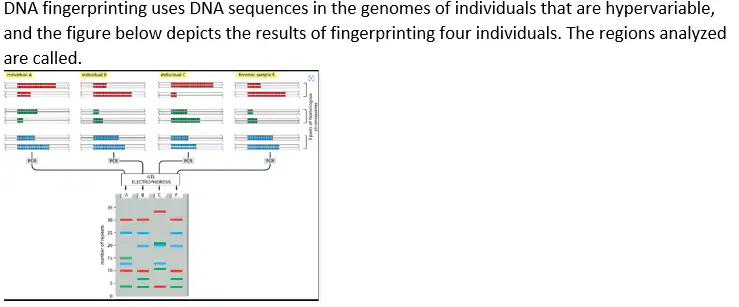
Alu sequences
miRNAs
protein-coding genes
short tandem repeats
L1 elements
PCR is a process that separates DNA fragments according to their size.
True
False
Approximately how many double-stranded DNA molecules will be formed from one starting molecule after three rounds of PCR
4
16
24
2
8
DNA migrates through the pores of an agarose gel towards the _______ electrode; larger fragments travel more ________.
Positive; quickly
Negative; slowly
Negative; quickly
Positive; slowly
The first step of PCR requires that the DNA to be amplified is
Polymerized
Extended
Annealed
Elongated
Denatured
In response to DNA damage the _____ protein is phosphorylated and activates the transcription of Cdk inhibitor to halt cell cycle progression.
P21
P53
P27
Cyclin
The expression levels of different _____ fluctuate throughout the cell cycle.
Cyclins
Cdks
Phosphates
Cyclins and Cdks
The slow rise of s cyclin levels throughout G1 phase is due to _______, and the abrupt decrease is caused by ________
Import; export
Synthesis; Mitosis
Dephosphorylation; export
Phosphorylation; translation
Transcription; proteolysis
Oncogenes have mutations causing excessive cell proliferation
True
False
Which is not a transition point where the cell cycle control system regulates progression through the cell cycle?
G2/M transition
G1/S transition
S/G2 transition
Before chromosome segregation
Cells that die by apoptosis simply release their contents into the extracellular space
True
False
If DNA damage occurs, p53 stops the cell cycle AT G2.
True
False

Terminator
DNA polymerase
Pre-replication complex
Cdc6
ORC
1. What is the difference between a malignant tumor and a metastasis?
A metastasis is a tumor in a different distant tissue
A metastasis does not invade surrounding tissue
A malignant tumor is not able to invade neighboring tissue
A malignant tumor does not proliferate excessively
________ will keep eukaryotic cells growing in a laboratory dish from forming more than one cell layer.
Contact inhibition
Growth factor
Metastasis
Apoptosis
Angiogenesis
A cell with 36 chromosomes undergoes mitotic cell division. How many chromosomes do resulting cells have?
46
23
72
18
36
Down Syndrome is an example of a monosomy, whereas Tuner’s syndrome is an example of a trisomy
True
False
The four products of human germ-cell meiosis each contain ______ copies of each gene.
8
1
4
23
2
A cell with 62 chromosomes undergoes meiotic cell division. How many chromosomes do resulting cells have?
16
31
248
62
124
What drives the reassembly of the nuclear envelope?
Invagination of the ER membrane
Expression of all new lamin proteins
Destruction of condensins
Dephosphorylation of lamins
Destruction of cohesion
Can diploid cells result from meiotic cell division?
Yes
No
Sometimes
The contractile ring is composed of
Keratin fibers
Tubulin and kinesin
Actin and myosin
Keratin and collagen
Tubulin and dynein
Which of the following contributes to genetic diversity during meiosis?
Independent assortment and crossing-over during meiosis 1
Homologous recombination in meiosis 11
Crossing-over and independent assortment during meiosis 11
Independent assortment in meiosis 1
Crossing-over of chromosomes during meiosis 1
What is the function of condensins?
To break down the nuclear envelope
To shorten the contractile ring
To pull sister chromatids apart
To coil sister chromatids into a compact form
To hold sister chromatids together
A bivalent contains ______ sister chromatids
1
2
4
3
8
Plasma membrane proteins that move ions in and out of cells using active transport are called
Channels
Pumps
Anchors
Enzymes
Receptors
Ion channels are just gates for the diffusion of ions, they don’t “push” ions in one direction or another.
True
False
Proteins encoded by nuclear genes and destined for the mitochondria matrix are
Transported across the membrane as a folded protein. NEED TO BE UNFOLED
Synthesized on ribosomes on the smooth ER (Stay in cellular membrane in free folding
Synthesized on ribosomes on the rough ER
Able to diffuse into the mitochondria intermembrane space first
In possession of a signal sequence for targeting to the mitochondria
Where are new phospholipids made?
Cytosol
Endoplasmic reticulum
Mitochondria
Golgi apparatus
The electrochemical gradient for a charged substance depends only on the concentration gradient.
True
False
The sodium-potassium antiport maintains the extracellular concentration of sodium at levels that are about 20-30 times higher than inside the cells. What directly supplies the energy for maintaining this gradient?
ATP hydrolysis drives the function of the pump
Both Potassium and Sodium supply energy, as they are moving down their concentration gradient.
Potassium supplies the energy, as it is moving down its concentration gradient.
Sodium supplies the energy, as it is moving down its concentration gradient.
Active transport consumes energy, usually in the form of ATP breakdown
True
False
A small, positively charged ion like Potassium ion (K+) can diffuse across the plasma membrane by simple diffusion.
True
False
In Alzheimer’s patients, Beta-amyloid plaques are caused mainly by the accumulation of AB-43 peptides.
True
False
Which of the following is a difference transporters and channels?
Transporters can facilitate both active and passive transport of solutes; channels facilitate only passive transport.
Transporters can facilitate only active transport of solutes; channels facilitate both active and passive transport.
Channels do not discriminate between ions, whereas transporters bind their solute with extreme specificity.
Transporters move solutes against their concentration gradient, whereas channels can move solutes down or against their concentration gradient.
Transporters move solutes down their concentration gradient, whereas channels move solutes against their concentration gradient.

