wayground logo

Free Printable Worksheets

Font size

S
M
L
XL
Worksheets

Environmental Science Final practice Spring 25

Total questions: 55

Worksheet time: 53mins

Name
Class
Date
1.

What are the 'monsoons'

a)

deep caves

b)

people who dive for a living

c)

heavy rains

d)

medicine

2.

The country where 13 lives takes place is?

a)

Taiwan

b)

Thailand

c)

Timville

d)

Cambodia

3.

The sport pictured is called?

(the sport of caving)

a)

spelunking

b)

tub jumping

c)

nose pickin

d)

hog basting

4.

The brown areas of a map usually refer to ​ (a)   while the green areas represent ​ (b)  

Choose from the below words
high elevation
flat lands
dirty areas
grass
5.

Which of these is a renewable resource?

a)

Coal

b)

Natural gas

c)

Wind

d)

Oil

6.

A farmer just bought cattle. What type of energy can the cattle create?

(waste, tree and grass matter)

a)

Wind Energy

b)

Biofuel Energy

c)

Hydro Energy

d)

Nuclear Energy

7.

Hydroelectric is a _________ energy resource.

a)

renewable

b)

non-renewable

8.

What does "clean" mean for energy resources?

a)

smells good

b)

creates pollution

c)

does not create pollution

d)

dirty

9.

Which of the following would be considered a primary consumer? Something that eats plants

a)

green plant

b)

kite

c)

snake

d)

rabbit

10.

What is the term used for the largest population that an environment can support at any given time?

a)

carrying capacity

b)

full level

c)

organism scope

d)

biotic factor

11.

Living vegetation and the ocean are known as "carbon sinks" because

a)

they are made of water

b)

they burn carbon.

c)

they destroy carbon.

d)

they store carbon.

12.

Circle the producer

13.

Lichen, Moss or Macroinvertebrate?

a)

Lichen

b)

Moss

c)

Macroinvertebrate

14.

Lichen, Moss or Macroinvertebrate?

a)

Lichen

b)

Moss

c)

Macroinvertebrate

15.

Lichen, Moss or Macroinvertebrate?

a)

Lichen

b)

Moss

c)

Macroinvertebrate

16.
A place where a plant or an animal lives (HOME).
a)
organism
b)
fall lines
c)
Plateau
d)
habitat
17.

To reduce your carbon footprint, you should eat food that is....

a)

grown in other countries

b)

yummy

c)

grown locally

18.

What is the best description of CO2?

a)

Carbon clouds

b)

Oxygen

c)

Carbon dioxide

d)

A type of fizzy drink

19.

The “Three Rs” are

a)

Redesign, Repack, Re-establish

b)

Reinforce, Renovate, Recycle

c)

Reduce, Reuse, Recycle

20.

What do you call the process of drilling and injecting fluid into a ground at a high pressure in order to break or fracture the shale rocks to release natural gas inside?

a)

Drilling

b)

Fracking

c)

Perforation

d)

Sedimentation

21.
Fracking deals with 
a)
Rain Water and Oil Extraction
b)

Solar power collection

c)
Rock and Rain Water
d)
Natural Gas and Oil Extraction
22.

We have an unlimited supply of fossil fuel.

a)

True

b)

False

c)

Undecided

23.

What was the Deep Water Horizon?

a)

A coal mine

b)

A boat (ship)

c)

An oil rig

d)

A power company

e)

A body of water

24.

Place the items in the right location on the map

25.

What is pollution?

a)

an unhealthy diet

b)

global warming

c)

is the process of making land, water, air or other parts of the environment dirty and not safe or suitable to use

d)

lands, people and plants

26.
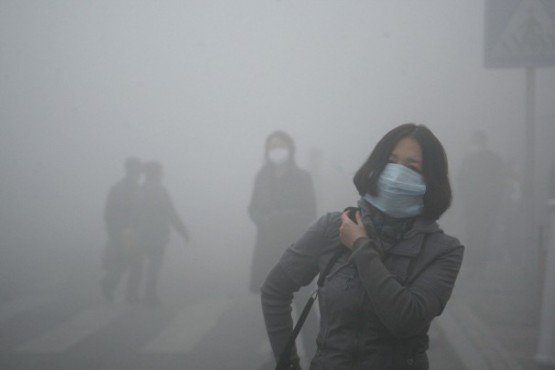
This picture shows people walking through a highly-polluted city in China. From what type of pollution are they protecting themselves based on what they are wearing?

a)

air pollution

b)

water pollution

c)

land pollution

d)

noise pollution

27.

Which human action can cause pollution?

a)

Walking

b)

Biking

c)

Mining

d)

Recycling

28.

What body of water was affected by the Deep Water Horizon oil spill

a)

Pacific Ocean

b)

Chattahoochee River

c)

Gulf of Mexico

d)

Buffalo Creek

29.
The image provided is an example of a(n):
a)
Carnivore
b)
Herbivore
c)
Producer
d)
Autotroph
30.
Water temperature would be an example of ...
a)
A biotic factor
b)
An abiotic factor
31.
Which of the following would be the definition of a herbivore?
a)
Animals that eat insects.
b)
Organisms that feed on rocks, recycling the nutrients back into the ground.
c)

Organisms that eat only plants

d)
Things that feed on dead organisms, recycling the nutrients back into the ground.
32.
Where are we
a)
North America
b)
Asia
c)
South America
d)
Australia
33.
The biome known for trees with broad leaves that fall off the trees in the winter.
a)
Coniferous Forests
b)
Deciduous Forests
c)
Deserts
d)
Tropical Rain Forests
34.
The term "terrestrial" means
a)
land.
b)
water.
35.
The most important abiotic factors when studying biomes are... diagram has the answer in it
a)
Food and Water
b)
Water and Sunlight
c)
Temperature and Oxygen
d)
Water and Temperature 
36.
What large mountain range is pictured here?
a)
Catskill Moutains
b)
Rocky Moutanins
c)
Appalachian Mountains
37.
This physical feature empties into the Gulf of Mexico.  It is the largest river in  the USA.
a)
Mississippi  River
b)
St. Lawrence River
c)
Atlantic  Ocean
d)
Pacific Ocean
38.
What ocean is on the west coast of the United States?
a)
Pacific
b)

Atlantic

c)
Arctic
d)
Southern
39.
What ocean is on the east coast of the United States?
a)
Atlantic
b)
Pacific
c)
Indian
d)
Southern
40.

How many states are in the US?

a)

50

b)

51

c)

45

d)

52

41.

What is located at 0° latitude?

a)

the Equator

b)

the North Pole

c)

the Prime Meridian

d)

the South Pole

42.

What field trip does this picture represent?

a)

Buffalo Creek

b)

Lake Carroll

c)

West Point Lake

d)

Atlantic Ocean

43.

These students are at the ​ (a)   and are excited about ​ (b)  

Choose from the below words

lichen

flowers

creek
science
stadium
44.

Renewable Energy Resources​: ​ ​ (a)   ​ (b)   ​ (c)   ​ (d)   ​ (e)  

Choose from the below words
Geothermal
Wind
Water
Solar
Biomass
Nuclear
Fossil Fuels
45.

Two examples of fossil fuels are ​ (a)   and (b)   .

Choose from the below words
oil
natural gas
sand
rocks
corn oil
syrup
maple syrup
46.

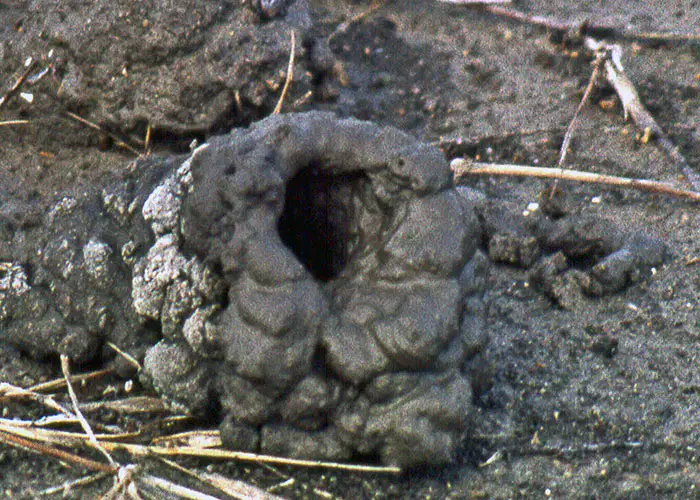
What does this diagram represent?

a)

a snake's habitat to hide in

b)

crayfish chimney for climate control

c)

an insect pitfall trap

d)

a hole created by erosion

47.
_______________ is the process of shedding and replacing the exoskeleton of a crayfish.
a)
Molting
b)
Hibernating
c)
Sleeping 
d)
Respiration
48.
Crayfish usually live in cold water. They can stay out of water for short periods of time ________________
a)
to molt
b)
to hibernate
c)
to look for a mate
d)
as long as their gills stay wet, so they can breathe
49.
Crayfish burrow into the mud to 
a)

A. to hide from enemies 

b)

B. to escape the winter cold 

c)

neither A  nor B 

d)

both A and B 

50.
Why does a crayfish molt?
a)
Crayfish like to molt because they become soft for a short time
b)
A crayfish fools predators into thinking its shed exoskeleton is a crayfish
c)
It's exoskeleton is hard and gets broken often
d)
As a crayfish grows its exoskeleton does not grow and must be replaced
51.
What kind of water do crayfish live in? 
a)
Fresh water 
b)
Salt water 
c)
Soda water
d)
Oceans
52.
What family does a crayfish belong to? 
a)
Mammal
b)
Reptile
c)
Amphibian
d)
Crustacean
53.
In ponds or streams, crayfish usually search for food _________________.
a)
at night
b)
during the day
c)
all the time 
d)
none of the above
54.

Click on the chicken

55.

In January when we started our semeter, we noted that there were ​ (a)   crawfish, now that is is spring with MORE vegetation, they are ​ (b)  

Choose from the below words
few
numerous
blue
green