Wayground logo

Free Printable Worksheets

Font size

S
M
L
XL
Worksheets

Midterm Gempel 2023 Practice

Total questions: 117

Worksheet time: 2hrs 45mins

Name
Class
Date
1.

What is an enzyme?

a)

A carbohydrate that breaks down food

b)

An apple

c)

A protein to speed up chemical reactions

d)

Things that is unusable after a chemical reaction

2.

Which is the active site?

a)

A

b)

B

c)

C

d)

NON OF THE ABOVE

3.

What happens to the enzyme if it is outside of its ph range?

a)

the enzyme will lose its shape and become denatured

b)

the enzyme will work better

c)

the enzyme will become bigger

d)

the enzyme will stop working entirely

4.

What happens to the enzyme above 50 degrees Celsius?

a)

cause them to get smaller

b)

cause them to get bigger

c)

cause denature most human enzymes.

d)

cause them to work faster

5.
Which of these is NOT true?
a)
Enzymes can denature (change shape) when the temperature gets too high.
b)
Enzymes can only be used once in a chemical reaction. 
c)
Extreme pH can denature enzymes.
d)
Enzymes speed up chemical reactions. 
6.
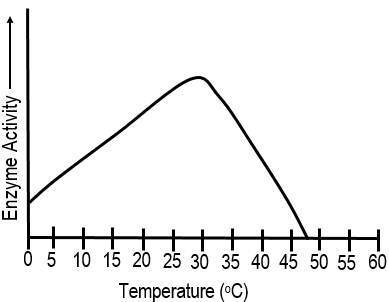
Based on the graph, what temperature does this enzyme work best? 
a)
15 C
b)
40 C
c)
30 C
d)
47 C
7.

Enzymes have a optimum ph

a)

true

b)

false

8.
Water molecules stick to other water molecules. This property is called ________.
a)
adhesion
b)
cohesion
c)
surface tension
d)
capillary action
9.
In _______ ______, cohesion and adhesion work together to allow water to move against gravity.  This is how plants pull water up their stems.
a)
surface tension
b)
capillary action
10.
Why does water move from the roots to the leaves of plants?
a)
Water is pushed by solutes
b)
Capillary action pulls the water molecules like a chain
c)
Water is pulled by gravity
d)
Water’s cohesion causes it to “pull” towards the leaves
11.
In the given scenario what will happen?  An egg is placed in pure water for 48 hours.
a)
The egg will gain water and swell.
b)
Water will move in and out of the cell equally, and the cell with neither shrink nor swell.
c)
The egg will lose water and shrink.
12.
If the egg is in distilled (100%) water overnight, what might happen?
a)
egg will shrink as water leaves
b)
egg mass will stay constant
c)
egg may burst as water enters
d)
most absorb water until it achieves equilibrium with solution
13.
Which way will the water move by osmosis in this situation?
a)
into the cell
b)
out of the cell
c)
won't move
14.
Proteins are made of monomers called ___________
a)
Nucleotides
b)
Monosaccharides
c)
Amino Acids
d)
Glycerol and fatty acids
15.

Low --> High

against the concentration gradient

a)

Passive

Transport

b)

Active

Transport

16.
Which of the following is not a type of passive transport?
a)
Osmosis
b)
Diffusion
c)
Endocytosis
d)
Facilitated Diffusion
17.
What type of transport is this?
a)
Endocytosis
b)
Facilitated Diffusion
c)
Active Transport Pump
d)
Osmosis
18.
In which phase does the cell spend most of it's life?
a)
Interphase
b)
Nuclear Division
c)
Telophase
d)
Mitosis
19.
What phase of mitosis is occuring in the picture?
a)
Prophase
b)
Metaphase
c)
Cytokinesis
d)
Telophase
20.
Which of the following is NOT occuring during interphase?
a)
Cell growth
b)
DNA being copied
c)
DNA condensing
d)
Two new cells are made
21.
Why would it be important to replicate DNA before a cell divides in mitosis or meiosis?
a)
In order for genetic information to be transferred into daughter cells.
b)
In order for the cell to be able to increase in size.
c)
In order for the DNA to be contained in the nucleus.
d)
In order for the cell to re-order the DNA sequencing in the new cells.
22.

In which phase of Mitosis do the Chromosomes pull Apart

a)

Metaphase

b)

Prophase

c)

Anaphase

d)

Telophase

23.

What is the purpose of Mitosis?

a)

Growth of an organism and Repair of damaged tissue

b)

To help the body get rid of extra cells

c)

To increase the amount of classwork you have to do

d)

To get rid of the nucleus

24.
DNA is replicated during the ______ phase of the cell cycle.
a)
G1
b)
Synthesis
c)
G2
d)
G0
25.
What do the cells look like at the end of mitosis?
a)
different from original cell
b)
similar to the original cell
c)
identical to the original cell
d)
none of these
26.

A nucleotide is composed of

a)

A phosphate, sugar and nitrogenous base

b)

A protein, protein and Guanine

c)

A phosphate, Adenine, and nitrogenous base

d)

A protein, Adenine and nitrogenous base

27.

Find the complementary DNA sequence: AATCGAC

a)

UUAGCUG

b)

AATCGAC

c)

CCGATCT

d)

TTAGCTG

28.
Which of the following is a characteristic of both Eukaryotic and Prokaryotic cells?
a)
ribosomes
b)
nucleus
c)
membrane bound organelles
d)
simple
29.
Has membrane bound organelles
a)
Prokaryote
b)
Eukaryote
c)
both
30.
Which of the following is found inside a prokaryote?
a)
cytoplasm
b)
DNA
c)
ribosomes
d)
all of these
31.
Which is true of prokaryotic and eukaryotic cells?
a)
Prokaryotic cells are larger than eukaryotic cells.
b)
Eukaryotic cells do not have nuclei, and prokaryotic cells do have nuclei.
c)
Prokaryotic cells lack membrane-bound organelles, and eukaryotic cells contain membrane-bound organelles.
d)
Eukaryotic cells are simpler than prokaryotic cells.
32.

Which do BOTH prokaryotes and eukaryotes contain?

a)

nucleus

b)

mitochondria

c)

ribosomes

d)

cell wall

33.

Which does only eukaryotic cells contain?

a)

nucleus

b)

DNA

c)

cell membrane

d)

ribosomes

34.
A cymothoid isopod lives inside the mouth of a snapper fish. The isopod severs blood vessels in the fish’s tongue, causing the tongue to atrophy and degenerate.The isopod then hooks its pereopods, or legs, to the base of the fish’s tongue,essentially replacing the tongue. The isopod stays there for the rest of its life, feeding on blood, mucus, and stray pieces of food from the fish.
a)
Commensalism
b)
Parasitism
c)
Mutualism
35.
A tapeworm needs to eat food that is already digested, so it lives in the intestines of a dogfish shark and derives nourishment from the shark. As a result of the tape worm infestation, the shark is weakened and more vulnerable to disease and predation. 
a)
Parasitism
b)
Commensalism
c)
Mutualism
36.

A student fills a beaker with a solution of 96% water and 4% salt. She then adds a solution of 88% and 12% salt into dialysis tubing (See image). At the end of the experiment, the dialysis tubing will

a)

turn purple

b)

weigh the same

c)

weigh less

d)

weigh more

37.

A student fills a beaker with a solution of 96% water and 4% salt. She then adds a solution of 88% and 12% salt into dialysis tubing (See image). SALT molecules will move

a)

from inside the tubing to the beaker

b)

from the beaker to inside the tubing

c)

they won't move due to equilibrium

d)

they won't move because water molecules are too big to pass through the tubing

38.

A student fills a beaker with a solution of 96% water and 4% salt. She then adds a solution of 88% and 12% salt into dialysis tubing (See image). WATER molecules will move

a)

from inside the tubing to the beaker

b)

from the beaker to inside the tubing

c)

they won't move due to equilibrium

d)

they won't move because water molecules are too big to pass through the tubing

39.

What molecules are in nucleotides?

a)

Phosphate group

b)

Protein

c)

Sugar

d)

lipid

e)

Nitrogenous base

40.

Which molecules make up the "backbone" of DNA and RNA?

a)

Sugar

b)

Phosphate group

c)

Nucleotide base

41.

Adenine can bond with... (CAREFUL!!!)

a)

Guanine

b)

Cytosine

c)

Thymine

d)

Uracil

42.

Where is DNA made into RNA?

a)

Cytoplasm

b)

Nucleus

c)

Ribosome

d)

Cell Membrane

43.

Where is RNA made into protein?

a)

Cytoplasm

b)

Nucleus

c)

Ribosome

d)

Cell Membrane

44.

Is this a strand of DNA or RNA?

TACGGACTA

a)

DNA

b)

RNA

c)

Impossible to tell

45.

DNA is used as a guide to rewrite the genetic code into RNA. RNA can then leave the nucleus.

a)

This is Transcription.

b)

This is Translation.

46.

RNA goes to the ribosome where it is used as a guide to attach amino acids together. Amino acids in a chain is a protein

a)

This is Transcription.

b)

This is Translation.

47.

What is the correct order to make a protein?

a)

Protein, DNA, RNA

b)

RNA, DNA, Protein

c)

DNA, RNA, Protein

d)

Protein, RNA, DNA

48.
If one strand of DNA has the sequence TTACCG, the sequence of the other strand of the same molecule will be
a)
AATGGC
b)
TTACCG
c)
AACGGC
d)
AATGGG
49.
Where does transcription take place?
a)
nucleus
b)
cytoplasm
c)
ribosome
50.
Franklin used x-ray crystallography to determine the shape of the DNA molecule is
a)
a cloverleaf
b)
a braided rope
c)
a pleated sheet
d)
a twisted ladder
51.

Built models to determine that DNA was a double helix shape with base pairs A-T and G-C in rungs between the sugar/phosphate backbone of DNA.

a)

Watson & Crick

b)

Franklin

c)

Wilkins

d)

Pauling

e)

Chargaff

52.

Provided clear x-ray crystallography images of DNA

a)

Watson & Crick

b)

Franklin

c)

Wilkins

d)

Pauling

e)

Chargaff

53.

Using x-ray diffraction to determine the structure of a crystal, such as DNA

a)

x-ray crystallography

b)

gas chromatography

c)

chromatography

d)

gel electrophoresis

54.

Check the two correct boxes:

a)

Plant Cell - cell plate; Animal Cell - cleavage furrow

b)

Plant Cell - cleavage furrow; Animal Cell - cell plate

55.
During which phase of the cell cycle does the cell spend the most time?
a)
Mitosis
b)
Cytokinesis
c)
Interphase
56.
During which part of the cell cycle is DNA copied?
a)
Mitosis
b)
Cytokinesis
c)
S phase
57.
Interphase has 3 stages; G1, S, and G2.  What happens during synthesis?
a)
Cells grow and carry out normal functions
b)
Cells copy organelles and prepare for a critical checkpoint
c)
The cell splits into two new daughter cells
d)
The cell makes a copy of its DNA
58.
The cycle in which cells undergo growth and division
a)
Cell Cycle
b)
Interphase
c)
Mitosis
d)
Cytokinesis
59.
In the G1 stage of the cell cycle, the cell
a)
Grows
b)
Matures
c)
Carries on normal activities
d)
All of the above
60.

Which statement best describes the enzyme represented in the graph?

a)

This enzyme works best at a temperature of 35 degrees Celsius

b)

This enzyme works best at 10 degrees Celsius

c)

This enzyme works best at 50 degrees Celsius

d)

Temperature has no effect on the enzyme

61.
Iodine is an indicator that tests for the presence of
a)
Glucose
b)
Starch
c)
Disaccharides
d)
Protein
62.
Which solution shows a negative result for the presence of starch when using iodine?
a)
A
b)
B
c)
C
d)
D
63.
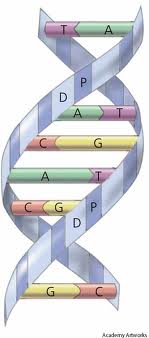
Which 2 molecules forms the sides (backbone) of the DNA ladder?
a)
deoxyribose and adenine
b)
deoxyribose and a hydrogen bond
c)
sugar and the nucleus
d)
deoxyribose (sugar) and phosphate
64.
What are the three components of a nucleotide?
a)
sugar, hydrogen, nitrogen base
b)
sugar, oxygen, nitrogen base
c)
sugar, phosphate, nitrogen base
d)
sugar, phosphate, protein
65.
Cytosine always pairs with
a)
Adenine
b)
Thymine
c)
Uracil
d)
Guanine
66.
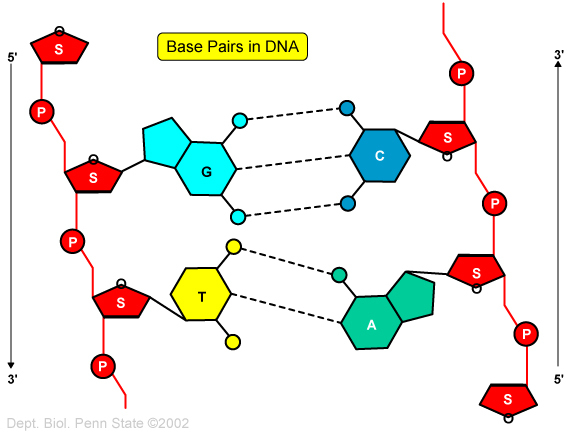
Nitrogenous bases are joined by which type of bond?
a)
polar bonds
b)
ionic bonds
c)
covalent bonds
d)
hydrogen bonds
67.

The cell membrane is composed of a ...........

a)

phospholipid bilayer

b)

single layer of phospholipids

c)

carbohydrate bilayer

d)

single layer of carbohydrates

68.

The heads of the phospholipids in the cell membrane are considered to be?

a)

hydrophobic: water loving

b)

hydrophilic: water loving

c)

hydrophobic: water hating

d)

hydorphilic: water wating

69.

The tails of the phospholipids in the cell membrane are considered to be?

a)

hydrophobic: water loving

b)

hydrophobic: water hating

c)

hydrophilic: water loving

d)

hydrophillic: water hating

70.
Which form of active transport is being shown?
a)
Pinocytosis
b)
Endocytosis
c)
Exocytosis
d)
Osmosis
71.
Hydrophobic region of the cell membrane?
a)
E
b)
B
c)
C
d)
A 
72.

What are the reactants of cellular respiration?

a)

CO2 + glucose

b)

Glucose + CO2 + Energy (Sun)

c)

Oxygen + glucose

d)

CO2 + H2O + Energy (Sun)

73.

If material is too big to go through the cell membrane, special proteins HELP move molecules from high to low through the membrane. What is that called?

a)

active transport

b)

osmosis

c)

equilibrium

d)

facilitated diffusion

74.
Which is not a type of active transport?
a)
Receptor-mediated endocytosis
b)
Pinocytosis
c)
Sodium potassium pump
d)
Facilitated diffusion
75.
If there is 25% oxygen inside the cell and 50% oxygen in the outside blood, which direction will the oxygen move?
a)
Out of the cell
b)
Into the cell
c)
The cell is at equilibrium
76.

How do small molecules like oxygen and carbon dioxide cross the cell membrane?

a)

active transport

b)

endocytosis

c)

protein pumps

d)

simple diffusion

77.

This is an example of which method of getting molecules across a cell membrane?

a)

facilitated diffusion

b)

active transport

c)

simple diffusion

d)

bulk transport

78.
Where does transcription take place?
a)
nucleus
b)
cytoplasm
c)
ribosome
79.
what does mRNA do?
a)
carry info from genes to ribosomes
b)
carry amino acids to ribosomes
c)
help with RNA splicing
d)
make up ribosomes
80.
True or false:  RNA is double-stranded.
a)
true
b)
false
c)
it depends on the type
81.

What is the correct order to make a protein?

a)

Protein, DNA, RNA

b)

RNA, DNA, Protein

c)

DNA, RNA, Protein

d)

Protein, RNA, DNA

82.

Transcription occurs before Translation

a)

True

b)

False

83.

The goal of Translation is to make...

a)

mRNA

b)

rRNA

c)

DNA

d)

Proteins

84.
If there is 5 percent water inside a cell and 5 percent water outside a cell
a)
more water will move inside the cell
b)
more water will move outside the cell
c)
There will be no movement of water cells
85.
A person would never have pure water put into their veins in a hospital because their cells would...
a)
Shrink/Dehydrate
b)
Expand
86.
What type of transport is this?
a)
Endocytosis
b)
Facilitated Diffusion
c)
Active Transport Pump
d)
Osmosis
87.

The cell expanded in size to the point of lysing (bursting), which means it was placed in a ____ solution.

a)

Isotonic

b)

Hypertonic

c)

Hypotonic

88.
The cell below is in a _________ solution.
a)
Hypotonic
b)
Hypertonic
c)
Isotonic
89.
The cell below is in a _____________ solution.
a)
Hypertonic
b)
Hypotonic
c)
Isotonic
90.

This egg has shrunk, what type of solution was it placed in?

a)

hypotonic solution

b)

hypertonic solution

c)

isotonic solution

91.
What type of solution is this cell in?
a)
Isotonic
b)
Hypertonic
c)
Hypotonic
d)
diffused
92.

Which protein helps speed up chemical reactions?

a)

Enzymes

b)

Transport Protein

c)

Antibodies

d)

Collagen

93.

The building block (monomer) of proteins is...

a)

Monosaccharides

b)

Fatty Acids

c)

Amino Acids

d)

Nucleotides

94.

When an enzyme changes its shape due to pH or temperature it is known as...

a)

Denature

b)

Deform

c)

Substrate

d)

Product

95.

Which of the following is NOT a function of proteins?

a)

stored energy

b)

create muscle

c)

speed up reactions as enzymes

d)

fights infection in the form of antibodies

96.

The main function of stomata is to

a)

capture sunlight

b)

protect leaves from insects

c)

allow gases to move rapidly in/out of leaves

d)

release sugars into the atmosphere

97.

If plants don't store up water, how does water leave the plant?

a)

The roots get rid of excess water.

b)

Most plants DO store water.

c)

It is released from the leaves by TRANSPIRATION.

98.

What is the name of the microscopic holes in leaves that are opened and closed to allow water to TRANSPIRE?

a)

water doors

b)

stomata

c)

leaf eyes

d)

transpiration holes

99.
Name the levels of organization in the human body in order from smallest to largest:
a)
Tissue, organ, organ system
b)
Organ system, tissue, organs, cells
c)
Cells, tissue, organs, organ system
d)
Cells , organs, tissue, organ system
100.

When your glucose levels are too high, what is the appropriate response?

a)

urinate

b)

release glucagon

c)

eat sugar

d)

release insulin

101.

Glucagon causes muscles and the liver to release _____ back into the bloodstream

a)

glucose

b)

glucagon

c)

glycogen

d)

insulin

102.

Which hormone is released when blood sugar gets too low?

a)

glucose

b)

glucagon

c)

glycogen

d)

insulin

103.

Which hormone is released when blood sugar gets too high?

a)

glucose

b)

glucagon

c)

glycogen

d)

insulin

104.

which organ will balance the glucose level in the blood by releasing hormones like insulin or glucagon?

a)

Stomach

b)

Small intensine

c)

large intestine

d)

Pancreas

105.
This image shows that DNA Replication is _______.
a)
Conservative
b)
Semiconservative
c)
Dispersive
d)
Spontaneous
106.

Which letter in the picture below depicts the leading strand in DNA replication?

a)

A

b)

C

c)

B

d)

None of the above

107.

Which letter in the picture below depicts the lagging strand in DNA replication?

a)

Letter A since it is copied from 5' to 3'

b)

Letter A since it is copied from 3' to 5'

c)

Letter B since it is copied from 3' to 5

d)

Letter B since it is copied from 5' to 3'

108.

DNA replication puts down nucleotides ______' to _____' and is said to be ______________________

a)

5, 3, antiparallel

b)

3, 5, antiparallel

c)

5, 3, parallel

d)

3, 5, parallel

109.

During replication, the double helix is unwound by the enzyme __.

a)

Helicase

b)

Ligase

c)

Polymerase

d)

Primase

110.

Label the three parts of the nucleotide.

111.

The fragments on the lagging strand that are made up of repeating segments of DNA and RNA Primers

a)

okazaki fragments

b)

Primase

c)

Polymerase

d)

unused DNA

112.

Replication is occurring AWAY FROM the replication fork on strand

a)

I, the leading strand

b)

I, the lagging strand

c)

H, the leading strand

d)

H, the lagging strand

113.

H is the

a)

leading strand

b)

lagging strand

c)

parent strand

d)

none of these

114.

This structure is an Okazaki fragment.

a)

A

b)

D

c)

F

d)

G

115.

DNA replication creates two strands of DNA from one. If pink is parental DNA and blue is new DNA - which picture demonstrates the accepted model of DNA replication after the SECOND replication cycle?

a)
b)
c)
d)
116.
Which number best represents helicase
a)
2
b)
3
c)
5
d)
6
e)
9
117.
Which number best represents DNA polymerase?
a)
2
b)
3
c)
5
d)
6
e)
9