wayground logo

Free Printable Worksheets

Font size

S
M
L
XL
Worksheets

PS- Chapter 5

Total questions: 50

Worksheet time: 25mins
Name
Class
Date
1.
Radiation is the transfer of energy in the form of particles.
a)
True
b)
False
2.
In a forced-air heating system, the warm air circulates by convection.
a)
True
b)
False
3.
In an internal combustion engine, fuel burns outside the engine in chambers called cylinders.
a)
True
b)
False
4.
Solar energy can be changed into thermal energy without any work being done.
a)
True
b)
False
5.
Winds are examples of convection currents.
a)
True
b)
False
6.
Lighter materials absorb more radiant energy than darker materials.
a)
True
b)
False
7.
In a vacuum flask, the vacuum helps in reducing heat loss due to radiation.
a)
True
b)
False
8.
When the same amount of thermal energy is added to both an object with high specific heat and an object with low specific heat, the object with a high specific heat will increase in temperature more than the object with a low specific heat.
a)
True
b)
False
9.
One degree Celsius is the same as one Kelvin.
a)
True
b)
False
10.
Refrigerators work because the heat flows spontaneously from warmer food to the colder air inside the refrigerator. The cooler air in the refrigerator occurs by the heat transferring to the coolant and taken out of the system.
a)
True
b)
False
11.
A heat pump works because it does not have to obey the second law of thermodynamics.
a)
True
b)
False
12.
A material that reduces the flow of heat by conduction, convection, and radiation is ____.
a)
a conductor
b)
condensation
c)
an insulator
d)
a solar collector
13.
Study of the relationships between thermal energy, heat, and work
a)
Potato
b)
Thermodynamics
c)
Chain
d)
Aerodynamics
14.
All of the following are good conductors of heat EXCEPT ____.
a)
air
b)
aluminum
c)
copper
d)
silver
15.
The transfer of energy that does NOT require matter is ____.
a)
combustion
b)
radiation
c)
conduction
d)
convection
16.
Energy from the Sun travels to Earth as ____.
a)
chemical energy
b)
combustion
c)
radiation
d)
mechanical energy
17.
The inside surface of the glass inside a vacuum bottle is coated with aluminum to prevent heat loss by ____.
a)
combustion
b)
radiation
c)
conduction
d)
convection
18.
Solar collectors are parts of a(n) ____.
a)
active solar heating system
b)
external combustion engine
c)
radiant heating system
d)
passive solar heating system
19.
Refrigerators and air conditioners are examples of ____.
a)
heat engines
b)
heat movers
c)
heat pumps
d)
solar collectors
20.
The process by which engine fuels burn is called ____.
a)
combustion
b)
condensation
c)
conduction
d)
convection
21.
Gasoline engines and diesel engines are ____.
a)
insulators
b)
external combustion engines
c)
internal combustion engines
d)
heat movers
22.
A device that converts thermal energy into mechanical energy is a ____.
a)
conductor
b)
refrigerator
c)
heat engine
d)
heat mover
23.
Through which of the following will convection most likely occur?
a)
liquids and gases
b)
solids and liquids
c)
solids
d)
solids and gases
24.
Which of the following would be the best insulator?
a)
air
b)
aluminum
c)
copper
d)
silver
25.
When a closed tin is heated, the pressure inside it increases. This happens because:
a)
The number of molecules increases on heating.
b)
The molecules move faster and each molecule strikes the walls of the tin more often.
c)
The molecules become heavier and strike the walls of the tin harder.
d)
The molecules now collide more with the walls of the tin than among themselves.
26.
Which is an example of heating through conduction?
a)
a ceiling fan pushes warm air downwards in winter
b)
touching a hot stove
c)
using a greenhouse to grow plants in winter
d)
The sun heats up the inside of a car
27.
Which is an example of heating through convection?
a)
warm air rising toward the ceiling
b)
touching a hot stove
c)
using a greenhouse to grow plants in winter
d)
The sun heats up the inside of a car
28.
Which is the transfer of thermal energy through direct contact of particles?
a)
conduction
b)
radiation
c)
convection
d)
specific heat
29.
Which is the transfer of thermal energy through the motion of particles caused by temperature differences?
a)
conduction
b)
radiation
c)
convection
d)
specific heat
30.
The specific heat of copper is 385 J/kg·K. If a 2.6 kg block of copper is heated from 300 K to 450 K, how much thermal energy is absorbed?
a)
22,000 J
b)
1000 J
c)
58,000 J
d)
150,000 J
31.
A 2.15 kg block of aluminum (specific heat = 897 J/kg·K) is at an initial temperature of 300 K. What will its final temperature be if 335,000 J of thermal energy are added?
a)
474 K
b)
174 K
c)
803 K
d)
447 K
32.
What is the specific heat of a substance that requires 99,100 J of thermal energy to heat 3.47 kg of this substance from 11°C to 45°C?
a)
634 J/kg·K
b)
2600 J/kg·K
c)
695 J/kg·K
d)
840 J/kg·K
33.
A block of copper (specific heat = 385 J/kg·K) requires 635,000 J of thermal energy to change in temperature from 17°C to 139°C. What is the mass of this copper block?
a)
13.5 kg
b)
11.9 kg
c)
5.68 kg
d)
4.00 kg
34.
Temperature is a measure of ____ of the particles in an object.
a)
the difference between the potential and kinetic energy
b)
the sum of the potential and kinetic energy
c)
the average potential energy
d)
the average kinetic energy
35.
The thermal energy of an object is ____.
a)
its potential energy
b)
its average kinetic energy
c)
its potential energy minus its kinetic energy
d)
its kinetic energy plus its potential energy
36.
Heat is thermal energy transferred from one object to another because of a difference in ____.
a)
mass
b)
temperature
c)
volume
d)
potential energy
37.
Fast food restaurants keep food hot with infrared lamps. The heat is transferred to the food by ____.
a)
condensation
b)
conduction
c)
convection
d)
radiation
38.
When a pot of water is put on a stove, the water at the top gets hot primarily by ____.
a)
radiation
b)
conduction
c)
convection
d)
condensation
39.
Most materials ____ when they are heated.
a)
condense
b)
freeze
c)
expand
d)
contract
40.
A device that can be used both for cooling and heating is a ____.
a)
heat engine
b)
compressor
c)
heat pump
d)
vaporizer
41.
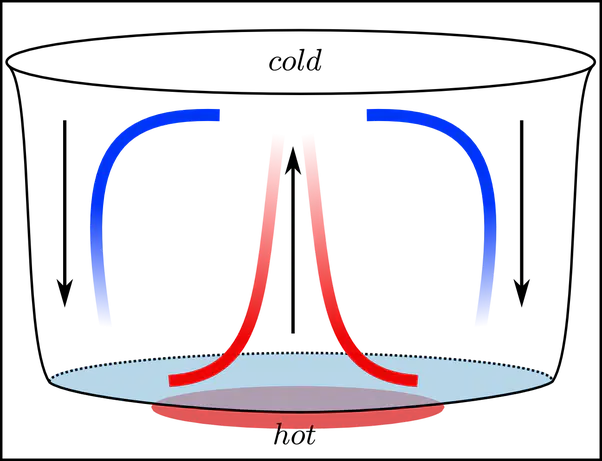
What type of heat transfer is shown in the picture?
a)
conduction
b)
convection
c)
radiation
d)
repulsion
42.
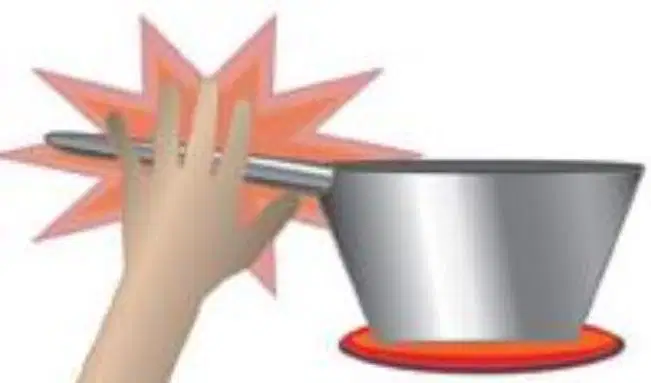
What type of heat transfer is shown in the picture by the arrows?
a)
conduction
b)
convection
c)
radiation
d)
condensation
43.
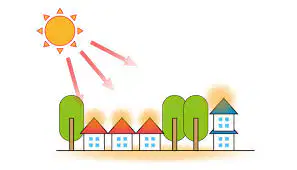
What type of heat transfer is shown in the picture?
a)
conduction
b)
convection
c)
radiation
d)
obstruction
44.

The process of heat transfer where molecules move from a higher temperature area to a lower temperature area is called ____.

a)

conduction

b)

convection

c)

radiation

d)

insulation

45.

A material that allows heat to pass through it easily is known as a ____.

a)

conductor

b)

insulator

c)

radiator

d)

condenser

46.

The transfer of heat in the form of electromagnetic waves is known as ____.

a)

conduction

b)

convection

c)

radiation

d)

insulation

47.

The process of heat transfer that does not require a medium is ____.

a)

conduction

b)

convection

c)

radiation

d)

insulation

48.

Which of the following is not a good conductor of heat?

a)

copper

b)

aluminum

c)

silver

d)

wood

49.

What is the process of heat transfer from one particle of matter to another?

a)

Conduction

b)

Convection

c)

Radiation

d)

Insulation

50.

Which of the following is a good insulator of heat?

a)

Gold

b)

Iron

c)

Plastic

d)

Copper