
 Worksheets
Biology Fall Semester Exam Review
Total questions: 180
Worksheet time: 10hrs 16mins


What part of a virus is the protein capsule (coat) that houses the genetic material (DNA/RNA)?
tail
nucleus
capsid
glycoprotein


Where do viruses reproduce?
Outside of a host cell
Inside of a host cell
They do not reproduce

takes over the cell's functions.

What conclusion can be made about the HIV infection of a host cell is best supported by the image?
It takes place outside of living cells.
It relies on the host cell to replicate.
It involves the process of meiosis.
It requires carbon dioxide.
An illness caused by a certain virus includes fever, rash, joint pain, red eyes, and headache. The virus is transmitted by mosquitoes and the symptoms quickly occur within three to twelve days after contracting the virus. What is the reproductive cycle of the virus considered.
Lytic
Lysogenic

Using your knowledge on viruses, which structure below IS NOT part of a viruses structure?
Genetic Material (DNA/RNA)
Capsid (Protective Protein Coat)
Cytoplasm (gel like fluid)
Projections (Protein Spikes used for attachment)
What type of genetic material do viruses have?
Only DNA
Only RNA
It could be DNA or RNA
None of these are true.

WHICH SAMPLE MOST LIKELY CONTAINS VIRUSES?
SAMPLE 1
SAMPLE 2
SAMPLE 3
SAMPLE 4
The viruses genetic material (DNA) starts to take over the functions of the cell
The host cell bursts open, releasing the new viruses
The virus injects its genetic material into the cell
A virus attaches to the surface of a host cell
A virus attaches to the surface of a host cell
The proteins and genetic material start to assemble in the cell
The host cell bursts open, releasing the new viruses
The virus injects its genetic material into the cell
True
False
Severe acute respiratory syndrome (SARS) is an illness caused by a coronavirus. Symptoms include a high fever, headaches, and body aches typically occur two to seven days after infection by the virus. SARS is more serious in elderly patients. This information suggests that the reproductive cycle of the SARS virus is-
lysogenic, because the virus is a coronavirus
lytic, because the virus causes respiratory illness
lysogenic, because the virus primarily affects older people
lytic, because of the quick onset of symptoms after infection

The smallest unit that makes up the known elements.
Molecule
Organelle
Cell
Atom

The smallest unit
of a compound consisting of two or more atoms
bonded together.
Organelle
Cell
Molecule
Atom

Structures in a cell that have specialized jobs.
Similar concept to organs for the human body.
Tissue
Molecule
Atom
Organelles

The basic building block of living things, made up of organelles.
Tissue
Organelle
Cell
Atom

Groups of cells with similar functions.
Organs
Molecules
Tissues
Organelles

Group of tissues with similar functions.
Organelles
Cells
Tissues
Organs

Group of organs with similar functions.
Organism
Cell
Organ
System
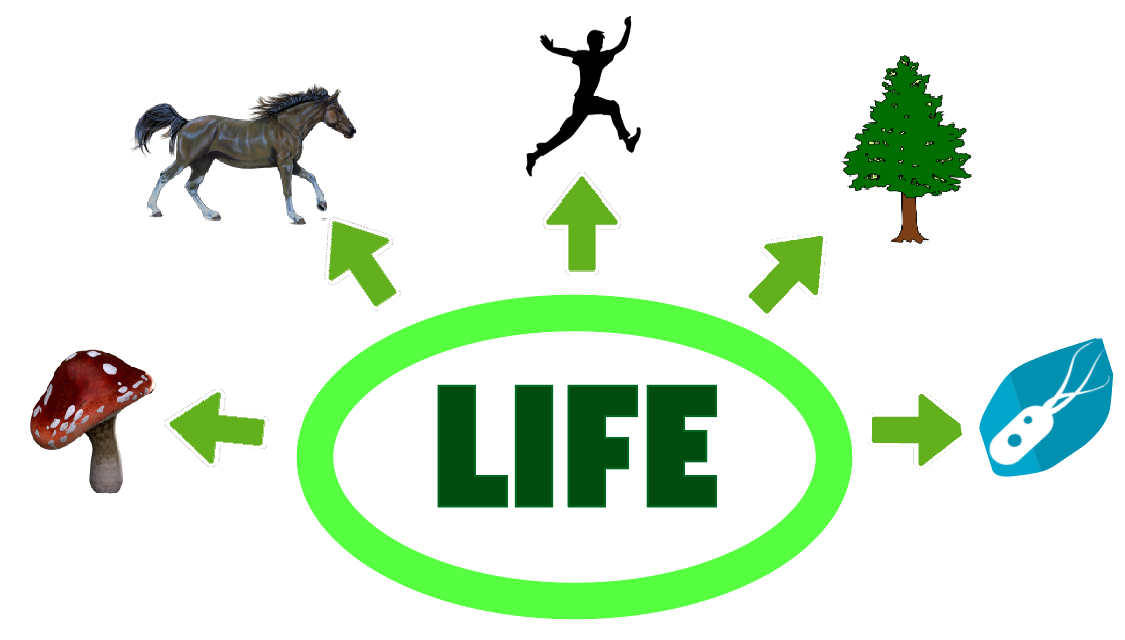
Any single living individual, and can refer to a single human, animal, plant,
Protista, bacteria, or fungi.
Community
Cell
Population
Organism

Organisms who are members of the same species in an ecosystem.
Organism
Population
Organ
Community

Group of populations in an area.
Organism
Ecosystem
Community
Biosphere

A biological community that includes various species and their physical environment (Biotic and Abiotic Factors).
Organism
Community
Biosphere
Ecosystem

Where life is found on earth.
Community
Habitat
Ecosystem
Biosphere
The simplest type of passive transport is diffusion.
True
False
The movement of molecules from an area of higher concentration to an area of lower concentration is called _______________________.
Cytolysis
Osmosis
Diffusion
Plasmolysis
The difference in the concentration of molecules across a distance is called __________________________________.
Concentration gradient.
Facilitated diffusion.
Concentration change
Equilibrium gradient.
Molecules tend to move from areas where they are more concentrated to areas where they are less concentrated, or "down" their concentration gradient.
True
False
Complete the following sentence: Molecules are in constant motion because they have ___________________ energy. Molecules move randomly, traveling in a _____________ line until they hit an object, such as another molecule. In the absence of other influences, diffusion will eventually cause the molecules to be in _______________
potencial, curve, equilibrium
kinetic, curve, osmosis
kinetic, straight, equilibrium
potencial, straight, osmosis
When the concentration of molecules is the same throughout the space the molecules occupy, the molecules are in __________________________.
osmosis
total balance
equilibrium
total pressure
If a molecule can pass through a cell membrane,
It will diffuse from an area of higher concentration one one side of the membrane to an area of lower concentration on the other side.
It will diffuse from an area of lower concentration one one side of the membrane to an area of higher concentration on the other side.
It will diffuse from an area of higher concentration one one side of the membrane to an area of higher concentration on the other side.
It will diffuse from an area of lower concentration one one side of the membrane to an area of lower concentration on the other side.
Diffusion across a membrane is also called __________________
Osmosis
simple diffusion
facilitated diffusion
direct osmosis
The simple diffusion of a molecule across a cell membrane depends on __________________________________________.
The size of the membrane and the chemical nature of the molecule.
The chemical nature of the membrane.
The size and type of molecules.
The type and size of the molecules and on the chemical nature of the membrane.
Which of the following molecules can dissolve in lipids because of their non polar nature?
carbon dioxide and oxygen.
glucose and water
carbon dioxide and glucose
glucose and oxygen
Molecules that are very small but not soluble in lipids may diffuse across the membrane by moving through the pores in the membrane.
True
False
The process by which water molecules diffuse across cell membrane from an area of higher concentration to an area of lower concentration is called
facilitated diffusion
isotonic diffusion
osmosis
hypertonic diffusion
Osmosis does not require cell to expend energy,_________________________
because water is moving from from higher to lower concentration.
because lipids are moving from from higher to lower concentration.
because lipids are moving from from lower to higher concentration.
because water is moving from from lower to higher concentration.
The net direction of osmosis depends on the relative concentration of solutes on the two sides of the membrane.
true
false
When the concentration of solute molecules outside the cells lower than the concentration in the cytosol, the solution outside is _____________________to the cytosol. In this situation, water diffuses ________ the cell until equilibrium is established.
hypotonic, into
hypertonic, into
isotonic, out of
hypotonic, out of
isotonic, into
When the concentration of solute molecules outside the cell is higher than the concentration in the cytosol, the solution outside is ____________________ to the cytosol. In this situation, water diffuses ___________ the cell until equilibrium is established.
hypotonic, into
hypertonic, into
hypertonic, out of
isotonic, into
isotonic, out of
When the concentration of solutes outside and inside the cell are equal, The outside solution is said to be ________________________ to the cytosol. Under these conditions, water diffuses ____________________ the cell at equal rates.
hypotonic, into
hypotonic, out of
hypertonic, into and out of
isotonic, out of
isotonic, into and out of
When the external solution is isotonic to cytosol,
there is no net movement of water.
there is a net movement of water from inside to out side.
there is a net movement of water from outside to inside.
Water tends to diffuse from
hypertonic solutions to isotonic solutions.
hypotonic solutions to hypertonic solutions.
isotonic solutions to hypotonic solutions.
hypertonic solutions to hypotonic solutions.
In a hypertonic environment , water leaves the cells through osmosis, The cell thrink away from the cell wall, and tutor pressure is lost. This condition is called ________________________
carrier proteins
plasmolysis
cytolysis
active transport.
______________________________________ is used for molecules that cannot readily diffuse through cell membranes, even when there is a concentration gradient across the membrane.
tutor pressure
facilitated diffusion
endocytosis
exocytosis
In facilitated diffusion, the movement of large molecules or molecules not soluble in lipids across the cell membrane is assisted by specific proteins in the membrane. these proteins are known as __________________________________
carrier proteins
lipid proteins
ion channels
When cell move materials from an area of lower concentration to an area of higher concentration or up their concentration gradient, such movement of material is known as ________________________________.
pasive transport
active transport
endocytosis
diffusion
The process by which cells ingest external fluid, macromolecules, and large particles, including other cells is called __________________________________
endocytosis
pinocytosis
phagocytosis
exocytosis
In the process of endocytosis the external material are enclosed by a portion of the cell's membrane, which folds into itself and forms a pouch. The pouch then pinches off from the cell membrane and becomes a membrane-bound organelle called a _________________
ion channel
vacuole
vesicle
phagocyte
Two main types of endocytosis are based on the kind of material that is taken into the cell: _____________________________ involves the transport of solutes or fluids, and ________________________ is the movement of large particles or large cells.
exociytosis, phagocytosis
pinocytosis, phagocytosis
pinocytosis, exocytosis
The process by which the a substance is released from the cell through a vesicle that transports the substance out of the cell is called _________________.
pinocytosis
exocytosis
endocytosis
phagocytosis
Which organic molecule would a long-distance runner most likely choose to eat two hours before a race?
A protein, because it builds muscle mass.
A lipid because it provides long term energy storage.
A carbohydrate because it releases energy quickly.
A protein, because it transports oxygen into the blood stream.
How are the functions of a carbohydrate and a lipid similar?
Both are a source of energy.
Both are replicated during meiosis.
Both lower the activation energy of reactions.
Both dissolve nutrients in the digestive system.
What are the monomers of a lipid?
fat cubes and glycogen
glycerol and amino acids
fatty acids and glycerol
amino acids
Nucleotides are a monomer of which biomolecule?
Nucleic acids
Proteins
Carbohydrates
Lipids
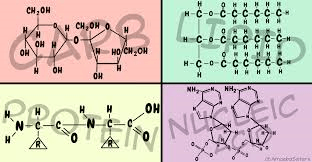
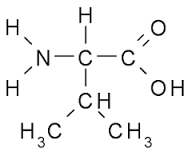
What are monosaccharides?
double sugar
single sugar
protein
nucleic acid
Which biomolecules can be DNA and RNA?
Carbohydrates
Lipids
Proteins
Nucleic Acids
Which organic molecules is paired with its function?
nucleic acid- to store energy
lipids – to regulate metabolic.
protein- to provide insulation.
carbohydrates – to provide quick-release energy.
Which of the following is the correct equation for PHOTOSYNTHESIS?
Glucose + Oxygen ---> Carbon Dioxide + Water
Water+Oxygen ---> Carbon Dioxide + Glucose
Glucose + Water ---> Carbon Dioxide + Oxygen
Water + Carbon Dioxide ---> Oxygen + Glucose
What is the main purpose of PHOTOSYNTHESIS?
To make ATP
To make Glucose
To make Water
To make Carbon Dioxide (CO2)
Besides glucose, what else is made in PHOTOSYNTHESIS?
Oxygen
Carbon Dioxide
Water
Sunlight
Where does photosynthesis occur?
In the mitochondria
In a vacuole
In the chloroplast
Where does CELLULAR RESPIRATION occur?
In the mitochondria
In a vacuole
In the chloroplast
Which of the following is the correct (right) chemical equation for CELLULAR RESPIRATION?
Oxygen + Water ---> Carbon Dioxide + Glucose
Glucose + Oxygen ---> Carbon Dioxide + Water
Oxygen + Carbon Dioxide ---> Water + Glucose
Glucose + Carbon Dioxide ---> Water + Oxygen
What is the main purpose of CELLULAR RESPIRATION?
To make glucose
To make ATP by breaking down Glucose
To make Carbon Dioxide (CO2)
To make oxygen
What is the purpose of Fermentation?
To make ATP
To make glucose
To keep Glycolysis going
To make Oxygen
What happens after Glycolysis if there is NO oxygen?
Photosynthesis
Fermentation
Cellular Respiration
What is the pigment that captures light in plants for photosynthesis? (Hint it makes plants green)
Chlorophyll
Actin
Microtubule
Mitochondria

The end result of mitosis is
4 Identical Cells are produced
4 genetically different cells are produced
2 identical cells are produced
2 genetically different cells are produced
The end result of meiosis is...
4 identical cells
4 genetically different cells
2 identical cells
2 genetically different cells
How many chromosomes do the daughter cells have in mitosis?
23
46
2
4
How many chromosomes do the daughter cells have in meiosis?
23
46
2
4
If an organism reproduces asexually, its offspring will most likely be...
genetically identical to the parent
genetically different from each other
produced from specialized cells known as gametes
A mutant
What is the correct order for the phases of mitosis?
Prophase, Anaphase, Telophase, Metaphase
Anaphase, Telophase, Prophase, Metaphase
Telophase, Anaphase, Prophase, Metaphase
Prophase,
Metaphase, Anaphase, Telophase
Which phase does the cell grow and develop?
Prophase
Interphase
Cytokinesis
Metaphase
How many divisions are in meiosis?
46
23
2
4
Which phase of mitosis do the chromosomes line up in the middle of the cell?
Anaphase
Metaphase
Telophase
Prophase
What is the correct definition of a haploid cell?
A cell that only has a single set of chromosomes. (23 = n)
A cell that has 2 sets of chromosomes (46 = 2n)


How is DNA organized inside the Nucleus?
Chromosomes
Base pairs
Segments
Plasmids

What is the next phase of mitosis?
Prophase
Metaphase
Anaphase
Telophase

What process results in the division of 1 cell into 2 identical daughter cells?
Mitosis
Meiosis
G1
Cross-Over

What is the name for the event that results in the division of the cell body (cytoplasm) into 2 daughter bodies.
Telophase
Citokinesis
Mitosis
Cross Over
The ___________________ determines an organism's traits.
sugar-phosphate backbone
sequence of nitrogen bases

What is represented in the picture?
amino acid
fatty acid
nucleotide
protein
What bond holds the two DNA strands together?
Hydrogen
Nitrogen
Where would you find DNA/chromosomes within a cell?
cytoplasm
nucleus
vacuole
golgi body
Give the complimentary strand:
ACT GGC TAC AAT CAG
ACT GGC TAC AAT CAG
TAA CCG ATG TTA GTC
TGA CCG ATT TTA GTC
TGA CCG ATG TTA GTC
What does semi-conservative mean?
both strands are old
one strand is old and one strand is new
both strands are new
both strands are half made
Which answer choice is not matched up correctly?
Helicase-unzips DNA
DNA polymerase-builds new DNA strands
Primase-lays a primer to initiate the start of replication
DNA-carbohydrate

What percentage of Thymine would the rat have?
21.4%
28.4%
30%
20.3%

What is the correct order of replication?
3, 2, 1, 4
2, 1, 4, 3
2, 3, 1, 4
3, 4, 1, 2
The end result of replication is ________________________.
one new molecule of DNA
two identical molecules of DNA
two different molecules of DNA

The assembling of new molecules, especially polymers.
Homeostasis
Meisosis
Mitosis
Synthesis

Assembling proteins via instructions from DNA.
Replication
Mutations
Protein synthesis
Homeostasis

A single strand of nucleotides made by DNA that is used to communicate genetic code outside the nucleus.
RNA
DNA
Ribosomes
Amino acid chain

DNA makes RNA → RNA makes proteins →
Proteins make life.
Homeostasis
Mendelian Genetics
Central Dogma
Myocardial Infarction

Double stranded DNA is unzipped, and one strand is used as a template to form Messenger RNA.
Translation
Transcription
Replication
Mitosis

Messenger RNA travels out of the nucleus to ribosomes
and is used as a template to assemble a protein.
Translation
Transcription
Replication
Homeostasis

A single strand of nucleotides coded by DNA
which travels to the ribosomes in the cytoplasm to give instructionsfor building proteins.
tRNA
DNA
mRNA
rRNA

A small section of RNA that transports amino acids
to the ribosome for synthesis into proteins.
tRNA
mRNA
rRNA
DNA

A nucleotide base that takes the place of Thymine in RNA.
Uracil
Thymine
Adenine
uRNA

The enzyme that codes mRNA from DNA instructions.
DNA Polymerase
RNA Polymerase
Helicase
Lipase

A ←→ U
C ←→ G
T → A
Homeostasis
Mitosis
Base Pairing Rules for Replication
Base Pairing Rules for Transcription

The order of the nucleotide bases in DNA or RNA.
Numerical sequence
Amino acid sequence
Base Sequence
Anti codon

Units of 3 nucleotide bases in mRNA which code for a single
amino acid.
Mitosis
Base Pairing
Anti codon
Codon

The reverse codon found on the tRNA.
Codon
Anticodon
Mitosis
Meiosis

A chart that shows the relationship between
codons and the amino acids they code for.
Homeostasis chart
Anticodon
Codon Chart
EKG Chart

Three nucleotide bases that code for the beginning
of a strand of protein.
Uracil
Stop Codon
Anticodon
Start Codon

Three nucleotide bases that code for the end
of a strand of protein.
Anticodon
Start Codon
Stop Codon
tRNA

Most of a ribosome is made of rRNA.
Anticodon
mRNA
tRNA
Ribosomal RNA (rRNA)
The mutated DNA segment is TTCGCAAG. This is an example of ___ mutation.
Mutation: ATC GCAT
What mutation occurred?
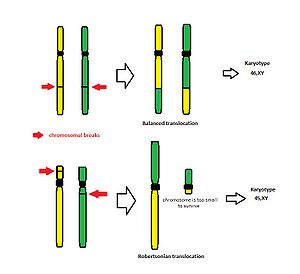
ATG CCA AAT

Original DNA: CAT GAT CCA
New DNA: CAT TGA TCC A
What mutation occurred? (one has been added)
deletion
substitution
tranverse
insertion

GAG-CTC-GAC-AGA
Mutant
GAG CTC-CAC-AGA

