
 Worksheets
Anatomy and Physiology Final Review 1 (Intro-Histology)
Total questions: 175
Worksheet time: 3hrs 34mins
The study of the structure and shape of the body and its parts and their relationships to one another is PHYSIOLOGY.
True
False
What body position is considered the “starting point” for describing body positions?
SOFT Planes
Anatomical Position
Quadrants
Cavities
Anatomy means:
the study of the form of all living things
the study of the body
the study of how living things work
None of the above
Physiology means
The study of the form of all living things.
The study of the body.
The study of how living things work.
None of the above.
Sagittal Planes divide the body
into right v left
into front v back
into unsymmetrical parts
into top v bottom
Transverse planes divide
into right v left
into top v bottom
into unsymmetrical parts
into front v back
The foot is ______ to the ankle.
Lateral
Posterior
Superior
Inferior
Which cavity contains the brain?
Oral
Cranial
Orbital
Abdominopelvic
The smallest particle in the structural makeup of the body is:
cell
molecule
atom
tissue
Which of the following is not a quadrant?
Upper left
Upper Right
Lower Left
Middle
The posterior body cavity contains:
Thoracic and Abdominal
Thoracic and Spinal
Pelvic, Abdominal, and Thoracic
Spinal and Cranial
Positive feedback....
Reduces a disruptive influence
Increases disruptive influence
none of the above
Which of the following is an example of negative feedback?
Blood clotting
Childbirth
Sweating
Transmitting nerve signals
Buccal means _______ and carpal means _____
Cheek of face; wrist
Cheek of face; toes
Groin; wrist
Groin; toes
Crural means ______; fibular means ______
Lateral, lower leg; lower leg
Lower leg; wrist
wrist; lower leg
Lower leg; lateral, lower leg
Frontal means ______; Mental means _____
Chin; forehead
Forehead; Chin
Eyes; Chin
Chin; brain
A patient's dorsal side is lying on the operating table. This position is called:
Lateral
Anterior
Supine
Prone
How many organ systems are there in the human body?
10
8
14
11
Anatomical landmark describing the shoulder:
Acromial
Crural
Scapular
Axillary
Anatomical landmark describing the upper Arm:
Antebrachial
Brachial
Mental
Frontal
Anatomical landmark describing the Armpit:
Occipital
Umbilical
Patellar
Axillary
Anatomical landmark describing the Elbow:
Occipital
Umbilical
Patellar
Olecranon
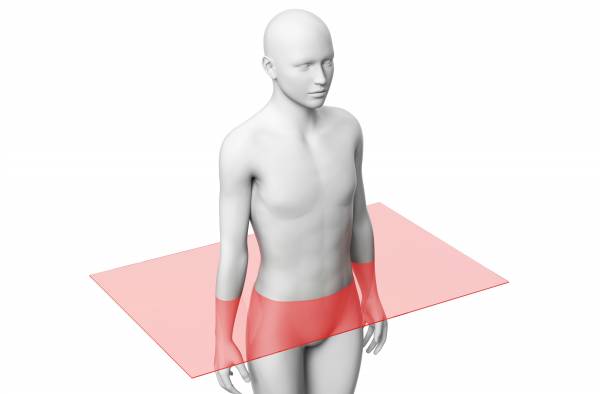
Identify the sectional plane:
frontal
lateral
transverse
sagittal
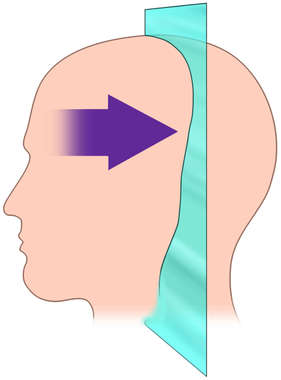
Identify the sectional plane:
transverse
sagittal
midsagittal
coronal
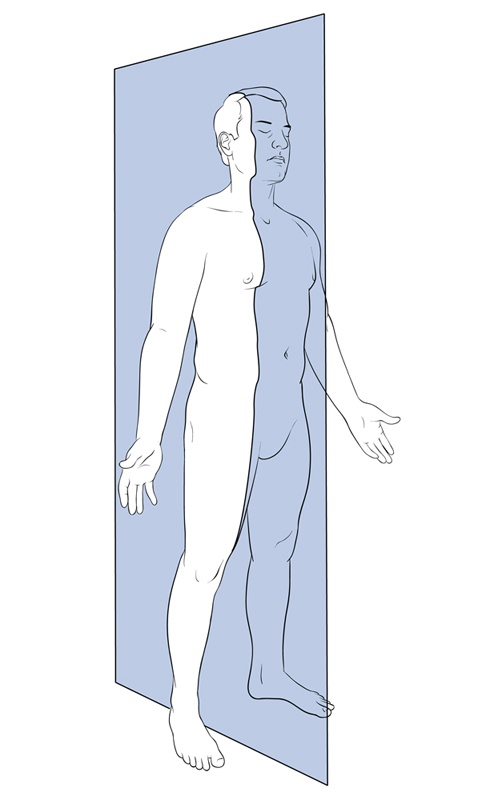
Identify the sectional plane:
frontal
cross
transverse
sagittal
The shoulder is _____ to the elbow.
proximal
dorsal
distal
ventral
Which term means "below" or "toward the feet?"
Inferior
Superior
Posterior
Lateral
A 47 year has fallen and is laying on her back, what position is this?
Lateral
Prone
Superior
Supine
Which medical term means "toward the front?"
Supine
Anterior
Lateral
Inferior
The cranial cavity is _____ to the thoracic cavity.
inferior
anterior
peripheral
superior
Oral means ________
Eyes
Ears
Mouth
Nose
Which large cavity describes the upper "chest" cavity?
Thoracic cavity
Cranial cavity
Abdominal cavity
Pelvic cavity
The type of sectional plane that divides the body into Dorsal and Ventral portions is:
Sagittal
Frontal
Transverse
Midsagittal
Directional term meaning "toward the mid-line?"
Lateral
Proximal
Rotation
Medial
Anatomical term meaning "toward the surface?"
Deep
Caudal
Superficial
Lateral
"Physiology" is the study of:
How living organisms perform functions
Labeling and naming body structures
Maintenance and repair of body tissues
The functions of internal body organs and structures
Which of the following options orders the structures from most simple to most complex?
tissues - cells - organ systems - organs
cells - tissues - organs - organ systems
cells - organs - tissues - organ systems
tissues - cells - organs - organelles
Amputation of a foot at the ankle would involve a cut in the _____ plane.
coronal
midsagittal
transverse
frontal
Which set of directional terms are opposites?
distal and proximal
medial and inferior
superior and ventral
anterior and deep

Which plane would make a slice right between your eyes dividing you into EQUAL left and right halves?
transverse
sagittal
midsagittal
frontal
Which landmark region is most Medial?
Nasal
Otic
Pollex
Femoral
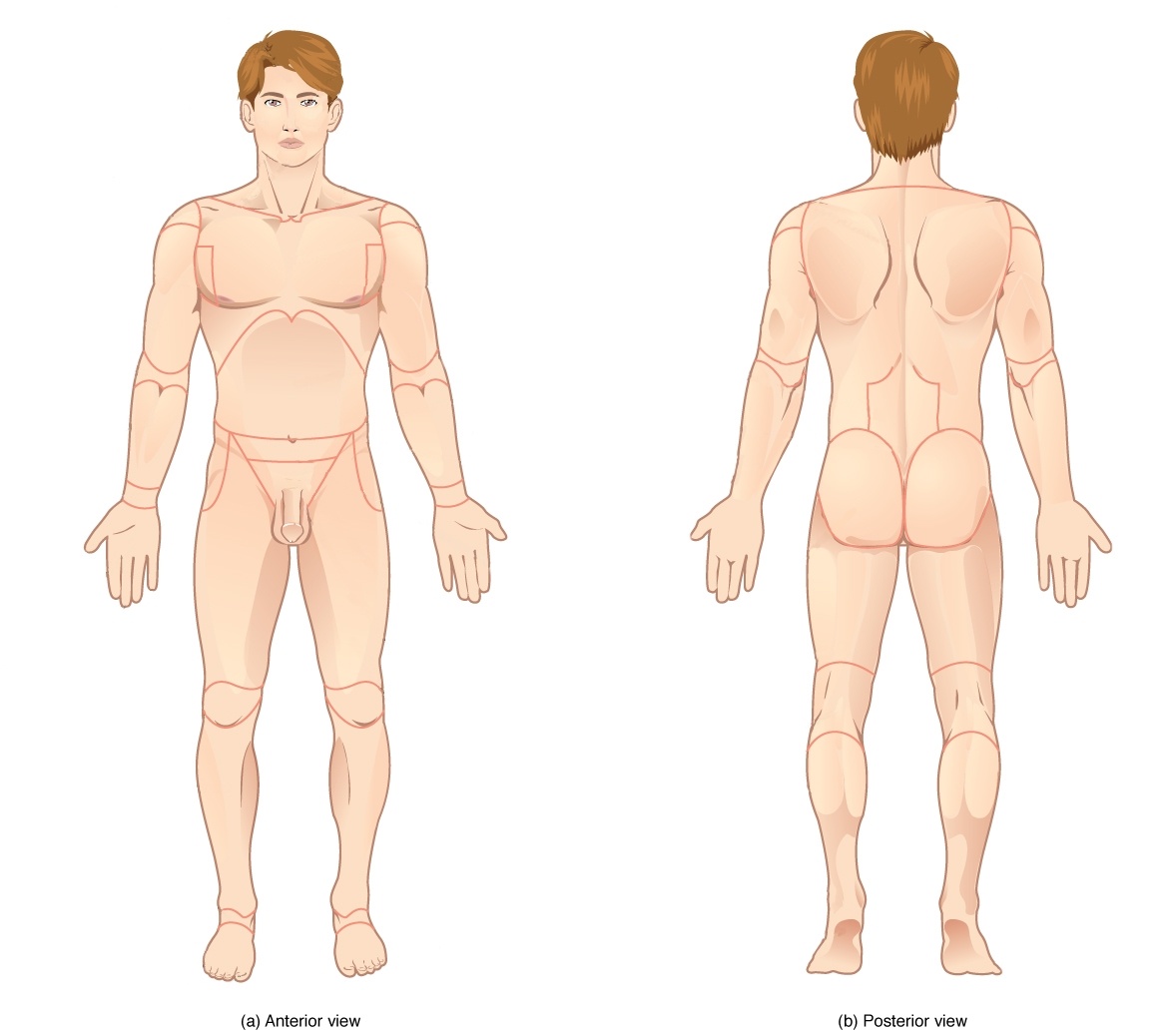
Which of the following represents the "Anatomical" position?
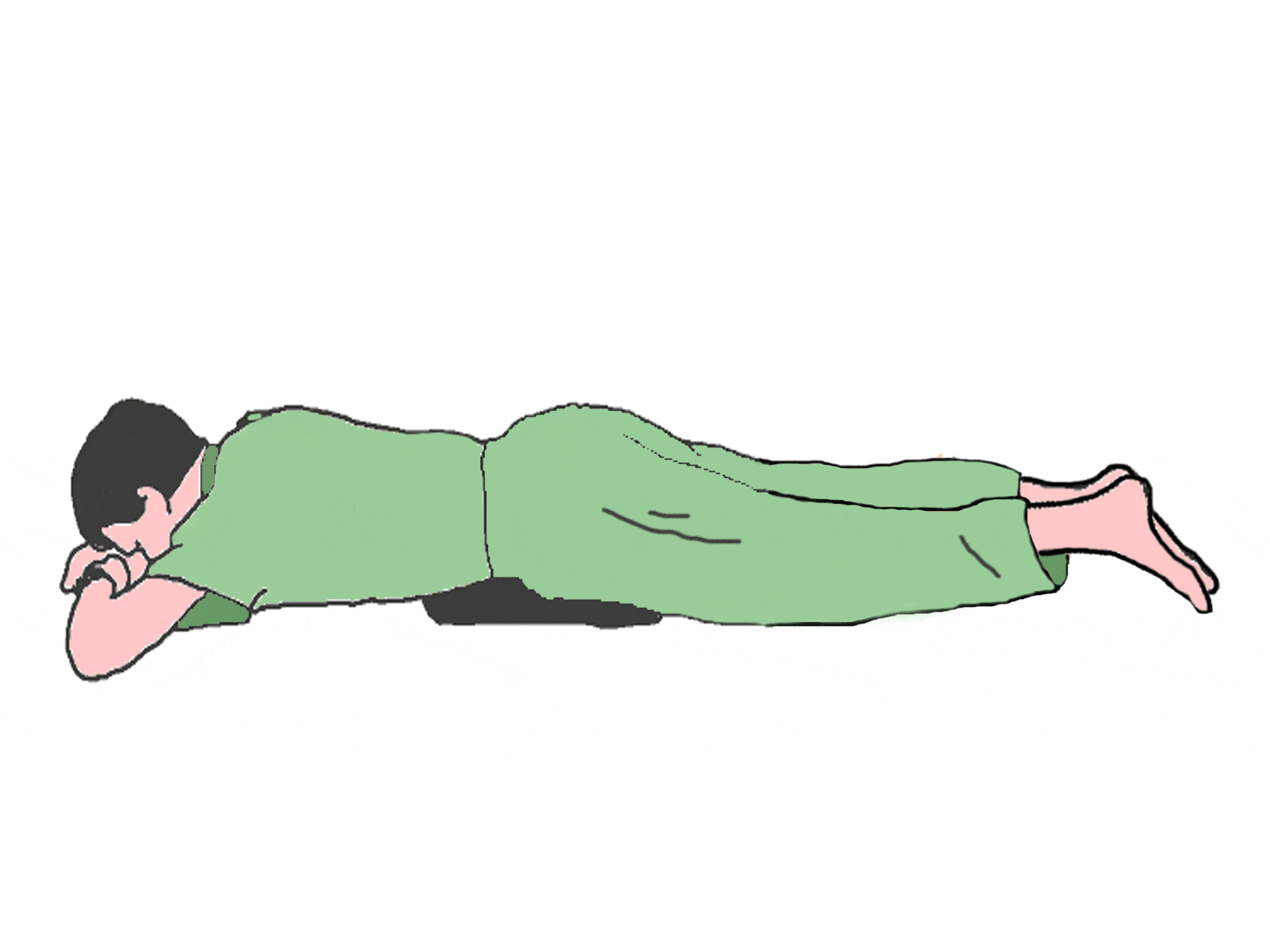
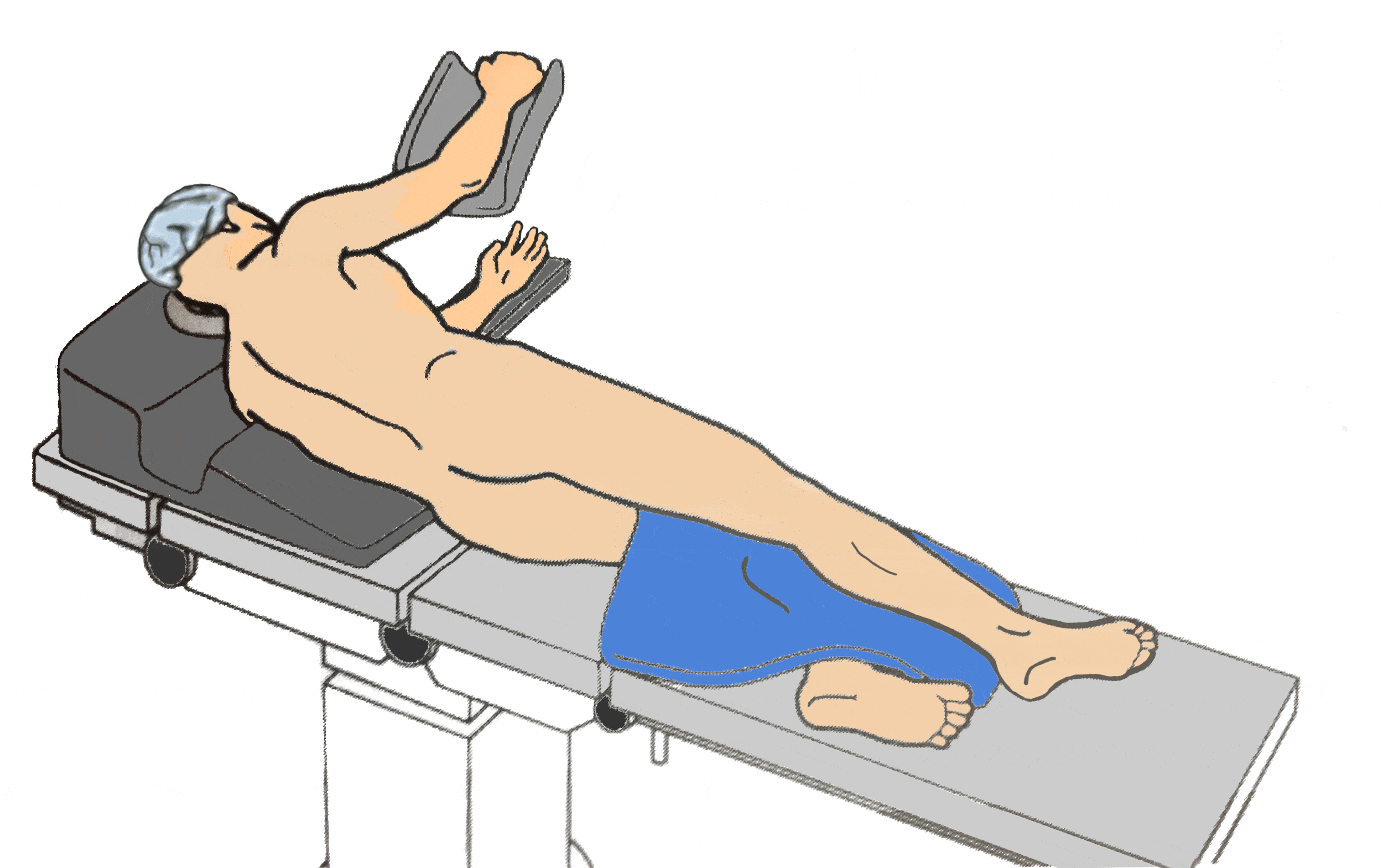
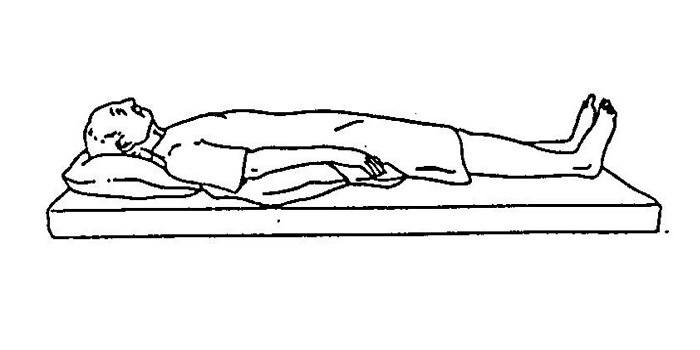

Reproductive organs are located within which cavity?
Pleural
Pelvic
Mediastinum
Thoracic
The brain is located in the:
spinal cavity
Hyperchondriac region
cranial cavity
umbilical region

Identify body cavity #3:
pericardial cavity
pleural cavity
pelvic cavity
abdominal cavity

Identify the body cavity #4:
Pericardial cavity
Pelvic cavity
Pleural cavity
Cranial cavity
A group of similar cells work together to form a(n):
Organ
Tissue
Organelle
Organ system
The ears are __________ to the eyes.
Lateral
Medial
Superior
Posterior
A collection of tissues that work together to carry out a specialized function is defined as a(n):
Muscle
Cell
Organ System
Organ
The maintenance of a stable internal environment in the body is known as ____________.
Homeostasis
Meandering
Stabilization
Equalizing
Which of the following organs are NOT found in the abdominal cavity?
Small Intestine
Stomach
Bladder
Liver
Muscles are a collection of tissues. They can contract and relax which causes body movements. A muscle would be a(n):
Organ
Organelle
Organ System
Organism

The cavity surrounded by the box is:
Pleural
Pericardial
Pelvic
Mediastinum

What abdominal quadrant does "Number 2" represent?
Right Upper
Right Lower
Left Upper
Left Lower

Which abdominal region is "Section 1?"
Epigastric
Left Hypochondriac
Right Hypochondriac
Right Iliac
Which abdominal region is "Section 2?"
Epigastric
Left Hypochondriac
Right Hypochondriac
Right Iliac
Which abdominal region is "Section 7?"
Epigastric
Left Iliac
Right Hypochondriac
Right Iliac
Which abdominal region is "Section 5?"
Umbilical
Hypogastric
Right lumbar
Epigastric
Which abdominal region is "Section 4?"
Umbilical
Left lumbar
Right lumbar
Right Iliac
Which abdominal region is "Section 8?"
Epigastric
Umbilical
Hypogastric
Right lumbar
Which term below describes a body structure that can be observed with the naked eye?
Microscopic
Gross
Systemic
Physical
Which of the following is an example of a Negative Feedback loop?
The body chemically enhances muscle contractions during the labor process
The body maintains a steady heartbeat during REM sleep
The body sweats to stop the internal temperature from rising too high
The body sends more platelets to the site of an open wound to form a clot

If starch (solute) cannot move through a membrane, which observation would most likely be made 24 hours later?
water will diffuse into the model cell
the cell will change color
the cell will shrivel
starch will diffuse out of the cell
"Active transport" is when a cell:
absorbs materials from Low to High concentrations without energy
absorbs materials from High to Low concentrations without energy
forces materials from Low to High concentrations using energy
does nothing

Diffusion is when the the particles move:
From A to B
From B to A
from both sides equally
not at all

Where in a cell is this structure found, and what is its purpose?
around the nucleus; protein production
around the cell; protection and transport
near the nucleus; package molecules for transport
in plant cells only; photosynthesis
Which pair correctly matches organelles to their functions?
mitochondria and chloroplast; control cells activities
golgi apparatus and vessicles; make and process energy
cell membrane and cell wall; package molecules for transport
ribosomes, rough and smooth ER; manufacture proteins
When cells are placed in a hypertonic sugar solution, what will likely happen?
water will leave the cell
water will enter the cell
the amount of water will stay the same
sugar will enter the cell

Where are channel proteins found, and what do they do?
in the nucleus; make DNA
in the cell membrane; allow certain substances in and out
in the chloroplast; make sugar
around the vacuole; control pressure
Mitochondria, nucleus, and endoplasmic reticulum are found in
human cells
plant cells
human and plant cells
bacteria
Why do organisms use the cell cycle?
to grow
to make sugar
to get energy
to make unique cells
During which part of the cell cycle is DNA replicated?
interphase
mitosis
cytokinesis
Simon looks at an image of a slide and notices that all of the chromosomes are lined up in along the middle of the cell. He is likely looking at a cell that is in
prophase
metaphase
anaphase
telophase


What is the main biological function of carbohydrates?
Store energy
Contain genetic information
Make up enzymes
Make you fat
Speed up chemical reactions
catalysts
hormones
salts
acids
Building blocks of carbohydrates
monosaccharides
glycerol and fatty acids
neucleotides
amino acids
Building blocks of lipids
monosaccharides
glycerol and fatty acids
neucleotides
amino acids
Building blocks of proteins
monosaccharides
glycerol and fatty acids
neucleotides
amino acids
Building blocks of DNA or RNA
monosaccharides
glycerol and fatty acids
neucleotides
amino acids

Salinity means
savory
saltiness
soapy
acidity
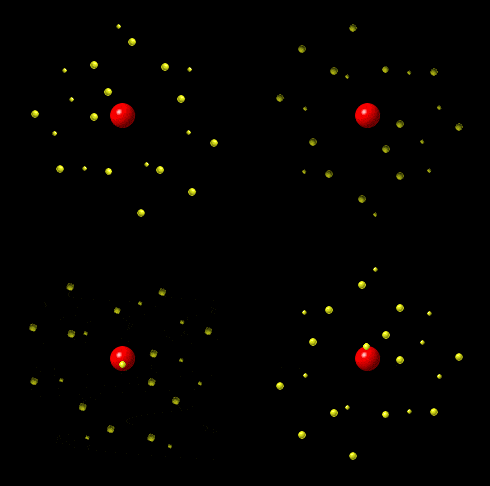
Water is known as a universal biological solvent because...
it is non-polar and cannot dissolve ions.
it is cohesive and can form droplets.
it is polar and can dissolve both negative and positive ions.
it dissolves every substance on Earth.
All organic molecules contain the element:
oxygen
hydrogen
carbon
sulfur

Contain C, H, O; used for energy and some plant structures; starch, sugar, cellulose, glycogen.
Lipids
Nucleic acids
Proteins
Carbohydrates

Contain C, H, O, N; make up cell structures and control cell functions; enzymes, muscles, hair.
proteins
lipids
nucleic acids
carbohydrates

Contain C, H, O, N, P; code for proteins; genetic code; DNA/RNA.
carbohydrates
proteins
lipids
nucleic acid

Contain C, H, O; long chains; hydrophobic; fats, oils, waxes
carbohydrates
nucleic acids
lipids
proteins
Monomers are:
single units of larger molecules linked together
single sugars
large molecules
Macromolecule means:
a very small molecule
a double unit of a molecule
a single unit of a molecule
a very large molecule
The monomer of a protein:
amino acid
nucleotide
monosaccharide
fatty acid
The monomer of a nucleic acid:
monosaccharide
nucleotide
amino acid
glycerol
The monomer of a carbohydrate:
amino acid
glycerol
nucleotide
monosaccharide
An important type of protein that serve as catalysts for chemical reactions:
enzyme
nitrogen base
cellulose
keratin
When two monosaccharides are joined in a synthesis reaction, it forms a:
polysaccharide
disaccharide
water molecule
fatty acid
Amino acids are joined by ____ bonds for form a protein.
hydrogen
ionic
covalent
peptide
Starch and cellulose are _____ found in plants.
lipids
monosaccharides
polysaccharides
monomers


An avocado is an example of a which macromolecule?
Carbohydrate
Lipid/Fat
Protein
Nucleic Acid
Which type of fat is considered healthier than others?
Saturated Fat
Unsaturated Fat
Monounsaturated Fats
Trans Fat
Which two types of epithelial tissue contain goblet cells?
Pseudostratified Columnar & Simple Columnar
Simple cubodial & Stratified Cubodial
Simple Squamous & Stratified Squamous
Transitional & Glandular
Which of the following is NOT a glandular epithelium?
merocrine
holocrine
apocrine
eccrine
Which of the following glandular epithelium simply secretes?
merocrine
holocrine
apocrine
eccrine
This tissue allows for distensibility and found in the bladder
Transitional
Glandular
Pseudostratified columnar
Simple squamous
Which of the following diagrams represents glandular epithelium?


Which of the following diagrams represents pseudostraified columnar epithelium?
Which of the following diagrams represents simple columnar?
Which of the following is an anticoagulant
histiocytes
histamine
heparin
fibroblast
Which of the following promotes inflammation
histiocytes
histamine
heparin
fibroblast
Which of the following are examples of mast cells
histiocytes
histamine
heparin
fibroblast
Which of the following BUILD collagen and are the most common cell type of connective tissue
histiocytes
histamine
heparin
fibroblast
Which of the following are examples of dense connective tissue
tendons
ligmants
adipose
fibroblast


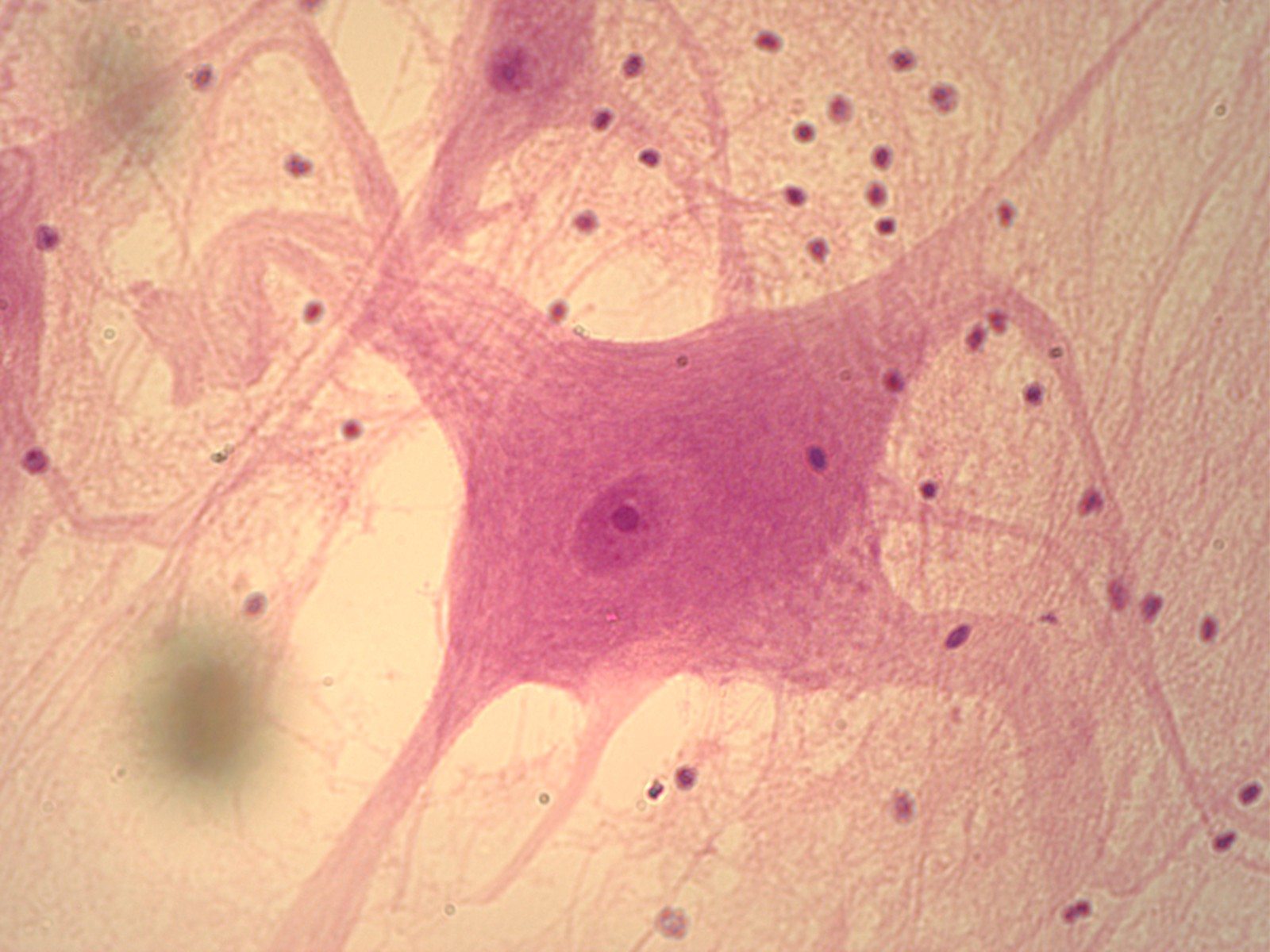


being compressed?
Layers or groups of similar cells with a common function
Tissues
Organs
Organ systems
Molecules
Histology
The study of cells
The study of the human body
The study of tissues
The study of past events
Which part of epithelial tissue attaches it to the connective tissue below?
Basement membrane
Free surface
Extracellular matrix
Nucleus
Two or more layers of cells
Basic
Complex
Simple
Stratified
A single layer of flattened cells
Stratified columnar epithelium
Simple cuboidal epithelium
Stratified squamous epithelium
Simple squamous epithelium
Glands that release products to the outside of the body
Exocrine
Endocrine
Exothermic
Endothermic
Glands that lose portions of their cell bodies
Merocrine
Apocrine
Holocrine
Connecrine
What type of product is secreted by endocrine glands?
Sweat
Hormones
Saliva
Tears

