
 Worksheets
DQA1 bio review
Total questions: 180
Worksheet time: 9hrs 39mins


The ability of water molecules to stick to each other, creating surface tension is called:
Cohesion
Adhesion
Insulation
Ph
What property of water results in the accumulation of small amounts of water into larger amounts of water? The results in the rivers, lakes, streams, and even the oceans.
Cohesive Behavior
Expansion Upon Freezing
Ability to Moderate Temperature
Universal Solvent
What property of water allows for water to act as a temperature regulator for the world?
Cohesive Behavior
Expansion Upon Freezing
High Specific Heat
Universal Solvent

What property of water causes these Alka-Seltzer tablets to dissolve?
Universal Solvent
Expansion Upon Freezing
Cohesive Behavior
High Specific Heat
Sweating is an example of what property of water?
Ability to Moderate Temperature
Expansion Upon Freezing
Cohesive Behavior
Universal Solvent
Why does ice stay at the top of oceans instead of sinking to the bottom?
Ice is colder than liquid water
Ice is less dense than liquid water
Ice is more dense than liquid water
Ice is warmer than liquid water
One of the accepted scientific theories describing the origin of life on Earth is known as chemical evolution. According to this theory, which of the following events would need to occur first for life to evolve?
onset of photosynthesis
origin of genetic material
Synthesis of organic molecules
formation of the plasma membrane
Which types of organisms developed first due to the early environmental conditions on Earth?
prokaryotic and aerobic
prokaryotic and anaerobic
eukaryotic and aerobic
eukaryotic and anaerobic
The Miller-Urey experiment of 1953 was designed to test the hypothesis that lightning supplied the energy needed to turn atmospheric gases into organic molecules such as amino acids. Which of the following describes why the Miller-Urey theory is widely accepted today?
Amino acids spontaneously form from molecules in the atmosphere today.
Organic molecules are present today in extremely high concentrations.
The process of synthesizing organic molecules from a mixture of gases has been successfully modeled in the laboratory.
No other alternative hypotheses have been introduced.

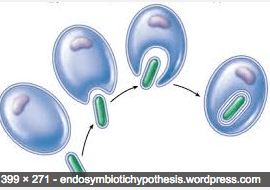
The diagram below shows a proposed theory of the origin of eukaryotic cells, called endosymbiosis.
Which of the following explains why cells that contained mitochondria-like organelles had an evolutionary advantage?
They were able to photosynthesize
They had more DNA
They were able to make more use of available energy
They were immune to bacterial invasion.


A ______________ is a large molecule.
Micromolecule
Polymer
Amino Acid
Macromolecule
Which of the following elements are found in all macromolecules? (Select all that apply).


Which of the following is not one of the four major classes of macromolecules?
Lipids
Carbon
Protein
Carbohydrates
Nucleic Acid
Which macromolecule is used as our main source of energy?
Lipids/Fats
Nucleic Acids
Proteins
Carbohydrates
Which macromolecule stores energy?
Carbohydrates
Proteins
Lipids/Fats
Nucleic Acids
Nucleic acids make up which of the two molecules listed below?
FDA
RNA
DNA
FDR
This is one job proteins do not have in the body.
structure for tissues and organs
transport things through cell membranes
speed up chemical reactions
insulation
This macromolecule breaks down into sugars such as glucose.
Lipids/Fats
Nucleic Acids
Protein
Carbohydrates
Enzymes belong to which class of macromolecules?
lipids
carbohydrates
proteins
nucleic acids
DNA belongs to which class of macromolecules?
proteins
nucleic acids
carbohydrates
lipids
Enzyme
proteins that speed up chemical reactions
Changing substances by breaking and forming bonds (includes hydrolysis and dehydration reactions)
the capacity for doing work
the energy needed to start a chemical reaction
Activation energy
proteins that speed up chemical reactions
Changing substances by breaking and forming bonds (includes hydrolysis and dehydration reactions)
the capacity for doing work
the energy needed to start a chemical reaction
Reactants
the substances changed during a chemical reaction (goes into the process)
the substances made by a chemical reaction (comes out of the process)
substance that speeds up the rate of a chemical reaction
reactant of an enzyme-catalyzed reaction
Products
the substances changed during a chemical reaction (goes into the process)
the substances made by a chemical reaction (comes out of the process)
substance that speeds up the rate of a chemical reaction
reactant of an enzyme-catalyzed reaction
Substrate
the substances changed during a chemical reaction (goes into the process)
the substances made by a chemical reaction (comes out of the process)
substance that speeds up the rate of a chemical reaction
reactant of an enzyme-catalyzed reaction
Active site
the region of an enzyme that attaches to a substrate
a change in the shape of a protein (such as an enzyme) that can be caused by changes in temperature or pH (among other things).
substance that can bind to an enzyme and prevent the substrate from properly binding
macromolecules that contain carbon, hydrogen, oxygen, and nitrogen, include enzymes
Denature
the region of an enzyme that attaches to a substrate
a change in the shape of a protein (such as an enzyme) that can be caused by changes in temperature or pH (among other things).
substance that can bind to an enzyme and prevent the substrate from properly binding
macromolecules that contain carbon, hydrogen, oxygen, and nitrogen, include enzymes
How do enzymes speed up chemical reactions? Enzymes
lower the activation energy of chemical reactions.
raise the temperature of the cell, speeding chemical reactions.
store ATP, allowing more energy to be used in chemical reactions.
act as miniature "transfer trucks", gathering materials for chemical reactions, and placing them together.

What is the optimum temperature for this enzyme?
20 degrees Celsius
45 degrees Celsius
52 degrees Celsius
64 degrees Celsius

What can be inferred using the graph?
Cells can function equally as well at all pH values.
Cells do not function well at pH values that are too high or too low.
Cells function best at high pH values.
Cells function best at low pH values.

In the enzymatic reaction, the __________ is on the left of the arrow, while the products are to the right of the arrow.
enzyme
filtrate
pre-product
reactant
Each enzyme produced by the body is
open - meaning it is able to catalyze a reaction with any molecule.
immature - meaning it cannot catalyze a reaction until many years later.
incomplete - meaning it requires other parts before it is able to bind to a molecule.
specific - meaning it is only able to catalyze a rection with a certain molecule.
Which of the following two factors affect an enzyme's operation the most?
amount of light and temperature
blood glucose and pH
temperature and pH
amount of light and pressure

What is the optimum pH for the enzyme salivary amylase?
2
5
6.2
9.1
Enzymes are a type of which macromolecule?
carbohydrate
lipid
protein
nucleic acid

Which labeled part is the substrate?
letter A
letter B
letter D
letter E

Which labeled part is the enzyme?
letter A
letter B and D
letter D
letter E

The 3 parts of the Cell Theory are...?
All living things are composed of cells
Cells are the basic units of structure and function in living things
All cells are produced from other cells
All living things are composed of cells
Cells are the basic units of dance and vibes in living things
All cells are destroyed from other aliens
All living things are composed of Jell-O
Cells are the basic units of structure and function in living things
All cells are produced from factories in Canada
All living things are composed of cells
Cells do karate and practice eating whole pies in their free time
All cells are produced from other cells
What does it mean to say that a cell membrane is semipermeable?
it allows some materials to pass through
it allows nothing to enter the cell, only to leave
It only allows things into the cell and not out
it allows all materials to pass through
What is the function of an organelle?
to take up space
to carry out a specific function in the cell
to carry out all the functions of a cell
to create new cells
Which organelle uses enzymes to break down waste in a cell?
Lysosome
Ribosome
Chloroplast
Golgi Apparatus
What is the function of the mitochondria?
to capture energy from the sun and turn it to sugar
to release usable energy for the cell
to store energy for when the cell needs it
to remove waste from the cell
What organelle allows plants to create their glucose?
Mitochondira
Lysosome
Ribosome
Chloroplast
Which of the following is not one of the 5 things all cells have?
cell membrane
cytoplasm
DNA
nucleus
What is the difference the key difference between prokaryotic and eukaryotic cells?
Prokaryotes have a nucleus, Eukaryotes do not
Eukaryotes have a nucleus, Prokaryotes do not
Prokaryotes have a cell membrane, Eukaryotes do not
Eukaryotes have ribosomes, Prokaryotes do not
Which of the following organelles do plants have that animals to not? (Select all that apply)
Cell wall
Golgi Apparatus
Endoplasmic Reticulum
Chloroplasts
Ribosomes
Which organelle provides structure and protection to plant cells?
cell membrane
ribosome
golgi apparatus
cell wall
What is the name of the "packages" the golgi body creates?
Vacuoles
Lysosomes
Vesicles
Ribosomes
What is the name of the "packages" the golgi body creates?
Vacuoles
Lysosomes
Vesicles
Ribosomes

What type of cell is this?
Plant
Animal
Prokaryote

What type of cell is this?
Plant
Animal
Prokaryote

What type of cell is this?
Plant
Animal
Prokaryote


Which organelle is responsible making food (Glucose) using sunlight?
Cell Membrane
Nucleus
Chloroplast
Mitochondria
Select all that are raw materials for Photosynthesis.
Water
Carbon Dioxide
Oxygen
Sunlight (Light Energy)
Glucose (Sugar/food)
Select all that are products of Photosynthesis.
Water
Carbon Dioxide
Oxygen
Sunlight (Light Energy)
Glucose (Sugar/food)
How does most of the water needed by the plant get into its leaves?
It enters through the stomata
The roots absorb it and then it travels up the stem
It's made during a chemical reaction in the leaf
The flowers capture water and deliver it to the leaves

Exit: Carbon dioxide
Exit: Glucose
Exit: Oxygen
Exit: Water vapor
Which of the following is the correct equation for PHOTOSYNTHESIS?
light + carbon dioxide + water --> glucose + oxygen
carbon dioxide + sugar + water --> oxygen + light
oxygen + light + water --> carbon dioxide + sugar
carbon dioxide + oxygen + water --> Light+ Sugar
Which of the following is the correct equation for PHOTOSYNTHESIS?
light + carbon dioxide + water --> glucose + oxygen
carbon dioxide + sugar + water --> oxygen + light
oxygen + light + water --> carbon dioxide + sugar
carbon dioxide + oxygen + water --> Light+ Sugar
Part of the plant that absorbs water.
Roots
Flowers
Petals
Leaves
Part of the plant that has chlorophyll
Roots
Flowers
Petals
Leaves
What is one job of the stem?
To pollinate the plant
To make food for the plant
To carry food and water to the plant


Which of the following is a simple tissue that serves as a site for photosynthesis, provides supporting matrix for vascular tissue, and helps to store water and sugar?
Vascular tissue
Collenchyma tissue
Ground tissue
Sclerenchyma tissue
How do cells get energy to perform their necessary functions?
Cells get energy by taking in nutrients from food.
Cells get energy by dissolving waste products.
Cells get energy only by taking in oxygen from the atmosphere.
Cells get energy by moving water from one organelle to another.
Which of the following are products in the process of cellular respiration?
carbon dioxide and oxygen
carbon dioxide and water
glucose and oxygen
glucose and water
In which organelle does cellular respiration take place?
chloroplast
mitochondrion
nucleus
endoplasmic reticulum
Cellular respiration is carried out by which of the following?
plants only
plants and animals
plants, algae, and cyanobacteria
all living organisms
Which of the following are reactants in the process of cellular respiration?
carbon dioxide and water
glucose and oxygen
carbon dioxide and oxygen
glucose and water
What is the total number of ATP molecules formed from the breakdown of one glucose molecule during aerobic cellular respiration?
2
34
38
44
Aerobic means __________ .
"requires hydrogen"
"needing electrons"
"forming ATPs"
"requires oxygen"
Which of the following represents the correct cycling of gases?


Which statement best describes a relationship between mitochondria and chloroplasts?
Mitochondria release chemical energy from molecules and store it in chloroplasts.
Chloroplasts release chemical energy from molecules and store it in mitochondria.
Mitochondria convert chemical energy into light energy that can be used by chloroplasts.
Chloroplasts convert light energy into chemical energy that can be used by mitochondria.

Four students classified the main energy conversions that occur during photosynthesis and cellular respiration. Which student best classified the energy conversions that occur in the two processes?
student 1
student 2
student 3
student 4
A cell in the leaf of a green plant performs both photosynthesis and cellular respiration, often at the same time. Which statement best describes how these processes are related to each other?
Both processes produce carbon dioxide.
Both processes require energy directly from the Sun.
Products of one process are used as some of the reactants for the other process.
Thermal energy from one process is used as the energy source for the other process.
An organism carries out both photosynthesis and cellular respiration. Which statement describes a difference between these two processes?
Only cellular respiration creates chemical energy.
The processes occur in different types of animal cells.
Only photosynthesis changes light energy into chemical energy.
The processes occur at different times during the animal’s life cycle.

The Letter “X” is pointing to ____________ and the _____________ reactions take place here.
Inner membrane, Electron Transport Chain
Matrix, Electron Transport Chain
Inner membrane, Krebs Cycle
Matrix, Krebs Cycle

AATCATGGA


the longest phase of the cell cycle
telophase
metaphase
interphase
anaphase
portion of interphase when the primary function is to grow
G1
G2
S
cytokinesis
During which portion of interphase is DNA copied
G1
S
G2
anaphase
During which portion of interphase is the cell preparing for mitosis
prophase
G1
S
G2
During which portion of interphase are copies of organelles made?
G1
S
G2
Telophase
Which portionof the cell cycle involves division of the nuclear material
mitosis
interphase
cytokinesis
prophase
Which portion of mitosis involves chromatin condensing into chromosomes?
G2
metaphase
anaphase
prophase
In which phase of mitosis do the spindle apparatus form and attach to the sides of a cell?
anaphase
prophase
S phase
interphase
Which phase of mitosis involves the nucleolus and nuclear envelope diappearing?
prophase
metaphase
telophase
G1
Which of the following is the longest phase of mitosis?
metaphase
interphase
G1
prophase
Which of the following is represented by chromosomes lining up in the middle (on the equator) of the cell?
prophase
metaphase
telophase
cytokinesis
During which phase of mitosis are chromosomes pulled apart and move to opposite ends of the cell?
anaphase
telophase
cytokinesis
interphase
During which phase of mitosis do chromosomes unwind?
cytokinesis
G1
telophase
metaphase
During which phase of mitosis does the nuclear envelope and nucleoli reappear?
telophase
S
G1
prophase
During which phase of mitosis does the spindle apparatus disappear?
metaphase
interphase
telophase
anaphase
During which phase of the cell cycle does the cytoplasm divide and two new cells are formed?
interphase
cytokinesis
anaphase
metaphase

95% of the cells life cycle
Stage where DNA is copied
Interphase
Metaphase
Telophase
Prophase

Nuclear membrane disappears
Chromosomes can now be seen
Centrioles move to opposite sides
Metaphase
Interphase
Telophase
Prophase

Chromosomes line up at the equator of the cell
Spindle fibers extend from the centrioles to the middle of the chromosomes
Prophase
Metaphase
Anaphase
Interphase

Nuclear membrane reforms around the new daughter cells.
Cytoplasm begins to "pinch" in.
Anaphase
Metaphase
Telophase
Interphase

Two replicated cells split from each other and are able to move on their own.
Metaphase
Prophase
Cytokinesis
Telophase
Students are observing particles moving against the concentration gradient in a lab investigation. Which type of transport are they observing?
osmosis
active Transport
facilitated diffusion
diffusion

This picture shows molecules of red dye that have moved. What is this type of movement called?
Osmosis; the water molecules are moving from high concentration to low
Diffusion; the dye molecules are moving from low to high concentration
Diffusion; the dye molecules are moving from high to low concentration.
Facilitated diffusion; because the molecules are moving through a protein channel.
Passive transport is when molecules move ________ the concentration gradient.
against
up
down
with
Active transport is when molecules move ________ the concentration gradient.
against
up
down
with

This picture is a representation of what type of transport?
Osmosis because it is diffusing through a protein from an area of high concentration to low concentration.
Facilitated diffusion because it is diffusing through a protein from an area of high concentration to low concentration.
Facilitated diffusion because it is diffusing through a protein from an area of low concentration to high concentration.
Simple diffusion because it is diffusing through a protein from an area of high concentration to low concentration.
This picture is a representation of what type of transport?
Osmosis because it is diffusing through a protein from an area of high concentration to low concentration.
Facilitated diffusion because it is diffusing through a protein from an area of high concentration to low concentration.
Facilitated diffusion because it is diffusing through a protein from an area of low concentration to high concentration.
Simple diffusion because it is diffusing through a protein from an area of high concentration to low concentration.

This a picture of an animal and plant cell placed in a solution. Describe the solution?
Isotonic
Hypotonic
Hypertonic

This a picture of an animal and plant cell placed in a solution. Describe the solution?
Isotonic
Hypotonic
Hypertonic

What type of solution was this plant placed in?
hypotonic
isotonic
hypertonic

The cell shrunk in size, which means it was placed in a ____ solution.
Isotonic
Hypertonic
Hypotonic

What part of the cell regulates what can enter and leave the cell?
A cell that is 90% water and 10% solute is placed in a solution that is 90% water and 10% solute. Which of the following is correct?
it is hypertonic because water is exiting the cell.
it is isotonic because the concentration is the same inside and outside the cell.
it is hypotonic because water is entering the cell.
it is hypertonic because water is entering the cell.

