
 Worksheets
Intro to Animals - iScience Chapter 9
Total questions: 67
Worksheet time: 39mins
Indicate whether the statement is true or false.
All animals move from place to place on their own.
True
False
Indicate whether the statement is true or false.
Most roundworms are parasitic.
True
False
Indicate whether the statement is true or false.
All animals digest their food.
True
False
Indicate whether the statement is true or false.
Animals are many-celled.
True
False
Indicate whether the statement is true or false.
If it is false, change the identified word(s) to make the statement true.
About 95% of all known animal species are invertebrates.
False: 75%
True: Change Nothing
Indicate whether the statement is true or false. If it is false, change the identified word(s) to make the statement true.
Fertilization that occurs in water is called hydrologic fertilization.
False: Internal
False: External
True: Change Nothing
Indicate whether the statement is true or false. If it is false, change the identified word(s) to make the statement true.
Earthworms take soil into their bodies to absorb nutrients.
True: Change Nothing
False: DO NOT take soil
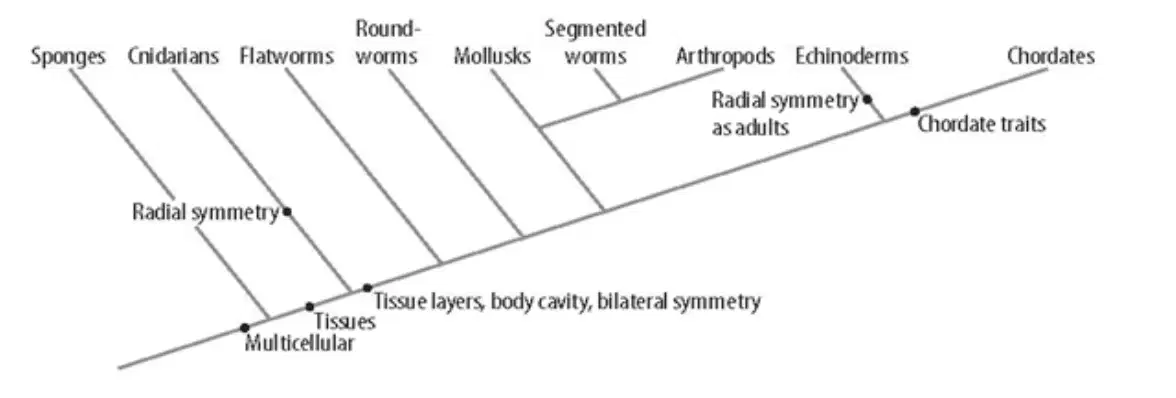
According to the tree diagram, Cnidarians have bilateral symmetry.
True: Change Nothing
False: have radial symmetry
All animals begin life as an embryo.
True: change nothing
False: a zygote
The word reptiles means “both ways of life”, and refers to the fact that this type of animal spends large parts of their lives on land and in water.
True: change nothing
False: amphibians
Humans have the traits of chordates while they are developing in the womb.
True
False: growing in an egg
Why do adult amphibians need to stay near the water?
They have skin that is thin and moist.
They need to lay their eggs in water.
When they are young, many amphibians have gills and must stay in the water.
all of the answers
What is the least common structural system for an invertebrate?
endoskeleton
exoskeleton
hydrostatic skeleton
Invertebrates have no structural system.
Which of these traits do humans have at some point of development?
a notochord and a nerve cord
pharyngeal pouches
a tail
all of the answers
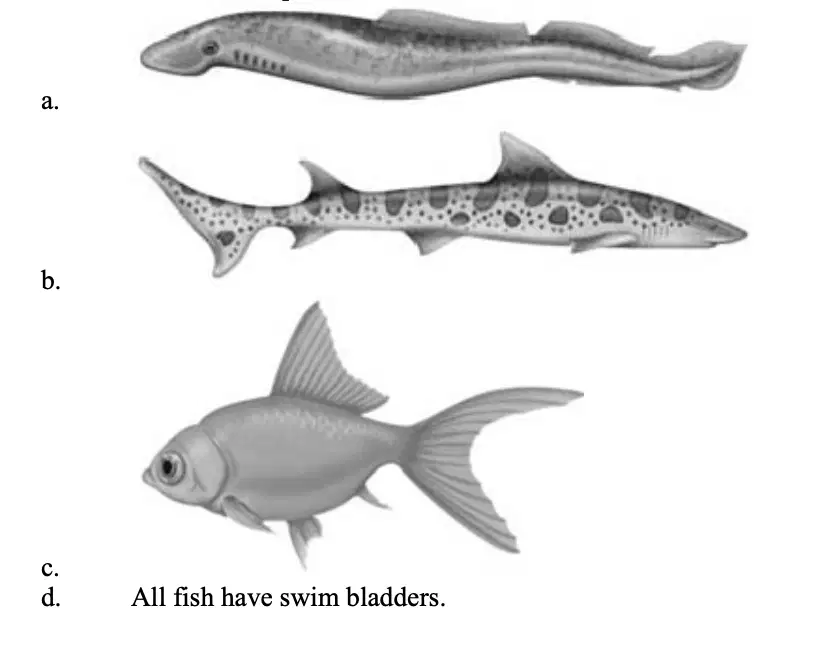
Which of these is an example of a fish with a swim bladder?
a
b
c
d
Which gives the correct order of development for animals?
egg and sperm, zygote, embryo
egg and sperm, embryo, zygote
zygote, egg and sperm, embryo
zygote, embryo, egg and sperm
Behavioral adaptations include _____.
instinctive behavior
learned behavior
both instinctive and learned behaviors
neither instinctive nor learned behaviors
An adaptation _____.
is an inherited trait
increases a species chances of surviving
increases a species chances of reproducing
all of the answers
The flexible rod-shaped structure that supports the body of a developing chordate is called a _____.
notochord
backbone
pharyngeal pouch
nerve cord
Scientists call insects _____ because they have six legs.
quadropods
pentapods
hexapods
octopods
A giraffe’s long neck would be considered which type of adaptation?
structural
behavioral
functional
environmental
What do centipedes and millipedes have in common?
They have many segments and appendages.
They both have one pair of appendages per segment.
They are both predators.
They both eat dead plants.
A monkey using a twig to fish for ants in an anthill would be considered which type of adaptation?
structural
behavioral
functional
environmental
Which of the following is a member of the phylum Cnidaria?
sponges
ants
snails
jellyfish
How can humans be chordates if they have no tails?
Humans are not chordates.
Tails are not a requirement for being a chordate.
Humans have a tail for a time while developing in the womb.
An exception is made, since humans have all the other chordate characteristics.
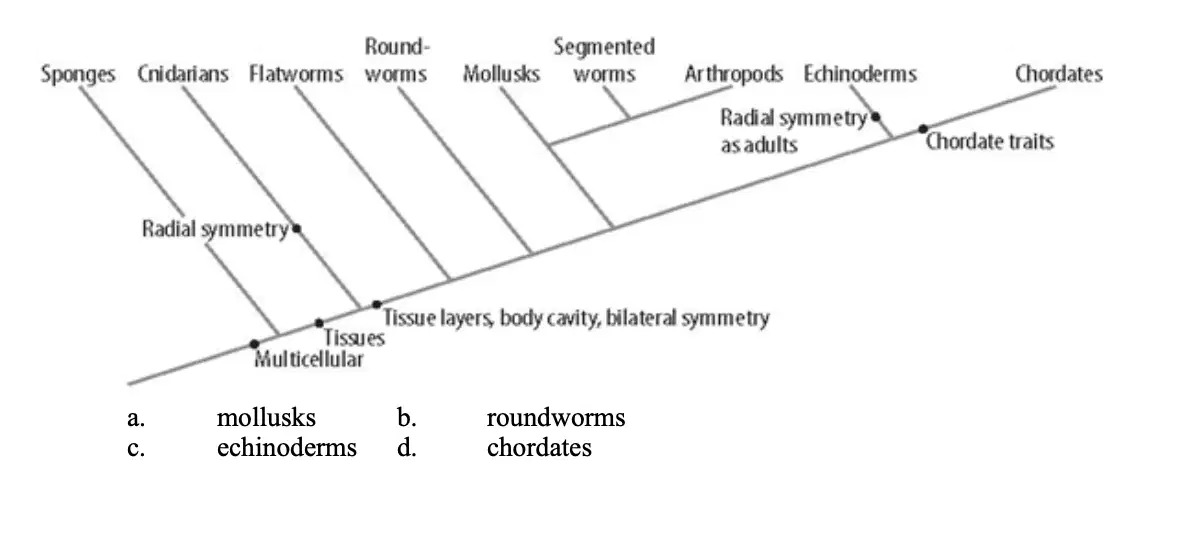
Looking at the chart, which of the following phyla would you expect segmented worms to share more traits with?
mollusks
roundworms
echinoderms
chordates
A planarian is an example of a ____ flatworm.
parasitic
mutualistic
free-living
none of the above
Which of the following statements is true?
All mollusks have external shells.
All mollusks have a mantle.
All mollusks have a foot-like muscle.
Mollusks have radial symmetry.
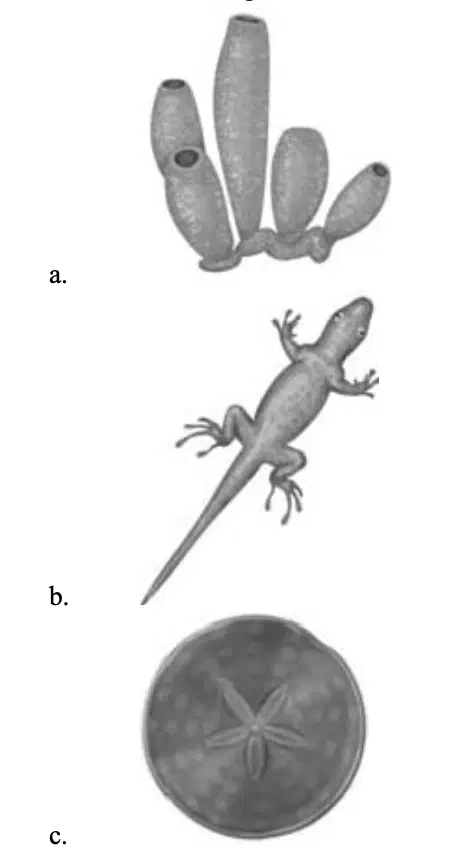
Which of the following animals has bilateral symmetry?
a
b
c
none of these show bilateral symmetry
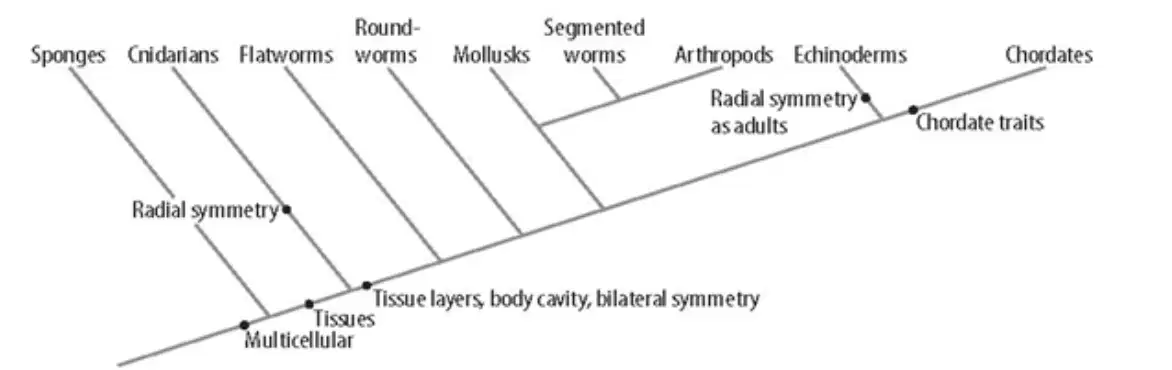
According to the tree below, which trait is believed to have evolved the most recently?
radial symmetry as adults
arthropods
tissues
a and c
As a fish develops, its pharyngeal pouches become _____.
parts of their ears
slits that support the gills
the brain and spinal cord
scales
Which trait is unique to birds?
flight
wings
endothermic
feathers
What characteristic do animals and plants share?
nerve cells
collagen
cell walls
multicellular construction
Which fish group includes parasites?
jawless fish
sharks and rays
bony fish
none of the above
Cnidarians use their ____ to stun food organisms.
tentacles
stinging cells
polyps
spicules
Which of the following is NOT a characteristic of animals?
made of many cells
digest their food
make their own food
have cells with a nucleus and organelles
Which is NOT a characteristic of animals?
They have nerve cells.
They have cell walls.
They get energy from food.
They begin as a fertilized egg cell called a zygote.
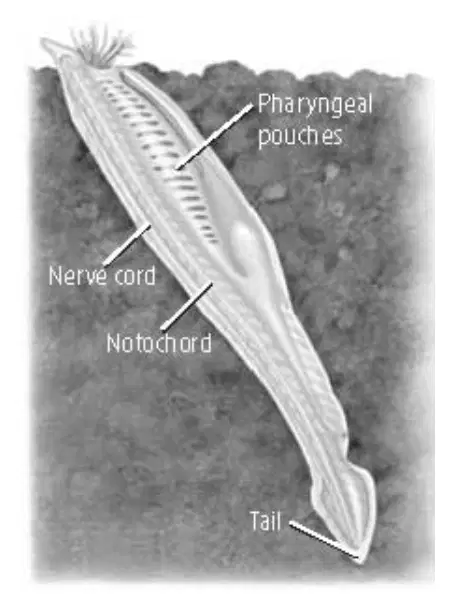
How does this chordate differ from a vertebrate chordate?
It never developed a brain.
It never developed a backbone.
It retained its tail.
It retained its pharyngeal pouches.
Which of the following statements is false?
Echinoderms have early growth patterns similar to humans.
Echinoderms are soft.
Echinoderms live only in salt water.
Water moving back and forth through canals and tube feet allow echinoderms to grasp and release surfaces.
A vertebrate is defined as having a(n) ____.
brain
nervous system
anterior end
backbone
The difference between invertebrate and vertebrate chordates is the presence of a _______________.
gills
backbone
tail
brain
Snakes can detect infrared light. This is a _______________ adaptation.
behavioral
structural
A snake is a vertebrate because it has a(n) ____________________.
backbone
eyes
tongue
Animals that reproduce with external fertilization release large numbers of eggs or sperm. This is a _______________ adaptation.
behavioral
functional
The body of a developing chordate is supported by a flexible rod-shaped structure called a _______________.
spine
notochord
brain
tree
Bird migration is an example of a _______________ adaptation.
structural
functional
behavioral
A planarian is an example of an animal with ____________________ symmetry.
radial
asymmetry
bilateral
A sponge is an example of an animal with ____________________ symmetry.
asymmetry
radial
bilateral
_______________ exist in a human developing in the womb before the brain and spinal chord develop.
nerve chords
notochord
tails
An insect is a(n) ____________________ because it has no backbone.
vertebrate
invertebrate
Reptiles heat their bodies using _______________.
heat in the environment
heat produced in their body
heat from another animal
an animal with a backbone
nematodes
bilateral symmetry
invertebrate
cnidarians
vertebrate
an animal that does not have a backbone
nematodes
bilateral symmetry
invertebrate
cnidarians
vertebrate
body parts are arranged the same on both sides of the body
nematodes
bilateral symmetry
invertebrate
cnidarians
vertebrate
animals that contain stinging cells
nematodes
bilateral symmetry
invertebrate
cnidarians
vertebrate
produce milk
amphibians
birds
fish
mammals
reptiles
live on land, but depend on water to survive and reproduce
amphibians
birds
fish
mammals
reptiles
have lungs for breathing and scales on skin to keep from drying out
amphibians
birds
fish
mammals
reptiles
have feathers
amphibians
birds
fish
mammals
reptiles
have hair
amphibians
birds
fish
mammals
reptiles
have gills for breathing
amphibians
birds
fish
mammals
reptiles
have gills for breathing
Is a flying insect more closely related to a worm or a bird? Why?
To a worm because they are both invertebrates.
To a mullusk because they are both invertebrates.
To a human because they are both vertebrates.
What type of symmetry do humans display? Explain your answer.
Radial symmetry because they have on central axis point.
Bilateral symmetry because they can be divided into mirror images.
They are asymmetrical.
Why are sponges called simple animals?
Which of the following groups of organisms are more closely related:
group one—earthworm, spider, stag beetle;
group two—frog, trout, centipede? Why?
Group 1
Group 2
Name the four traits that exist at some point in the life of a chordate.
tail
notochord
nerve chord
pharyngeal pouch
brain

