Wayground logo

Free Printable Worksheets

Font size

S
M
L
XL
Worksheets

CH Semester Exam Review

Total questions: 116

Worksheet time: 4hrs 33mins

Name
Class
Date
1.

Sarah conducts an experiment to determine whether the shape of ice affects how long it takes to melt. What is the independent variable?

a)

Sarah

b)

the shape of ice

c)

how long it takes to melt

d)

the experiment

2.

Sarah conducts an experiment to determine whether the shape of ice affects how long it takes to melt. What is the dependent variable?

a)

Sarah

b)

the shape of ice

c)

the time it takes to melt

d)

the experiment

3.

Jeremiah wanted to determine the best material to use to make Lima beans sprout. He put cotton balls in a bag, soil into another bag, and gravel into a final bag. He added 30ml of water to each of the three bags and one Lima bean to each bag. He placed all three bags in the windowsill of his kitchen so they could get sunlight. He then measured and recorded plant growth in all three bags.

What is the independent variable

a)

the Lima bean

b)

the material in which you grow the seed

c)

the amount of growth of the plant

d)

the bags you put the materials in

4.

Dr. Shrode knew that students who attended her morning study sessions performed better on science test but very few students attended them. She wanted to test if bringing doughnuts to the study sessions would increase student attendance. She continued to advertised the sessions in the same method and hold sessions at the same time. The only difference was that she brought doughnuts to the session. She had a 50% increase in attendance when she brought the doughnuts.

What is the independent variable?

a)

The study session

b)

The number of students who attend the study session

c)

The doughnuts

d)

The test

5.

Dr. Shrode knew that students who attended her morning study sessions performed better on science test but very few students attended them. She wanted to test if bringing doughnuts to the study sessions would increase student attendance. She continued to advertised the sessions in the same method and hold sessions at the same time. The only difference was that she brought doughnuts to the session. She had a 50% increase in attendance when she brought the doughnuts.

What is the dependent variable?

a)

The number of students who attend the study session

b)

The doughnuts

c)

The test

d)

The study session

6.

Jeremiah wanted to determine the best material to use to make Lima beans sprout. He put cotton balls in a bag, soil into another bag, and gravel into a final bag. He added 30ml of water to each of the three bags and one Lima bean to each bag. He placed all three bags in the windowsill of his kitchen so they could get sunlight. He then measured and recorded plant growth in all three bags.

What is the dependent variable

a)

The Lima beans

b)

The material used to grow the Lima beans

c)

The amount of growth of the Lima beans

d)

The bags

7.

Jeremiah wanted to determine the best material to use to make Lima beans sprout. He put cotton balls in a bag, soil into another bag, and gravel into a final bag. He added 30ml of water to each of the three bags and one Lima bean to each bag. He placed all three bags in the windowsill of his kitchen so they could get sunlight. He then measured and recorded plant growth in all three bags.

Mark checks next to all the items that are constants in this experiment.

a)

The amount of sunlight

b)

The amount of water added to each bag

c)

The number of Lima beans placed in the bag

d)

The type of material used to grow the beans

e)

The type of beans used in the experiment

8.

Erin conducts an experiment to determine if a milk chocolate bar will melt faster than a white chocolate bar when placed in the sun. What is the dependent variable?

a)

The type of chocolate

b)

The amount of sunlight

c)

The time it takes to melt the chocolate

d)

Erin

9.

The amount of algae growth in the lake depends on the amount of phosphate fertilizer used by local farmers. What is the dependent variable?

a)

The farmers

b)

The amount of phosphate fertilizer

c)

The amount of algae in growth

d)

The lake

10.
How many sig figs are there?
100000000
a)
1
b)
9
c)
10
11.
How many sig figs are there?
4004
a)
1
b)
2
c)
3
d)
4
12.
How many sig figs are there?
0.00400
a)
1
b)
3
c)
5
d)
6
13.
How many sig figs are there?
9009.00
a)
2
b)
4
c)
5
d)
6
14.
How many sig figs are there?
27000000
a)
2
b)
5
c)
8
15.
Write 0.000972 in scientific notation.
a)
9.72 x 10⁻⁴
b)
9.72 x 10⁻³
c)
972 x 10-4
d)
9.72 x 10⁴
16.
How would you write 50,000 in scientific notation?
a)
50 x 105
b)
5 x 10⁴
c)
5 x 10³
d)
.5 x 103
17.
Write 2.08 x 10²  in standard form.
a)
208
b)
0.0208
c)
20,800
d)
0.208
18.
Write 3.2 x 10³ in standard form.
a)
3.200
b)
3200
c)
32000
d)
.0032
19.
Write 46.3 x 10⁴ in scientific notation.
a)
It is in scientific notation.
b)
.463 x 106
c)
4.63 x 10⁵
d)
4.63 x 10⁴
20.

A cube of aluminum has a volume of 9cm3 and weighs 81 g. What is its density?

a)

9 g/ cm3

b)

.11 g/cm3

c)

729 g/cm3

21.

What is the density of an object having a mass of 6.5 g and a volume of 30.0 cm3?

a)

0.22 g/cm3

b)

4.6 g/cm3

c)

195 g/cm3

d)

200 g/cm3

22.

All of the following are units of volume EXCEPT

a)

milliliter

b)

liter

c)

cubic centimeter

d)

kilogram

23.

During an experiment, the variable that responds to the manipulated variable is the

a)

independent variable

b)

dependent variable

c)

control

24.
Flammability is an example of what property?
a)
Chemical property
b)
Physical property
25.
Which is NOT a physical property?
a)
odor
b)
reacts with bleach
c)
sinks in water
d)
density
26.
Which is an example of a physical property?
a)
ability to react with acid
b)
 color
c)
flammability
d)
ability to react with oxygen
27.
Which of the following is a chemical property of water?
a)
Reacts with pure sodium
b)
Boils at 100 oC
c)
Is liquid at room temperature
d)
Has a density of 1 gm/mL
28.
Which of the following is a sign that a chemical reaction has occurred?
a)
change in shape
b)
melting
c)
formation of a gas
d)
dissolving
29.
What is digestion?
a)
Physical property
b)
Chemical change
c)
Physical change
d)
Chemical property
30.
Examples are milk and gasoline.
a)
elements
b)
mixtures
c)
compounds
31.
Elements can be broken down into simpler substances. 
a)
false 
b)
true 
c)
sometimes 
32.
Is sugar (C12H22O11) an element or a compound?
a)
Element
b)
Compound
33.

Examples are diamonds (C) and Uranium (U)

a)

elements

b)

mixtures

c)

compounds

34.

diagram "a" is an example of a(n)

a)

element

b)

compound

c)

mixture

35.

diagram "d" is an example of a(n)

a)

element

b)

compound

c)

mixture

36.

What does this illustrate

a)

Elements

b)

Compunds

c)

Mixture of Elements and Compunds

d)

Mixture of Compounds

37.

Which of the following is matched incorrectly.

a)

Milk: compound

b)

Steel alloy: homogeneous mixture

c)

Glucose (C6H12O6): compound

d)

Cookies & Cream: heterogenous mixture

38.
In an exothermic reaction, heat is ...
a)
taken in
b)
given out
39.

In an endothermic reaction, heat is ...

a)

taken in

b)

given out

40.
If a chemical reaction is EXOTHERMIC, the temperature would....
a)
Stay the same
b)
Increase
c)
Decrease
41.
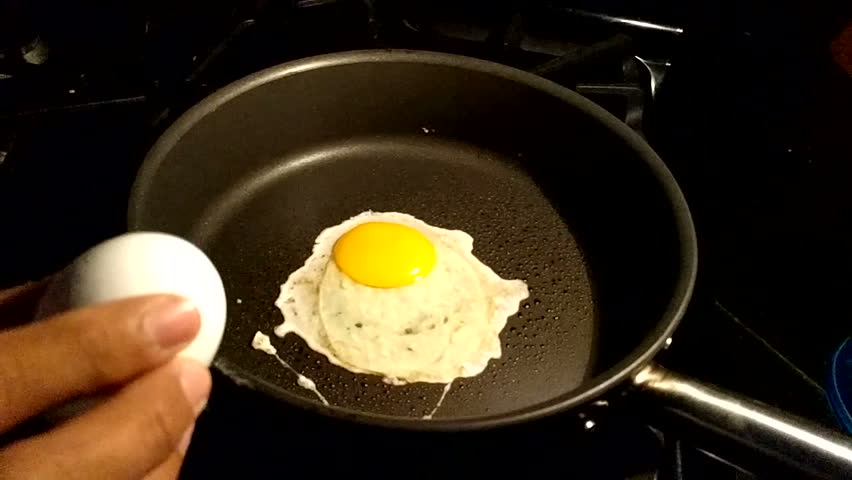
Baking bread and cooking an egg are examples of....?
a)
Endothermic processes
b)
Exothermic processess
c)
None of these 
42.
Which of the following is a sign that a chemical reaction has occurred?
a)
change in shape
b)
melting
c)
bubbles of gas appear
d)
dissolving
43.
HCl reacts with Zn giving off heat
a)
endothermic
b)
exothermic
44.
Filtration is a common method of separating an insoluble solid from a liquid. An example of a mixture is sand and water. This process involves the use of a filter paper placed in a filter funnel. The funnel is placed in a beaker and the mixture of water and sand is poured into the funnel. The liquid part drains through the filter paper into the beaker, leaving the solid sand particles trapped on the filter.
Filtration is a common method of separating an insoluble solid from a liquid.
True or False?
a)
True
b)
False
45.
Evaporation is good for separating a mixture (solution) of a soluble solid and a solvent. The process involves heating the solution until the solvent evaporates (turns into gas) leaving behind the solid residue.
Evaporation is good for separating a mixture (solution) of a soluble solid and a solvent.
True or False?
a)
False
b)
True
46.
Distillation uses two changes of state. what are they?
a)
Evaporation and condensation
b)
Evaporation and freezing
c)
melting and boiling
d)
sublimation and condensation
47.
Magnetism is ideal for separating mixtures of two solids with one part having magnetic properties

How would you separate iron filings mixed with sand?
a)
Evaporation
b)
fractional distillation
c)
filtration
d)
magnetism
48.

The subatomic particle with a negative charge

a)

proton

b)

neutron

c)

electron

d)

nucleus

49.

The subatomic particle with a positive charge

a)

proton

b)

neutron

c)

electron

d)

nucleus

50.
The first energy level can hold up to how many electrons?
a)
8
b)
4
c)
2
d)
5
51.
all matter is made of what 
a)
energy 
b)
atoms 
c)
electrons 
d)
compounds 
52.

A wave with a large wavelength will have a ______ frequency and _____ energy

a)

high, low

b)

high, high

c)

low, high

d)

low, low

53.

The frequency of violet light is 7.5x10¹⁴ Hz. What is its wavelength?

a)

4.0x10⁻⁷ m

b)

4.0x10⁷ m

c)

2.25x10²³m

d)

2.25x10²³ Hz

54.
High frequency waves have _________ wavelength.
a)
varying
b)
high
c)
the same
d)
low
55.

The number of waves that pass a fixed point in a given amount of time is...

a)

frequency

b)

wave speed

c)

amplitude

d)

wavelength

56.
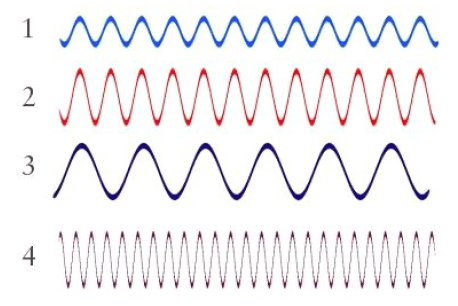
Which wave in the diagram has the greatest wavelength?
a)
1
b)
2
c)
3
d)
4
57.
Violet light has a wavelength of
4.10 x 10⁻¹²  m. What is the frequency?
a)
1.23 x 10^ -3 Hz
b)
7.31 x 10^ 19 Hz
c)
1.37 x 10^12 Hz
d)
3.0 x 10^ 8 Hz
58.

Based on the picture above, which kind of wave has the highest frequency?

a)

microwave

b)

ultraviolet

c)

infrared

d)

gamma rays

59.

Which wave has a higher frequency?

a)

A

b)

B

60.

The _____ the element is in determines the number of valence electrons it has.

a)

period/row

b)

group/column

61.

Valence electrons are the

a)

outer most electrons in an atom

b)

total electrons in an atom

62.

This could be the dot diagram of

a)

Mg

b)

Cl

c)

C

d)

O

63.

This is a correct dot diagram for neon (Ne)

a)

true

b)

false

64.

This could be the dot diagram for...

a)

He

b)

Al

c)

Be

d)

Si

65.
This could be the dot diagram of 
a)
Ne
b)
Si
c)
Al
d)
Be
66.
Find the energy, in joules per photon, of microwave radiation with a frequency of 7.91 × 10 10 1/s.
a)
6.63 x 10⁻³⁴ J
b)
5.25 x 10¹⁴ J
c)
5.24 x 10⁻²³ J
d)
1.19 x 1044 J
67.
What is the frequency of UV light that has an energy of 2.39 × 10 -18 J? 
a)
2.32 x 10⁹ Hz
b)
3.60 x 10¹⁵ Hz
c)
1.58 x 10-51 Hz
d)
3 x 10⁸  m/s
68.
What is the energy of an X-ray with a frequency of 1.0 x 10¹⁷ Hz?
a)
6.63 x 10⁻³⁴ J
b)
6.63 x 10⁻¹⁷ J
c)
1.51 x 10¹⁶ J
d)
1.51 x 10⁻¹⁶ J
69.
What is the energy of light whose wavelength is 4.06 x 10⁻¹¹ m? 
a)
2.69 x 10-44 J
b)
1.63 x 10⁻²³ J
c)
4.90 x 10⁻¹⁵ J
d)
8.97 x 10-53 J
70.

What is the speed of light?

a)

3.0x10⁸ ms

b)

3.0x10⁸ m/s

c)

6.626x10⁻³⁴ Js

d)

6.626x10⁻³⁴ J/s

71.
Find the energy, in joules per photon, of microwave radiation with a frequency of 7.91 × 10 10 1/s.
a)
6.63 x 10⁻³⁴ J
b)
5.25 x 10¹⁴ J
c)
5.24 x 10⁻²³ J
d)
1.19 x 1044 J
72.
What atom matches this electron configuration?
1s22s22p63s23p64s23d10
a)
Zinc
b)
Copper
c)
Nickel
d)
Germanium
73.
The electron configuration of an atom is 1s22s22p6.  The number of electrons in the atom is 
a)
3
b)
6
c)
8
d)
10
74.
How many electrons can the d sublevel hold?
a)
14
b)
10
c)
2
d)
6
75.
What atom matches this electron configuration?
1s22s22p63s2
a)
Neon
b)
Magnesium
c)
Aluminum
d)
Potassium
76.
What is the noble gas configuration for Neon?
a)
[Ne]
b)
[He]2s22p6
c)
[F]2p1
d)
[Ne]2s21p6
77.
A covalent bond is
a)
a bond that shares electrons metallicaly
b)
A bond that shares electrons with non metals
c)
Metalloids bonding
d)
metals and nonmetals bonding
78.
Which of the following is the correct Lewis dot structure for the molecule fluorine (F2)?
a)
A
b)
B
c)
C
d)
D
79.
How many valence electrons are in Phosphorus?
a)
15
b)
4
c)
5
d)
31
80.

How many valence electrons should Lithium have in its Lewis dot model?

a)

1

b)

2

c)

3

d)

4

81.

How would you draw a Lewis dot diagram for Magnesium?

a)
b)
c)
d)
82.
According to the octet rule most elements need _______ valence electrons.
a)
2
b)
8
c)
6
d)
18
83.
What is the correct formula for this molecule?
a)
Si4F
b)
SiF4
c)
SiF
d)
Si4F4
84.

Which of the group 13 elements is the largest?

a)

B

b)

Ti

c)

Fr

d)

Ga

85.

Of the halogens, which has the smallest radius?

a)

F

b)

Br

c)

He

d)

At

86.

Which of the alkaline-earth metals has the smallest electronegativity

a)

Be

b)

Sc

c)

Ra

d)

Sr

87.
Put the following in order of increasing ionization energy:Strontium, Aluminum, Indium
a)
Strontium, Indium, Aluminum
b)
Strontium, Aluminum, Indium
c)
Indium, Aluminum, Strontium
d)
Aluminum, Indium, Strontium
88.
The element with the lowest electronegativity in Period 3 is - 
a)
Na
b)
Cl
c)
Ar
d)
Mg
89.
The general trend of metal ion size is that they decrease in size as you move from ______ to ______ on the PT.
a)
Right to left
b)
Left to right
c)
Diagonally
d)
Top to bottom
90.
Which element is a metalloid?
a)
S
b)
Br
c)
As
d)
Au
91.

Is O2 a compound or a molecule?

a)

Compound

b)

Molecule

c)

Both

92.

When an atom loses or gains an electron it is called a(an)

a)

isotope

b)

compound

c)

ion

d)

molecule

93.

Which of the pair of elements form an ionic bond?

a)

Magnesium and Oxygen

b)

Magnesium and Sodium

c)

Iron and Zinc

d)

Nitrogen and Hydrogen

94.

Predict the bond that is formed between Phosophorus and Chlorine?

a)

Ionic

b)

Covalent

c)

Metallic

d)

H-bond

95.
What is the VSEPR theory used to predict?
a)
Bond Strength
b)
Polarity
c)
Molecular Shape
d)
Electronegativity
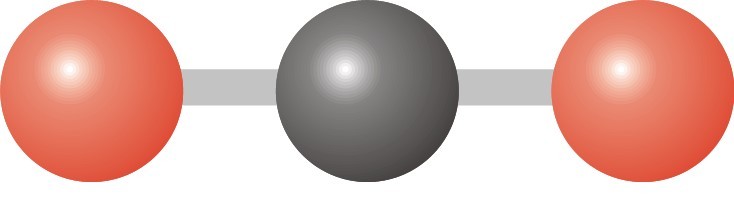
96.
Which molecule would have this shape?
a)
BF3
b)
CH4
c)
PCl5
d)
CO2
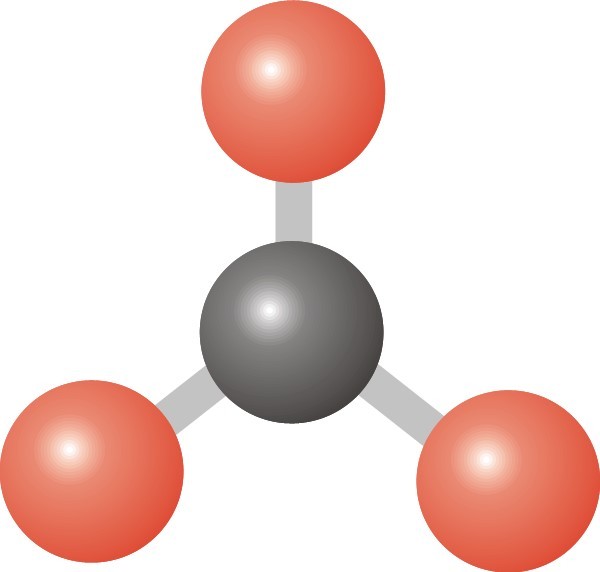
97.
What molecule could this be? 
a)
BF3
b)
CH4
c)
H2O
d)
CO2
98.

What type of bond would form between O and H?

a)

Polar Covalent

b)

Non-Polar Covalent

c)

Ionic

99.

What type of bond would form between O and O?

a)

Polar Covalent

b)

Non-Polar Covalent

c)

Ionic

100.

What type of bond would form between Li and O?

a)

Polar Covalent

b)

Non-Polar Covalent

c)

Ionic

101.

The bond between C and Cl is polar covalent. That means

a)

there is a pair of electrons shared equally between them

b)

there is a pair of electrons shared unequally between them

c)

an electron will be stolen from one and given to the other

102.
Name that Ion
Li+
a)
copper (III)
b)
lithium
c)
ladmium
d)
iodine
103.
Name the ion...  P3-
a)
Phosphorous
b)
Phosphide
c)
Phosphorous (III)
d)
Potassium 
104.
Will Magnesium gain or lose electrons to become stable?
a)
gain
b)
lose
c)
neither
105.
What is the symbol for the Sulfide ion?  (The most stable form of Sulfur)
a)
S-2
b)
S+2
c)
S-8
d)
S+6
106.
Name the ion....  Ca2+
a)
Calcium
b)
Calcide
c)
Calcium (II)
d)
Calciumide
107.
What is the charge does a sodium ion have?
a)
+2
b)
+1
c)
-1
d)
-2
108.

Name the ion formed by magnesium.

a)

Magnesium (II) ion

b)

Magnesium ion

c)

Magnesiumide ione

109.

How many electrons lost or gained to form O2- ion

a)

2

b)

-2

c)

0

110.

Write the formula for dichromate ion.

a)

Cr2O72-

b)

Cr2O73-

c)

CrO42-

111.

Write the ion formula formed by phosphorus , 3 electrons gained

a)

P3+

b)

P3-

c)

P5+

112.

nitride

a)

N-3

b)

NO2-1

c)

NO3-1

113.

sulfite

a)

S-2

b)

SO3-2

c)

SO4-2

114.

phosphide

a)

P-3

b)

PO3-3

c)

PO4-3

115.

carbonate

a)

NH4+1

b)

C2H3O2-1

c)

OH-1

d)

CO3-2

116.

acetate

a)

NH4+1

b)

C2H3O2-1

c)

OH-1

d)

CO3-2