wayground logo

Free Printable Worksheets

Font size

S
M
L
XL
Worksheets

Unit 4 Test Review 25.26

Total questions: 100

Worksheet time: 8hrs 20mins

Name
Class
Date
1.
Elements are primarily arranged on the periodic table by their
a)
according to their atomic number.
b)
according to their size.
c)
according to their mass number.
d)
according to their reactivity.
2.
Elements are primarily arranged on the periodic table by their
a)
according to their atomic number.
b)
according to their size.
c)
according to their mass number.
d)
according to their reactivity.
3.
Are the properties of Silicon(Si) more like the properties of Carbon(C) or Aluminum(Al)?
a)
The properties of Silicon(Si) are more like Carbon(C) because they both are in the same group and have the same number of valence electrons.
b)
The properties of Silicon(Si) are more like Carbon(C) because they both are in the same period and have the same number of valence electrons.
c)
The properties of Silicon(Si) are more like Aluminum(Al) because they both are in the same group and have the same number of valence electrons.
d)
The properties of Silicon(Si) are more like Aluminum(Al) because they both are in the same period and have the same number of valence electrons.
4.
Are the properties of Silicon(Si) more like the properties of Carbon(C) or Aluminum(Al)?
a)
The properties of Silicon(Si) are more like Carbon(C) because they both are in the same group and have the same number of valence electrons.
b)
The properties of Silicon(Si) are more like Carbon(C) because they both are in the same period and have the same number of valence electrons.
c)
The properties of Silicon(Si) are more like Aluminum(Al) because they both are in the same group and have the same number of valence electrons.
d)
The properties of Silicon(Si) are more like Aluminum(Al) because they both are in the same period and have the same number of valence electrons.
5.
What group contains very reactive non-metals?
a)
Group 17
b)
Group 1
c)
Group 2
d)
Group 18
6.
What group contains very reactive non-metals?
a)
Group 17
b)
Group 1
c)
Group 2
d)
Group 18
7.
What is the maximum number of electrons that can occupy the first energy level?
a)
2
b)
8
c)
10
d)
18
8.
Identify the number of energy levels or electron shells for Magnesium(Mg).
a)
3
b)
4
c)
2
d)
Can't determine
9.
Identify the number of energy levels or electron shells for Magnesium(Mg).
a)
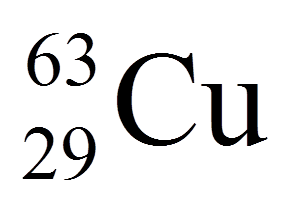
3
b)
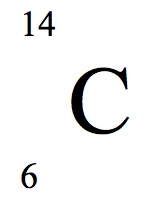
4
c)
2
d)
Can't determine
10.
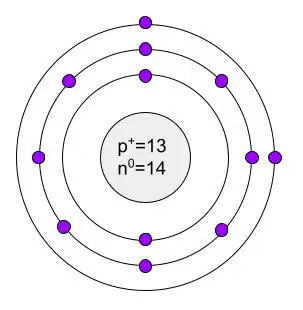
Is the following Bohr Model correct for an Aluminum Atom?
a)
No, the neutron number is incorrect for the average Aluminum atom.
b)
No, the atom does not have the appropriate number of electrons.
c)
Yes, the model is correct.
d)
No, the number of protons is incorrect.
11.
Is the following Bohr Model correct for an Aluminum Atom?
a)
No, the neutron number is incorrect for the average Aluminum atom.
b)
No, the atom does not have the appropriate number of electrons.
c)
Yes, the model is correct.
d)
No, the number of protons is incorrect.
12.
Is the following Bohr Model correct for this isotope of a Sodium atom?
a)
Yes, the model is correct.
b)
No, the electron number is incorrect or the electrons are not placed correctly.
c)
No, the neutron number is incorrect.
d)
No, the proton number is incorrect.
13.

Identify the number of valence electrons (outer electrons) for Chlorine(Cl).

a)
7
b)
4
c)
3
d)
Can't Determine
14.

Identify the number of valence electrons (outer electrons) for Chlorine(Cl).

a)
7
b)
4
c)
3
d)
Can't Determine
15.
A chlorine isotope has a 20 neutrons. How many protons does it have? What is the mass of this isotope?
a)
17 protons, mass of 37
b)
17 protons, mass of 35
c)
15 protons, mass of 35
d)
15 protons, mass of 37
16.
A chlorine isotope has a 20 neutrons. How many protons does it have? What is the mass of this isotope?
a)
17 protons, mass of 37
b)
17 protons, mass of 35
c)
15 protons, mass of 35
d)
15 protons, mass of 37
17.
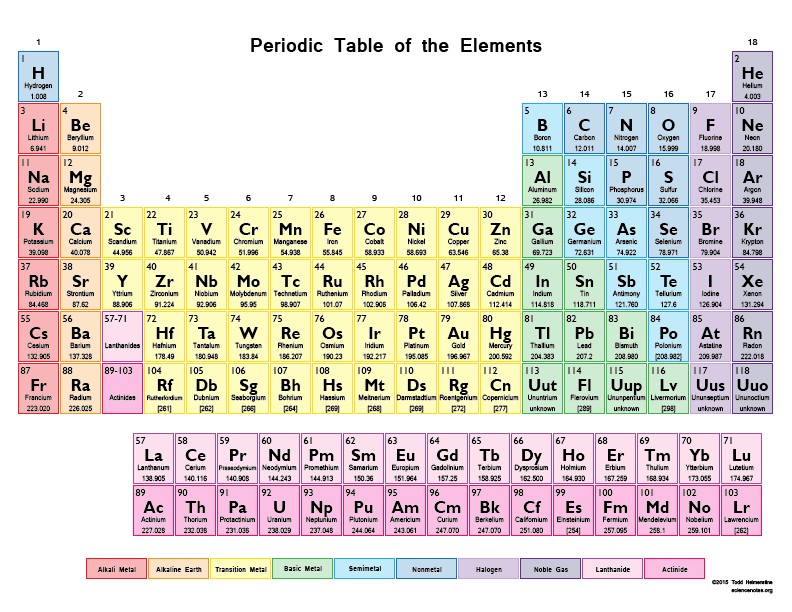
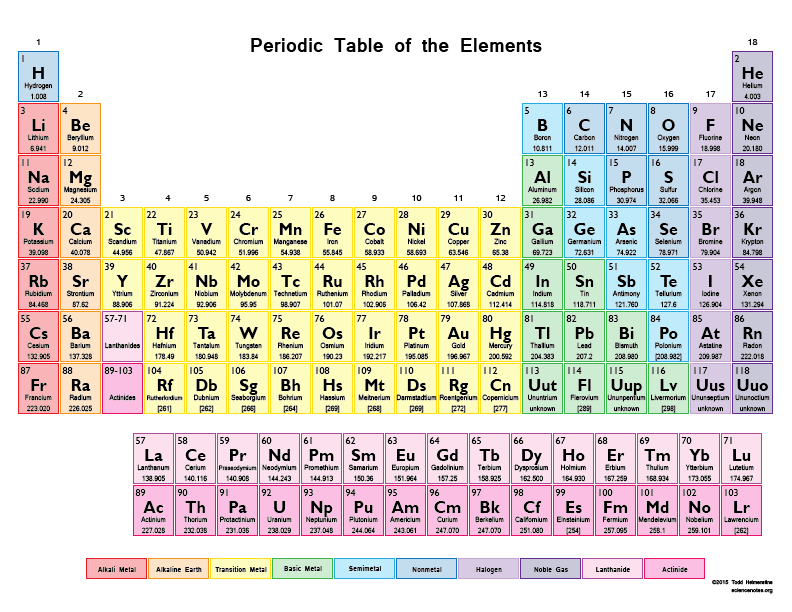
Use the periodic table below. What types of elements can be found in the general placement of the letters?
a)
D = metalloids, G = metals, and F = nonmetals
b)
G = metalloids, D = metals, and F = nonmetals
c)
D = metalloids, F = metals, and G = nonmetals
d)
F = metalloids, G = metals, and D = nonmetals
18.
Use the periodic table below. What types of elements can be found in the general placement of the letters?
a)
D = metalloids, G = metals, and F = nonmetals
b)
G = metalloids, D = metals, and F = nonmetals
c)
D = metalloids, F = metals, and G = nonmetals
d)
F = metalloids, G = metals, and D = nonmetals
19.
Look at the diagram below. What element is represented?
a)
Magnesium
b)
Boron
c)
Carbon
d)
Beryllium
20.
Which of the following elements is found in the following location on the periodic table? Period 2 Group 14
a)
Carbon (C)
b)
Silicon (Si)
c)
Calcium (Ca)
d)
Strontium (Sr)
21.
What is the correct notation for a Fluorine atom with 9 protons, 11 neutrons, and 9 electrons?
a)
A
b)
B
c)
C
d)
D
22.
What is the correct notation for a Fluorine atom with 9 protons, 11 neutrons, and 9 electrons?
a)
A
b)
B
c)
C
d)
D
23.
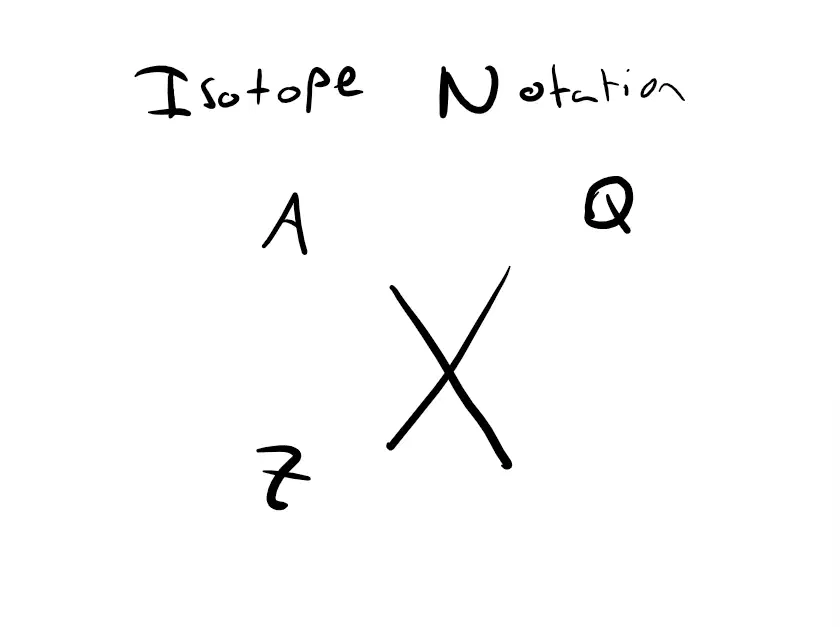
What is the A in this example of isotope notation?
a)
Atomic Number
b)
Atomic Mass Units
c)
Mass Number
d)
Net Charge
24.
If Z was 15 what element would this isotope be?
a)
Phosphorus
b)
Chlorine
c)
Californium
d)
Hydrogen
25.
If Z was 15 what element would this isotope be?
a)
Phosphorus
b)
Chlorine
c)
Californium
d)
Hydrogen
26.
The element silicon has three naturally occurring isotopes. Which of the following describes the relationship of these isotopes?
a)
same atomic number, different mass
b)
same atomic number, same mass
c)
different atomic number, different mass
d)
different atomic number, same mass
27.
The element silicon has three naturally occurring isotopes. Which of the following describes the relationship of these isotopes?
a)
same atomic number, different mass
b)
same atomic number, same mass
c)
different atomic number, different mass
d)
different atomic number, same mass
28.
How many neutrons are in this isotope of chlorine?
a)
20
b)
17
c)
37
d)
54
29.
Almost all the mass of an atom is located in its
a)
nucleus.
b)
orbitals.
c)
protons.
d)
electrons.
30.
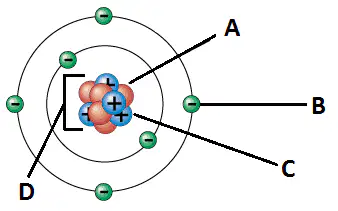
Look at the diagram below. Identify what parts are labeled B and D?
a)
B = electrons and D = nucleus
b)
B = nucleus and D = electrons
c)
B = nucleus and D = neutrons
d)
B = neutrons and D = electrons
31.
Look at the diagram below. Identify what parts are labeled B and D?
a)
B = electrons and D = nucleus
b)
B = nucleus and D = electrons
c)
B = nucleus and D = neutrons
d)
B = neutrons and D = electrons
32.

What particles are in the nucleus?

a)

Protons

b)

Neutrons

c)

Electrons

d)

Nucleus

33.

Which particle is outside the nucleus?

a)

Protons

b)

Neutrons

c)

Electrons

d)

Nucleus

34.

Which two particles have mass?

a)

Protons

b)

Neutrons

c)

Electrons

d)

Nucleus

35.

Protons are:

a)

Positive

b)

Neutral

c)

Negative

36.

Neutrons are:

a)

Positive

b)

Neutral

c)

Negative

37.

Electrons are:

a)

Positive

b)

Neutral

c)

Negative

38.

An atom has 25 protons and 30 neutrons. How many electrons are needed to make the atom neutral?

a)

0

b)

25

c)

30

d)

35

39.

Which statement explains why most of the mass of an atom is contained in the relatively small nucleus?

a)

Atoms are composed of less dense sub-units than the nucleus

b)

The nucleus is located at the center of an atom

c)

Protons and neutrons have more mass than electrons

d)

Atoms are composed of mostly empty space

40.

When an atom has the same number of protons and electrons, the atom is __________?

a)

neutron

b)

neutral

c)

newton

d)

nutella

41.
If an atom has 3 electrons, how many protons does it have?
a)
1
b)
2
c)
4
d)
3
42.

What is the correct formula for calculating how many neutrons are in an atom?

a)

Protons + Electrons= Neutrons

b)

Mass Number - Atomic number= Neutrons

c)

Atomic mass + Atomic number = Neutrons

d)

Atomic mass - Protons = Neutrons

43.
What is the atomic number?
a)
the number of protons
b)

the number of protons AND neutrons (ADDED)

c)
the number of neutrons
d)

the number of protons AND electrons (ADDED)

44.

How many neutrons does nitrogen have?

a)

7

b)

14

c)

0

d)

6

45.
What is the mass number defined as?
a)
the number of protons
b)
the number of protons and neutrons
c)
the number of neutrons
d)
the number of protons and electrons
46.

How many protons are in a sodium atom, Na? (tap to enlarge the periodic table)

a)

Sodium has 1 proton.

b)

Sodium has 3 protons.

c)

Sodium has 11 protons

47.

What particles are in the nucleus?

a)

Protons

b)

Neutrons

c)

Electrons

d)

Nucleus

48.

Which particle is outside the nucleus?

a)

Protons

b)

Neutrons

c)

Electrons

d)

Nucleus

49.

Which two particles have mass?

a)

Protons

b)

Neutrons

c)

Electrons

d)

Nucleus

50.

Protons are:

a)

Positive

b)

Neutral

c)

Negative

51.

Neutrons are:

a)

Positive

b)

Neutral

c)

Negative

52.

Electrons are:

a)

Positive

b)

Neutral

c)

Negative

53.

An atom has 25 protons and 30 neutrons. How many electrons are needed to make the atom neutral?

a)

0

b)

25

c)

30

d)

35

54.

Which statement explains why most of the mass of an atom is contained in the relatively small nucleus?

a)

Atoms are composed of less dense sub-units than the nucleus

b)

The nucleus is located at the center of an atom

c)

Protons and neutrons have more mass than electrons

d)

Atoms are composed of mostly empty space

55.

When an atom has the same number of protons and electrons, the atom is __________?

a)

neutron

b)

neutral

c)

newton

d)

nutella

56.

All matter is made of _________.

a)
energy 
b)
atoms 
c)
electrons 
d)
compounds 
57.
If an atom has 3 electrons, how many protons does it have?
a)
1
b)
2
c)
4
d)
3
58.

What is the correct formula for calculating how many neutrons are in an atom?

a)

Protons + Electrons= Neutrons

b)

Mass Number - Atomic number= Neutrons

c)

Atomic mass + Atomic number = Neutrons

d)

Atomic mass - Protons = Neutrons

59.

How many neutrons does nitrogen have?

a)

7

b)

14

c)

0

d)

6

60.
What is the atomic number?
a)
the number of protons
b)

the number of protons AND neutrons (ADDED)

c)
the number of neutrons
d)

the number of protons AND electrons (ADDED)
61.
What is the mass number defined as?
a)
the number of protons
b)
the number of protons and neutrons
c)
the number of neutrons
d)
the number of protons and electrons
62.
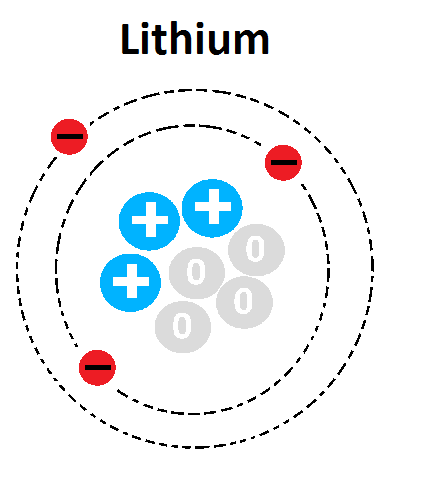
What is the atomic number of this atom?
a)
1
b)
3
c)
4
d)
7
63.

What is the mass number of this atom?

a)

1

b)

3

c)

4

d)

7

64.

How many protons are in a sodium atom, Na? (tap to enlarge the periodic table)

a)

Sodium has 1 proton.

b)

Sodium has 3 protons.

c)

Sodium has 11 protons

65.

An element has the mass number 12 and atomic number 6. The number of neutrons in it is:

a)

6

b)

10

c)

4

d)

8

66.

Atoms of the same element which have a different number of neutrons are called _________________.

a)

ions

b)

isotopes

c)

quarks

d)

molecules

67.

If an atom has 10 electrons, how many protons does it have?

a)

0

b)

1

c)

10

d)

5

68.

How many electrons are in an atom with an atomic number of 50? You will need a periodic table to help you.

a)

5

b)

8

c)

50

d)

2

69.
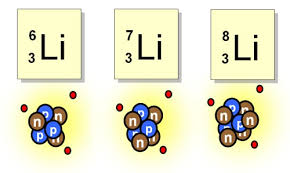
which atom has  4 neutrons?
a)
Li-6
b)
Li-7
c)
Li-8
d)
they have the same # of neutrons
70.

What is the atomic number of Barium, Ba? (enlarge the periodic table)

a)

20

b)

38

c)

56

d)

88

71.

On the periodic table, Groups are

a)

Horizontal rows

b)

Vertical columns

72.

What is a valence electron?

a)

Electrons in the first energy shell

b)

Electrons in the second energy shell

c)

Electrons in the outer shell

d)

Total number of electrons

73.

On the periodic table, Periods are

a)

Horizontal rows

b)

Vertical columns

74.

The innermost energy level has a maximum of how many electrons?

a)

1

b)

2

c)

6

d)

8

75.

Which element is this?

a)

Nickel

b)

Neon

c)

Sodium

d)

Nitrogen

76.

Name this element.

a)

Argon

b)

Chlorine

c)

Aluminum

d)

Boron

77.

Name this element.

a)

Neon

b)

Magnesium

c)

Sodium

d)

Manganese

78.

What is the atomic number of this atom?

a)

2

b)

4

c)

6

d)

8

79.

What is the mass number of this atom?

a)

1

b)

3

c)

4

d)

7

80.

What group does this element belong to?

a)

1

b)

2

c)

17

d)

18

81.

How many valence electrons?

a)

2

b)

5

c)

6

d)

8

82.

What element is represented in this Bohr Model?

a)

Carbon

b)

Hydrogen

c)

Aluminum

d)

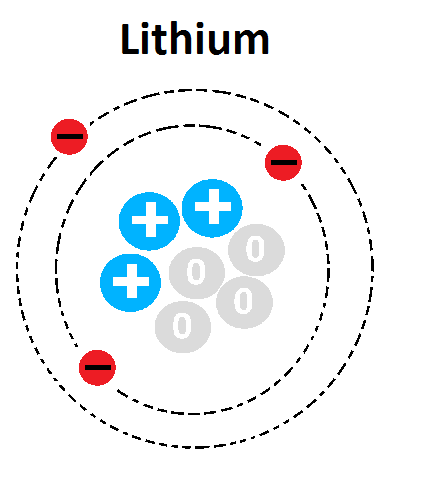
Lithium

83.
an element will always have the same number of 
a)
neutrons
b)
protons
c)
isotopes
d)
atoms
84.

What is the atomic number of this element?

a)

17

b)

18

c)

35

d)

35.453

85.

What is the mass number of this atom of Chlorine?

a)

17

b)

18

c)

35

d)

35.453

86.

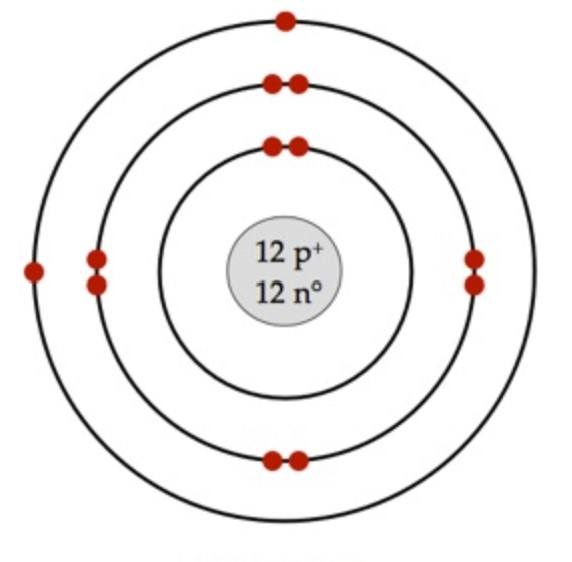
Which element does this Bohr model represent?

a)

Aluminum

b)

Silicon

c)

Magnesium

d)

Cobalt

87.

What is the mass of this atom?

a)

9

b)

10

c)

19

d)

28

88.

What element does this Bohr model represent?

a)

Chromium

b)

Magnesium

c)

Carbon

d)

Krypton

89.

Which element is this?

a)

Lithium

b)

Carbon

c)

Oxygen

d)

Boron

90.

How many energy levels does this element have?

a)

6

b)

2

c)

4

d)

5

91.

How many energy levels do atoms in period 3 have?

a)

1

b)

2

c)

3

d)

4

92.

How many energy levels do elements in period 4 have?

a)

2

b)

3

c)

4

d)

5

93.

What does the period number tell you about an element?

a)

Number of energy levels

b)

Number of valence electrons

94.

What does the group number tell you about an element?

a)

The number of energy levels

b)

The number of valence electrons

95.

Elements in the same group (column) will have similar properties.

a)

True

b)

False

96.

How many neutrons are in the following symbol?

a)

7

b)

8

c)

15

d)

10

97.

What is mass number for the following symbol?

a)

165

b)

66

c)

99

d)

100

98.
The top number in this isotope notation is
a)
the mass number
b)
the atomic number
c)
the atomic mass
d)
the neutron number
99.
The photo above shows the isotopic notation for which isotope?
a)
Carbon 12
b)
Carbon 13
c)
Carbon 14
d)
Carbon 15
100.
Which of the following is the proper equation for determining the number of neutrons for a given isotope?
a)
mass # - atomic #
b)
atomic mass - protons
c)
protons + electrons
d)
mass # + protons