wayground logo

Free Printable Worksheets

Font size

S
M
L
XL
Worksheets

Year 8 term 1 Revision

Total questions: 196

Worksheet time: 4hrs 26mins

Name
Class
Date
1.

Which is the correct definition for an element?

a)

A substance made up of only one type of atom that can be broken down

b)

Two or more substances that are not chemically combined

c)

Two or more different atoms that are chemically combined

d)

A substance made up of only one type of atom that cannot be broken down

2.

C is the correct chemical symbol for which element?

a)

calcium

b)

copper

c)

carbon

d)

caesium

3.

The smallest part of an element is called...

a)

a compound

b)

a mixture

c)

an element

d)

an atom

4.

Which is the correct definition for a compound?

a)

A substance made up of only one type of atom that can be broken down

b)

Two or more substances that are not chemically combined

c)

Two or more different atoms that are chemically combined

d)

A substance made up of only one type of atom that cannot be broken down

5.

What is the missing word? The properties of a compound are __________ the elements it is made up of.

a)

the same as

b)

different to

6.

Which is correct?

a)

iron and sulfur are both metals

b)

iron and sulfur are both non metals

c)

iron is a non metal and sulfur is a metal

d)

iron is a metal and sulfur is a non metal

7.

What is the correct name for CO?

a)

carbon dioxide

b)

carbon monoxide

c)

cobalt

d)

carbon oxide

8.

Which elements are present in H2SO4?

a)

hydrogen and oxygen

b)

hydrogen, oxygen and sodium

c)

hydrogen, oxygen and sulfur

d)

hydrogen, oxygen and silicon

9.

How many atoms of aluminium are there in the chemical formula for aluminium oxide: Al2O3

a)

2

b)

3

c)

5

d)

1

10.

Which element has the chemical symbol Ni?

a)

nitrogen

b)

nickel

c)

sodium

d)

neon

11.

What is the chemical symbol for copper?

a)

C

b)

Co

c)

Cp

d)

Cu

12.

What is the chemical symbol for gold?

a)

Ag

b)

Go

c)

Gu

d)

Au

13.

Is water an element or a compound?

a)

compound

b)

element

14.

How many different elements are there in Mg(OH)2

a)

2

b)

3

c)

4

d)

5

15.

True or false: Hydrogen atoms go around in pairs called molecules

a)

True

b)

False

16.

Where on the periodic table are the non metals located?

a)

left

b)

right

c)

middle

17.

What is the name given to the columns on the periodic table?

a)

periods

b)

groups

c)

rows

d)

columns

18.

Are non metal oxides acidic or alkaline?

a)

acidic

b)

alkaline

19.

Which property describes the ability of metals to be drawn into wires?

a)

malleable

b)

good conductor

c)

ductile

d)

insulator

20.

What happens to the size of atoms as you go down a group?

a)

they increase in size

b)

they decrease in size

21.

Which group are known as the alkali metals?

a)

Group 0

b)

Group 7

c)

Group 2

d)

Group 1

22.

Group 1 metal + Water --> ?

a)

metal hydroxide + water

b)

metal hydroxide + carbon dioxide

c)

metal hydroxide + hydrogen

d)

metal hydroxide + oxygen

23.

Which metal in group 1 is the leats reacrive?

a)

Li - lithium

b)

Na - sodium

c)

K - potassium

d)

Rb - rubidium

24.

Is the boiling point of a substance a physical or chemical property?

a)

physical

b)

chemical

25.

Which group on the periodic table are known as the halogens?

a)

Group 1

b)

Group 2

c)

Group 7

d)

Group 0

26.

Iron + Chlorine --> ?

a)

iron chlorite

b)

iron chloride

c)

iron chlorine

d)

iron chlorate

27.

What happens to the reactivity of group 7 elements as you go down the group?

a)

they get more reactive

b)

they get less reactive

c)

their reactivity stays the same

28.

What type of reaction occurs when a more reactive element takes the place of a less reactive element?

a)

thermal decomposition

b)

combustion

c)

displacement

d)

switching

29.

Which group of elements show very little/no reactivity?

a)

The alkali metals

b)

The Halogen

c)

The transition metals

d)

The noble gases

30.

Do the elements in group 0 have high or low boiling points?

a)

High

b)

Low

31.

The vertical (up and down) columns in the Periodic Table are called

a)

groups

b)

towers

c)

periods

d)

atomic numbers

32.
The Modern Periodic Table of Elements is arranged by
a)
atomic mass
b)
atomic number
c)
valence electrons
d)
number of isotopes
33.
What does the atomic mass tell you? 
a)
Basically,the number of electrons and protons
b)
The number of neutrons
c)
Basically, the number of protons and neutrons
d)
The number of protons.
34.
These are found on the Periodic Table.
a)
Compounds
b)
Elements
c)
Mixtures
35.

The horizontal (side to side) rows in the Periodic Table are called

a)

groups

b)

families

c)

periods

d)

atomic numbers

36.

what is the biggest group on the table

a)

metals

b)

nonmetals

c)

metaloids

d)

halogens

37.

what is the name of group number 1

a)

halogens

b)

noble gases

c)

alkali

d)

alkaline earth

38.

what is the big group of metals called found within the metals

a)

transition metals

b)

nonmetals

c)

noble gases

d)

halogens

39.
All matter is made of .....
a)
energy 
b)
atoms 
c)
air
d)
chemistry
40.
The atomic number of an element tells the number of _____ in the nucleus of an atom of that element.
a)
protons
b)
neutrons
c)
electrons
d)
isotopes
41.
Most of the mass of an atom is found it its _____.
a)
electron cloud
b)
nucleus
c)
atomic number
d)
empty space
42.
An element is made up of only one kind of _____.
a)
isotope
b)
plastic
c)
atom
d)
metal
43.
Which subatomic particle has a negative charge in the atom?
a)
proton
b)
neutron
c)
electron
d)
quark
44.
Which is an electron?
a)
A
b)
B
c)
C
45.
Which is a proton?
a)
A
b)
B
c)
C
46.
Which is a neutron?
a)
A
b)
B
c)
C
47.

How many electrons does Barium (Ba) have?

a)

13

b)

2

c)

71

d)

56

48.

What is group name of the most reactive metals?

a)

Noble gases

b)

Halogens

c)

Alkali metals

d)

Alkaline earth metals

49.

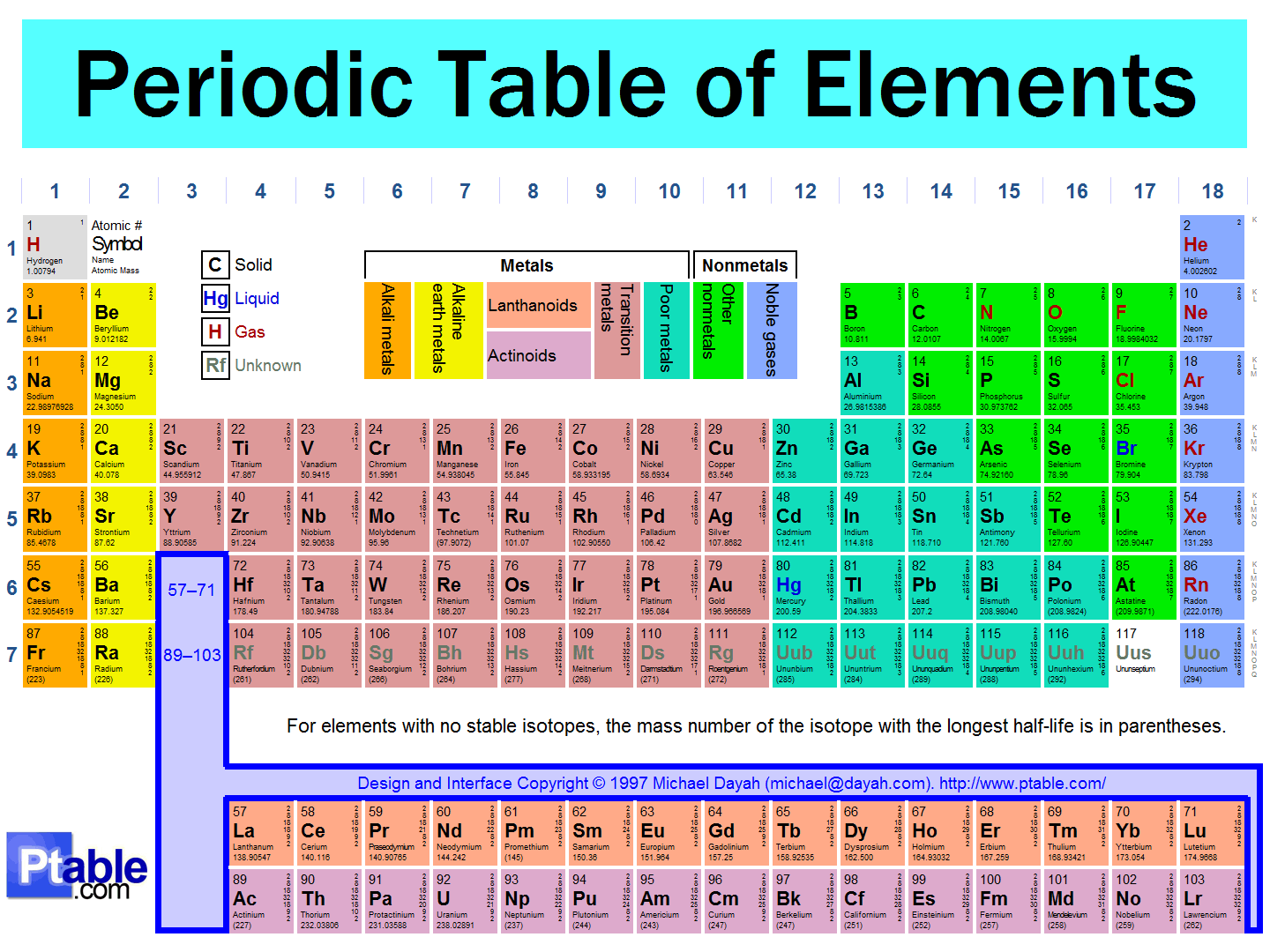
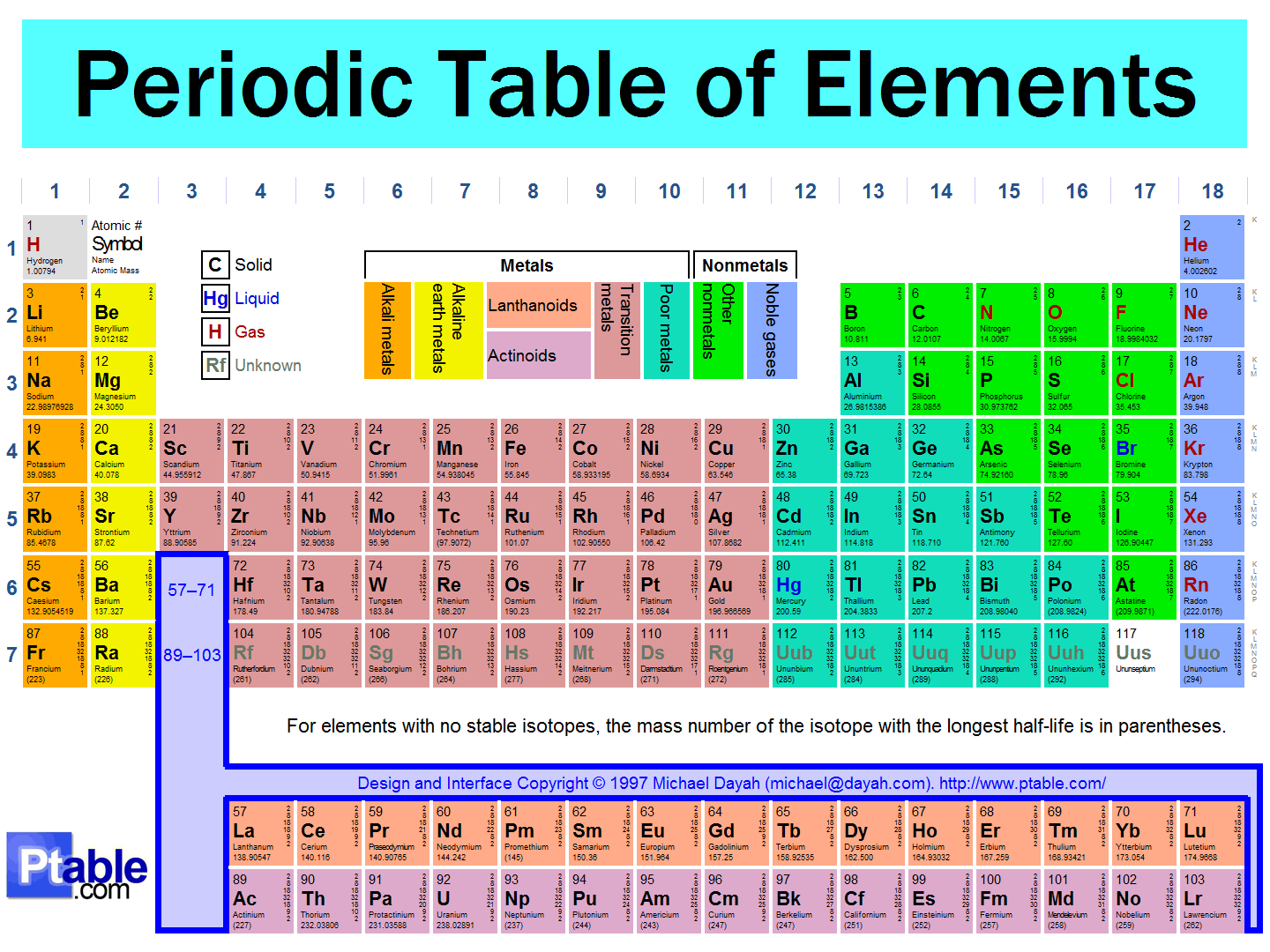
What is the name of the element? (Periodic table will be needed)

a)

sodium

b)

magnesium

c)

vanadium

50.
How did Mendeleev arrange the elements?
a)
alphabetical 
b)
density
c)
melting point
d)
atomic mass
51.
The horizontal row on the periodic table is called a
a)
group
b)
family
c)
period
d)
atomic number
52.
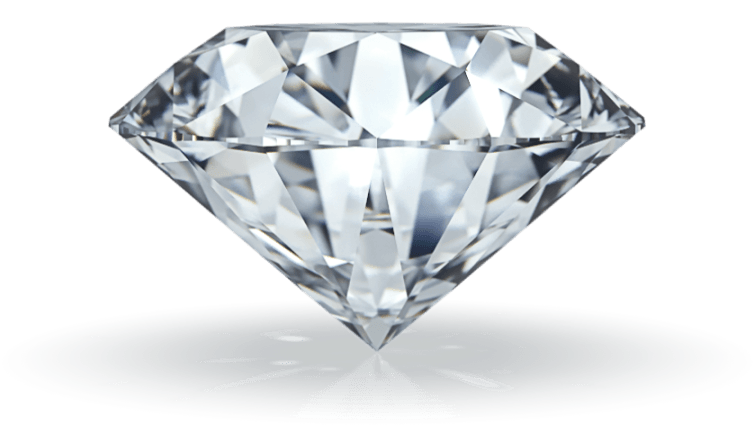
Diamonds are a pure form of what element?
a)
Carbon
b)
Oxygen
c)
Silicon
d)
Silver
53.
What does the 1 stand for?
a)
Hydrogen
b)
atomic number
c)
atomic mass
d)
atomic explosion
54.
What does the H stand for?
a)
Hydrogen
b)
atomic number
c)
atomic mass
d)
atomic explosion
55.
Is water an element or a compound?
a)
Element
b)
Compound
56.
The properties of the elements that make up a compound are usually very similar to the compound itself.
a)
True
b)
False
57.
A compound consists of two or more elements bound together.
a)
True
b)
False
58.
Is Iron (Fe) an element or a compound?
a)
Element
b)
Compound
59.
What is this element...Au
a)
Iron
b)
Titanium
c)
Gold
d)
Flourine
60.
Element:Fe
a)
Gold
b)
Flourine
c)
Phosphorus
d)
Iron
61.
What is the symbol for Calcium
a)
Cl
b)
Ca
c)
Cm
d)
ca
62.
Element is a
a)
pure substance
b)
compound
c)
mixture
d)
molecule
63.
Which of the following represents an element?
a)
H2O
b)
H2
c)
NaCl
d)
CaCO3
64.
Which of the following is not a compound?
a)
HCl
b)
Cl
c)
NaCl
d)
CO2
65.
What is H2SO4 
 made up of?
a)
2 hydrogen, 1 sulfur, 4 oxygen
b)
1 hydrogen, 2 sulfur, 4 oxygen
c)
2 hydrogen & 4 sodium
d)
1 hydrogen & 6 sodium
66.
In general, metals are _____. 
a)
poor conductors of heat
b)
brittle
c)
poor conductors of electricity 
d)
good conductors of heat
67.
Shiny
a)
Metal
b)
Nonmetal
68.
Sulfur
a)
Metal
b)
Nonmetal
69.
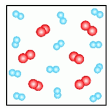
Classify the picture with the correct label.
a)
Element
b)
Compound
c)
Mixture of Elements
d)
Mixture of Compounds
70.
Classify the picture with the correct label.
a)
Element
b)
Compound
c)
Mixture of Elements and Compounds
d)
Mixture of Elements
71.
Classify the picture with the correct label.
a)
Element
b)
Compound
c)
Mixture of Elements & Compounds
d)
Mixture of Compounds
72.
Classify the picture with the correct label.
a)
Compounds
b)
Mixture of Elements
c)
Mixture of Compounds
d)
Mixture of Elements & Compounds
73.
Classify the picture with the correct label.
a)
Mixture of Elements
b)
Compound
c)
Mixture of Compounds
d)
Element
74.
Classify the picture with the correct label.
a)
Element
b)
Compound
c)
Mixture of Compounds
d)
Mixture of Elements
75.
Classify the picture with the correct label.
a)
Mixture of Compounds
b)
Mixture of Elements
c)
Compound
d)
Mixture of Elements & Compounds
76.
How many atoms are there TOTAL in:
H2SO4
a)
6
b)
5
c)
7
d)
3
77.
Which part of an atom is POSITIVELY charged?
a)
protons
b)
neutrons
c)
electrons
d)
atoms
78.
What part of an atom is NEGATIVELY charged?
a)
protons
b)
neutrons
c)
electrons
d)
atoms
79.
Which part of an atom has no charge?
a)
protons
b)
neutrons
c)
electrons
d)
atoms
80.
What is the term for combining 2 or more atoms together?
a)
atoms
b)
elements
c)
molecules
d)
compounds
81.
TRUE OR FALSE:
Every compound is a molecule but not every molecule is a compound.
a)
TRUE
b)
FALSE
82.
What is the picture displayed?
a)
atom
b)
element
c)
molecule
d)
compound
83.
This diagram represents a _____.
a)
pure substance that is a compound
b)
mixture of elements
c)
pure substance that is an element
d)
mixture of compounds
84.
This diagram represents a _____.
a)
pure substance that is a compound
b)
mixture of elements
c)
pure substance that is an element
d)
mixture of compounds
85.
a)
Element
b)
Compound
c)
Mixture of compound and element
d)
Mixture of elements
86.
a)
Element
b)
Compound
c)
Mixture of compound and element
d)
Mixture of two elements
87.
Based off of the image, what type of matter is shown?
a)
gas
b)
solid
c)
liquid
88.
Which of these is a property of metals?
a)
It's malleable
b)
It can't conduct electricity
c)
They are used in food
d)
It's very brittle
89.
Brittle
a)
Metal
b)
Nonmetal
90.
Good conductor of heat
a)
Metal
b)
Nonmetal
91.
Iron is a good conductor, malleable and magnetic. What type of element is Iron? 
a)
Metal
b)
Nonmetal
c)
Metalloid
d)
Pretty
92.
Which of the following is a property of a non-metal?
a)
Conducts electricity and heats well
b)
Can be hammered into thin sheets
c)
Is brittle and breaks easily
d)
Has a shiny, metallic luster
93.
At room temperature metals are ____________.
a)
plasma
b)
gases
c)
liquid
d)
solid
94.
Metals that can be used as wire are ____________.
a)
metallic
b)
shiny
c)
malleable
d)
ductile
95.
Where are the non-metallic elements found in the periodic table?
a)
In the middle
b)
In the top rows
c)
On the left-hand side
d)
On the right-hand side
96.
Which elements are found on the left to middle of The Periodic Table? 
a)
Metals
b)
Nonmetals
c)
Metalloids
d)
Candles
97.
I have an object that is dull, brittle, and an insulator, what is it?
a)
metalloid
b)
non-metal
c)
metal
d)
matter
98.
The elements argon, krypton, and xenon are all non-metals. What property would these elements have in common?
a)
Good conductor of thermal energy
b)
Poor conductor of electricity
c)
Shiny, lustrous surface
d)
Soft and malleable
99.
What physical properties are used to classify elements as metals, non-metals, or metalloids?
a)
Color, smell, physical state
b)
Reactivity, streak, hardness
c)
Ability to burn, mass, density
d)
Luster, conductivity, malleability
100.

Where on the periodic table are the non metals located?

a)

left

b)

right

c)

middle

101.

What is the name given to the columns on the periodic table?

a)

periods

b)

groups

c)

rows

d)

columns

102.

Which property describes the ability of metals to be drawn into wires?

a)

malleable

b)

good conductor

c)

ductile

d)

insulator

103.

What happens to the size of atoms as you go down a group?

a)

they increase in size

b)

they decrease in size

104.

Which group are known as the alkali metals?

a)

Group 0

b)

Group 7

c)

Group 2

d)

Group 1

105.

Which metal in group 1 is the leats reacrive?

a)

Li - lithium

b)

Na - sodium

c)

K - potassium

d)

Rb - rubidium

106.

Which group on the periodic table are known as the halogens?

a)

Group 1

b)

Group 2

c)

Group 7

d)

Group 0

107.

What happens to the reactivity of group 7 elements as you go down the group?

a)

they get more reactive

b)

they get less reactive

c)

their reactivity stays the same

108.

Which group of elements show very little/no reactivity?

a)

The alkali metals

b)

The Halogen

c)

The transition metals

d)

The noble gases

109.

Do the elements in group 0 have high or low boiling points?

a)

High

b)

Low

110.
The Modern Periodic Table of Elements is arranged by
a)
atomic mass
b)
atomic number
c)
valence electrons
d)
number of isotopes
111.
What does the atomic mass tell you? 
a)
Basically,the number of electrons and protons
b)
The number of neutrons
c)
Basically, the number of protons and neutrons
d)
The number of protons.
112.
These are found on the Periodic Table.
a)
Compounds
b)
Elements
c)
Mixtures
113.

The horizontal (side to side) rows in the Periodic Table are called

a)

groups

b)

families

c)

periods

d)

atomic numbers

114.

what is the biggest group on the table

a)

metals

b)

nonmetals

c)

metaloids

d)

halogens

115.

what is the big group of metals called found within the metals

a)

transition metals

b)

nonmetals

c)

noble gases

d)

halogens

116.
The atomic number of an element tells the number of _____ in the nucleus of an atom of that element.
a)
protons
b)
neutrons
c)
electrons
d)
isotopes
117.
An element is made up of only one kind of _____.
a)
isotope
b)
plastic
c)
atom
d)
metal
118.
Is water an element or a compound?
a)
Element
b)
Compound
119.
A compound consists of two or more elements bound together.
a)
True
b)
False
120.
Is Iron (Fe) an element or a compound?
a)
Element
b)
Compound
121.
What is this element...Au
a)
Iron
b)
Titanium
c)
Gold
d)
Flourine
122.
Element:Fe
a)
Gold
b)
Flourine
c)
Phosphorus
d)
Iron
123.
What is the symbol for Calcium
a)
Cl
b)
Ca
c)
Cm
d)
ca
124.
Element is a
a)
pure substance
b)
compound
c)
mixture
d)
molecule
125.
In general, metals are _____. 
a)
poor conductors of heat
b)
brittle
c)
poor conductors of electricity 
d)
good conductors of heat
126.
Shiny
a)
Metal
b)
Nonmetal
127.
Sulfur
a)
Metal
b)
Nonmetal
128.
Which of these is a property of metals?
a)
It's malleable
b)
It can't conduct electricity
c)
They are used in food
d)
It's very brittle
129.
Brittle
a)
Metal
b)
Nonmetal
130.
Good conductor of heat
a)
Metal
b)
Nonmetal
131.
Iron is a good conductor, malleable and magnetic. What type of element is Iron? 
a)
Metal
b)
Nonmetal
c)
Metalloid
d)
Pretty
132.
Which of the following is a property of a non-metal?
a)
Conducts electricity and heats well
b)
Can be hammered into thin sheets
c)
Is brittle and breaks easily
d)
Has a shiny, metallic luster
133.
At room temperature metals are ____________.
a)
plasma
b)
gases
c)
liquid
d)
solid
134.
I have an object that is dull, brittle, and an insulator, what is it?
a)
metalloid
b)
non-metal
c)
metal
d)
matter
135.
The elements argon, krypton, and xenon are all non-metals. What property would these elements have in common?
a)
Good conductor of thermal energy
b)
Poor conductor of electricity
c)
Shiny, lustrous surface
d)
Soft and malleable
136.
a)

A

b)

B

c)

C

137.
a)

A

b)

B

c)

C

138.
a)

A

b)

B

c)

C

139.
a)

Ar

b)

Kr

c)

N

d)

Ne

140.
a)

A

b)

B

c)

C

141.
a)

A

b)

B

c)

C

142.
a)

A

b)

B

c)

C

143.
a)

Sb

b)

Sn

c)

S

d)

Se

144.
a)

B

b)

C

c)

A

145.
a)

C

b)

A

c)

B

146.
a)

A

b)

B

c)

C

147.
a)

A

b)

B

c)

C

148.
a)

A

b)

B

c)

C

149.
a)

C

b)

B

c)

A

150.
a)

B

b)

C

c)

A

151.
a)

Br

b)

B

c)

Be

d)

Ba

152.
a)

B

b)

C

c)

A

153.
a)

B

b)

C

c)

A

154.
a)

C

b)

A

c)

B

155.
a)

Ne

b)

N

c)

Mg

d)

P

156.
a)

A

b)

B

c)

C

157.
a)

A

b)

B

c)

C

158.
a)

A

b)

B

c)

C

159.
a)

Ar

b)

Kr

c)

N

d)

Ne

160.
a)

A

b)

B

c)

C

161.
a)

A

b)

B

c)

C

162.
a)

A

b)

B

c)

C

163.
a)

Sb

b)

Sn

c)

S

d)

Se

164.
a)

B

b)

C

c)

A

165.
a)

C

b)

A

c)

B

166.
a)

A

b)

B

c)

C

167.
a)

A

b)

B

c)

C

168.
a)

A

b)

B

c)

C

169.
a)

C

b)

B

c)

A

170.
a)

B

b)

C

c)

A

171.
a)

Br

b)

B

c)

Be

d)

Ba

172.
a)

B

b)

C

c)

A

173.
a)

B

b)

C

c)

A

174.
a)

C

b)

A

c)

B

175.
a)

Ne

b)

N

c)

Mg

d)

P

176.

Most diet-related diseases can be linked to: (Choose 3)

a)

Too much saturated fat

b)

Not eating enough sugar

c)

Too much salt

d)

Not eating enough fibre

e)

Leading an active lifestyle

177.

What does CHD stand for?

a)

Cardiovascular disease

b)

Coronary heart disease

c)

Carbohydrate health disorder

178.

Which of the following statements is true?

a)

A balanced diet should not include anything sweet.

b)

Pasta and vegetables are enough to provide a balanced diet.

c)

A balanced diet must include carbohydrates, fats, proteins, minerals, vitamins, water and fibre.

d)

A balanced diet should not include any fats.

179.

Fill in the blank: (a)   means being 20% or above the normal weight for your height.

180.

________ ________ is when energy input (calories consumed through food and drink) is equal to energy output (calories used by the body for our energy requirements).

a)

Portion control

b)

Energy balance

c)

Balanced diet

d)

Exercise

181.

Foods that offer few, if any, nutrients but do supply calories.

a)

Nutrient Dense

b)

Empty Calorie Foods

c)

Nutritious Foods

d)

Supplemental Foods

182.

True or False: Type 1 diabetes is associated with being overweight.

a)

True

b)

False

183.

The organ responsible for producing insulin is the...

a)

Liver

b)

Heart

c)

Pancreas

d)

Gallbladder

184.

Which of these guidelines would you not recommend to someone who is trying to increase fibre intake in their diet.

a)

Add nuts & seeds to home baking & breakfast cereals, e.g. chopped nuts added to crumble topping

b)

Choose wholegrain cereals over white, refined cereals.

c)

Add pulse vegetables to dishes, e.g. adding beans, peas & lentils to soups, stews & casseroles.

d)

Remove the skins from fruit and vegetables before eating.

185.
Define the term 'balanced diet'.
a)
A diet containing some nutrients in the correct proportions.
b)
A diet containing most nutrients in the correct proportions.
c)
A diet containing none nutrients in the correct proportions.
d)
A diet containing all nutrients in the correct proportions.
186.
Which nutrient provides the most amount of energy per gram?
a)
Carbohydrate
b)
Fats
c)
Protein
d)
Vitamin
187.
_____________ increases the risk of diet related diseases.
a)
High Blood Pressure
b)
Coronary Heart Disease
c)
Diabetes
d)
Obesity
188.
Chicken, fish and meat contain which nutrient?
a)
Protein
b)
Carbohydrate
c)
Fats
d)
Minerals
189.
Which food contains carbohydrates?
a)
Fish
b)
Pasta
c)
Egg
d)
Carrot
190.

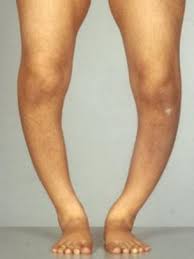
Deficiency of which nutrient leads to this disease?

a)

Vitamin A

b)

Vitamin D

c)

Vitamin C

191.

Deficiency of __________ causes Night blindness.

a)

Vitamin B1

b)

Vitamin D

c)

Vitamin A

192.

True or false? Having a high BMI increases your risk of developing coronary heart disease.

a)

True

b)

False

193.

Which of the following diseases can be caused by a deficiency of iron?

a)

Anaemia

b)

Osteoporosis

c)

Obesity

d)

Marasmus

194.

True or false? Reducing salt intake can reduce the risk of coronary heart disease.

a)

False

b)

True

195.

Eating too much sugary food causes,

a)

Tooth decay

b)

High on energy

c)

Health probems like diabetes, heart problems and cancer.

d)

All of the above

196.

What does the body use carbohydrates for?

a)

Carbohydrates enable the tranport of essential nutrients in the body.

b)

Carbohydrates improve digestion.

c)

Carbohydrates are used by the body for growth.

d)

Carbohydrates provide the body with a source of energy.