Wayground logo

Free Printable Worksheets

Font size

S
M
L
XL
Worksheets

Chem Semester Exam Review 2023

Total questions: 175

Worksheet time: 7hrs 15mins

Name
Class
Date
1.
Blue Color: Chemical or Physical Property
a)
Chemical Property
b)
Physical Property
2.
Flammability (burns): Chemical or Physical Property
a)
Chemical Property
b)
Physical Property
3.
Solubility (dissolves): Chemical or Physical Property
a)
Chemical Property
b)
Physical Property
4.
Reacts with Acid: Chemical or Physical Property
a)
Chemical Property
b)
Physical Property
5.
iron rusting is an example of what?
a)
Physical change
b)
Chemical change
6.
this is an example of?
a)
physical change
b)
chemical change
7.
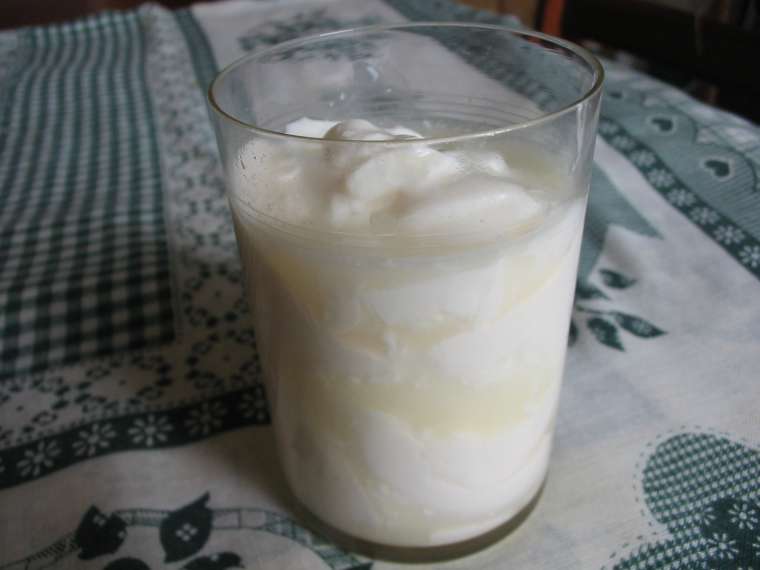
Is milk going sour a physical or chemical change?
a)
Physical 
b)
Chemical
8.
Is mold growing on cheese a physical or chemical change?
a)
Physical 
b)
Chemical
9.
A substance that contains only one type of atom is a(n)
a)
compound
b)
element
c)
heterogeneous mixture
d)
homogeneous mixture
10.
Which of these is a pure substance?
a)
bread
b)
table salt
c)
garden soil
d)
sea water
11.
A mixture that appears to be evenly mixed throughout:
a)
an atom
b)
a compound
c)
a homogeneous mixture
d)
a heterogeneous mixture
12.

A mixture that does NOT appear to be evenly mixed throughout is ______.

a)

an atom

b)

a compound

c)

a homogeneous mixture

d)

a heterogeneous mixture

13.

A _______ _________ is what we call when the composition is not uniform throughout.

a)

homogeneous mixture

b)

heterogeneous mixture

14.
Sugar water is a 
a)
solution
b)
suspension
c)
colloid
15.
Two classifications of a pure substance are
a)
homogeneous and heterogeneous
b)
atoms and elements
c)
elements and compounds
d)
solutions and colloids
16.

Which of the following is a compound?


(circles of different colors represent different types of atoms)

(circles that are touching are chemically bonded)

a)
b)
c)
17.

Which of the following is a mixture?


(circles of different colors represent different types of atoms)

(circles that are touching are chemically bonded)

a)
b)
c)
18.

Which of the following are mixtures

a)

tap water

b)

bread flour

c)

blood

d)

beach sand

19.

Water, H2O, can be broken down by chemical means.

a)

True

b)

False

20.

Which of the following are elements?

a)

He 

b)

O2 

c)

S8

d)

Fe2O3

e)

O3

21.

The atomic number is the same as......

a)

the number of protons

b)

the number of electrons

c)

the number of neutrons

d)

the number of protons plus neutrons

22.

The mass number is the same as......

a)

the number of protons

b)

the number of electrons

c)

the number of neutrons

d)

the number of protons plus neutrons

23.

If we are talking about the isotope carbon-14, the mass number of this isotope is.....

a)

12

b)

13

c)

14

d)

6

24.

If we are talking about the isotope carbon-13, the mass number of this isotope is...

a)

12

b)

13

c)

14

d)

6

25.

Isotopes of an element have different numbers of ......

a)

protons

b)

neutrons

c)

electrons

26.

Can you use the periodic table to find the atomic number of an element?

a)

yes

b)

no

27.

On the periodic table, the number under the symbol for carbon is "12.01" This number is the....

a)

atomic number

b)

mass number

c)

average atomic mass

d)

number of neutrons

28.

What is the average atomic mass of boron?

a)

10 amu

b)

11 amu

c)

5 amu

d)

10.81 amu

29.

What is the atomic number of boron?

a)

10

b)

11

c)

5

d)

10.81

30.

If boron only has two isotopes (B-10 and B-11), which isotope is the most abundant?

a)

boron-10

b)

boron-11

c)

We can't tell without more information

31.

How many electrons would a neutral atom of boron have?

a)

10.81

b)

5

c)

10

d)

15

32.

How many protons does krypton have?

a)

84

b)

36

c)

48

d)

8

33.

How many electrons does oxygen have?

a)

8

b)

16

c)

2

d)

15

34.

How many neutrons does lithium have?

a)

3

b)

4

c)

6

d)

7

35.

How many neutrons are in magnesium?

a)

12

b)

24

c)

25

d)

36

36.

What is the atomic number of silicon?

a)

14

b)

28

c)

42

d)

7

37.

How many neutrons does beryllium have?

a)

4

b)

5

c)

9

d)

13

38.

How many electrons does helium have?

a)

2

b)

4

c)

6

d)

8

39.

Which particles are found in the nucleus of an atom?

a)

protons only

b)

neutrons only

c)

protons & electrons

d)

protons & neutrons

40.
What atom matches this electron configuration?
1s22s22p63s23p64s23d10
a)
Zinc
b)
Copper
c)
Nickel
d)
Germanium
41.
What atom matches this electron configuration?
1s22s22p63s2
a)
Neon
b)
Magnesium
c)
Aluminum
d)
Potassium
42.
What electron configuration matches an oxygen atom?
a)
1s22s22p63s2, 3p64s23d104p5
b)
1s22s22p4
c)
1s22s22p6
d)
1s22s22p63s23p64s23d1
43.
How many electrons does Si contain? (click to see image)
a)
14
b)
28
c)
2
d)
4
44.
How many electrons can the first energy level hold?
a)
1
b)
2
c)
8
d)
0
45.

What do you start all electron configurations with?

a)

1s2

b)

1d10

c)

1f14

d)

1p6

46.

The 4 orbitals are

a)

s, p, d, f

b)

a, b, c, d

c)

2, 4, 6, 8

47.
How many electrons can the d sublevel hold?
a)
8
b)
10
c)
2
d)
4
48.
What is the shorthand electron configuration for Sulfur atom?
a)
[Ar] 3p4
b)
[He] 3s23p4
c)
[Ne] 3s23p4
d)
[Na] 3s23p3
49.
What atom matches this electron configuration?
[Xe] 6s2 4f14 5d9
a)
Mercury
b)
Gold
c)
Platinum
d)
Thallium
50.

Each row on the periodic table represents:

a)

an energy level

b)

a sublevel

c)

an electron

d)

an orbital

51.
Maximum number of electrons that can be placed in an s orbital.  
a)
2
b)
6
c)
10
d)
14
52.
The maximum number of electrons that can be placed in an p orbital.  
a)
2
b)
6
c)
10
d)
14
53.
The maximum number of electrons that can be placed in an f orbital.  
a)
2
b)
6
c)
10
d)
14
54.
Spherical orbital, also the lowest energy orbital. 
a)
s
b)
p
c)
d
d)
f
55.
This orbital fill after the s,  the shape is a dumbbell. 
a)
s
b)
p
c)
d
d)
f
56.
In an orbital diagram,  an arrow represents: 
a)
an electron
b)
an orbital
c)
an element
57.
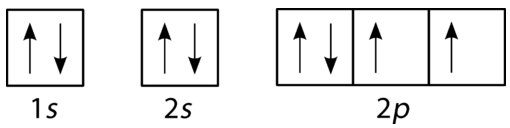
This orbital diagram represents:  
a)
C
b)
B
c)
N
d)
O
58.
This orbital diagram represents:  
a)
C
b)
B
c)
N
d)
O
59.

What is incorrect about this orbital diagram?

a)

Both arrows in the 2p box should be pointing up

b)

There is nothing incorrect with this diagram

c)

There should only be 1 orbital in the first 2p box and one in the 2nd 2p box

d)

All the arrows should be pointing up.

60.
A charged particle that has gained or lost electrons is called a _____.
a)
molecule
b)
ion
c)
isotope
d)
element
61.
A cation is a ____ ion.
a)
negative
b)
positive
c)
neutral
d)
ficticious
62.
A anion will be a ____ ion.
a)
negative
b)
positive
c)
neutral
d)
ficticious
63.
Nitrogen will form which of the following ions?
a)
N
b)
N-3
c)
N-5
d)
N+5
64.
Beryllium will ____ valence electrons when forming an ionic bond.
a)
lose 4
b)
gain 4
c)
lose 2
d)
gain 2
65.
In the compound aluminum oxide, which is the cation?
a)
Al+3
b)
Al
c)
O-2
d)
O
66.
Ionic bonds form between metals and ____.
a)
metalloids
b)
metals
c)
nonmetals
67.
What determines how ionic bonds will form?
a)
Number of protons
b)
Mass of the atom
c)
Number of total electrons
d)
Number of valence electrons
68.
Ionic bonds happen because of the ____ of valence electrons.
a)
sharing
b)
transfer
69.
Boron will ____ valence electrons when forming an ionic bond.
a)
lose three
b)
gain three
c)
lose 5
d)
gain 5
70.
Nitrogen will ____ valence electrons when forming an ionic bond.
a)
gain 1
b)
lose 1
c)
gain 3
d)
lose 3
71.
What type of bond is this? Lithium with Fluorine?
a)
ionic
b)
covalent
72.
How many electrons are needed in the outer energy levels of an atom to be stable?
a)
2
b)
4
c)
6
d)
8
73.
Nitrogen will do what to gain a stable octet?
a)
Lose 3
b)
Gain 3
c)
Lose 1
d)
Gain 2
74.
What is the charge on a Hydrogen ion?
a)
+1
b)
1
c)
2
75.
What is the charge on an Aluminium ion?
a)
3
b)
+3
c)
+2
d)
+1
76.
What is the ionic compound formed between K and F?
a)
KF
b)
K2F
c)
KF2
d)
K2F2
77.
What is the ionic compound formed between Ba and P?
a)
Ba2P3
b)
Ba3P2
c)
BaP
d)
Ba2P2
78.
What is the ionic compound formed between Ca and O?
a)
CaO
b)
Ca2O
c)
Ca2O2
d)
CaO2
79.
The compound formed by Mn (IV) and S would be which of these choices?
a)
Mn4S2
b)
MnS
c)
MnS4
d)
MnS2
80.
Write the correct chemical formula for Ag +  and  Br -
a)
AgBr
b)
silver bromide
c)
Ag2Br2
d)
gold bromide
81.
What is the formula for tin (II) nitride?
a)
Sn3N2
b)
SnN2
c)
Sn3N
d)
SnN
82.
Name the following ionic compound: MgSO4
a)
magnesium sulfoxide
b)
magnesium sulfide
c)
magnesium sulfate
d)
magnesium oxide
83.
If copper (II) and phosphate bond together, the resulting chemical formula would be:
a)
Cu2(PO4)3
b)
CuPO4
c)
Cu3(PO4)2
d)
Cu3PO4
84.

What is the chemical name for Cu(OH)3

a)

Copper Hydroxide

b)

Copper Hydroxide III

c)

Copper III Hydroxide

d)

Copper I Hydroxide III

85.
What is the name for CaS?
a)
calcium sulfate
b)
calcium sulfide
c)
calcium monosulfide
d)
monocalcium monosulfide
86.
What is the name for LiI?
a)
lithium oxide
b)
lithium iodide
c)
lithium monoiodide
d)
monolithium iodide
87.
How many electrons should Lithium have around its Lewis dot model?
a)
1
b)
2
c)
3
d)
4
88.
According to the octet rule most elements need _______ valence electrons.
a)
2
b)
8
c)
6
d)
18
89.
Hydrogen needs _____ electrons in its valence shell to be stable.
a)
4
b)
6
c)
8
d)
2
90.
Which of the following is the correct Lewis dot structure for the molecule fluorine (F2)?
a)
A
b)
B
c)
C
d)
D
91.

Which is the correct structure for NH3?

Pictures correspond with a-d.

a)

Option A.

b)

Option B.

c)

Option C.

d)

Option D.

92.
How many covalent bonds does carbon need to form in order to have a full octet?
a)
2
b)
3
c)
4
d)
5
93.
What is a double bond?
a)
a bond between two atoms
b)
one pair of electrons shared between two atoms
c)
two pairs of electrons shared between two atoms
d)
James Bond's brother
94.
Covalent compounds
a)
Share electrons
b)
transfer electrons
c)
contain a sea of electrons
d)
conduct electricity
95.

Which is the correct molecular structure for carbon dioxide CO2?

a)
b)
c)
d)
96.

H2O has how many lone pairs?

a)

0

b)

1

c)

2

d)

3

97.

The chemical name of P₄S₁₀ is:

a)

phosphorous sulfide

b)

phosphorus sulfide

c)

tetraphosphorus decasulfide

d)

phosphorus (X) sulfide

98.

The chemical name of SO₃ is:

a)

sulfate

b)

sulfur oxide

c)

sulfur trioxide

d)

monosulfur trioxide

99.

The chemical formula of dinitrogen tetroxide is:

a)

Ni₂O₄

b)

NiO

c)

N₂O₄

d)

NiO₂

100.

The chemical formula of sulfur hexabromide is:

a)

SBr₆

b)

S₆Br

c)

S(VI)Br

d)

S6Br

101.

Which of these element pairs would bond covalently?

a)

Fr and K

b)

Sc and O

c)

F and Cl

d)

He and Pt

102.
How many valence electrons does nitrogen have?
a)
3
b)
2
c)
5
d)
1
103.
What can be generalized about covalent bonds?
a)
Electrons will be exchanged.
b)
Electrons will be transferred.
c)
Electrons will be given and taken.
d)
Electrons will be shared.
104.
What two types of atoms make a covalent bond?
a)
2 Nonmetals
b)
1 Nonmetal & 1 Metal
c)
2 Metals
d)
2 Noble Gases
105.
How many electrons are shared in a double bond?
a)
2
b)
4
c)
6
d)
8
106.

What bond is formed between a metal and a nonmetal?

a)

Covalent bond

b)

Ionic bond

c)

Hydrogen bond

d)

Metallic bond

107.

Which formula is for phosphorus trichloride?

a)

KCl3

b)

PCl3

c)

K3Cl

d)

P3Cl

108.

Silicon dioxide is the compound in sand. What is its formula?

a)

SO2

b)

NaO2

c)

SiO2

d)

SiO

109.
The chemical formula of sulfur hexabromide is
a)
SBr₆
b)
S₆Br
c)
S(VI)Br
d)
S6Br
110.

What is the formula for diphosphorus pentoxide?

a)

P2O5

b)

PO5

c)

P5O2

d)

P2O6

111.
What is the correct name for NO?
a)
Mononitrogen Monoxide
b)
Nitrogen Monoxide
c)
Mononitrogen Dioxide
d)
Nitrogen Oxide
112.
Which of the following is NOT an ionic compound:
a)
CaO
b)
NaOH
c)
BaCl2
d)
Br2
113.
What is the percent by mass of chlorine in NaCl?
a)
39%
b)
61%
c)
35%
d)
65%
114.

What percent of Zn3(PO4)2 is zinc?

a)

33.15%

b)

16.04%

c)

50.80%

d)

19.68%

115.

Find the percent composition of CaCl2?

a)

Ca: 36.11%; Cl: 63.88%

b)

Ca: 53.12%; Cl: 100%

c)

Ca: 36.11%; Cl: 83.56%

d)

Ca: 46.11%; Cl: 63.88%

116.
What is the percent by mass of sodium in NaCl?
a)
39%
b)
61%
c)
35%
d)
65%
117.
An empirical formula:
a)
is a formula that calculates the coefficients of a compound in a balanced equation.
b)
is the simplest whole-number ratio of moles of elements in the compound.
118.
What is the empirical formula of the following molecular formula:  C3H6
a)
C3H6
b)
CH2
c)
C2H4
d)
CH3
119.
Which pair has the same empirical formula?
a)
NaCrO4 and Na2Cr2O7
b)
C2H4O2 and C6H12O6
c)
C3H6O3 and C2H6O2
d)
CH4 and C2H6
120.
What is the empirical formula if you have 88.80% copper and 11.20% oxygen?
a)
Cu3O8
b)
CuO4
c)
Cu2O
d)
Cu4O10
121.

A compound consists of 72.2% magnesium(Mg) and 27.8% nitrogen(N) by mass. What is the empirical formula?

a)

Mg4N3

b)

MgN2

c)

Mg3N2

d)

MgN

122.

You are given the following percentages: 40.05% S and 59.95% O. Find the empirical formula for these elements so that you can give the correct name of the compound formed.

a)

Sulfur monoxide

b)

Sulfur dioxide

c)

Sulfur trioxide

d)

Sulfur tetroxide

123.

What is Avogadro's number?

a)

6.02 x 10²³

b)

1 mole

c)

600 million

d)

6.02

124.

How many moles are in 6.02 x 10²³ molecules of H2O?

a)

1 mole

b)

2 moles

c)

6.02 moles

d)

602000000000000000000000 moles

125.

One mole of carbon dioxide (CO2) contains 6.02 x 10²³ _____.

a)

atoms

b)

formula units

c)

ions

d)

molecules

126.

How many moles are in 8.30 X 10²³ molecules of H2O?

a)

1.38 X 10²³ moles H2O

b)

1.38 moles H2O

c)

2 moles H2O

d)

1 mole H2O

127.

How many molecules are there in 31.8 moles of water?

a)

5.28 x 10⁻²³ molecules

b)

1.91 x 1025 molecules

c)

5.28x 10⁻²⁵ molecules

d)

1.91 x 10²³ molecules

128.

A mole is:

a)

The SI unit for mass

b)

The SI unit for the amount of a substance

c)

The SI unit for volume

d)

The SI unit for area

129.

Which has the most particles?

a)

1 mole H2

b)

1 mole Na1+

c)

1 mole Al(OH)3

d)

These are all the same

130.
4Si + S8 --> 2Si2S4
a)
Synthesis
b)
Decomposition
c)
Single displacement
d)
Double displacement
131.
3Ca + 2AlCl3 --> 3CaCl2 + 2Al
a)
Synthesis
b)
Decomposition
c)
Single diplacement
d)
Double displacement
132.
3KOH + H3PO4 --> K3PO4 + 3H2O
a)
Synthesis 
b)
Decomposition
c)
Single displacement
d)
Double displacement
133.
2Pb(NO3)2 --> 2PbO + 4NO2 + O2
a)
Synthesis 
b)
Decomposition
c)
Single displacement
d)
Combustion
134.
3Mg + N2 --> Mg3N2
a)
Synthesis 
b)
Decomposition
c)
Single displacement
d)
Combustion
135.
2NO2 --> N2 + 2O2
a)
Synthesis
b)
Decomposition
c)
Single displacement
d)
Combustion
136.
P4 + 3O2 --> 2P2O3
a)
Synthesis 
b)
Decomposition
c)
Single displacement
d)
Combustion
137.
Fe + H2SO4 --> Fe2(SO4)3 + H2
a)
Synthesis (combination)
b)
Decomposition
c)
Single replacement
d)
Combustion
138.
Which reaction type is the following: C5H10O4 + O2 --> CO2 + H2O
a)
Decomposition
b)
Single Replacement
c)
Combustion
d)
Double Replacement
139.
Which of the following is the general formula for a decomposition reaction?
a)
A + B  → AB
b)
AB → A + B
c)
AB + C → AC + B
d)
AB + CD → AC + BD
140.
When balancing equations a ____ can be placed to the left of a formula of a substance to make the equations balanced
a)
charge
b)
subscript
c)
random number
d)
coefficient
141.
What coefficient should be used to make the following equation balanced?
N2+O2--> _NO 
a)
1
b)
2
c)
3
d)
4
142.
Balance this equation:
 __Li + __Cl2 -> __LiCl
a)
2Li + Cl2 -> 4LiCl2
b)
2Li + Cl2 -> LiCl2
c)
2Li +  Cl2 -> 2LiCl
143.
C4H12 + O2 --> CO2 + H2O
a)
Synthesis
b)
Combustion
c)
Single Replacement
d)
Double Replacement
144.
H2SO4 + Fe -->H2 + FeSO4
a)
Synthesis
b)
Decomposition
c)
Single Replacement
d)
Double Replacement
145.
PbCl2 + AgNO3 ---> Pb(NO3)2 + AgCl 
a)
Synthesis
b)
Decomposition
c)
Single Replacement
d)
Double Replacement
146.
NH3 + HCl ---> NH4Cl 
a)
Synthesis
b)
Decomposition
c)
Single Replacement
d)
Double Replacement
147.
Which chemical reaction switches 2 elements?
a)
Double Replacement
b)
Single Replacement
c)
Combustion
d)
Decomposition
148.
Which chemical reaction takes place when 2 substances react to form a single product?
a)
Decomposition
b)
Double Replacement
c)
Single Replacement
d)
Synthesis
149.
At the end of chemical reactions, what is the total mass of the reactants compared to the total mass of the products?
a)
the product is doubled
b)
the product is half the mass of the reactants
c)
the mass is the same
d)
the mass changes depending on the reaction
150.
Write a balanced reaction for this SR Reaction
Zn(s) + H2SO4(aq) -->
a)
Zn(SO4)2 + H
b)
ZnSO4 + H2
c)
NR
d)
Zn2SO4 + H2
151.
Write a balanced reaction for this SR reaction
Sn(s) + NaNO3(aq) -->
a)
NaSn + NO3
b)
SnNO3 + Na
c)
NR
d)
SnN3O3 + Na
152.
Write a balanced equation for this DR reactions
NaOH + Fe(NO3)3 -->
a)
NaFe + OH(NO3)3
b)
2NaNO3 + 3Fe(OH)3
c)
NR
d)
3NaNO3 + Fe(OH)3
153.
Write a balanced equation for this DR reaction
KOH(aq) + H3PO4(aq) --> 
a)
K3PO4 + 3HOH
b)
KH3 + OHPO4
c)
NR
d)
KPO4 + H3OH
154.
Write a Balanced Equation for this reaction:
C2H4 + 2 O2 -->
a)
C2O2 + H4
b)
CO2 + HOH
c)
NR
d)
2 CO2 + 2H2O
155.
What is a limiting reactant?
a)
the reactant that determines how much product can be made
b)
the reactant that is in excess
c)
the product that you can make the most of
d)
the amount of reactants that react with each other
156.
When 12 moles of O2 reacts with 1.1 mole of C10H8 what is the limiting reactant?  C10H8 + 12 O2 --> 10 CO2 + 4 H2O
a)
Oxygen
b)
C10H8
c)
Water
d)
Carbon Dioxide
157.
What is the molar mass of sodium?
a)
11
b)
23
c)
45.98
d)
3
158.
In this image, what are the information in red is called the_______.
a)
Product
b)
Reactant
c)
Chemical Subscript
d)
Yield
159.
In this image, what are the information to the right of the arrow (in black) is called the_______.
a)
Product
b)
Reactant
c)
Chemical Subscript
d)
Yield
160.
Read the following chemical formula: C6H12O6. How many hydrogen atoms are in the formula?
a)
12
b)
6
c)
4
d)
2
161.

3CaCO3 + 2FePO4 --> Ca3(PO4)2 + Fe2(CO3)3


Assuming we start with 100. g of CaCO3 and 45 g of FePO4, identify the limiting reactant. (CaCO3 = 100.09 g/mol; FePO4 = 150.82 g/mol)

a)

iron(V) phosphate

b)

calcium carbonate

c)

iron(III) phosphate

d)

calcium(II) carbonate

162.

What is the limiting reactant if 10 moles of NH3 react with 30.0 moles of NO if we look at how much H2O is formed?

4NH3+6NO --> 5N2 + 6H2O

a)

NH3

b)

NO

c)

N2

d)

water

163.
Fe + S --> FeS
If 7.62g Fe react with 8.67g S, what is the limiting reactant?
a)
Fe
b)
S
c)
FeS
d)
none 
164.
CH4  +  2O2  →  CO2  +  2H2O
24 grams of CH4 was added to the above reaction. Calculate the theoretical yield of CO2.
a)
66 grams
b)
132 grams
c)
33 grams
d)
8.72
165.
The ______________ yield is the maximum amount of product possible in a reaction. This determines the amount of product that should be produced in a perfect setting
a)
Percent
b)
actual
c)
stoichiometry
d)
theoretical
166.
When reacting Na with Cl2, we calculated that the theoretical yield should be 12.5 grams. Our actual yield was 13.0 grams. What is the percent yield?
a)
100%
b)
104%
c)
96%
d)
1.04
167.
What does percent yield indicate?
a)
The amount of product we should get
b)
The efficiency of the lab
c)
The amount of product we actually got
d)
nothing
168.
2Fe2O3  +  C  →  Fe  +  3CO2
You add 28 grams of carbon. You find the actual yield to be 181.2 grams of CO2. What is the percent yield of CO2? (Hint: calculate theoretical yield of CO2 first)
a)
15.8%
b)
209.2%
c)
6435%
d)
15.5
169.
Theoretical yield = 73g
Actual yield = 62g
Calculate the percent yield.
a)
1.16%
b)
116%
c)
85%
d)
76%
170.
Percent yield = 100%
Theoretical yield = 88 grams
What is your actual yield?
a)
88 grams
b)
88%
c)
100 grams
d)
22%
171.
Zn  +  CuCl​2​​  →  ZnCl​2​  ​+  Cu
How many moles of ZnCl2 will be produced from 23.0 g of Zn
a)
0.354 moles
b)
1495 moles
c)
47.76 g
172.
Zn  +  CuCl​2​​  →  ZnCl​2​  ​+  Cu
How many grams of ZnCl2 will be produced from 23.0 g of Zn
a)
0.354 moles
b)
1495 moles
c)
47.76 g
173.
If 15 grams of copper (II) chloride react with 20 grams of sodium nitrate, how much sodium chloride can be formed? 
a)
13.04 g
b)
130.4 moles
c)
130.4 g
d)
13.04 moles
174.
P4 + 3O2 --> P4O6 
What is the limiting reactant is 12 moles of P4 react with 15 moles of O2?

a)
P4
b)
O2
c)
P4O6 
d)
none of the above
175.
How many grams of ammonia (NH3) can be produced from the reaction of 28 g of nitrogen gas and 25 grams of hydrogen gas? 
a)
43 g
b)
34 moles
c)
25 grams
d)
34 grams