
Font size
 Worksheets
HONORS Biology Final... Supplement (23-24)
Total questions: 50
Worksheet time: 37mins
When populations have abundant food, mates, and shelter their populations tend to (a) . As resources become limited the population begins to struggle as they have potentially reached a point and have (b) their maximum population. In response the population begins to (c) and the population begins to shrink until the environmental presesures are reduced. Once resources become more available the pattern of growth and death repeats until it finds its (d) and population size levels off at (e) .
The marine zone that is lit by sun and lies on the open ocean is called
abyssal zone
aphotic zone
photic zone
benthic zone
Which of the following is the most common ozone destroying pollutants?
Chloroflurocarbons
particular matter
Nitrogen dioxide
carbon monoxide
What landform causes the rain shadow effect?
mountains
lakes
plains
valley

Matter is recycled within and between ecosystems in __________________ cycles
biogeochemical
ecological
life
weather

What is predictable changes that occur in a community over time?
biological shift
geological improvement
ecological succession
chemical variation

What type of species/community is a redwood forest?
Climax Community
Pioneer Species
Intermediate Species
Tertiary Community


This type of growth is best described as
logistic
exponential

If a disease kills off the grasshopper in the food web above, how would this ecosystem be affected?
SELECT ALL THAT APPLY!
The grasshopper would evolve into a new species
The Shrew would adapt and eat the cricket
The Cricket would decrease
The Cattail would increase
The Frog would increase


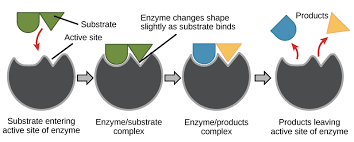
What is happening in this picture?
an enzyme is binding a substrate together to form a product
an enzyme is breaking down a substrate to release new products
the active site of the enzyme does not fit the substrate
a change in pH has damaged the enzyme

What are the REACTANTS in this chemical equation?
CH4 and 2O2
carbon and oxygen
CO2 and 2 H2O
water and methane
A chemical reaction or process that releases heat.
Endothermic
Exothermic

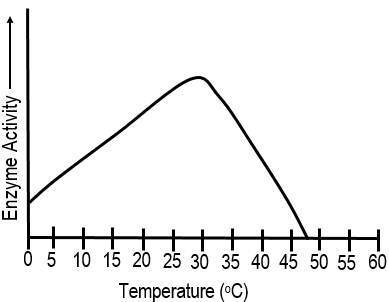
What happens when an enzyme is denatured?
It loses it's shape
It loses it's function
It loses BOTH it's shape and it's function
It becomes a co-enzyme
The energy needed to start a reaction is called the
activation energy
starting energy
promoting energy
reacting energy
Atoms become ___________ when their outer energy shell (valence shell) is full.
Stable / happy
Unstable / sad
If a proton is added or removed from an atom, what happens?
It becomes a different element.
It becomes a different isotope.
Nothing happens.
Isotopes are atoms of the same element with different #’s of __________ & therefore different __________.
neutrons; atomic #’s
protons ; atomic #’s
electrons ; atomic masses
neutrons ; atomic masses

There are (a) ATOMS in this molecule.

A force that holds two atoms together and involves the two atoms sharing one or more electrons
ionic bond
covalent bond
electronegativity
polar bond
An ionic bond is
attraction between opposite charged atoms or molecules
attraction between same charged atoms or molecules
When you share electrons between atoms or molecules
none of the above
Approximately 96% of organisms are made up of which 4 elements?
Hydrogen, oxygen, water and phosphorus
carbon, hydrogen, oxygen and nitrogen
phosphorus, sulfur, calcium and potassium
iron, zinc, iodine and carbon

Affect of water pollution that occurs when substances rich in nitrogen and phosphorous flow into waterways which causes a dense growth of plant life and death of animal life from lack of oxygen.
endemication
oligiotrophication
dead zone
suffocation

The pesticide DDT accumulating in the tissues of osprey is an example of biological magnification.
False
True
The introduction of Alien / invasive species affects biodiversity negatively if the alien / invasive species;
has a faster growth rate than native species
outcompetes the native species for resources
carries a new pathogen into the native species habitat
all of the above.
The job of decomposers in an ecosystem is to
break down once living things from all levels of the ecosystem to recycle nutrients back to producers
break down only top level consumers to recycle nutrients
break down only producers to recycle nutrients
give energy to all levels of the ecosystem
The amount of oxygen in a fish tank is a _______ that affects the number of fish that can live in the tank
Tolerance zone
Limiting factor
When populations have abundant food, mates, and shelter their populations tend to (a) . As resources become limited the population begins to struggle as they have potentially reached a point and have (b) their maximum population. In response the population begins to (c) and the population begins to shrink until the environmental presesures are reduced. Once resources become more available the pattern of growth and death repeats until it finds its (d) and population size levels off at (e) .
Currently the world population of humans is (a) . Human population has been growing unchecked for a very long time. This kind of growth is referred to as (b) and the curve is shaped like a (c) . Scientists are predicting that the human population may top out at about 10 billion people as we reach carrying capacity. As humans approach this mark the growth rate will slow. This growth pattern is referred to as (d) and the curve is shaped like a (e) .
What is carrying capacity?
The largest population an environment can support at any time.
The smallest population an environment can support at any time
How much an organism can carry
None of these
When a chemical reaction occurs there are signs... What are evidences of a chemical reaction occuring? mark all that apply
color change
phase change
light produced
sound produced
temperature change
Balance the follow chemical equation... Then decide which one is Photosynthesis and which is Cellular Respiration
(a) CO2 + (b) H2O ==> C6H12O6 + (c) O2
(d) ====> (e)
Plants / Autotrophs ====> Animals / Heterotrophs

