
 Worksheets
Classification
Total questions: 45
Worksheet time: 34mins
The taxonomic level that would include the MOST number of species
class
domain
phylum
genus
Which taxonomic level would include the LEAST number of organisms?
species
genus
order
phylum
Select all of the cell types that have DNA that is bound in a nuclear membrane.
animal cell
plant cell
prokaryotic cell
protist cell
Select all of the following that belong to the domain Eukarya (Eukaryota).
protists
animals
bacteria
plants
thermophiles

Here is a table that shows the level of classification for a dog. What is the correct label for X?
Domain
Genus
Order
Phylum
Here is a table that shows the level of classification for a dog. What is the correct label for Z?
Domain
Genus
Order
Phylum

Which of these animals listed are the MOST closely related?
(Select the two)
dog
lion
robin
swift fox

Which characteristic places the king snake in a different class from the giant panda?
It is not a mammal
It does not have a spine
It eats other animals
It sheds its skin
How are organisms classified as Eukarya different from organisms classified as Archaea and Bacteria?
They are all multicellular
They all reproduce asexually
They all produce their own food
They all have membrane-bound nuclei
Organisms are classified into 3 domains: 1. Archaea 2. Bacteria 3. Eukarya
Organisms that live in extremely hot or acidic environments belong to:
1 only
2 only
1 and 2 only
1, 2, and 3
The theory of Endosymbiosis explains
The origin of eukaryotes
How bacteria live
How species develop
Why cells rely on one another
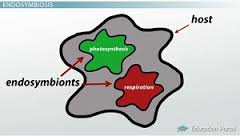
Bacteria are an example of a _________ cell.
Eukaryotic
Prokaryotic
animal
plant
Why type of cell does not contain membrane bound organelles?
Animal Cells
Prokaryotic Cells
Eukaryotic Cells
Plant Cells
Which of the following characteristics make mitochondria and chloroplasts different from other organelles?
They are much bigger
The are found in both prokaryotic and eukaryotic cells.
They both make ATP
They were once free-living prokaryotes
Which of the following is evidence to support the endosymbiotic theory?
Prokaryotes have the same number and types of enzymes as eukaryotes.
Mitochondria and chloroplasts have their own DNA, which is similar to prokaryotic DNA.
All eukaryotic cells have a double-layered membran composed of phosplipids and proteins.
Fossil evidence shows that the first forms of life were prokaryotic cells.
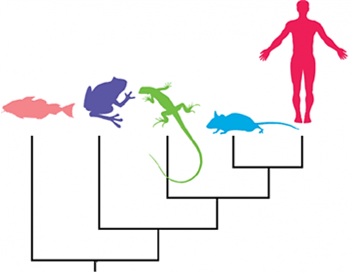
According to this phylogenetic tree, which creature is the least related out of all pictured?
Fish
Frog
Salamander
Human


What number is the common ancestor of C and D
1
2
4
Which order of classification is correct?
family, species, phylum, class, order, genus, kingdom
Kingdom, phylum, class, order, family, genus, species
kingdom, phylum, order, class, family, genus, species
species, kingdom, phylum, class, order, family, genus
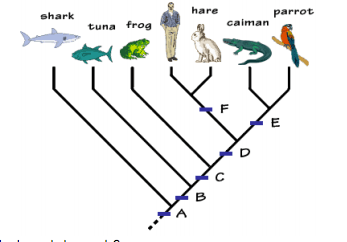
On the cladogram, which organism is the closest relative of the parrot?
Frog
Hare
Caiman
Parrot
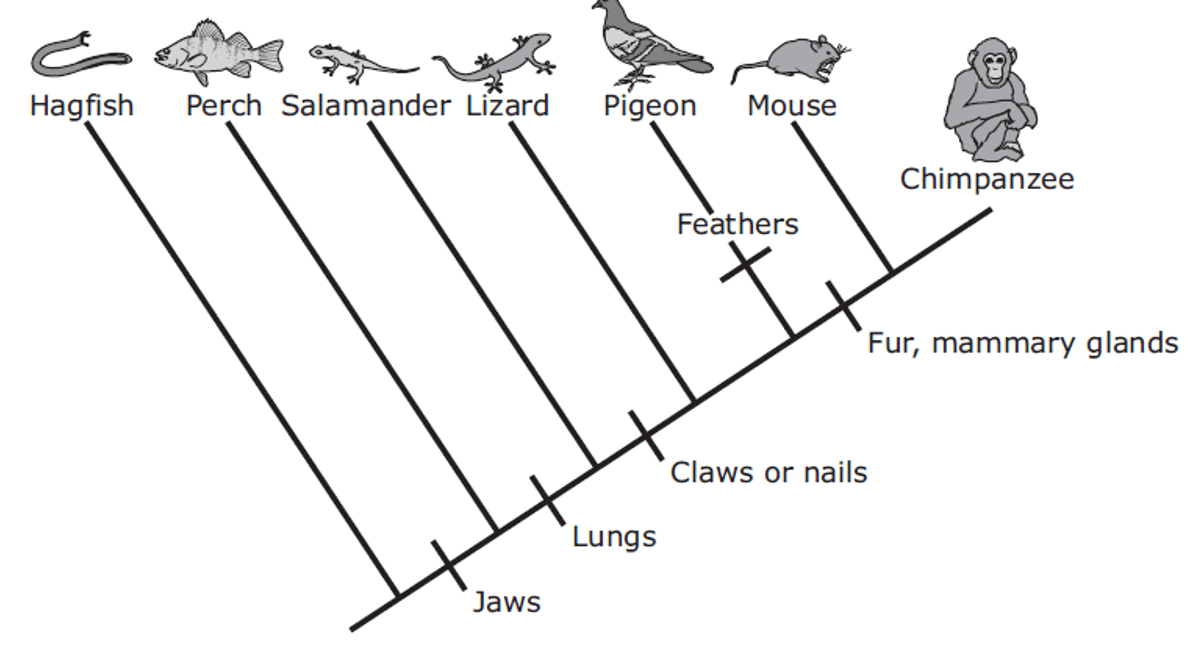
All the animals to the right of the salamander would have the common characteristic of...
Fur
Claws or nails
Lungs
Jaws
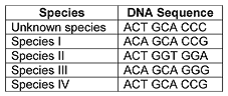


Unicellular organisms with no nuclei found living in the superheated waters of a hot spring.
Multicellular organism with cell walls made of chitin found growing on a decomposing manure pile.
An organism that provides all the things needed for a virus
parasite
host
all cells
some cells
All viruses are different, but what are two parts that a virus must have?
Genetic Information (DNA or RNA)
a lipid membrane
a nucleus
a protein coat
Which statement is true?
A virus has a nucleus, but no other organelles.
A virus has a nucleus and ribosomes.
A virus has no organelles, because it has no cells, and it is non-living.
Once a virus gets into a cell, it
Releases its DNA or RNA into the cell.
It begins to create DNA or RNA in the cell.
It destroys its own DNA and RNA in the cell.
What happens after the virus has been taken up by the cell?
it begins making protein
it divides, or replicates
it inserts into the host DNA
it switches to infectious mode
Why do viruses need a host cell?
because they aren't living
because they need to reproduce
because they can't live without a host cell
What is the outside, protein coat on a virus called?
genetic material
capsid
envelope
tail fibers
The more classification levels that two organisms share,
the closer together on earth they live.
the easier it is to tell them apart.
the more related they become because of many shared characteristics.
the more distance is between them due to lack of shared characteristics.

