wayground logo

Free Printable Worksheets

Font size

S
M
L
XL
Worksheets

Reynolds Chem Unit 1 Final Review

Total questions: 157

Worksheet time: 4hrs 53mins

Name
Class
Date
1.

How does heat move?

a)

from a warmer to a cooler object

b)

from a cooler to a warmer object

c)

toward a hot object

d)

away from a cold object

2.

Energy transmitted by electromagnetic waves

a)

conduction

b)

convection

c)

radiation

3.

__________ is the transfer of heat by the movement of a fluid.

a)

Conduction

b)

Convection

c)

Radiation

4.

When you touch hot sand, heat is transferred by _________ to your skin.

a)

conduction

b)

convection

c)

radiation

5.

Two fluids, one warm and one cold, mix. The warm fluid rises and the cool fluid sinks

a)

Conduction

b)

Convection

c)

Radiation

6.
Transfer of energy between solids by direct contact is:
a)
Conduction
b)
Convection
c)
Radiation
7.
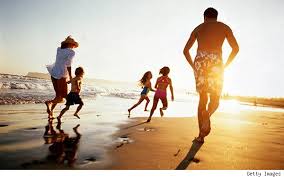
The sun shines down on this family as the play on the beach.
a)
conduction
b)
convection
c)
radiation
8.
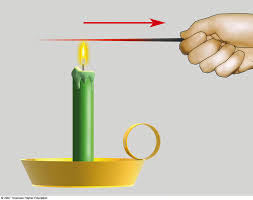
The candle will slowly heat the metal and transfer the heat directly to the mans hand.
a)
conduction
b)
convection
c)
radiation
9.
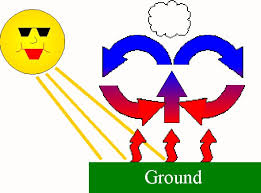
The warm air from this heater creates a current when the warm air rises and the cold air sinks.
a)
conduction
b)
convection
c)
radiation
10.

A huge rock at the state park gets hot during the day. The rock was warmed from the Sun by

a)

conduction

b)

convection

c)

radiation

11.

The Sun's heat reaches the Earth through the vacuum of space.

a)

Radiation

b)

Conduction

c)

Convection

d)

none of these

12.

A toaster oven heats the air inside, creating cycles of hot air that warm food.

a)

Radiation

b)

Conduction

c)

Convection

d)

none of these

13.

You touch a warm light bulb and it burns you.

a)

Radiation

b)

Conduction

c)

Convection

d)

none of these

14.

This flame is hotter than the air around it. Which of the following describes how the heat will be transferred?

a)

The heat will flow from hot to cold

b)

The heat will flow from cold to hot

c)

The heat will flow equally in both directions

d)

none of these

15.

define heat

a)

The transfer of heat by the movement of a fluid

b)

The transfer of heat between two substances that are in direct contact.

c)

Is thermal energy that is transferred from hotter object to a cooler object.

16.
Involves heat transfer in LIQUIDS and GASES.
a)
Conduction
b)
Convection
c)
Thermal Heat
d)
Radiation
17.
This heat transfer involves waves in space.
a)
Conduction
b)
Convection
c)
Radiation
d)
Thermal Transfer
18.
Radiation (waves) needs matter (a solid) to pass through.
a)
True
b)
False
19.

Convert 30°C into Kelvin.

a)

252K

b)

316°C

c)

303K

d)

-163°C

20.

Convert -21°C into Kelvin.

a)

252K

b)

316°K

c)

303K

d)

-163°K

21.

Convert 589 Kelvin into °C.

a)

252K

b)

316°C

c)

303C

d)

-163°C

22.

Convert 110 Kelvin into °C.

a)

252K

b)

316°C

c)

303K

d)

-163°C

23.

Convert 45°F into °C.

a)

7.2°C

b)

32°C

c)

30°C

d)

212°C

24.

Convert 89°F into °C.

a)

7.2°C

b)

32°C

c)

32°F

d)

212°C

25.

Convert 0°C into °F.

a)

7.2°F

b)

32°C

c)

32°F

d)

212°F

26.

Convert 100°C into °F.

a)

7.2°F

b)

32°C

c)

32°F

d)

212°F

27.

Convert 24°C into °F.

a)

7.2°F

b)

32°F

c)

75.2°F

d)

°68 F

28.

Convert 20°C into °F.

a)

7.2°F

b)

32°F

c)

75.2°F

d)

°68 F

29.

If the specific heat of water is 4.0 J/g∙°C, how much heat is required to increase the temperature of 100 g of water from 23 °C to 25 °C?

a)

800 J

b)

400 J

c)

80 J

d)

-80 J

30.

A sample of iron receives 50 J of heat energy that raises the temperature of the iron by 25.0°C. If iron has a specific heat of 1.0 J/g°C, what is the mass of the iron sample?

a)

2.5g

b)

3.0g

c)

2.0g

d)

5.0g

31.

What is the formula to calculate heat energy required to raise the temperature of any substance?

a)

Q = m C ∆T

b)

Q = m Hv

c)

Q = ½ m v

d)

m = Q Hf

32.

The temperature of a 5.0 g sample of glass changed from 20.0°C to 30.0°C when it absorbed 50 J of heat. What is the specific heat of this glass?

a)

1.7 J/g °C

b)

1.0 J/g °C

c)

130 J/g °C

d)

1.2 J/g °C

33.

The heat absorbed by melting a solid is known as

a)

heat of fusion

b)

heat of solid

c)

heat of liquid

d)

heat of vaporization

34.

The amount of heat needed to change 1 gram of a substance from the liquid phase to the gas phase is ___

a)

Heat of Vaporization

b)

Boiling point

c)

Heat Energy

d)

Phase change

35.

What is the correct SI unit for energy? (provide the correct name and symbol)

a)

calorie, C

b)

temperature, C

c)

Joule, J

d)

Kelvin, K

36.

656.7 J of energy are added to a sample of iron and the temperature of the sample increases by 22.36oC. What must be the mass of this iron sample? (CFe = .4494 J/g * oC)

a)

65.34 g

b)

89.36 g

c)

48.36g

d)

35.21g

37.

500 J of energy are added to a sample of iron and the temperature of the sample increases by 100oC. What must be the mass of this iron sample? (C of iron = 5.0 J/g * oC)

a)

1.0 g

b)

1000 g

c)

5.0 g

d)

50000 g

38.

How does heat move?

a)

from a warmer to a cooler object

b)

from a cooler to a warmer object

c)

toward a hot object

d)

away from a cold object

39.
For the formula:
 Q= m c ∆T
The  units for specific heat are:
a)
g /J C
b)
°C/g J
c)
kJ/g
d)
J/g°C
40.
What would be the effect on the particles if more heat is supplied to the system?
a)
They would slow down
b)
They would stop moving
c)
They would speed up
d)
There would be no effect
41.

If two objects have different temperatures when they come in contact, heat will flow from the warmer object to the cooler one UNTIL ____________

a)

one reaches a temperature of zero

b)

they both have an equal temperature

c)

one runs out of energy

42.
The total energy of all the particles in a substance is called: 
a)
temperature
b)
thermal energy
c)
degrees
d)
mass
43.

If the specific heat of water is 2 J/g∙°C, how much heat is required to increase the temperature of 1kg of water from 23 °C to 38 °C?

a)

-30 J

b)

30 J

c)

15 J

d)

-15 J

44.

For a skillet, used for cooking, do you want a high or low specific heat

a)

High, so that it will need more energy to heat up

b)

Low, so that it will change temperature quickly

45.
The SI unit of heat and energy is the __________.
a)
calorie
b)
heat
c)
joule
d)
watt
46.

A sample of iron receives 50.J of heat energy that raises the temperature of the iron by 25.0°C. If iron has a specific heat of 0.10 J/g°C, what is the mass of the iron sample?

a)

2.5g

b)

3.0g

c)

2.0g

d)

5.0g

47.
In an exothermic process, the surroundings are gaining energy.
a)
True
b)
False
48.
What is a tool that measures the heat of chemical reactions?
a)
calorimeter
b)
 calorie
c)
Styrofoam™ cup
d)
none of these
49.
Calorimeters use insulating materials to:
a)
encourage affordable materials in science experiments in schools.
b)
preserve the heat of the environment outside the Styrofoam cup.
c)
prevent heat from escaping to the environment.
d)
keep the liquid inside the Styrofoam cup from overheating.
50.
A metal cube at temperature of 10°C immersed in a liquid at temperature of 70°C.
What is the temperature of the metal cube when thermal equilibrium is achieved between the cube and the liquid?
a)
Between 10°C and 70°C
b)
More than 70°C
c)
Less than 10°C
d)
Same as the room temperature
51.

What does "ΔT" mean?

a)

A change in health

b)

A change in heat

c)

A change in height

d)

A change in temperature

52.
What is the definition of CONDUCTION?
a)
When heat is transferred from objects like rays of light or electromagnetically.
b)
a  hot liquid or air that  expands, becomes less dense, and rises or becomes more dense, and sinks.
c)
When heat transfers from objects that are touching.
d)
When heat transfers through the heater or AC in your house.
53.
What is the definition of CONVECTION
a)
When heat transfers through the heater or AC in your house.
b)
When heat transfers from objects that are touching.
c)
a  hot liquid or air that  expands, becomes less dense, and rises or becomes more dense, and sinks.
d)
 hot liquid or air that  expands, becomes less dense, and rises or becomes more dense, and sinks.
54.
What is the definition of RADIATION
a)
 hot liquid or air that  expands, becomes less dense, and rises or becomes more dense, and sinks.
b)
When heat is transferred from objects like rays of light or electromagnetically.
c)
When heat transfers from objects that are touching.
d)
When heat transfers through the heater or AC in your house.
55.
What kind of heat transfer happens when the sun is heating your body?
a)
Conduction
b)
Radiation
c)
Convection
d)
Density
56.
When a pot is  touching a stove that is on, what heat transfer is happening?
a)
I don't know??????
b)
Radiation
c)
Conduction
d)
Convection
57.
This is a lava lamp. When the light bulb heats the wax, the wax rises. When the wax cools, it falls. This cycle of rising/falling is an example of:
a)
Conduction.
b)
Convection.
c)
Radiation.
58.
Heat transfers from an area of ____temperature to an area of ___ temperature.
a)
high to low
b)
low to high
c)
high to high
d)
It can travel high to low and low to high. 
59.
A group of friends gather around a fire to stay warm.
a)
conduction
b)
convection
c)
radiation
60.
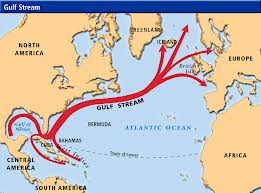
The Gulf Stream is a current that brings warm ocean water from the south to the north.
a)
conduction
b)
convection
c)
radiation
61.
Walking on the warm sand sand with your bare feet.
a)
conduction
b)
convection
c)
radiation
62.
Which direction will the heat flow while this ice cap melts?
a)
there is no heat transfer
b)
from the icecap to the water
c)
from the water to the icecap
63.
Warm air rises and the cool air sinks.
a)
conduction
b)
convection
c)
radiation
64.
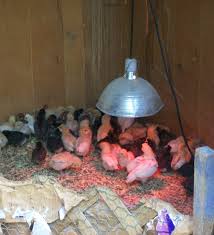
The baby chickens are kept warm from the heat lamps.
a)
conduction
b)
convection
c)
radiation
65.
The symbol for specific heat is .......
a)
c
b)
Q
c)
m
d)
t
66.

What is the formula to calculate heat energy required to raise the temperature of any substance?

a)

Q=mc∆t

b)

Q=mc

c)

Q= ½mv

d)

m=QC

67.
A material was cooled from 100ºC to 40ºC.  What is the temperature change?
a)
60ºC
b)
40ºC
c)
-60ºC
d)
-40ºC
68.
What does temperature measure?
a)
Heat
b)
ºC
c)
Kinetic Energy
d)
Thermal Energy
69.

What is Specific Heat?

a)

The amount of thermal energy required to increase the temperature of 1 g of a material by 1 degree Celsius.

b)

The amount of radiant energy required to increase the temperature of 1 g of a material by 1 degree Fahrenheit.

c)

The amount of energy required to increase the temperature of 1 kg of a material by 1 degree Kelvin.

d)

The amount of friction required to increase the temperature of 1 kg of a material by 1 degree.

70.

Using the heat equation, what would the formula look like if we were solving for change in temperature?

a)

Q m=∆T c

b)

Q/mc= ∆T

c)

Qm/c=∆T

d)

mcQ=∆T

71.
In an endothermic reaction the system is releasing energy.
a)
True
b)
False
72.

In an exothermic process, the surroundings are gaining energy.

a)

True

b)

False

73.

The unit(s) for specific heat is/are

a)

J

b)

g

c)

d)

J/g℃

74.

The symbol for heat is

a)

c

b)

m

c)

q

d)

ΔT

75.

Using the heat equation, what would the formula look like if we were solving for specific heat?

a)

q=mcΔT

b)

q=c/mΔT

c)

c=qmΔT

d)

c=q/mΔT

76.

How do you calculate ΔT?

a)

Tinitial -Tfinal

b)

Tfinal -Tinitial

c)

Tinitial - Tstart

d)

Tfinal- T end

77.
What would be the effect on the particles if more heat is supplied to the system?
a)
They would slow down
b)
They would stop moving
c)
They would speed up
d)
There would be no effect
78.

If two objects have different temperatures when they come in contact, heat will flow from the warmer object to the cooler one UNTIL ____________

a)

one reaches a temperature of zero

b)

they both have an equal temperature

c)

one runs out of energy

79.
A reaction is performed in a beaker with a temperature probe recording the temperature changes of the reaction.  If the temperature began at 15.0 degrees Celsius and ended at 27.5 degrees Celsius. Is the reaction endothermic or exothermic?
a)
Exothermic
b)
Endothermic
80.
In an exothermic process, the surroundings are gaining energy.
a)
True
b)
False
81.
What is a tool that measures the heat of chemical reactions?
a)
calorimeter
b)
 calorie
c)
Styrofoam™ cup
d)
none of these
82.
Calorimeters use insulating materials to:
a)
encourage affordable materials in science experiments in schools.
b)
preserve the heat of the environment outside the Styrofoam cup.
c)
prevent heat from escaping to the environment.
d)
keep the liquid inside the Styrofoam cup from overheating.
83.
A metal cube at temperature of 10°C immersed in a liquid at temperature of 70°C.
What is the temperature of the metal cube when thermal equilibrium is achieved between the cube and the liquid?
a)
Between 10°C and 70°C
b)
More than 70°C
c)
Less than 10°C
d)
Same as the room temperature
84.

What does "ΔT" mean?

a)

A change in health

b)

A change in heat

c)

A change in height

d)

A change in temperature

85.

The total amount of energy of all the particles in a substance is called________________.

a)

temperature

b)

thermal energy or heat

c)

degrees

d)

mass

86.

The standard unit of heat and energy is the __________.

a)

grams

b)

heat

c)

joule

d)

watts

e)

milliliters

87.

Tectonic plates move quickly.

a)

true

b)

false

88.

What is the lithosphere?

a)

another name for Earth's crust

b)

the crust and uppermost part of the mantle

c)

another name for Earth's mantle

d)

the solid part of the mantle

89.

There are ____ major tectonic plates.

a)

1

b)

5

c)

7

d)

10

90.

convergent boundary

a)

b)

where two plates are moving toward each other

c)

d)

91.

Divergent boundary

a)

where two plates are moving away from each other

b)

may result in seafloor spreading

c)
d)

where two plates slide past each other

92.

What type of plate boundary has plates that are sliding past each other?

a)

convergent

b)

divergent

c)

transform

93.

Large pieces of the lithosphere are broken into ___.

a)

the mantle

b)

the asthenosphere

c)

tectonic plates

d)

magma

94.

Earth's huge supercontinent that existed millions of years ago.

a)

Pangea

b)

Nazca

c)
95.

What happens at a subduction zone?

a)

two plates slide past each other

b)

one plate is pulled down under another one

c)

two plates move apart

96.

How much do tectonic plates move in a year?

a)

less than 1 inch

b)

about 1-2 feet

c)

1-6 inches

d)

no one is really sure

97.

The lithosphere floats on top of the asthenosphere.

a)

true

b)

false

98.

What plate do we live on?

a)

North American

b)

Pacific

c)

Australian

d)

South American

99.

Plate tectonics explains the cause of ___.

a)

volcanoes

b)

earthquakes

c)

trenches

d)

all of these

100.

The San Andreas fault in California is a --- boundary.

a)

convergent

b)

divergent

c)

transform

101.

The mid Atlantic ridge is a ___ boundary.

a)

convergent

b)

divergent

c)

transform

102.

A ____ boundary is very active. It can have mountains, experience earthquakes, and have volcanoes.

a)

convergent

b)

divergent

c)

transform

103.

Seafloor spreading is caused by ____.

a)

volcanoes

b)

earthquakes

c)

convection currents in the mantle

d)

magic

104.

The movement of the ____ plate causes 90% of the earthquakes in the world.

a)

North American

b)

African

c)

Pacific

d)

African

105.

Who is the German scientist who proposed the idea of continental drift?

a)

Mrs. Pescay

b)

Alfred Wegner

c)

Albert Einstein

d)

Mrs. Nastasi

106.

Earthquakes can cause ___.

a)

mountains to form

b)

tsunamis

c)

hurricanes

d)

none of these

107.

The smallest piece of an element:

a)

quark

b)

electron

c)

shell

d)

atom

108.

The cloud-like space that electrons travel around:

a)

nucleus

b)

shell

c)

neutrons

d)

Oort cloud

109.

Protons and neutrons are found in the center of the atom called the:

a)

nucleus

b)

neutron

c)

shell

d)

cell

110.

Classification system for elements is called:

a)

Elements

b)

Periods

c)

The Periodic Table of Elements

d)

Families

111.

The subatomic particles are called:

a)

protons, nucleus and electrons

b)

protons, electrons and neutrons

c)

protons, positives and negatives

d)

cloud, shell and quarks

112.

Substances that have only one kind of atom are called:

a)

elements

b)

nitrogen

c)

electrons

d)

nucleus

113.

Electrons have a _____ charge.

a)

neutral

b)

negative

c)

positive

d)

both positive and negative

114.

_____ is what scientists think atoms are like.

a)

Chemistry

b)

The box

c)

The atomic structure

d)

The atomic theory

115.

The abbreviation for an element:

a)

element name

b)

atomic number

c)

chemical symbol

d)

atomic symbol

116.

Who invented the simplified version of the atom?

a)

Dmitri Mendeleev

b)

Niels Bohr

c)

Sir Isaac Newton

d)

Albert Einstein

117.

What is the sum of an atom's protons and neutrons called?

a)

atom

b)

atomic theory

c)

atomic mass

d)

atomic number

118.

The _____ is based on the number of protons in the nucleus of the atom.

a)

atomic structure

b)

periodic table of the elements

c)

atomic number

d)

atomic mass

119.

What subatomic particle is represented by this symbol (+):

a)

neutron

b)

proton

c)

electron

120.

What subatomic particle is represented by this charge (-):

a)

neutron

b)

proton

c)

electron

121.

Why do the electrons surround the nucleus?

a)

the negative electrons are attracted to the neutral neutrons

b)

the negative electrons are repelled by the neutral neutrons

c)

the negative electrons are attracted to the positive protons

d)

the negative electrons are repelled by the positive protons

122.

All matter is made of _____.

a)

light

b)

energy

c)

cells

d)

atoms

123.
This unit is represented by the combined number of protons and neutrons
a)
Atomic Mass
b)
Atomic Number
c)
Mass Number
124.
This number is represented by the number of protons in the atom
a)
Atomic Mass
b)
Atomic Number
c)
Mass Number
125.
The negative charge particles that float around the outside of the atom
a)
Proton
b)
Neutron
c)
Electron
126.
The area of the atom where protons and neutrons are found
a)
Electron Cloud
b)
Nucleus
c)
Energy Level
127.
A positively charged particle found in the nucleus of the atom
a)
Proton
b)
Electron
c)
Neutron
128.
The smallest possible unit matter can be divided into while still maintaining its properties.
a)
Proton
b)
Atom
c)
Element
129.
Most of the mass in an atom is made up of _____________________?
a)
protons and electrons
b)
protons and neutrons
c)
neutrons and electrons
d)
electrons and quarks
130.
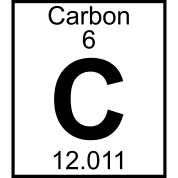
What does the C represent?
a)
atomic mass
b)
atomic number
c)
element name
d)
chemical symbol 
131.

What does the 6 represent?

a)

Atomic mass

b)

atomic number

c)

chemical symbol

d)

element name

132.
If an atom has 12 positively charged subatomic particles, which of the following must it also have to be considered a neutral atom?
a)
12 neutrons
b)
12 electrons
c)
12 protons
d)
24 protons and neutrons
133.
Protons and Electrons balance the charge of an atom.
a)
True
b)
False
134.
Electric charges that are different _______ each other.
a)
Attract
b)
Repel
135.
Electric charges that are alike _______ each other.
a)
Attract
b)
Repel
136.
What charge does a proton have?
a)
negative (-)
b)
positive (+)
c)
neutral or no charge (0)
137.
What charge does an electron have?
a)
negative (-)
b)
positive (+)
c)
neutral or no charge (0)
138.

What is the correct Lewis Dot Structure for ammonia NH3

a)
b)
c)
d)
139.
How many electrons should Lithium have around its Lewis dot model?
a)
1
b)
2
c)
3
d)
4
140.
How many "valance electrons" are in chlorine?
a)
7
b)
2
c)
17
d)
8
141.
Carbon-12, Carbon-13, and Carbon-14 are...
a)
ions
b)
isotopes
c)
electronegative
d)
radioactive
142.
How many Protons does Bromine have?
a)
45
b)
79.904
c)
80
d)
35
143.
How many Neutrons does Bromine have?
a)
35
b)
80
c)
45
d)
79.905
144.
A particle with a negative charge inside of an element is called
a)
isotope
b)
neutron
c)
proton
d)
electron
145.

An atom with a negative charge is a ...

a)
isotope
b)

ion

c)

anion

d)

cation

146.

An atom with a positive charge is a ...

a)
isotope
b)

ion

c)

anion

d)

cation

147.
Does this carbon have the correct amount of electrons?
a)
Yes
b)
No, it needs one more
c)
No, it needs two more
d)
No, it needs three more
148.
Nitrogen has 5 valence electrons
a)
True
b)
False, it has 7
c)
False, it has 14
d)
False, it has 7.01
149.
An isotope has...
a)
the same number of protons but different number of electrons
b)
same number of protons but different number of neutrons
c)
same number of electrons and neutrons
d)
same number of electrons, protons, and neutrons
150.
Not non-metals or metals but somewhere in between
a)
noble gases
b)
isotopes
c)
metalloids
d)
ions
151.
Is this Lewis Dot Structure correct
a)
Yes
b)
No, chlorine has 6 valence
c)
No, chlorine has 8 valence
d)
No, chlorine has 17 electrons
152.
How many electrons are in the following chlorine atom?
a)
7
b)
8
c)
17
d)
13
153.
What is titanium's atomic mass?
a)
47.867
b)
22
c)
26
d)
49
154.
The atomic mass of Boron is 10.81, which means Boron has..
a)
5 electrons and 6 protons, each weigh 1 amu
b)
5 neutrons and 6 electrons, each weigh 1 amu
c)
6 neutrons and 5 protons, each weigh 1 amu
d)
10.81 protons each weighing around 1 amu
155.

I am Chlorine many electrons to I need to be complete?

a)

8

b)

7

c)

1

d)

0

156.

Potassium has 1 valence electron, would it rather gain 7 electrons or lose its one valence electron to complete its energy level?

a)

lose 1 electron

b)

gain 1 electron

c)

lose 7 electrons

d)

gain 7 electrons

157.

Lewis Dot Structure shows us the..

a)

Energy Levels of electrons

b)

Valence electrons

c)

number of protons

d)

total number of electrons