
 Worksheets
Matter and Atoms Test
Total questions: 95
Worksheet time: 2hrs 58mins

How do you know something is matter?
Matter has weight (mass).
Matter takes up space (has volume).
both of these

Is air matter?
No
Air does not take up space.
Yes
Air takes up space and it has weight.
Click all of the following that are matter.


Which of the following is NOT matter?
Air
Light Energy
Ice
Why is sound not matter?
Sound takes up space.
Sound does not have weight.
Sound takes up space and has weight.
______________ is the amount of space something takes up.
Density
Volume
Mass
______________ is the amount of matter in an object.
Mass
Volume
All matter is made up of _______________.
cells
atoms
compounds

This image represents a molecule of water.
How many atoms make up a molecule of water?
1
2
3
This image represents a molecule of water, commonly known as H2O.
It is made of 2 types of atoms.
Which atoms make up a molecule of water? Select all that apply
Hydrogen
Nitrogen
Oxygen
When two or more atoms combine, we call it a _____________________.
molecule
nucleus
proton

All of the atoms known to humans are found in a chart called _______________________________.
The Periodic Table of Elements
The Pythagorean Theorem
A Glossary
The positive particles of an atom are the _______________.
What is the name of the central region of an atom where the neutrons and protons are located?
nucleus
electron cloud
An atom with atomic number 6 would have how many protons?
6
12
cannot be determined
Particles in an atom that are neutral and have no charge are called _____________.
True or False?
Neutrons have a negative charge.
The atomic number for an element with three protons is (a) .
Name the subatomic particle that moves around the nucleus.


The number at the top of each square of the pictures to the left represents the ___________________.
chemical symbol
element name
An element's identity is determined by the number of __________________.
electrons
protons
neutrons

The atomic number is the represents the __________________________ an element has.
average mass
number of protons
number of valence electrons

Electrons ______________________________
are found in the nucleus.
give us the atomic number of an element.
have a negative charge.

blue and red balloons
protons and neutrons
protons and electrons

How many protons does Nitrogen have?
14
7
What makes something an element?
An element is made of many different types of atoms.
An element is made of only one type of atom.
An element has to be a mineral.
Matter is defined as anything that takes of space and has (a) .

The smallest unit of matter is (a) .

When two or more atoms come together, they form a what?
A Solid
An Element
A Molecule
What are the 3 states of matter? Check all correct answers.
Liquid
Gas
Smoke
Solid
Dr. Pepper

What state of matter has molecules extremely close together that form a defined shape?
Solid
Liquid
Gas

What state of matter has molecules spaced apart from one another and changes its shape depending on its container?
Solid
Liquid
Gas

What state of matter has molecules that bounce around at high speeds and are not close together?
Solid
Gas
Liquid

When ice cream is left out of a freezer, the ice cream changes from a _______________ to a ___________________.
liquid to a solid
liquid to a gas
solid to a liquid

What process takes place when a gas becomes a liquid?
Freezing
Evaporation
Condensation

Circling the atom, these parts of an atom hold a negative charge.
Neutron
Electron
Proton

Compound or Just a Molecule?
Compound
Molecule
Which one of these is a compound?
H2O
Na
O2

How are oxygen atoms different from nitrogen atoms?
Different Masses
Different Volume
Different Spelling

Sublimation is the process of changing from (a) to (b) .

Which state of matter has a definite volume and shape?
Liquid
Solid
Gas
(a) takes up space and has mass is Matter.
The molecules of a (a) are the farthest apart.
An example of a physical property is mass.
true
false
What is the smallest unit of an element that would still have all the properties of the element?
Particle
Molecule
Atom
(a) are the building blocks of matter.

Ms. Peterburs created a model of the molecules of a solid, liquid, and gas to compare the motion of the particles.
Which state of matter does each image represent?
A - solid
B - liquid
C - gas
A - gas
B - liquid
C - solid
A - liquid
B - gas
C - solid
(a) is the ability of a type of matter to burn easily.

How many protons does neon have?
10
20
15
Which figure correctly identifies sodium on the periodic table?


Potassium has an atomic number of 19 and a mass number of 39.09.
How many electrons will an atom of potassium have?
39
20
19
The (a) can be found in the nucleus of an atom.
Fluorine has an atomic number of 9 and an atomic mass of 18.998.
How many protons does an atom of fluorine have?
19
18
9
Which is NOT an example of a chemical change?
milk souring
burning newspaper
ice melting
nail rusting


The vertical (up and down) columns in the Periodic Table are called ___________.
groups
periods
atomic numbers
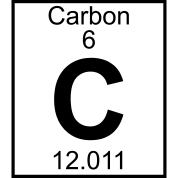
The atomic number is unique to each element?
Yes!
No!
Maybe!

How many electrons does Calcium have?
40
60
20

How many electrons does this oxygen atom have?
16
8

How many electrons does the first energy shell hold?
1
2
4
8
Which of the following is a physical change?
burning
rusting
freezing
Match the following.
Freezing
Liquid --> Solid
Melting
Solid --> Liquid
Condensation
Gas --> Liquid
Evaporation
Liquid --> Gas
Organize these options into the right categories.
p
positive
+
n
no charge
inside nucleus
e
-
outside nucleus
proton
neutron
electron
Place a point on the 6 protons.
Place a point on all 6 neutrons.
Place a point on all 6 electrons.

What does this illustration represent?
The Coriolis Effect
The Law of Conservation of Mass
The Theory of Relativity

Physical or Chemical Change?
Physical
Chemical

Physical or Chemical Change?
Physical
Chemical
The boiling point of water is (a) oC.

What is atomic mass?
# of protons & neutrons
# of electrons & protons

What is the ROUNDED atomic mass of F

W elements that touch the zigzag line on the Periodic Table are called
metals
nonmetals
metalloids

The chemical symbol in this element box is (a)

The diagram shows a piece of the periodic table.
Use information in the table to decide which statement is true.
Sulfur has 16 protons.
Se is the symbol for silicon.
Helium has the most protons.

Calculate the number of protons, neutrons and electrons for Lithium.
Protons = 3
Neutrons = 7
Electrons = 3
Protons = 3
Neutrons = 4
Electrons = 3
Protons = 3
Neutrons = 3
Electrons = 7

Calculate the number of protons, neutrons and electrons for Neon.
Protons = 10
Neutrons = 20
Electrons = 10
Protons = 10
Neutrons = 10
Electrons = 10
Protons = 10
Neutrons = 20
Electrons = 20

In an exothermic reaction, heat is (a) .

In an endothermic reaction, heat is (a) .

The atomic mass of Oxygen is (a) .

Cobalt has 27 protons, 32 neutrons, and 27 electrons.
What is the atomic number?
32
59
27
(a) can cause matter to change phases.

There are (a) atoms of Nitrogen in this molecule.
Flammability is an example of what property?

The following element has (a) neutrons.

What state of matter would this substance be between points A & B?
Solid
Liquid
Gas
What state of matter would this substance be between points C & D?
Solid
Liquid
Gas
What state of matter would this substance be between points E & beyond?
Solid
Liquid
Gas

Where is vaporization occurring?
A
B
D
E
Where is melting occurring?
A
B
D
E
The melting and freezing point of water is 0 ℃.
True
False

