wayground logo

Free Printable Worksheets

Font size

S
M
L
XL
Worksheets

Chemistry Semester 1 Practice Final

Total questions: 49

Worksheet time: 59mins

Name
Class
Date
1.

What is the formula needed to calculate density?

a)

V= M + D

b)

D = M/V

c)

D = M * V

d)

D = V/M

2.
What is the volume of Object X?
a)
10.0 cm3
b)
15.0 cm3
c)
20.0 cm3
d)
25.0 cm3
3.
What is this tool to get volume?
a)
triple beam balance
b)
ruler
c)
thermometer
d)

graduated cylinder

4.

Match the following to their proper equipment

a)

1.

Mass

b)

2.

Distance

c)

3.

Volume

5.

A block measuring 2 cm x 2 cm x 5 cm has a mass of 54 grams. What is the exact density of the block? Density = mass volumeDensity\ =\ \frac{mass\ }{volume}  .


(a)  

6.

How many gallons are in a pool that holds 758,000 Liters? (1 gallon = 3.79 Liters)

a)

200

b)

20,000

c)

200,000

d)

2,000,000

7.

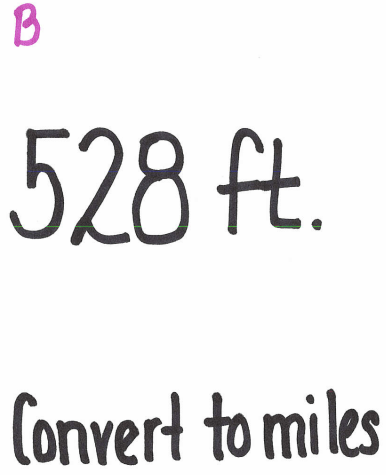
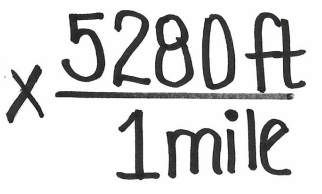
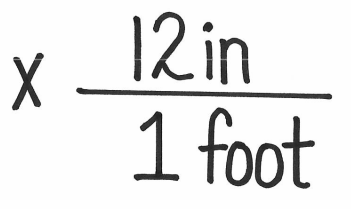
Which conversion fraction would be needed from this starting amount?
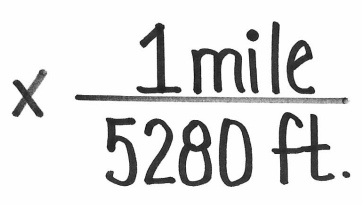
a)
b)
c)
8.
You know 1000 mg = 1 g.  Convert 2.5 grams into milligrams.
a)
25 mg
b)
25,000 mg
c)
250 mg
d)
2500 mg
9.

How is a chemical change different from a physical change?

a)

there is no difference

b)

a physical change creates a new substance

c)

a chemical change creates a new substance

10.
Is a a rusting bicycle a chemical or physical change?
a)
chemcial
b)
physical
11.
Is melting ice a chemical or physical change?
a)
chemical
b)
physical
12.

When mixing milk and vinegar, a white, chunky, solid substance is formed. What has occurred?

a)

Physical change: state of matter

b)

Chemical change: precipitate

c)

Physical change: freezing

d)

Chemical change: new gas

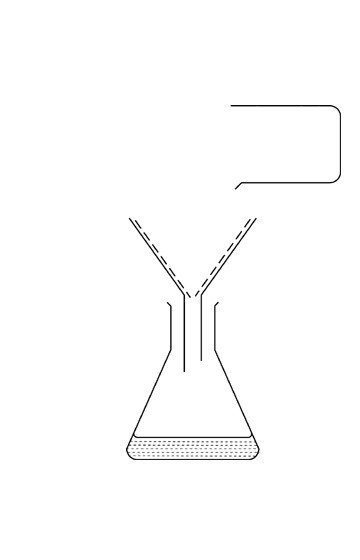
13.

What is the name of this separation technique?

a)

distillation

b)

filtration

c)

evaporation

d)

chromatography

14.

Which separation technique is used to obtain salt from seawater?

a)

Simple distillation

b)

Filtration

c)

Chromatography

d)

Evaporation

15.

True or false: Magnets can be used to separate iron filings from sand

a)

True

b)

False

16.

Typically in an atom, which two subatomic particles are equal in number?

a)

protons and neutrons

b)

all subatomic particles are equal in number

c)

neutrons and electrons

d)

protons and electrons

17.

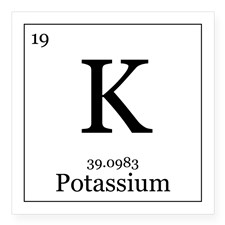
How many neutron are in the atom "K"?

a)

29

b)

19

c)

58

d)

20

18.
The atomic number is equal to _.
a)
the number of protons and electrons
b)
the number of neutrons only
c)
the total number of protons and neutrons
d)
the number of protons neutrons and electrons
19.
Adding or subtracting neutrons (charge = 0, mass = 1) makes the element change into an...
a)
ion
b)
mixture
c)
isotope
d)
neutral atom
20.
An atom becomes _________ when it gains electrons.
a)
Positive
b)
Negative
c)
Neutral
d)
Invinsible
21.
An atom that has gained or lost electrons is called ...
a)
a winner
b)
an isotope
c)
an ion
d)
a loser
22.

An atom has an atomic number of 11. How many protons will the atom have?

(a)  

23.
What is the atomic number for an element with three protons?
a)
2
b)
1
c)
3
d)
6
24.
Question Image

Match the following parts of the symbol to the correct term

a)

27

1.

mass number

b)

13

2.

atomic number

c)

3+

3.

ion charge

d)

14

4.

neutrons

e)

protons

5.

13

25.

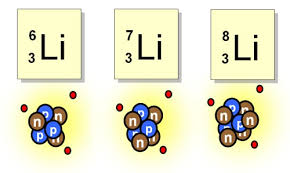
What do these 3 pictures represent? (Choose 2 correct answers)

a)

ions

b)

isotopes

c)

neutral atoms

d)

compounds

26.

An atom has 4 protons, 5 neutrons, and 4 electrons. What is its atomic mass?

a)

9

b)

8

c)

13

d)

1

27.
The name of FeCl₂ is
a)
iron chloride
b)
iron (II) chloride
c)
iron (I) chloride
d)
iron dichloride
28.
The chemical formula of magnesium phosphide is
a)
MgP
b)
Mg₂P₃
c)
Mg₃P₂
d)
Mg₃(PO₄)₂
29.
What is the formula for sodium phosphate?
a)
Na3PO4
b)
Na3PO3
c)
Na3P
d)
Na3PO
30.
What is the formula for Hexaboron Monosilicide
a)
B6Si
b)
BSi
c)
BSi6
d)
B6Si6
31.

How many Hydrogen atoms are in 4H2O?

a)

6

b)

8

c)

2

d)

4

32.

A subscript is the small number below the element symbol that tells the number of _______ of that element.

a)

atoms

b)

valence electrons

c)

protons

d)

elements

33.

Balance this equation:

H2 + Cl2 ---> HCl

a)

It is balanced.

b)

H2 + Cl2 ---> 2HCl

c)

3H2 + Cl2 ---> 6HCl

d)

H2 + 3Cl2 ---> 6HCl

34.

Balance this equation:

HgO ---> Hg + O2

a)

It is balanced.

b)

2HgO ---> 2Hg + O2

c)

2HgO ---> Hg + O2

d)

HgO ---> Hg + 2O2

35.
Balance this equation:
P4+O2  -->  P2O3
a)
3 P4+ O--> 2 P2O3
b)
 P4+ O--> 2 P2O3
c)
 P4+ 3 O2 --> 2 P2O3
d)

 P4 + O--> P4O2

36.
The following is what type of reaction:
PbCl2 + AgNO3 → Pb(NO3)2 + AgCl
a)
Synthesis
b)
Decomposition
c)
Single Replacement
d)
Double Replacement
37.
The following is what type of reaction:
NH3 + HCl  → NH4Cl
a)
Synthesis
b)
Decomposition
c)
Single Replacement Replacement
d)
Double Replacement Replacement
38.
What type of chemical reaction is this?
Al(OH)3 → Al2O3  + H2O
a)
Decomposition
b)
Combustion
c)
Synthesis
d)
Single Replacement 
39.
C4H12 + O2 → CO2 + H2O
a)
Synthesis
b)
Combustion
c)
Single Replacement
d)
Double Replacement
40.
3KOH + H3PO4 --> K3PO4 + 3H2O
a)
Synthesis 
b)
Decomposition
c)
Single displacement
d)
Double displacement
41.

What is the correct molar mass for Mg(OH)2? (Round to the hundredths place)

(a)  

42.
How many particles are in a mole?
a)
602
b)
602 million
c)
602 moles
d)
6.02 x 10²³
43.
What is the molar mass of table salt (NaCl)?
a)
116.886 g/mol
b)
35.453 g/mol
c)
22.990 g/mol
d)
58.443 g/mol
44.
Which conversion factor should be used for the following question " How many molecules are there in 4.00 moles of glucose, C6H12O6
a)
1 mole = 78.12 g
b)
1 mole = 22.4 L 
c)
1 mol = 6.02x 10²³ particles 
d)
more than one
45.

How many moles are equal to 89.23 g of calcium oxide, CaO?

a)

1.59 mol

b)

2.03 mol

c)

1.77 mol

d)

3.21 mol

46.
Using the following equation:
Fe2O3(s) + 3H2(g) → 2Fe(s) + 3H2O(l)
How many moles of iron can be made from  6 moles H2
a)
4 moles Fe
b)
6 moles Fe
c)
9 moles Fe
d)
2 moles Fe
47.

N2 + 3H2 → 2NH3

What is the conversion factor between N2 and NH3 in the above reaction?

a)

1 moles NH3 = 2 moles N2

b)

2 moles NH3 = 1 moles N2

c)

2 moles N2 = 3 moles NH3

d)

1 moles N2 = 3 moles NH3

48.

What is the total mass, in grams, of a 0.75 mole sample of SO2?

a)

16 g

b)

24 g

c)

32 g

d)

48 g

49.
How many moles are in 19.82 g Mg? 
a)
1.226mol Mg
b)
481.7mol Mg
c)
1.000mol Mg
d)
 0.8156 mol Mg