wayground logo

Free Printable Worksheets

Font size

S
M
L
XL
Worksheets

DNA Replication

Total questions: 63

Worksheet time: 3hrs 9mins

Name
Class
Date
1.

Which of the following units are repeatedly joined together to form a strand of DNA?

a)

Amino Acids

b)

Nucleotides

c)

Fatty Acids

d)

Polysaccharides

2.

The process of DNA replication is called semi conservative because it results in

a)

none of these

b)

Two DNA molecules.  One original molecule and one with two new strands

c)

two exact copies with new strands

d)

two DNA molecules, each with 1 original strand and one new.

3.

Nitrogen bases are joined by which type of bond?

a)

polar bonds

b)

hydrogen bonds

c)

phosphate bonds

d)

deoxyribose bonds

4.

Adenine bonds with _____

a)

Cytosine

b)

Thymine

c)

Guanine

d)

Uracil

5.

Cytosine bonds with ____

a)

Adenine

b)

Thymine

c)

Guanine

d)

Uracil

6.

What does DNA stand for?

a)

Deoxyribonucleic acid

b)

Denitrogenous acid

c)

Deribonucleic acid

d)

Diribonucleic acid

7.

What is needed for DNA replication to unzip at the hydrogen bonds?

a)

phosphates

b)

enzymes

c)

deoxyribose (sugar)

d)

hydrogen

8.

What is a mutation?

a)

Adenine

b)

a change/mistake in DNA

c)

a copy of the original DNA

d)

Guanine

9.
What are the 4 nitrogen bases?
a)
adenine, thymine, cytoplasm, and guanine
b)
adenine, thymine cytosine, and guanine
c)
adenine, thymine, cytosine, and gylcerol
d)
adenine, thymine, cytosine, and glucose
10.
Which sequence of DNA bases would pair with this partial strand
ATG TGA CAG
a)
ATG TGA CAG
b)
TAC ACT GTC
c)
GTA AGT GAC
d)
CAT TCA CTG
11.
In a molecule of double-stranded DNA, the amount of Adenine present is always equal to the amount of
a)
cytosine
b)
guanine
c)
thymine
d)
uracil
12.
Replicate the following strand of DNA: 
AATCATGGA
a)
AATCATGGA
b)
TTAGTACCT
c)
UUAGUACCU
d)
GGATAUCUA
13.
The enzyme that unzips the DNA to prepare for replication
a)
helicase
b)
replicase
c)
polymerase
d)
synthase
14.
order of replication
a)
3, 2, 1, 4
b)
2, 1, 4, 3
c)
2, 3, 1, 4
d)
3, 4, 1, 2
15.
The two strands of DNA run in opposite directions. This is called
a)
Double helix
b)
Anti parallel
c)
Anti perpendicular
d)
double stranded
16.
A nucleotide includes...?
a)
pentose sugar
b)
nitrogenous base
c)
phosphate group
d)
all of the above
17.
Which 2 molecules form the sides (backbone) of the DNA ladder?
a)
deoxyribose sugar and adenine
b)
deoxyribose sugar and a hydrogen bond
c)
deoxyribose sugar and the nucleus
d)
deoxyribose sugar and phosphate
18.
Guanine bonds with ______________.
a)
Adenine
b)
Guanine
c)
Cytosine
d)
Thymine
19.
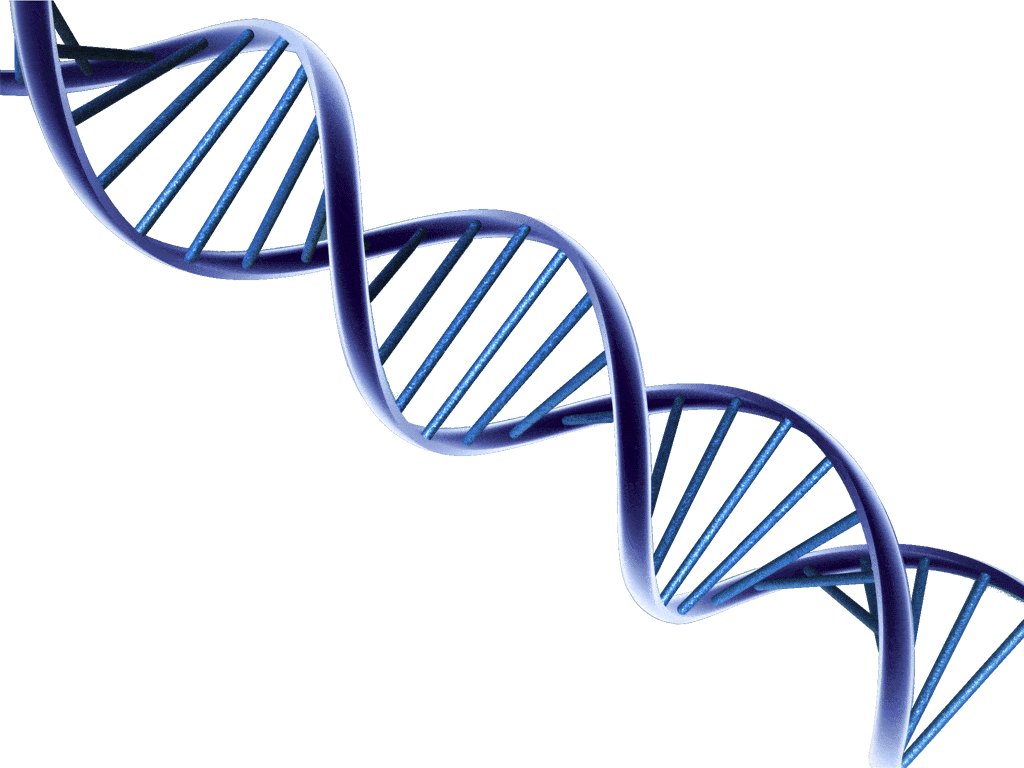
The drawing shows the structure of what molecule?
a)
A DNA molecule
b)
A lipid molecule
c)
A carbohydrate molecule
d)
A protein molecule
20.
Which enzyme is responsible for adding nucleotides ("The Builder")?
a)
Topoisomerase
b)
DNA Polymerase
c)
Ligase
d)
Primase
21.
The DNA is found in the nucleus of what type of organisms?
a)
Bacteria
b)
Eukaryotes
c)
Prokaryotes
d)
Viruses
22.

DNA polymerase moves in the _________ to ____________ direction

a)

3' to 5'

b)

easiest

c)

5" to 3"

d)

9 to 5

23.

DNA strand has the following bases AAGCCA what are the bases on the complementary strand

a)

GGCTTA

b)

TTGGGA

c)

CCAGGT

d)

TTCGGT

24.

The new DNA strand formed after DNA replication is an exact copy of its parent strand

a)

True

b)

False

25.

What are the nucleotides made of?

a)

Sugar, Phosphate, nitrogen base

b)

Phosphate, Adenine, nitrogen base

c)

Thymine, Adenine, Cytomine

d)

Phosphate, Nitrogen, Adenine

26.
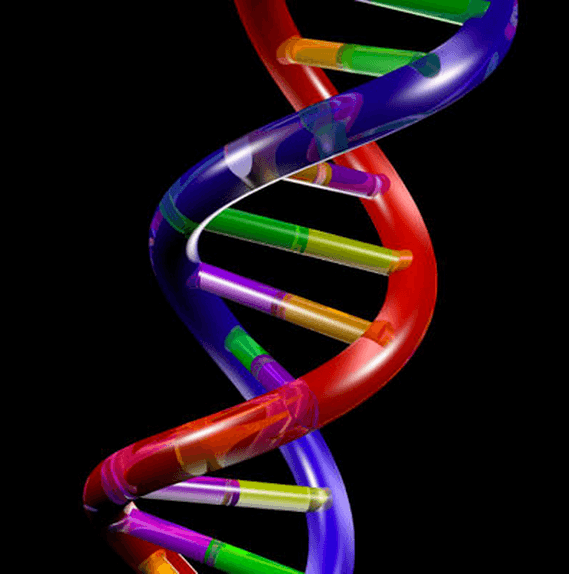
This picture is illustrating the ____ nature of DNA.
a)
anti-parallel
b)
deoxyribosic
c)
helical
d)
radioactive
27.

Which is the first step?

a)

DNA Helicase unwinds original DNA strand

b)

RNA Primase lays down RNA primer for new nucleotide bases.

c)

DNA polymerase builds new strands by bring in new nucleotide bases.

d)

Ligase knits together fragments on lagging strand

28.

Pair the following using the Base Pairing Rule

a)

A

1.

T

b)

C

2.

G

c)

T

3.

A

d)

G

4.

C

29.

Pair the following using the Base Pairing Rule

a)

Adenine

1.

Thymine

b)

Cytosine

2.

Guanine

c)

Thymine

3.

Adenine

d)

Guanine

4.

Cytosine

30.

After replication, each strand has ​ (a)   new strand(s) and ​ (b)   old strand(s).

Choose from the below words
one
two
zero
31.
Which of the following units are repeatedly joined together to form a strand of DNA?
a)
amino acids
b)
nucleotides
c)
fatty acids
d)
polysaccharides
32.
What determines the code, or information, of a DNA molecule?
a)
the shape (structure) of the nitrogen bases
b)
the order (sequence) of the nitrogen bases
c)
the color of the nitrogen bases
d)
the frequency (number) of nitrogen bases
33.
If a strand reads:
3' A A A T T T C 5'
The matching strand would read...
a)
5' T T T A A A G 3'
b)
3' T T T A A A G 5'
c)
5' A A A T T T C 3'
d)
3' U U U A A A G 5'
34.
What is the shape of DNA?
a)
Double helix
b)
Triple helix
c)
Flat, bilayer
d)
Three-pronged rigid ladder
35.
Sometimes, DNA is called "semi-conservative." Why might this be?
a)
The old strand is "conserved" and used to make the new strands
b)
Uracil is "conserved" in that it is only used to make the new strands
c)
ATP is "conserved" via the usage of facilitated diffusion
d)
Ligase is "conserved" in that it is denatured by the process
36.
If the percentage of DNA is made of 30% Thymine, what is the correct percentage of Guanine?
a)
30
b)
15
c)
20
d)
60
37.
A process in which DNA has the unique ability to make an exact copy of itself.
a)
Replication
b)
Translation
c)
Transcription
38.
The bonds that hold the two strands of DNA together come from...
a)
the attraction of phosphate groups 
b)
strong bonds between  bases and sugars
c)
carbon to carbon bonds in the sugar
d)
weak hydrogen bonds between the bases
39.
The nucleic acid DNA is composed of
a)
sugar, protein, and nitrogenous bases.
b)
protein, nitrogenous bases, and phosphate.
c)
nitrogenous bases, phosphate, and RNA.
d)
sugar, phosphate, and nitrogenous bases.
40.

You are given the DNA strand 5'ATGCTCAGCTGA3'. What is the corresponding DNA strand?

a)

5'UACGAGUCGACU3'

b)

5'TACGAGTCGACT3'

c)

3'UACGAGUCGACU5'

d)

3'TACGAGTCGACT5'

41.
Question Image

Match the DNA sequence codon with the complimentary sequence

a)
ATT
1.
TAA
b)
CGC
2.

GCG

c)

TAC

3.

ATG

d)

AGT

4.

TCA

e)

CTT

5.

GAA

42.
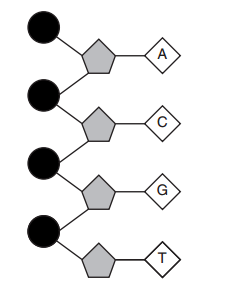
The diagram below represents a portion of a DNA molecule. The letters represent different types of 
a)
sugar molecules
b)
nitrogen bases
c)
enzymes
d)
proteins
43.

The end result of replication is ________________________.

a)

one new molecule of DNA

b)

two identical molecules of DNA

c)

two different molecules of DNA

44.

In the DNA of a panda, there is 30% adenine. Determine the percent of guanine.

a)

15%

b)

40%

c)

10%

d)

20%

45.

In organism #1 there is 13% thymine in a molecule of DNA, Determine the percent (%) _____ cytosine.

a)

13%

b)

26%

c)

37%

d)

74%

46.

The sugar in DNA is called

a)

glucose

b)

deoxyribose

c)

ribose

d)

phosphate

47.

DNA is the molecule of _____

a)

life

b)

space

c)

earth

d)

death

48.

If a DNA molecule has 28% cytosine, what is the percent of guanine?

a)

28%

b)

14%

c)

22%

d)

44%

49.

Hydrogen bonds are the _______ type of bond

a)

strongest

b)

longest

c)

shortest

d)

weakest

50.

Which enzyme reads the DNA and determines which new nucleotide to add to the parent strand?

a)

helicase

b)

polymerase

c)

ligase

d)

primase

51.
Why is DNA important?
a)
it is very small and very complicated
b)
it's in everything
c)
it serves as the blueprint for traits of all living things
d)
because we eat it every day for energy
52.

Which of the following correctly describes GENOTYPE?

a)

A. The combination of genes an organism has

b)

B. The physical traits an organism demonstrates

53.

Which of the following correctly describes PHENOTYPE?

a)

A. The combination of genes an organism has

b)

B. The physical traits an organism demonstrates

54.
Hair colour is an example of
a)
genotype
b)
phenotype
55.

A flower's red color an example of a....

a)

Genotype

b)

Phenotype

56.

If a portion of original DNA is ATTCGA, what will the complimentary strand be?

a)

TAAGCT

b)

ATTCGA

c)

TATTCG

d)

CGATTA

57.

If a portion of original DNA is GCTAAT, what will the complimentary strand be?

a)

TAAGCT

b)

ATTCGA

c)

TATTCG

d)

CGATTA

58.
In a molecule of double-stranded DNA, the amount of Adenine present is always equal to the amount of
a)
cytosine
b)
guanine
c)
thymine
d)
uracil
59.
Which sequence of DNA bases would pair with this partial strand
ATG TGA CAG
a)
ATG TGA CAG
b)
TAC ACT GTC
c)
GTA AGT GAC
d)
CAT TCA CTG
60.

What is the function of DNA?

a)

Store genetic information

b)

Store energy

c)

Form enzymes

d)

Form the cell membrane

61.

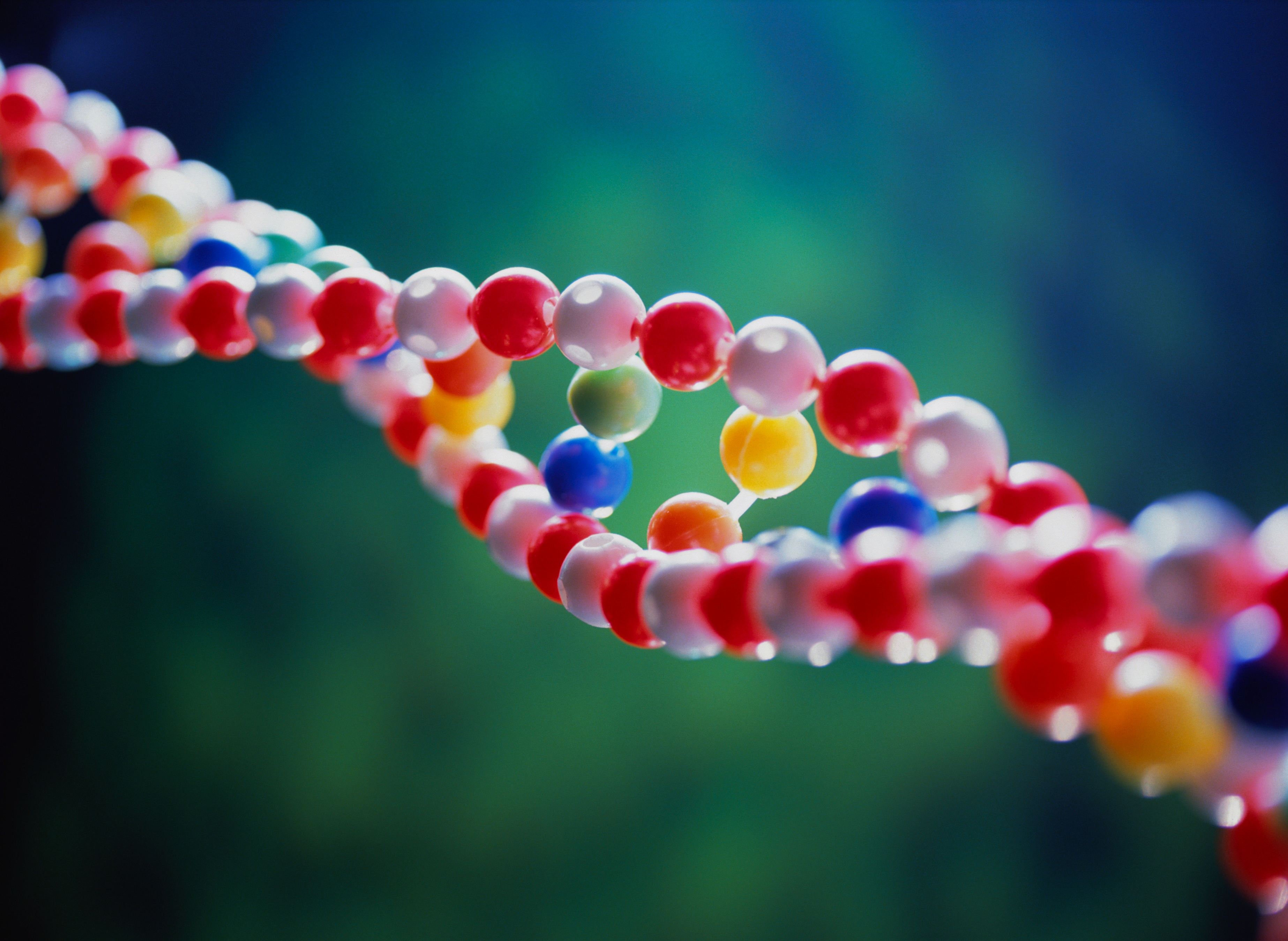
What process is occurring in this image?

a)

DNA transription

b)

DNA replication

c)

DNA translation

d)

Mitosis

62.
Fill in the complementary bases according to the base-pair rule in DNA: A T C C A G
a)
T U G G T C
b)
T A G G T C
c)
T A C G T G
d)
T A C C A C
63.

What is the correct complimentary strand for the following DNA?

ATCGAG

a)

TACGAG

b)

TAGCTG

c)

ATCGAG

d)

TAGCTC