wayground logo

Free Printable Worksheets

Font size

S
M
L
XL
Worksheets

HBS EOC Review: Unit 2

Total questions: 60

Worksheet time: 35mins

Name
Class
Date
1.

The divisions of the nervous system (choose all terms that apply)

a)

central

b)

peripheral

c)

sensory

d)

motor

2.

The part of the brain responsible for processing sight

a)

frontal

b)

temporal

c)

occipital

d)

cerebellum

3.
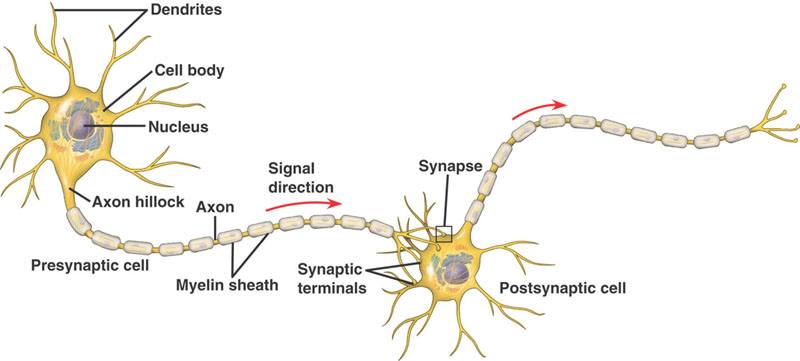
Which part of the neuron is a long fiber that send information to other cells?
a)
dendrite
b)
terminal
c)
cell body
d)
axon
4.
Which part of the brain controls balance and body position?
a)
cerebrum
b)
medulla
c)
cerebellum
d)
impluses
5.
If I step on a nail...what type of neuron take that signal TO the CENTRAL NERVOUS SYSTEM?
a)
interneurons
b)
motor
c)
sensory 
d)
receptors
6.
Which part of the brain controls vital functions such as breathing and heart rate?
a)
Diencephalon
b)
Frontal Lobe
c)
Brain Stem
d)
Cerebellum
7.
Neurons send signals in the brain and body via...
a)
neurotransmitters only
b)
electrical impulses only
c)
wifi
d)
neurotransmitters AND electrical signals
8.

Phineas Gage suffered a traumatic brain injury to his _________ that changed his personality and impulse control.

a)

frontal lobe

b)

parietal lobe

c)

temporal lobe

d)

cerebellum

9.

The 'master gland' that controls all the other endocrine glands in the body is the _________ gland

a)

thyroid

b)

pituitary

c)

adrenal

d)

thymus

10.

This hormone, released by the pancreas, helps RAISE blood glucose levels

a)

insulin

b)

glucagon

11.
The purpose of the endocrine system is to
a)
maintain homeostasis by reacting quickly to stimuli
b)
produce substances that protect the body from bacteria 
c)
maintain metabolism, growth and development in homeostasis 
d)
transport molecules throughout the body
12.
targets bone and muscle to promote growth and development
a)
growth hormone
b)
prolactin
c)
oxytocin
d)
ADH (antidiuretic hormone)
13.
a disease by which people cannot control sugar levels in the blood
a)
hypertension
b)
sleep apnea
c)
diabetes
d)
hyperthyroidism
14.
The correct order of the glands/organs shown in the diagram is 
a)
hypothalamus, thyroid, pancreas, kidneys, ovaries, testes
b)
pituitary, thyroid, adrenal, pancreas, ovaries, testes
c)
pituitary, parathyroid, pancreas, adrenal, testes, ovaries
d)
non are correctly ordered
15.

Which ions are involved in the electrical nerve impulse (action potential)?

a)

Iodine and Sodium

b)

Potassium and Sodium

c)

Iron and Sodium

d)

Calcium and Iodine

16.
Known as the "Little Brain" and is in charge of balance and coordinating movements
a)
Thalamus
b)
Reticular Formation
c)
Hypothalamus
d)
Cerebellum
17.
Damage this and you won't form new memories
a)
Hypothalamus
b)
Hippocampus
c)
Amygdala
d)
Thalamus
18.
Makes decisions, plans, reasons, and carries out behaviors
a)
Frontal Lobe
b)
Parietal Lobe
c)
Occipital Lobe
d)
Temporal Lobe
19.
Possesses the Motor Cortex
a)
Temporal Lobe
b)
Parietal Lobe
c)
Occipital Lobe
d)
Frontal Lobe
20.
Possesses the Sensory Cortex
a)
Frontal Lobe
b)
Occipital Lobe
c)
Temporal Lobe
d)
Parietal Lobe
21.
Controls hearing, and language comprehension
a)
Frontal Lobe
b)
Temporal Lobe
c)
Occipital Lobe
d)
Parietal Lobe
22.
Damage to the cerebellum would most affect the career of
a)
an architect
b)
a teacher
c)
an athlete
d)
a librarian
23.
The amygdala, the hypothalamus and the hippocampus are parts of
a)
limbic system
b)
cerebral cortex
c)
hindbrain
24.
The white portion of the eye (In Humans).
a)
Pupil
b)
Sclera
c)
Dyslexia
d)
Retina
25.
Cornea is abnormally curved, causes blurry vision because it is unable to focus.
a)
Temporarily Blind 
b)
Blindness
c)
Eye
d)
Astigmatism
26.
What light sensitive cells are stimulated in dim light?
a)
rods
b)
cones
27.
Which nerve transmits information from the eye to the brain?
a)
Optic
b)
Olfactory
c)
Occulomotor
d)
Trigeminal
28.
What is letter B
a)
Optic nerve
b)
Lens
c)
Cornea
d)
Retina
29.
What is letter E?
a)
Vitreous humor
b)
Retina
c)
Cornea
d)
Optic nerve
30.
What is letter G?
a)
Sclera
b)
Retina
c)
Lens
d)
Vitreous humor
31.
What is letter I?
a)
Cornea
b)
Lens
c)
Vitreous humor
d)
Optic nerve
32.
What part of the eye are the cones located
a)
Iris
b)
lens
c)
retina
d)
pupil
33.
What is the function of the pupil?
a)
Sends messages picked up by the retina to the brain
b)
The hole that controls the different amounts of light
c)
the colored part of the eye that controls the size of the pupil
d)
transparent jelly like fluid that fills the eye and refracts light
34.
Light entering the eye is focused behind the retina instead of directly on it, objects close to the eye look blurry
a)
Iris
b)
Near Sighted
c)
Astigmatism
d)
Far Sighted
35.
a junction at which a neuron meets another cell
a)
axon
b)
dendrites
c)
myelin sheath
d)
synapse
36.
part of a neuron that receives information from other neurons
a)
axon
b)
dendrites
c)
myelin sheath
d)
synapse
37.
Label the Neuron-What does the letter "H" represent?
a)
Schwann Cell
b)
Axon
c)
Axon Terminal
d)
Dendrite
38.
Label the Neuron-What does the letter "G"
represent?
a)
Axon Terminal
b)
Node of Ranvier
c)
Nucleus
d)
Myelin Sheath
39.
Label the Neuron-What does the letter "B" represent?
a)
Myelin Sheath
b)
Schwann Cell
c)
Cell Body
d)
Nucleus
40.
Label the Neuron-What does the letter "A" represent?
a)
Axon
b)
Dendrite
c)
Axon Terminal
d)
Cell Body
41.
What number on the graph represents the Depolarization phase?
a)
1
b)
2
c)
3
d)
4
42.
What number on the graph represents the Hyperpolarization phase?
a)
1
b)
2
c)
3
d)
4
43.
What is the insulating membrane that surrounds parts of the axon that helps to protect & propagate action potential?
a)
Axon
b)
Dendrites
c)
Node of Ranvier
d)
Myelin Sheath
44.
These connect Sensory and Motor Neurons to each other and are located in the brain and spinal cord
a)
Sensory Neurons
b)
Motor Neurons
c)
Interneurons
d)
Afferent Neurons
45.
When a neuron is depolarized, what are the first channels to open?
a)
Sodium
b)
Potassium
c)
Calcium
d)
ACTH
46.
Letter G
a)
Thalamus
b)
Hypothalamus
c)
Pituitary Gland
d)
Midbrain
47.
Letter K
a)
pons
b)
medulla oblongata
c)
cerebellum
d)
midbrain
48.
condition in which abnormal, rapid impulses are released by brain cells, causing skeletal muscles to contract violently and uncontrollably
a)
encephalitis
b)
aphasia
c)
coma
d)
epilepsy
49.
loss of myelin; result in loss of muscle function, double vision, loss of balance, poor coordination, tremors, tingling, numbness
a)
Parkinson's
b)
cerebral palsy
c)
Belle's palsy
d)
Multiple Sclerosis
50.
A sudden change in the polarity of the membrane of a neuron, gland cell, or muscle fiber that causes the transmission of electrical impulses
a)
Action potential
b)
Membrane potential
c)
Resting potential
d)
Threshold
51.
Brain disorder that results in loss of neuromuscular function, including loss of ability to swallow, speak
a)
Alzheimer
b)
Parkinson
c)
ALS
d)
Multiple sclerosis
52.
What is the blind spot
a)
Produces aqueous humor and controls the lense shape
b)
Whites of the eye and provides structure
c)
The area where the optic nerve  attaches , and no retina is located
, so there is no information to be picked up
53.
Stimulates the pituitary gland
a)
testes
b)
Hypothalamus
54.
What is FSH help with?
a)
milk production 
b)
stress
c)
egg and sperm production
d)
maintain blood pressure
55.
Which eye care professional does corrective surgery?
a)
Opthalmologist
b)
Optician
c)
Optometrist
56.
What is the central nervous system (CNS) made up of?
a)
brain & spinal cord
b)
sensory neurons
c)
motor neurons
d)
sensory receptors
57.

Name the Lobe:

a)

frontal

b)

parietal

c)

occipital

d)

temporal

58.

Name the Lobe:

a)

frontal

b)

parietal

c)

occipital

d)

temporal

59.

Name the Lobe:

a)

frontal

b)

parietal

c)

occipital

d)

temporal

60.

Name the structure:

a)

transverse sulcus

b)

occipital lobe

c)

cerebellum

d)

frontal lobe