
 Worksheets
Photosynthesis and Respiration
Total questions: 69
Worksheet time: 2hrs 42mins
The process in which plants and some other organisms use the energy in sunlight to make food.
photosynthesis
cellular respiration
osmosis
diffusion
The process that occurs when the chemical energy of "food" molecules, carbohydrates, fats, and proteins, is released and partially captured in the form of adenosine triphosphate (ATP).
photosynthesis
diffusion
osmosisi
cellular respiration
An organelle in plant and algae cells that converts energy from sunlight into chemical energy that the plant can use
chlorophyll
chloroplast
mitochondria
nucleus
Which is a molecule is a reactant in photosynthesis?
Water
Chlorophyll
Glucose
Oxygen
Which is a molecule is a product in photosynthesis?
Water
Chlorophyll
Glucose
Carbon Dioxide
Which of the following is a reactant in respiration?
H2O
CO2
C6H12O6
CH3
Which of the following is a product in respiration?
O2
CO2
C6H12O6
CH3
Why does a plant have both chloroplast and mitochondria?
The chloroplast makes glucose that the mitochondria uses to make ATP.
Photosynthesis can not produce ATP
When its dark photosynthesis stops and the mitochondria produces glucose
Chloroplasts are found in the roots of the plant and mitochondria is found in the leaves.
Plant cells make their own food by taking in
oxygen and water.
oxygen and hydrogen.
carbon dioxide and water.
carbon dioxide and oxygen.
What is the green pigment that "traps" sunlight?
Chlorophyll
Chloroplasts
Photosynthesis
ATP
In what organelle does photosynthesis take place?
chlorophyll
chloroplast
mitochondria
nucleus
Which of the following is the correct equation for RESPIRATION
O2 + sugar --> CO2 + H2O + ATP
CO2 + H2O --> ATP + Sugar + O2
During photosynthesis the carbon atoms from the carbon dioxide molecule are turned into
oxygen
glucose
water
hydrogen
Is Oxygen a Raw Material (Ingredient) or Product of Photosynthesis?
Product
Raw Material
Niether
What's Photosynthesis?
Is Glucose (C6H12O6) a Raw Material (Ingredient) or Product of Photosynthesis?
Product
Raw Material
Niether
What's Photosynthesis?
Is Carbon Dioxide (CO2) a Raw Material (Ingredient) or Product of Photosynthesis?
Product
Raw Material
Niether
What's Photosynthesis?
Is Water (H2O) a Raw Material (Ingredient) or Product of Photosynthesis?
Product
Raw Material
Niether
What's Photosynthesis?
Water is transported from roots to shoots and leaves in:
Xylem
Phloem
Stomata
Cholorophyll
What is transpiration?
The evaporation and diffusion of water from inside leaves
The uptake of water through root hair cells
The loss of water from leaves by osmosis
The uptake of water through stem cells
What happens to the transpiration rate as light intensity increases?
It changes
It stays the same
It decreases
It increases

Look at the diagram above!
the function of the structure A is ....
transfer glucose
transfer carbon dioxide
transfer soil
transfer water
How do water enter the roots from the soil?
diffusion
osmosis
transpiration
active transport
Root hairs cells are specialised cells for plant growth because
they keep growing until they reach water and nutrients
they have a large surface area to allow for greater photosynthesis
they have a large surface area for absorbing water and nutrients
they keep growing until they reach sunlight for photosynthesis
Which is NOT belong to the group
Iron
Nitrogen
Phosphorus
Potassium
Stimulates growth of the leaves and stems
Phosphorus
Potassium
Nitrogen
Manganese
It helps in the production of seeds.
Nitrogen
Phosphorus
Potassium
Iron

Recall the main function of a xylem cell.
To transport nutrients (mainly sucrose) to different parts of a plant.
To make energy for the plant via photosynthesis.
To transport carbon dioxide to the leaves for photosynthessis.
To transport water to different parts of plant.
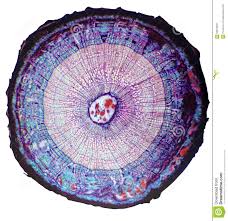
Recall what substance is used to thicken and strengthen xylem walls in woody plants.
Protein
Mineral ions
Lignin
Glucose
What does the Xylem transport?
Water and Minerals
Glucose
Blood
Chlorophyll
What does the Phloem transport?
Water and Minerals
Sucrose and Amino Acids
Blood
Chlorophyll
Which is BIDIRECTIONAL? (transports both ways around a plant)
Xylem
Phloem
What is water used for in the leaves of the plant?
Drinking
Respiration
Photosynthesis
Transport
Xylem tubes are made of...
Dead cells
Living cells
Phloem tubes are made of...
Dead cells
Living cells
Phloem tubes transport substances in which direction?
Up
Up and down
Xylem tubes transport substances in which direction?
Up
Up and down

What is the name of the microscopic holes in leaves that are opened and closed to allow water to TRANSPIRE?
water doors
stomata
leaf eyes
transpiration holes
What are sieve tube elements ?
are elongated cells that are joined end to end to form long tubes
dead cells that are joined end to end to form long tubes
are long tubes that contain nucleus, golgi body and ribosomes
long tubes that don't contain cytoplasm
The end walls of sieve tubes (the cells in phloem tissue) are called...
vessels
cellulose
sieve plates
plasmodesmata

The main function of stomata is to
capture sunlight
protect leaves from insects
allow gases to move rapidly in/out of leaves
release sugars into the atmosphere

When we added red food coloring to the water, what did that prove?
That the celery leaves caught the evaporating red water.
That the celery was absorbing all the red water.
That the water was passing through the celery all the way up to the leaves.
Foods synthesized in the process of Photosynthesis by plants is stored as
Starch
Protein
Vitamins
Fats
Which solution is used to test for starch?
soda lime
iodine solution
sodium hydrogen carbonate solution
ethanol
What does a positive result in the starch test look like?
The leaf turns black-blue
The leaf turns white
The leaf stays green
The leaf turns yellow-brown
What is the test that we can do to check whether photosynthesis has happened?
The starch test
The sugar test
The protein test
The lipids test
What is the function of chlorophyll??
To absorb light
To absorb heat
To absorb water
To absorb oxygen
Select all adaptions leaves have from the list below.
They have a large surface area
They are thin
They have lots of chloroplasts
They have veins
They are thick


Which lettered graph represents the affect of light intensity on photosynthetic rate?
A
B
C
D
What happens when temperatures are too cold?
Chemical reactions speed up - higher frequency of collisions
Chemical reactions slow down - less frequency of collisions
What happens when temperatures are optimal?
Chemical reactions work fastest - particles move faster and collide most frequently
Chemical reactions work slowest - particles move slow and collide infrequently
What happens when temperature is very high?
Enzymes controlling the reaction break down and the reaction stops happening.
The reaction gets even faster since particles are moving even faster and collide more frequently.
The reaction gets slower since the particles move slower and collide less frequently.
Which of the following DOES NOT affect the rate of photosynthesis?
Light
Temperature
Glucose Availability
Carbon Dioxide

What does the plant need magnesium for?
For the production of chlorophyll
For the production of amino acids
For the production of glucose
For the production of starch
Deficiency in Nitrogen will leads to
chlorosis
stunted growth
red spots on leaf
unhealthy root growth
Pale green or yellow plants due to lack of chlorophyll would indicate a deficiency in__________
Nitrogen
Phosphorus
Potassium
Discoloured blue-purple leaves indicates a deficiency in _________________
Nitrogen
Phosphorus
Potassium
Scorching of leaves (browning) along leaf margins indicates a deficiency in _______________________
Nitrogen
Potassium
Phosphorus

