
 Worksheets
iGCSE Physical Chemistry
Total questions: 107
Worksheet time: 2hrs 40mins
Which of the following is true about the formation of bonds between molecules?
Energy is given off when bonds are formed between molecules.
Energy is absorbed by the molecule when bonds are formed.
Energy is neither given off nor absorbed when bonds are formed.
Which of the following statement is true about the breaking of bonds between molecules?
To break a bond between molecules, energy must be released by the molecule
To break a bond between molecules, no energy is needed.
To break a bond between molecules, energy must be absorbed by the molecule.


The energy level diagram for the reaction between magnesium and hydrochloric acid is shown.
Energy is given out during the reaction
The products are at a lower energy level than the reactants
The reaction is endothermic.
Which reaction is endothermic?
acid neutralising alkali causing a temperature increase
adding magnesium to hydrochloric acid
calcium carbonate decomposing when heated combustion of fossil fuels
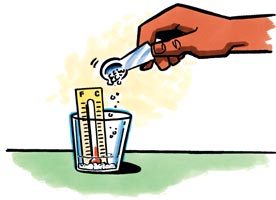

The initial temperature was measured to be 20oC and the final temperature was 10oC. The reaction was
exothermic
endothermic
The initial temperature was measured to be 20oC and the final temperature was 45oC. The reaction was
exothermic
endothermic

What type of reaction is this?
Exothermic
Endothermic
Energy Producing
No way to tell

The graph above is from which type of reaction?
Endothermic reaction
Exothermic reaction
In an exothermic reaction, heat is....
Absorbed
Released
In an endothermic reaction, heat is...
Absorbed
Released
What happens in an endothermic reaction?
Moe energy is released
Less energy is released
The substance heats up
The temperature of the substance stays the same
What happens in an exothermic reaction?
More energy is released
Less energy is released
The substance's temperature stays the same
The substance gets colder
What happens in an exothermic reaction?
More energy is released
Less energy is released
The substance's temperature stays the same
The substance gets colder
Once I take an ice pack out of the freezer, is it endothermic or exothermic?
Endothermic
Exothermic
If I put the ice pack back into the freezer, is it endothermic or exothermic?
Endothermic
Exothermic
When cooking eggs, is in endothermic or exothermic?
Endothermic
Exothermic
Is the evaporation of water endothermic or exothermic?
Endothermic
Exothermic
An iron nail getting rusty loses heat. Is the endothermic or exothermic?
Endothermic
Exothermic


Endo or exo?
Endo
Exo
Which of the following statement is true about the breaking of bonds between molecules?
To break a bond between molecules, energy must be released by the molecule
To break a bond between molecules, no energy is needed.
To break a bond between molecules, energy must be absorbed by the molecule.
Which of the following is true about the formation of bonds between molecules?
Energy is given off when bonds are formed between molecules.
Energy is absorbed by the molecule when bonds are formed.
Energy is neither given off nor absorbed when bonds are formed.
The energy level of molecules will _________ during bond breaking and _________ during bond forming.
decrease, increase
increase, increase
increase, decrease


This energy level diagram is showing an ...
endothermic reaction
exothermic reaction

This energy level diagram is showing an ...
Endothermic reaction
Exothermic reaction

What is the label covered by the red box?
Reactant
Activation Energy
Products
Overall energy change
What is the label covered by the blue box?
Reactant
Activation Energy
Products
Overall energy change
What is the label covered by the purple box?
Reactant
Activation Energy
Products
Overall energy change
When we investigate the rate of reaction we are looking at the...
amount of product formed
speed of reaction
concentration of reacting particles
combining reactants with products
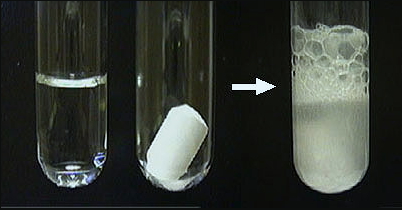
How could we make this reaction happen more quickly?
Decrease the concentration of the acid
crush the chalk to increase the surface area
Put the test tube in an ice bath
Creating fossils is a very _____ chemical reaction
Fast
Slow
It is not a chemical reaction
What does the M after a concentration value stand for?
meters
music
Molarity
moles
Which is the highest concentration?
10m
2M
25 mmol
0.5M
The major theory of reaction rate is called
Collision theory
Crash theory
Newton's laws
Thermodynamics
When surface area is decreased the rate of reaction...
Decreases, because there are LESS possible sites for correct collisions
Increases, because there are LESS possible sites for correct collisions
Decreases, because there are MORE possible sites for correct collisions
Increases, because there are MORE possible sites for correct collisions
What type of reactions can able to change products back to the their original form?
Reversible reactions
Irreversible reactions
Combustion reactions
Combination reactions
Which of the following changes is irreversible change?
Melting of ice cube
Heating hydrated CuSO4
Frying an egg
Thermal decomposing NH4Cl
Which of the following combination is correct?
reversible ⇌
irreversible →
reversible ←
irreversible →
reversible ⇌
irreversible ←
irreversible ⇌
reversible →
If a reversible reaction is exothermic in the forward direction, it will be ...
exothermic in the reverse direction
endothermic in the forward direction too
endothermic in the reverse direction
not involve energy in reverse direction

What is the color of the reactant ?
blue
white

What is the color of product ?
blue
white
A temperature increase causes the particles ......
to slow down
move faster
collide higher
in the right order
How does a catalyst work in speeding up a reaction?
By lowering the activation energy or reaction
by giving them more energy
by making them more available
Why does a higher concentration increase the rate of reaction?
it increases the amount of reactants
it lowers the activation energy
it increases the energy of particle collisions
it increases the frequency of particle collisions
Why does a higher temperature increase the rate of a reaction?
it increases both the frequency and energy of particle collisions
it only increases the frequency of particle collisions
it only increases the energy of particle collisions
it reduces the activation energy of the reaction
The ______________is required to break the bonds of the reactants.
Carbonic energy
Activation energy
Plutonic energy
Energi Gaib
What is dynamic equilibrium?
The reaction goes forward
The reaction goes backward
The rate of forward and backward reaction is equal
The equilibrium is dynamite
Which of the following does not affect the position of equilibrium?
Temperature
Pressure
Particle Size
Concentration
How does a catalyst affect the position of the equilibrium?
It does not. It only increases the rate of reaction.
Position of equilibrium will shift to the right.
Position of equilibrium will shift to the left.
The reaction would be slower.
What would be the effect of increasing the temperature to the equilibrium of an exothermic reaction?
equilibrium shifts to the left
equilibrium shifts to the right
no change in position of equilibrium
What would be the effect of increasing the temperature to the equilibrium of an endothermic reaction?
equilibrium shifts to the left
equilibrium shifts to the right
no change in position of equilibrium
What would be the effect of increasing the concentration of the product on the position of the equilibrium?
equilibrium shifts to the left
equilibrium shifts to the right
no change in position of equilibrium
What would be the effect of decreasing the concentration of the reactant on the position of the equilibrium?
equilibrium shifts to the left
equilibrium shifts to the right
no change in position of equilibrium
When pressure is increased, the position of the equilibrium will shift to the side that has...
less number of gaseous molecules
more number of gaseous molecules
3H2 (g) + N2 (g) ⇌ 2NH3 (g) ΔH = −197 kJ/mol
Which of the following factors would shift the equilibrium position to the right? (Choose 2)
increase concentration of nitrogen gas
increase temperature of the equilibrium
increase pressure of the equilibrium
Presence of a catalyst
H2 (g) + I2 (g) ⇌ 2HI (g)
What would be the effect of increasing the pressure on the position of equilibrium?
equilibrium shifts to the right
equilibrium shifts to the left
no change in position of equilibrium

Ammonia can be used to make the following
Fertiliser
Plastics
iPhones
Explosives!
What are the usual conditions of the Haber Process
450'C, 550 atm, Iron Catalyst
100'C, 200 atm, Diamond Catalyst
450'C, 250 atm, Iron Catalyst
-450'C, 250 atm, Iron Catalyst


What is a closed system
It gives out energy
The reactants and the products do not escape from reaction mixture
It takes in energy
The reactants and the products escape from he reaction mixture to be kept in the system

Heating aqueous Copper sulfate gives
Black powder
Orange juice
White powder
Blue powder
What is the symbol which is used in reversible reactions?
→
Δ
+
⇌


When no reactants can be detected, you can say that the reaction has gone to completion, or is irreversible.
True
False

