
 Worksheets
ESS: Unit 3 Review (Weather)
Total questions: 53
Worksheet time: 20mins
What is the boundary between two different air masses called?
division
separation
front
border
True or False: Air masses with different properties, like humidity and temperature, MIX.
True
False
What type of air mass is characterized by high pressure and low humidity?
Maritime tropical
Continental polar
Maritime polar
Continental tropical
How do air masses get their characteristics, like humidity and temperature?
Air masses are born unique.
Air masses take on the characteristics of the land or water below it, where it formed.
Each air mass comes from outer space.
Evolution
True or False: The boundary where a warm air mass replaces a cold air mass is called a cold front.
True
False
When liquid water becomes _________ it can evaporate and become water vapor in the air.
Warmer
Cooler
When water vapor in an air parcel cools, it can _________ into liquid water which can form a cloud and later fall as rain.
evaporate
condense
Air moving from an area of high pressure to an area of low pressure is __________
wind
energy
change
stability
How can a tornado be dangerous?
it can get you wet
it can be cold
it can damage houses and trees
it can be hot
How can you stay safe during a tornado?
stay away from windows
go outside
run to another house
cook food
A tornado occurs when
cold dry air collides with the wet warm air
cold dry air collides with wet cold air
dry warm air collides with wet warm air
angels go bowling
Where should you go in a tornado?
The highest place you can, like in the attic
get in the car and outrun it!
in the basement, a center room, or under a sturdy table
One way to tell if a tornado is coming:
you see lightning
you see a funnel cloud
you see a rainbow
Tornadoes are rated on a scale of 1 to 5. A number 5 tornado is:
the slowest, with the lowest winds
the safest
the worst, with the highest winds
What temperature of the ocean does a hurricane need to be form?
Warm
Cold
Can a hurricane be tracked?
Yes
No
What is the calmest part of a hurricane?
Eye
Eye Wall
Storm surge
Edge
Why does a hurricane slow down when it hits land?
The wind stops it
It stops raining
It loses its energy source
The air is different
What temperature does ocean water need to be for a hurricane to form?
70 degrees
80 degrees
90 degrees
75 degrees
What causes winds to spin in a hurricane?
The Coriolis Effect
The Corleone Affect
The Circular Wind Phenomenon
The East-West Effect
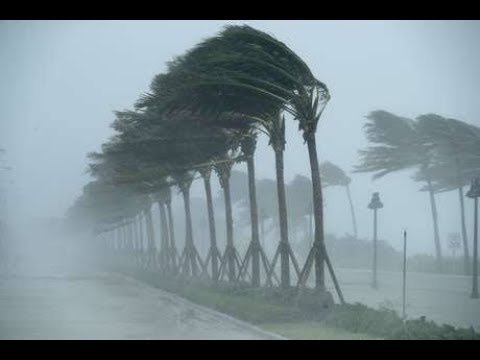
A hurricane is a very powerful storm.
false
true
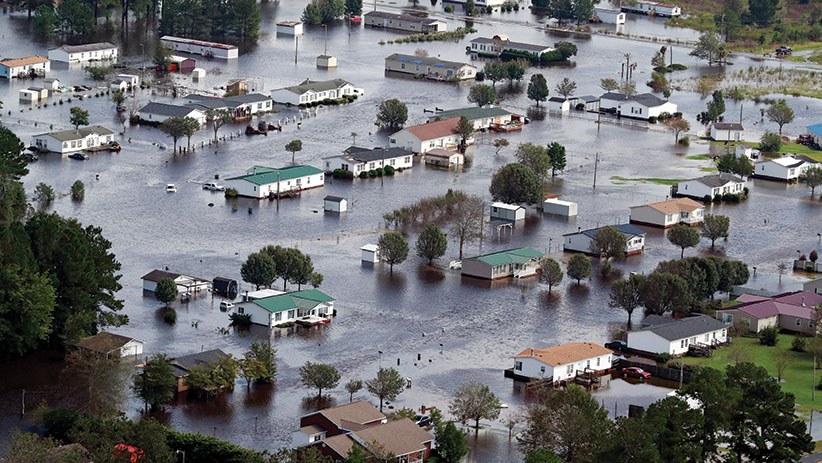
The ____ of tropical oceans make hurricanes stronger.
cold water
warm water
ocean life

Houses, cars, and boats can be damaged during a hurricane.
true
false
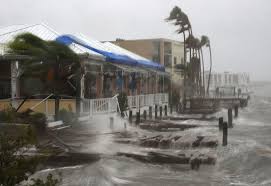
What happens as a hurricane moves further in-land?
It speeds up and gets stronger
It turns around and goes back to sea
It slows down and gets weaker
Standing near a tree is the safest thing to do during a lightning storm.
True
False
What should you do if during an outdoor activity you hear thunder?
Wait until the event organizers tell you to leave.
Speak out and find safe shelter.
Until you see lightning it's okay.
Spread out on the ground.
What are air masses?
A volume of air defined by its temperature and water vapor content.
A volume of air defined by its temperature and pressure.
A volume of air defined by its temperature and density.
A volume of air defined by its density and air pressure.
Continental Air mass is formed over
land
water
Maritime Air mass is formed over
land
water
Which result most likely occurs when cold and warm air masses collide?
The cold air mass pushes under the warm air mass.
The warm air mass pushes under the cold air mass.
The cold air mass and the warm air mass remain stationary.
The cold air mass and the warm air mass mix to create a new air system.
Which statement best describes the movement of winds?
Winds blow from low-pressure to high-pressure regions.
Winds blow from high-pressure to low-pressure regions.
Winds blow from north to south.
Winds blow from east to west.
Maritime-Tropical Air Mass
Dry. warm air
Wet, warm air
Dry, cold air
Wet, cold air
Continental-Polar Air mass
Dry, warm air
Wet, warm air
Dry, cold air
Wet, cold air
Maritime-Polar air mass
Dry, warm air
Dry, cold air
Wet, warm air
Wet, cold air
Continental-Tropical Air Mass
Dry, warm air
Dry, cold air
Wet, warm air
Wet, cold air
Why is storm surge considered one of the most dangerous aspects of hurricanes?
Storm surge results from high wind speeds associated with hurricanes.
Storm surge is caused by the heavy rainfall that accompanies hurricanes.
Storm surge is an unpredictable and rare phenomenon during hurricanes.
Storm surge is caused by the low atmospheric pressure at the center of hurricanes and poses a significant threat due to the rapid rise in water levels.
_______ is a major contributor to the destructive impact of hurricanes, often causing widespread flooding, inundation of coastal areas, and posing serious threats to life and property.
Strong winds
Heavy rain
Storm surge
High temperatures
Why are weather satellites and radar systems crucial for enhancing safety during storms?
They provide real-time images for social media updates.
They help meteorologists study cloud patterns for aesthetic purposes.
They enable the tracking and monitoring of storm development, movement, and intensity. This gives people more time to prepare.
They are primarily used for entertainment purposes during storm events.
Which type of cloud is commonly associated with the formation of thunderstorms and tornadoes?
Cirrus Clouds
Altostratus Clouds
Stratus Clouds
Cumulonimbus Clouds
In meteorology, what does the term "density" refer to in the context of air masses?
The mass of air per unit volume
The amount of moisture present in the air
The force exerted by air pressure on a given area
The temperature of the air mass
How does air density change with increasing altitude?
Air density increases with altitude.
Air density remains constant at all altitudes.
Air density decreases with altitude.
Air density is not affected by changes in altitude.
How does altitude affect atmospheric pressure?
Atmospheric pressure increases with increasing altitude.
Atmospheric pressure remains constant at all altitudes.
Atmospheric pressure is not influenced by changes in altitude.
Atmospheric pressure decreases with increasing altitude.
How does an increase in temperature typically affect air pressure?
Air pressure increases with higher temperatures.
Air pressure remains constant regardless of temperature changes.
Air pressure decreases with higher temperatures.
Air pressure is not influenced by changes in temperature.
How does an increase in humidity generally affect air pressure?
Air pressure decreases with higher humidity.
Air pressure is not influenced by changes in humidity.
Air pressure remains constant regardless of humidity changes.
Air pressure increases with higher humidity.
How do the skies typically appear in a LOW pressure system compared to a HIGH pressure system?
Clear skies in a LOW pressure system and cloudy skies in a HIGH pressure system
Cloudy skies in a LOW pressure system and clear skies in a HIGH pressure system
Both LOW and HIGH pressure systems result in clear skies
Both LOW and HIGH pressure systems result in cloudy skies
Why is the central United States, often referred to as Tornado Alley, prone to a high frequency of tornadoes?
The region has unique geological features that promote tornado formation.
Tornadoes are attracted to areas with high population density.
Tornadoes are a random occurrence and do not follow specific patterns.
The clash of contrasting air masses, including warm, moist air from the Gulf of Mexico meeting cool, dry air from Canada, creates favorable conditions for tornado development.
Over time, which direction is Tornado Alley in the United States observed to be shifting?
Eastward
Westward
Northward
Southward
What type of pressure system is typically associated with stormy weather, and why does it contribute to storm formation?
High-pressure system, due to its stability and calm conditions
Low-pressure system, because rising warm air creates instability and fosters storm development
Stationary pressure system, as it prevents air masses from interacting and creating storms
Subtropical pressure system, characterized by its dry and stable conditions that deter storm formation
What role does the Sun play in the water cycle?
The Sun regulates the Earth's rotation, influencing weather patterns.
The Sun provides the energy that drives evaporation and transpiration.
The Sun controls the temperature of the oceans, affecting precipitation.
The Sun determines the atmospheric pressure, influencing condensation.
How does gravity contribute to the water cycle on Earth?
Gravity causes the Earth to rotate, influencing precipitation patterns.
Gravity pulls water vapor from the atmosphere, leading to condensation.
Gravity facilitates the movement of water downhill, influencing runoff and the formation of rivers.
Gravity generates heat, influencing the temperature of oceans and lakes.

