Wayground logo

Free Printable Worksheets

Font size

S
M
L
XL
Worksheets

Biology A Final Exam Review

Total questions: 65

Worksheet time: 1hrs 4mins

Name
Class
Date
1.

What bases does DNA use?

a)

Adenine, Uracil, Cytosine, Guanine

b)

Nitrogenous Base, Sugar, Phosphate

c)

Deoxyribonucleic Acid

d)
Adenine, Thymine, Cytosine, Guanine
2.
What does NOT happen during interphase?
a)
growth
b)
DNA replication 
c)
obtaining nutrients
d)
cell divison
3.
Cells spend the majority of their lives in
a)
Interphase
b)
Mitosis
c)
Synthesis 
d)
Gap 2
4.

Cells of organisms must go through cell division for?

a)

growth

b)

repair of damaged cells

c)

replacement of dying cells.

d)

All of these

5.

DNA is replicated during ______ of the cell cycle.

a)

Gap 1

b)

Synthesis (S phase)

c)

Gap 2

d)

Gap 0

6.
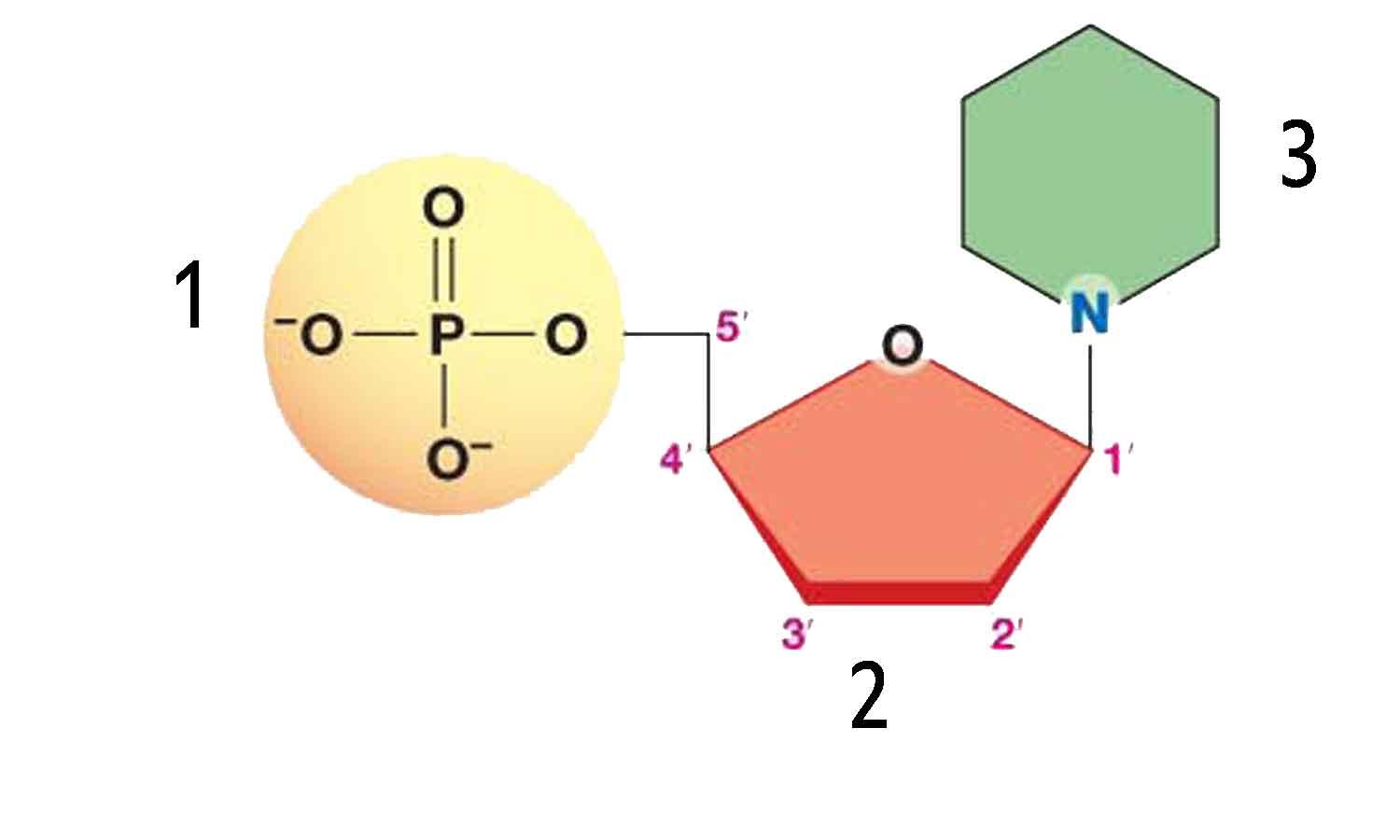
Identify the parts of the nucleotide shown:
a)
1) Ribose Sugar      2) Phosphate 
3)  Nitrogen Base
b)
1) Deoxyribose Sugar
2) Phosphate
3) Nitrogen Base
c)
1) Phosphate
2) Ribose Sugar
3) Nitrogen Base
d)
1)  Phosphate
2) Deoxyribose Sugar
3)  Nitrogen Base
7.
In mitosis, the two resulting cells are
a)
different from the starting cell and identical to each other.
b)
different from the starting cell and different from each other.
c)
identical to the starting cell and different from each other.
d)
identical to the starting cell and identical to each other.
8.

A ______________ is a large molecule.

a)

Micromolecule

b)

Polymer

c)

Amino Acid

d)

Macromolecule

9.

Which of the following is not one of the four major classes of macromolecules?

a)

Lipids

b)

Carbon

c)

Protein

d)

Carbohydrates

e)

Nucleic Acid

10.

Which macromolecule is used as our main source of energy?

a)

Lipids/Fats

b)

Nucleic Acids

c)

Proteins

d)

Carbohydrates

11.

Nucleic acids make up which of the two molecules listed below?

a)

FDA

b)

RNA

c)

DNA

d)

FDR

12.
The diagram shows the general structure of an amino acid. Which type of molecule is formed from amino acids?
a)
lipids
b)
proteins
c)
carbohydrates
d)
nucleic acids
13.
A sugar, a phosphate group, and a nitrogen base form the building blocks of which organic compound?
a)
carbohydrates
b)
lipids
c)
nucleic acids
d)
proteins
14.

What is the monomer of a lipid?

a)

Amino Acid

b)

Fatty Acid

c)

Monosaccharides

d)

Glucose

15.

What is the monomer of carbohydrates?

a)

Monosaccharide

b)

Nucleotide

c)

Fatty Acid

d)

Amino Acid

16.

What is the monomer of proteins?

a)

Amino Acid

b)

Fatty Acid

c)

Nucleotide

d)

Monsaccharide

17.

What is the monomer of nucleic acids?

a)

Monsaccharide

b)

Nucleotide

c)

Amino Acid

d)

Fatty Acid

18.
I am a single strand.
a)
DNA
b)
RNA
19.
I am arranged as a double helix or "twisted ladder".
a)
DNA
b)
RNA
20.
I include the bases Guanine, Cytosine, Adenine and Uracil .
a)
DNA
b)
RNA
21.
I travel outside of the nucleus.
a)
DNA
b)
RNA
22.
I have the sugar ribose.
a)
DNA
b)
RNA
23.
I have the sugar dioxyribose.
a)
DNA
b)
RNA
24.
The sugar in DNA is ____________________.
a)
deoxyribose
b)
ribose
25.
In RNA, adenine goes with __________.
a)
adnine
b)
cytosine
c)
thymine
d)
uracil
26.

According to Chargoff's Rule, if I have a DNA molecule with 18% Thymine, it must have __________ % Guanine

a)

64

b)

18

c)

30

d)

32

27.
If a DNA strand reads ATT CGT CTA, what would the mRNA strand read?
a)
TAA GCA GAT
b)
CGA TGA GUT
c)
UAA GCA GAU
d)
TAA GCA GUT
28.

Which amino acid matches with the following codon:

GAU

a)

GLU

b)

SER

c)

ASP

d)

ILE

29.

Which amino acid matches with the following codon:

CAC

a)

STOP

b)

HIS

c)

LYS

d)

ARG

30.

Use the mRNA below to select the correct amino acid sequence:

AUG-UCA-AAA-UAG

a)

MET-SER-LYS-STOP

b)

MET-THR-LYS-TYR

c)

LEU-SER-CYS-STOP

d)

ILE-LYS-SER-STOP

31.
What does homeostasis mean?
a)
Temperature
b)
Water
c)
Cells
d)
Steady state
32.
If the environment gets cold, we will often shiver in order to:
a)
keep body temperature the same as the external temperature
b)
decrease body temperature
c)
increase body temperature
d)
regulate blood pressure
33.

Which of the following is NOT an example of homeostasis?

a)

A human producing gametes

b)

A plant bending toward sunlight

c)

A bird drinking water when thirsty

d)

A dog stealing chicken off the kitchen counter when hungry

34.
Which of the following is the correct equation for PHOTOSYNTHESIS?
a)
CO2 + light + H2O --> O2 + Sugar
b)
CO2 + sugar + H2O --> O2 + light
c)
O2 + light + H2O --> CO2 + Sugar
d)
CO2 + O2 + H2O --> Light+ Sugar
35.
What process occurs when light energy is captured in autotrophs and converted into sugar?
a)
Photosynthesis
b)
Cellular Respiration
36.
What are the products of photosynthesis?
a)
water and carbon dioxide
b)
oxygen and glucose
c)
oxygen and carbon dioxide
d)
oxygen and water
37.
Which of the following is not needed for photosynthesis to occur?
a)
sunlight
b)
carbon dioxide
c)
water
d)
oxygen
38.

Oxygen (O2) is a reactant material of which process?

a)

Photosynthesis

b)

Cellular Respiration

39.
What are the two reactants of cellular respiration?
a)
C6H12O6 & 6CO2
b)
6 CO2 & 6H2O
c)
C6H12O6 & 6O2
d)
6CO2 & 6O2
40.
What is the correct equation for cellular respiration?
a)
6O2 + C6H12O6 -> 6CO2 + 6H2O + Energy
b)
6O2 + C6H12O6 + Energy -> 6CO2 + 6H2O
c)
6CO2 + 6H2O -> 6O2 + C6H12O6 + Energy
d)
6CO2 + 6H2O + Energy -> 6O2 + C6H12O6
41.

What are the products of photosynthesis?

a)

water and carbon dioxide

b)

oxygen and glucose

c)

oxygen and carbon dioxide

d)

oxygen and water

42.

What are the reactants of photosynthesis?

a)

carbon dioxide and oxygen

b)

water and oxygen

c)

carbon dioxide and water

d)

oxygen and glucose

43.

What are the products of cellular respiration?

a)

water and carbon dioxide

b)

oxygen and glucose

c)

oxygen and carbon dioxide

d)

oxygen and water

44.

What are the reactants of cellular respiration?

a)

carbon dioxide and oxygen

b)

water and oxygen

c)

carbon dioxide and water

d)

oxygen and glucose

45.

What level of biological organization is the largest (includes all other levels)?

a)

organ

b)

organ systems

c)

organism

d)

cells

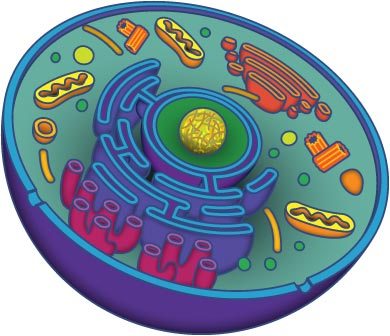
46.

This represents what level or organization?

a)

molecule

b)

atom

c)

cell

d)

organelle

47.

At which smallest level of organization in an organism can the characteristics of life be carried out?

(a)  

48.

Which is the correct sequence – from the lowest to highest – of the levels of organization in an organism?

a)

Cells => Tissues => Organs => Organ systems =>

Organisms => Population => Community => Ecosystem =>

Biosphere

b)

Cells => Tissues => Organs => Organ systems => Organisms=> Community => Population => Ecosystem =>Biosphere

c)

Cells => Organs => Tissues => Organ systems => Organisms => Population => Community => Ecosystem => Biosphere

d)

Cells => Tissues => Organs systems => Organ => Organisms => Population => Community => Ecosystem =>

Biosphere

49.
What is NOT TRUE about the cell membrane?
a)
It controls what enters and leaves the cell
b)
Semipermeable
c)
Phospholipid bilayer
d)
Contains digestive enzymes
50.

Define plasma membrane

a)

lipid that helps minimize effects of temperature

b)

only on the outer surface of the plasma membrane and are attached to proteins or lipids; form distinctive cellular markers

c)

flexible boundary of a cell that separates a cell from its surroundings

d)

may extend partway into the plasma membrane, cross the membrane entirely, or be loosely attached to its inside or outside face
51.

All living things are made up of...

a)

cells

b)

tissues

c)

organ

d)

organ systems

52.

Which statement was NOT included in cell theory?

a)

All living things are composed of cells.

b)

Living cells come only from other living cells.

c)

Each cell contains a cell membrane, cytoplasm, nucleus, mitochondria, and endoplasmic reticulum.

d)

Cells are the smallest structure of living things that can perform the functions necessary for life.

53.

What is the basic structural and functional unit of all living things?

a)

atom

b)

cell

c)

bacteria

d)

animalcules

54.

All cells -----

a)

come from other dead cells

b)

come from other living cells

c)

crystallize out of the air

55.
During diffusion
a)
substances (things) moves from high to low concentration
b)
water moves when energy is used
c)
large or oddly shaped molecules move across a cell membrane
d)
water moves from high to low concentration
56.
High to Low
a)
Passive Transport
b)
Active Transport
57.
Solutes move with the concentration gradient
a)
Passive Transport
b)
Active Transport
58.
Uses ATP
a)
Passive Transport
b)
Active Transport
59.
Solutes move against the concentration gradient
a)
Passive Transport
b)
Active Transport
60.
Low to High
a)
Passive Transport
b)
Active Transport
61.

Which is NOT a characteristic of Living Things?

a)

Respond to their environment

b)

Has DNA

c)

Breathes

d)

Uses Energy

62.

Which is NOT a characteristic of Living Things?

a)

Made of cells

b)

Can Move

c)

Reproduces

d)

Grows and develops

63.
Which of the following correctly describes viruses?
a)
non-living because they grow and develop
b)
living because they can use energy
c)
non-living because they cannot reproduce on their own
d)
living because they can maintain homeostasis
64.
Viruses are...
a)
prokaryotic
b)
eukaryotic
c)
non-living
d)
endospores
65.
Which of the following is a trait that a virus shares with a living organism?
a)
They use oxygen
b)
They have genetic material
c)
They grow
d)
They digest food