
 Worksheets
A.P. U.S. GOVT MID-TERM EXAM REVIEW 2026
Total questions: 128
Worksheet time: 1hrs 5mins
Enlightenment philosopher and creator of natural rights: life, liberty, and property. Also believed that government should be limited.
Thomas Hobbes
John Locke
Baron De Montesquieu
Jean Jacques Rousseau
Voltaire
Enlightenment philosopher who championed the idea of "separation of powers," arguing that a king's power should be divided among other branches of government.
Thomas Hobbes
John Locke
Baron De Montesquieu
Jean Jacques Rousseau
Voltaire
Enlightenment philosopher who championed the ideas of freedom of speech, freedom of religion, and separation of church and state.
Thomas Hobbes
John Locke
Baron De Montesquieu
Jean Jacques Rousseau
Voltaire
Enlightenment philosopher who believed that people were essentially evil, selfish, and greedy; therefore, the best form of government is an absolute monarchy.
Thomas Hobbes
John Locke
Baron De Montesquieu
Jean Jacques Rousseau
Voltaire
Enlightenment philosopher who championed the idea of the social contract, which is the belief that the government protects its citizens, and in exchange, citizens will obey the law and influence laws to be passed. The social contract also states that people can overthrow a government that does not protect them.
Thomas Hobbes
John Locke
Baron De Montesquieu
Jean Jacques Rousseau
Voltaire
"Let the decision stand" is the practice of judges looking at past cases to make their decisions. Which Latin term best describes this?
Amicus Curiae
Writ of Certiorari
Writ of Mandamus
Stare Decisis
Which U.S. Supreme Court case saw the Court rule that a school newspaper does not have the same rights as a regular newspaper?
Tinker v. Des Moines
Hazelwood v. Kuhlmeier
Worcester v. Georgia
Brandenburg v. Ohio
Which of the following represents the greatest weakness of the U.S. Supreme Court?
The Supreme Court faces term limits of 20 years, which does not allow highly experienced members to stay longer.
Supreme Court justices can be impeached at any time for any reason by Congress.
The Supreme Court is highly dependent upon the President to enforce its decisions.
The Supreme Court is dominated by graduates of Harvard and Yale Law School.
This judicial philosophy believes that matters of legislation should be left to elected representatives, not judges!
Judicial activism
Congressional theory
Judicial restraint
Executive Empowerment
N.A.S.A., the E.P.A., and the F.C.C. are all examples of?
Congressional Committees
Regulatory Agencies
Government Corporations
Independent Government Agencies
Which of the following would be the most effective way for Congress to control all agencies of the federal bureaucracy?
Congress can impeach all federal officials
Congress can dissolve federal agencies
Congress controls the budgets of all federal agencies.
Congress can issue executive orders which control bureaucratic agencies
A (a) is a government in which almost all important decisions are made by unelected state officials rather than elected representatives.
This President created the "Spoils System" or a system o f government in which political jobs and appointments are based on loyalty to the President, not your skills or knowledge!
Andrew Johnson
Andrew Jackson
Rutherford B. Hayes
Richard Nixon
Power gained by the U.S. Supreme Court in the Marbury v. Madison (1803) case, in which the court obtained the authority to decide whether actions by Congress or the President are constitutional or unconstitutional.
Judicial Restraint
Judicial Activism
Judicial Logrolling
Judicial Review
The practice of members of Congress exchanging favors and votes with each other to get their bills passed through Congress?
Gerrymandering
Logrollling
Backslapping
Pigeonholing
U.S. historical document written by James Madison that warned about the rise and dangers of factions within the government, but suggested these "factions" could be tamed by a large government and country.
Brutus 1
Federalist #10
Federalist #51
Federalist #70
Federalist #78
U.S. historical document written by Robert Yates, an Antifederalist, who argued that the two most dangerous clauses of the new U.S. Constitution were the Supremacy Clause and the Necessary and Proper Clause.
Brutus 1
Federalist #10
Federalist #51
Federalist #70
Federalist #78
U.S. historical document written by Alexander Hamilton in which he argues for a strong executive leader who could react quickly to a crisis facing the country, and a person who can be blamed for the nation's failings as well.
Brutus 1
Federalist #10
Federalist #51
Federalist #70
Federalist #78
U.S. historical document written by Alexander Hamilton in which he argues to Antifederalists that the U.S. Supreme Court should not be feared because it must rely on the President to enforce its decisions.
Brutus 1
Federalist #10
Federalist #51
Federalist #70
Federalist #78
Which Article of the U.S. Constitution established the U.S. Supreme Court and all lower federal courts?
Article I
Article II
Article III
Article IV
Which Article of the U.S. Constitution established the Executive branch, "The President"?
Article I
Article II
Article III
Article IV
Which Article of the U.S. Constitution established the Legislative Branch and includes expressed or enumerated powers?
Article I
Article II
Article III
Article IV
Which Article of the U.S. Constitution established that states have powers reserved to them alone, such as the right to control marriage laws, public schools, licensing of professionals, and voting qualifications?
Article I
Article II
Article III
Article IV
Which Article of the U.S. Constitution establishes the "Supremacy Clause," which states that the U.S. Constitution is the supreme law of the land and that there is none higher?
Article IV
Article V
Article VI
Article VII
Which Article of the U.S. Constitution explains how to amend the U.S. Constitution?
Article IV
Article V
Article VI
Article VII
To amend the U.S. Constitution, what vote is required in Congress?
1/3rds vote
2/3rds vote
3/5ths vote
3/4ths vote
To approve a Constitutional amendment, _______ of all U.S. states must agree.
1/3rds
2/3rds
3/5ths
3/4ths
What are the three levels of federal courts?
U.S. Supreme Court
U.S. Circuit Court of Appeals
Mecklenburg District Court
U.S. Supreme Court
N.C. Supreme Court
N.C. Superior Court
N.C. Supreme Court
N.C. Circuit Court of Appeals
Mecklenburg Dist. Court
U.S. Supreme Court
U.S. Circuit Court of Appeals
U.S. District Court
Power gained by the U.S. Supreme Court in the Marbury v. Madison (1803) case?
Judicial Restraint
Judicial Review
Judicial Activism
Judicial Oversight
The N.C. Court System contains four levels: the N.C. Supreme Court, the N.C. Circuit Court of Appeals, the _______________________, and County District Courts. Which level belongs in the blank?
Magistrate Courts
N.C. Superior Court
N.C. Court of Claims
N.C. Family Court
All of the following are ways that the U.S. Congress / Legislative Branch can check the power of the Executive Branch, except:
The President can be impeached
Presidential appointments can be rejected
Presidential vetoes can be overridden
The President's salary can be cut by Congress
All of the following are ways that the Executive Branch can check the power of the U.S. Congress / Legislative Branch, except?
The President can veto legislation passed by Congress
The President can nominate the heads of Federal agencies
The President can sign treaties without Senate approval
The President can pocket-veto legislation passed by Congress
All of the following ways can be used to check the power of the Judicial branch.
The President can appoint and confirm members of the Supreme Court
The voters can vote to replace members of the Supreme Court
The Congress can fire Presidential appointments to the Supreme Court.
The President can refuse to enforce a decision by the Supreme Court
In this Federalist paper, Alexander Hamilton wrote that the U.S. Supreme Court is not a threat because it lacks the power of the purse held by Congress, nor does it have the power of the sword held by the Executive branch.
Federalist #10
Federalist #51
Federalists #70
Federalists #78
The President has the power to appoint members to the U.S. Supreme Court. Who must confirm (approve) all Presidential appointments?
The House of Representatives
The U.S. Senate
The White House Office
The U.S. Supreme Court
Once a President decides to nominate someone to the U.S. Supreme Court, the U.S. Senate must approve the nomination by?
A 2/3rds vote
A simple majority vote
A 3/5ths vote
A 3/4ths vote
Most bills proposed in Congress die in which of the following?
Standing Committee
Subcommittee
Rules Committee
Conference Committee
Elected representatives can play three roles once elected. Which role are they playing when they choose to listen to what a majority of their constituents want?
Delegate
Partisan
Politico
Trustee
Elected representatives can play three roles once elected. Which role are they playing when they choose to listen to their constituents, then use their own best judgement to make a decision?
Delegate
Partisan
Politico
Trustee
Elected representatives can play three roles once elected. Which role are they playing when they choose to put the needs of their political party over the needs of their constituents?
Delegate
Partisan
Politico
Trustee
Elected representatives can play three roles once elected. Which role are they playing when they act as professional politicians and consider all sides before making a decision?
Delegate
Partisan
Politico
Trustee
Which of the following best represents an informal power of the President?
Signing a bill into law
Vetoing legislation passed by Congress
Acting as Commander-in-Chief of the military
Signing an Executive Agreement with a foreign nation
Which of the following best represents a formal power of the President?
Issuing an Executive Order
Vetoing legislation passed by Congress
Issuing a signing statement explaining why a piece of legislation was vetoed
Signing an Executive Agreement with a foreign nation
Which of the following actions can the President take without consulting the U.S. House or Senate?
Deploy troops to a foreign country
Ratify a treaty with a foreign nation
Appoint new Justices to the U.S. Supreme Court
Declare war on a country

Examine the attached image. What practice is being demonstrated, where political parties redraw district lines to give themselves an advantage over the other party?
Logrolling
Gerrymandering
Redistricting
Polling
In this document, Alexander Hamilton argues that an energetic President is necessary for a good government.
Federalists #10
Federalists #51
Federalist #70
Federalist #78
Which of the following is a tactic used in the U.S. Senate to delay action on a bill by gaining control of the Senate floor and refusing to give it up?
Pigeonholing
Gerrymandering
Filibustering
Gustation
Tactic used by the President in which he or she holds on to a bill for a period of 10 days. If Congress has adjourned ("gone home"), then the bill is vetoed.
Veto
Pocket veto
Filibuster
Pigeonhole
If the President holds a bill for 10 days without signing it and Congress is still in session, what happens?
The President could face impeachment
Congress will override the President's veto
The bill is automatically vetoed
The bill will automatically become law
This process, ruled unconstitutional by the U.S. Supreme Court, allowed a President to go through a bill line by line and veto items he or she did not like. What is this process called?
Pocket-veto
Itemized-Veto
Line-Item Veto
Pork Barrel Veto
This act passed by Congress was done so by using the Commerce Clause of the U.S. Constitution and found that African Americans were victims of discrimination in both trade and business.
1964 Civil Rights Act
The 1965 Voting Rights Act
The 1968 Fair Housing Act
The 1971 Fair Labor Standards Act
What is one major advantage of a President using an executive agreement?
It allows the President to work quickly with Congress
It allows the President to bypass the Supreme Court
It allows the President to avoid facing possible impeachment
It allows the President to avoid legislative checks and balances on their power.
People who live in a specific member's Congressional district are often referred to as?
Electors
Constituents
Gerrymanders
Citizens
This U.S. Supreme Court case ruled that the U.S. government has the power to establish a national bank as part of its implied powers.
McCulloch v. Maryland (1819)
Marbury v. Madison (1803)
Plessy v. Ferguson (1896)
Worcester v. Georgia (1832)
Which of the following is NOT a reserved power given to states under the 10th Amendment?
Licensing of professionals and businesses
Setting up elections and voting qualifications
Establishing post offices
Running public schools
Which clause of the U.S. Constitution allows Congress to change the law over time and makes the Constitution a living document?
The Full Faith and Credit Clause
The Necessary and Proper Clause / Elastic Clause
The Privileges and Immunities Clause
The Supremacy Clause
Which clause of the U.S. Constitution requires states to generally respect each other's civil laws? For example, New York and North Carolina respect each other's marriage laws and driver's licenses.
The Full Faith and Credit Clause
The Necessary and Proper Clause / Elastic Clause
The Privileges and Immunities Clause
The Supremacy Clause
Which clause of the U.S. Constitution requires states to treat citizens of other states the same as their own citizens? For example, North Carolina cannot tax citizens of Ohio who move to North Carolina at higher rates than their own citizens.
The Full Faith and Credit Clause
The Necessary and Proper Clause / Elastic Clause
The Privileges and Immunities Clause
The Supremacy Clause
What was the main goal of Brutus #1, as written by Robert Yates?
Win over Federalists to adopt the new Constitution
Oppose the ratification of the new U.S. Constitution
Explain to Antifederalists that the new U.S. Constitution was good
Convince the Federalists to oppose the new U.S. Constitution
Declaring war, establishing post offices, and raising armies and navies are all examples of which type of power?
Expressed / Enumerated
Reserved
Concurrent
Implied
Collecting taxes, writing laws, establishing courts, and borrowing money are all examples of which type of power?
Expressed / Enumerated
Reserved
Concurrent
Implied
Establishing a national bank, invoking a military draft, and regulating immigration are all examples of which type of power?
Expressed / Enumerated
Reserved
Concurrent
Implied
This U.S. Supreme Court case ruled that Congress violated the Commerce Clause by attempting to regulate interstate commerce through the creation of the Gun Free School Zones Act of 1990.
D.C. v. Heller (2008)
Tinker v. Des Moines (1969)
U.S. v. Lopez (1995)
Miller v. California (1973)
This U.S. Supreme Court case ruled that "students' rights do not stop at the schoolhouse door" when students wore black armbands to protest the Vietnam War.
D.C. v. Heller (2008)
Tinker v. Des Moines (1969)
U.S. v. Lopez (1995)
Miller v. California (1973)
States have the sole authority to regulate elections and establish voting qualifications.
TRUE
FALSE
According to James Madison in Federalist #10, what is one major weakness of having elected representatives?
Representatives may act in their own selfish interests rather than the people's
Representatives may seek to overthrow the government.
Representatives may represent state interests more than voters
Representatives may act in their party's interest instead of the people's interests
A model of democracy in which a small number of people, usually those who are wealthy and well-educated, control most of the political decision-making. A great example is the Electoral College.
Participatory Democracy
Pluralistic Democracy
Elite Democracy
Representative Democracy
A model of democracy in which a small number of people, usually those who are wealthy and well-educated, control most of the political decision-making. A great example is the Electoral College.
Participatory Democracy
Pluralistic Democracy
Elite Democracy
Representative Democracy
A model of democracy in which no single group dominates political decision-making, and organized interest groups compete with each other to influence policy. A great example of this would be the National Rifle Association (NRA) or the American Association of Retired Persons (AARP).
Participatory Democracy
Pluralistic Democracy
Elite Democracy
Representative Democracy
A model of democracy in which citizens have the power to make political decisions, and politicians are responsible for implementing those political or policy decisions. Good examples include voting in local elections or participating in community affairs.
Participatory Democracy
Pluralistic Democracy
Elite Democracy
Representative Democracy
The right of the people to choose the form of government under which they will live is known as?
Limited government
Popular sovereignty
Checks and Balances
Republicanism
Under the Articles of Confederation, what was considered the chief weakness that led to the collapse of the Articles?
The federal government had only one branch, "unicameral"
The federal government could not enforce laws
The federal government could not raise an army or navy
The federal government was simply too weak to govern.
Which event led to the collapse of the Articles of Confederation and initiated the need for the Constitutional Convention?
Shay's Rebellion
Bacon's Rebellion
Ham's Rebellion
The Whiskey Rebellion

Examine the attached image. It is representative of which Constitutional Compromise that counted some slaves towards a state's population and treated others as property?
The Great Compromise
The 3/5ths Compromise
The Commerce and Slave Trade Compromise
The Electoral College Compromise
Which Constitutional Compromise was a deal made between small states represented by the New Jersey Plan and large states represented by the Virginia Plan?
The Great Compromise
The 3/5ths Compromise
The Commerce and Slave Trade Compromise
The Electoral College Compromise
Which Constitutional Compromise was worked out between Federalists, who wanted a strong federal government, and Antifederalists, who wanted strong state governments?
The Great Compromise
The 3/5ths Compromise
The Bill of Rights Compromise
The Electoral College Compromise
Which U.S. Constitutional Amendment restricts the rights of citizens to sue or file lawsuits against states?
9th Amendment
10th Amendment
11th Amendment
12th Amendment
Which U.S. Constitutional Amendment includes all other rights retained by the people that are not mentioned in other amendments? Examples include the right to move where you want or to own a home.
9th Amendment
10th Amendment
11th Amendment
12th Amendment
Which U.S. Constitutional Amendment created a separate ballot for the President and Vice President in the Electoral College?
9th Amendment
10th Amendment
11th Amendment
12th Amendment
Which U.S. Constitutional Amendment created the first income tax to be collected from all Americans to help pay for the Civil War?
14th Amendment
15th Amendment
16th Amendment
17th Amendment
Which U.S. Constitutional Amendment provided the right to vote for black men and created "universal male suffrage?"
14th Amendment
15th Amendment
16th Amendment
17th Amendment
Which U.S. Constitutional Amendment made all former slaves U.S. citizens and contains the Equal Protection Clause and the Due Process Clause?
14th Amendment
15th Amendment
16th Amendment
17th Amendment
Which U.S. Constitutional Amendment made it possible for the American people to vote directly for U.S. Senators, taking this power from state legislatures?
14th Amendment
15th Amendment
16th Amendment
17th Amendment
Which U.S. Constitutional Amendment set the dates of both Presidential and Congressional terms to January 20 and January 3 to reduce the amount of time it took for both the President and Congress to assume their positions?
19th Amendment
20th Amendment
22nd Amendment
23rd Amendment

Which U.S. Constitutional Amendment is best represented by the attached image?
19th Amendment
20th Amendment
22nd Amendment
23rd Amendment
Which U.S. Constitutional Amendment granted Washington, D.C. the right to cast three electoral votes in presidential elections?
19th Amendment
20th Amendment
22nd Amendment
23rd Amendment
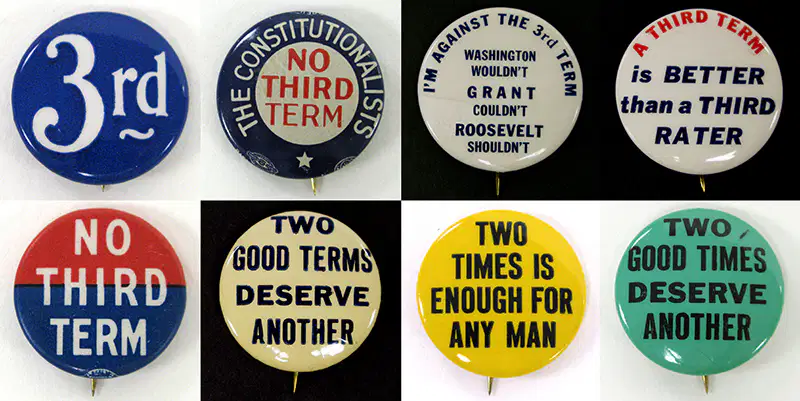
Which U.S. Constitutional Amendment is best represented by the attached image?
19th Amendment
20th Amendment
22nd Amendment
23rd Amendment
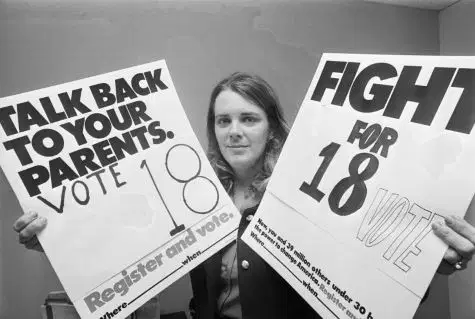
Which U.S. Constitutional Amendment is best represented by the attached image?
24th Amendment
25th Amendment
26th Amendment
27th Amendment
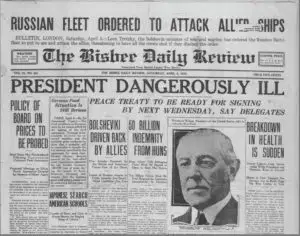
Which U.S. Constitutional Amendment would have allowed President Woodrow Wilson's Vice President to replace him as President after his stroke?
24th Amendment
25th Amendment
26th Amendment
27th Amendment
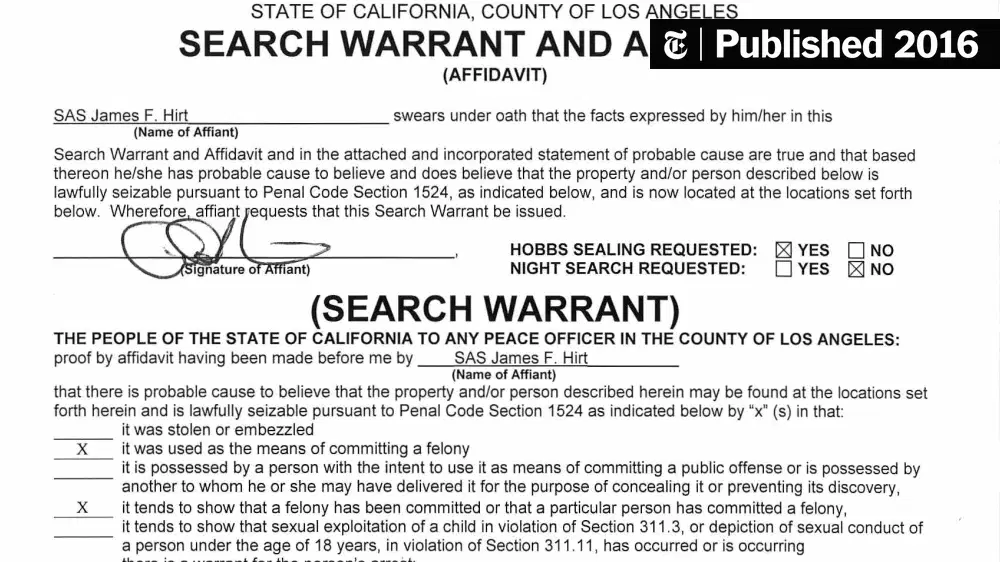
Which U.S. Constitutional Amendment is best represented by the attached image?
1st Amendment
2nd Amendment
4th Amendment
5th Amendment
Which U.S. Constitutional Amendment is best remembered by the acronym S.I.D.E.D., which stands for Self-Incrimination, Indictment, Due Process, Eminent Domain, and Double Jeopardy?
1st Amendment
2nd Amendment
4th Amendment
5th Amendment
Which U.S. Constitutional Amendment contains both the Free Exercise Clause and the Establishment Clause?
1st Amendment
2nd Amendment
4th Amendment
5th Amendment
Which U.S. Constitutional Amendment best represents U.S. Supreme Court cases such as D.C. v. Heller (2008) and McDonald v. Chicago (2010)?
1st Amendment
2nd Amendment
4th Amendment
5th Amendment
Which U.S. Constitutional Amendment can best be remembered with the acronym F.A.C.T.S., which provides citizens with the rights to face your accuser, an attorney, call witnesses, trial by jury (both speedy and public), and state the charges?
5th Amendment
6th Amendment
7th Amendment
8th Amendment
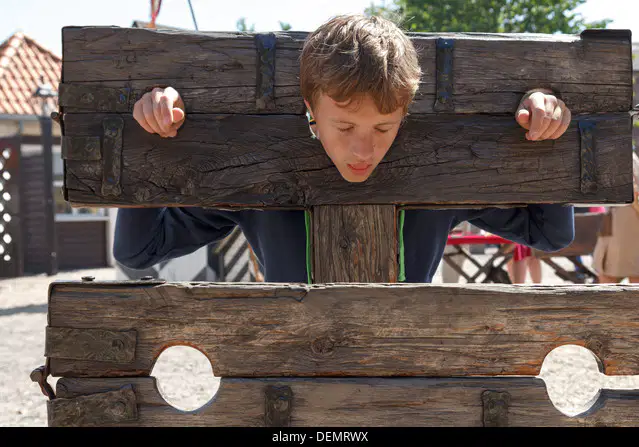
Which U.S. Constitutional Amendment would prohibit the punishment shown in the attached image?
5th Amendment
6th Amendment
7th Amendment
8th Amendment

Which U.S. Constitutional Amendment would allow you to sue McDonald's for serving you coffee that was far too hot and injured you?
5th Amendment
6th Amendment
7th Amendment
8th Amendment
Which of the following cases directly involve the 4th Amendment rights against illegal search and seizure?
Florida v. J.L.
Mapp v. Ohio
U.S. v. Leon
All cases involve the 4th Amendment
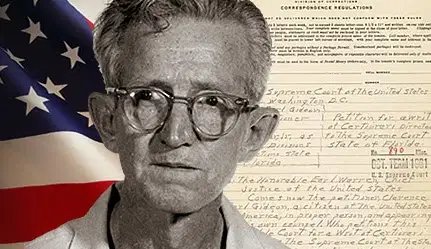
Which landmark U.S. Supreme Court case involves the defendant's right to an attorney when facing felony charges?
Brown v. Board of Ed. (1954)
Mapp v. Ohio (1961)
Gideon v. Wainwright (1963)
Miranda v. Arizona (1966)
Which landmark U.S. Supreme Court case involves the police informing criminal defendants of their rights: "You have the right to remain silent. Anything you say can and will be used against you in a court of law. You have a right to an attorney. If you cannot afford an attorney, one will be appointed for you."
Brown v. Board of Ed. (1954)
Mapp v. Ohio (1961)
Gideon v. Wainwright (1963)
Miranda v. Arizona (1966)
Which of the following are strongly supported by the 14th Amendment's Equal Protection Clause and include rights such as voting, the right to a fair trial, and the right to an attorney?
Civil Liberties
Civil Rights
Civil Laws
Civil Actions
Which of the following are strongly supported by the 14th Amendment's Due Process Clause, and include rights such as privacy and those generally found in the 1st Amendment?
Civil Liberties
Civil Rights
Civil Laws
Civil Actions
According to the U.S. Supreme Court's decision in Hazelwood v. Kuhlmeier (1988), are schools allowed to censor what students write in school newspapers?
YES
NO
In the U.S. Supreme Court case of Mapp v. Ohio (1961), a search warrant was executed to search for a former boyfriend; however, the police did not find him. The police did find pornographic material and arrested Mapp. Which rule states that police cannot use illegally obtained evidence in a court of law?
The Wingspan Rule
The Direct Line of Sight Rule
The Exclusionary Rule
The Innocent Search Rule
Which Supreme Court case below specifically deals with a defendant's right to free speech, in which the court ruled that a defendant's words must rise to the level of "Imminent Lawless Action!"
Wisconsin v. Yoder (1972)
Brandenburg v. Ohio (1969)
Reynolds v. U.S. (1878)
Engel v. Vitale (1962)
Which Supreme Court case below saw the Supreme Court rule that public schools cannot lead or engage in leading students in school prayer, as it is a violation of the 1st Amendment's establishment clause?
Wisconsin v. Yoder (1972)
Brandenburg v. Ohio (1969)
Reynolds v. U.S. (1878)
Engel v. Vitale (1962)
Which Congressional Committee is responsible for resolving the differences between a bill passed by the U.S. House of Representatives and a similar bill passed by the U.S. Senate?
Sub-committee
Standing Committee
Select / Special Committee
Conference / Reconciliation Committee
Major U.S. Constitutional compromise that created a bicameral legislature: one house based on a state's population, the other house based on equality among the states. Also known as the Connecticut Plan.
The Great Compromise
The Electoral College Compromise
The Bill of Rights Compromise
The 3/5ths Compromise
The two sides fighting over ratification of the new U.S. Constitution?
The Federalists and Anticonstitutionalists
The Antifederalists and Governmentalists
The Federalists and Antifederalists
The Anticentralists and Procentralists
Thomas Jefferson, George Mason, Patrick Henry, and Robert Yates
Antifederalists
Federalists
Alexander Hamilton, John Jay, James Madison, and John Adams
Antifederalists
Federalists
The belief that government should only exercise those powers given to it under the Constitution and no more!
Popular Sovereignty
Limited Government
Republicanism
Checks and Balances
This person runs the Executive Office of the President (EOP) and does everything from helping the President decide policy matters to deciding who gets to meet with the President.
Chief of Staff
U.S. Attorney General
Senate Majority Leader
Speaker of the House
Which two powers belong exclusively to the House of Representatives?
Impeaching the President and Spending/Revenue Bills
Impeachment Trials and Revenue Bills
Confirmation of Presidential Appointments and Impeachment
Declaring War and Holding Impeachment Trial
Which two powers belong exclusively to the U.S. Senate?
Impeaching the President and Spending / Revenue Bills
Impeachment Trials and Revenue Bills
Confirmation of Presidential Appointments and Holding Impeachment Trials
Declaring War and Holding Impeachment Trial
The second-highest ranking member of the U.S. Senate usually takes the Vice President's place when they cannot preside over the Senate.
Senate Majority Whip
President Pro Tempore
Senate Majority Leader
Senate Minority Leader
The policy of the U.S. Supreme Court holds that the 14th Amendment requires states to include the Bill of Rights in their own state constitutions.
Transconstitutionlism
Federalism
Incorporation
Legalism
What makes the federal bureaucracy so effective at doing its job?
Its ability to control federal spending
The ability of its officers to win reelection
The ability to set guidelines and implement congressional mandates
The ability to function without receiving orders from Congress or the President
Why are modern-day Presidents so focused on appointing or nominating ever younger justices to the U.S. Supreme Court?
Younger members have more energy and can decide more cases.
Younger members are more easily influenced than older members.
Younger members tend to be more loyal to the President.
Younger members will serve longer terms and implement Presidential policies long into the future.
Which U.S. Supreme Court case decided that a parent's religious rights were more important than a state law requiring students to attend public school until age 16?
Engel v. Vitale (1962)
Wisconsin v. Yoder (1972)
Schenck v. U.S. (1919)
Miller v. California (1973)
Which U.S. Supreme Court case decided that a defendant's right to send obscene mail through the U.S. Postal Service was not protected under the 1st Amendment right to free speech?
Engel v. Vitale (1962)
Wisconsin v. Yoder (1972)
Schenck v. U.S. (1919)
Miller v. California (1973)
Which U.S. Supreme Court case ruled that the defendant(s) had presented a "Clear and Present Danger" by encouraging others to burn their draft cards and refuse to serve during World War I? Justice Oliver Wendell Holmes remarked, "Freedom of Speech doesn't mean you can yell fire in a crowded movie theater!"
Engel v. Vitale (1962)
Wisconsin v. Yoder (1972)
Schenck v. U.S. (1919)
Miller v. California (1973)
Which of the following was designed to be the least responsive to public opinion?
The President
The U.S. Congress
The U.S. Supreme Court / Federal Court System
The Electoral College
What makes a U.S. Supreme Court justice unique compared to the other two branches of the federal government?
U.S. Supreme Court justices are immune from impeachment
U.S. Supreme Court justices serve for life as long as they are well behaved
U.S. Supreme Court justices are paid the highest salary of any branch
U.S. Supreme Court justices are immune from Presidential enforcement of the law.
Only the U.S. Senate may use a filibuster to stop or slow down legislation. What is the only way to stop a filibuster? It is also referred to as the "nuclear option."
Cloture Vote, which requires 60 Senators to vote to stop a filibuster
Override, which requires 2/3rds of the Senate to stop a filibuster
Logrolling, which requires 1/2 of your own party to vote against your filibuster
Pigeonholing, which requires 3/4ths of the Senate to vote to stop your filibuster
What are three options a President has regarding legislation passed by Congress?
Sign it, veto it, override it.
Veto it, Pocket-Veto it, Gerrymander it.
Sign it, Veto it, Pocket-Veto it.
Sign it, Line-item veto it or Pocket-Veto it.
Which role is the President fulfilling when he deploys troops to a foreign country to rescue American hostages?
Commander-in-Chief
Chief Diplomat
Chief of State
Chief Executive
Which role does the President play when he or she nominates members to the U.S. Supreme Court or appoints officials to lead Executive Departments?
Commander-in-Chief
Chief Diplomat
Chief of State
Chief Executive
The Michigan Wolverines have just won the NCAA Division I national championship in football. What role would the President be playing if he or she invites the Wolverines to the White House to celebrate their accomplishment?
Commander-in-Chief
Chief Diplomat
Chief of State
Chief Executive

