
 Worksheets
Science Term 2 Grade 6- Keywords
Total questions: 80
Worksheet time: 1hrs 20mins
What are the two main types of electron microscopes?
Transmission electron microscope (TEM) and scanning electron microscope (SEM)
X-ray microscope and UV microscope
Light microscope and confocal microscope
Atomic force microscope and scanning tunneling microscope
Which type of electron microscope uses a beam of electrons to create an image?
compound microscope
Transmission Electron Microscope (TEM)
Light Microscope
X-ray Microscope
Which type of electron microscope is commonly used for surface imaging and analysis?
Scanning electron microscope (SEM)
Atomic force microscope (AFM)
Confocal laser scanning microscope (CLSM)
Transmission electron microscope (TEM)

Which of the following produce an image as shown ?
Scanning electron microscope (SEM)
Atomic force microscope (AFM)
Confocal laser scanning microscope (CLSM)
Transmission electron microscope (TEM)
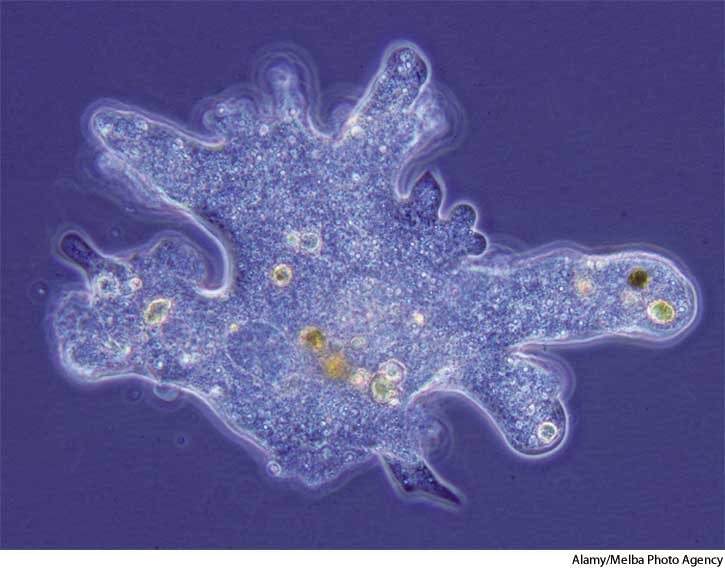
Prokaryotic cells do not have __________________.
DNA
Cell membrane
Cytoplasm
Nucleus
Which of these structures do prokaryotes and eukaryotes share?
Nucleus
Cell wall
Organelles
Ribosomes
What do you think homeostasis is?
Keeping your body systems stable
Staying at home
Making body systems unstable
Small grain-shaped organelles that produce proteins for the cell
Cytoplasm
Ribosomes
Lysosomes
Mitochondria
Large oval structure that acts as the control center of the cell, directing all of the cells’ activities
Vacuole
Ribosome
Golgi Apparatus
Nucleus
Thick, clear, gel-like fluid that fills the region between the cell membrane and the nucleus
Mitochondria
Cytoplasm
Chloroplast
Nucleus
Rod-shaped organelles that convert energy in food molecules to energy the cell can use to carry out its functions
Mitochondria
Golgi Apparatus
Ribosomes
Endoplasmic Reticulum
An organelle that forms a maze of passageways in which proteins and other materials are carried from one part of the cell to another
Cell Wall
Endoplasmic Reticulum
Golgi Appartus
Cytoplasm
Organelle in a cell that receives proteins and other newly formed materials from the endoplasmic reticulum, packages them, and distributes them to other parts of the cell
Golgi Apparatus
Lysosome
Endoplasmic Reticulum
Chloroplast
Organelle in the cells of plants and some other organisms that captures energy from sunlight and changes it to an energy form that cells can use in making food
Cell Wall
Chloroplast
Semipermeable membrane, surrounding a cell that controls what goes into and out of the cell
Cell Wall
Lysosome
Nucleus
Cell Membrane

Cells are...
groups of tissues that together carry out a particular function.
groups of organs that together carry out a particular function.
the structural and functional units of all living things.
only found in animals.

When it comes to biological organisation, the highest level is...
cells.
organs.
body systems.
organisms.

The organ you would find in the circulatory system is...
the liver.
the heart.
the bladder.
the large intestine.

Organs are...
groups of cells that together carry out a particular function.
groups of tissues that together carry out a particular function.
groups of body systems that make up an organism..
unicellular.
What are the 3 key joints?
Which joint has a 180 movement and moves like a lever?
Hinge
Ball and Socket
Pivot
Which joint has a 360 range of movement? But is restricted by muscles
Hinge
Ball and Socket
Pivot
What joint has a 360 potential restricted by flexibility
Hinge
Ball and Socket
Pivot
What do ligaments join?
Bone to Muscle
Muscle to muscle
Bone to Bone
What do tendons join?
Bone to Muscle
Muscle to Muscle
Bone to Bone
What is the role of cartilage?
What does synovial fluid do?
What are joints
A place where one bone meets
A place where two bones meet
Bones don't meet
A place where three bones meet
The joint which allows the maximum movement is the
Slightly movable joint
Ball and socket joint
hinge joint
Gliding joint
Which of the following is made up of the vertebrae?
cartilage
backbone
skull
rib cage
Where might you find a hinge joint?
knee
spine
neck
Hip
Which is an example of a hinge joint
knee and elbow
shoulder and hip
neck
ankle and wrist
The structure that carries the food from the mouth to the stomach
mouth
esophagus
pancreas
large intestine

The process that is taking place there is
peristalsis
digestion
absorption
excretion


What is the function of this structure ?
To digest the food
To digest the food mechanically
To absorb all the digested food particles
To excrete the wastes
What is the chemical in plants' leaves that performs photosynthesis and causes plants to be a green color?
stomata
chlorophyll
carbon dioxide
glucose
6. Where do plants get the energy for photosynthesis to take place?
Nutrients in the soil
The Sun
Pollination
Chlorophyll
What is produced in the leaves of the plant?
oxygen and water
carbon dioxide only
glucose and oxygen
oxygen only
During winter, our body will shivers. What is the reason?
To regulate water content in body
To regulate body temperature
To regulate blood pressure
To regulate glucose level in blood

What are the main functions of the excretory system?
deliver oxygen to the body
deliver nutrients to the body
remove water and waste from the body
remove disease from the body
Which organs help to remove waste from the body?
Lungs, stomach, bladder, and kidneys
Lungs, heart, bones, and bladder
Lungs, large intestine, bladder and kidneys
Lungs, esophagus, bladder and kidneys
Which organ(s) remove waste gases?
Bladder and kidneys
Lungs
Large intestine
Which organ(s) filter blood and store liquid waste?
Bladder and kidneys
Large Intestine
Lungs
Which organ(s) absorb excess water and store solid waste?
Bladder and kidneys
Large Intestine
Lungs

What is organ is #1?
Kidney
Stomach
Bladder
Heart
True or False:
Kidneys filter waste from blood.
True
False
I mix everything up with my acids
stomach
pancreas
large intestine
I am the largest organ inside the body
stomach
liver
small intestine
I look like a sleeping snake
colon
small intestine
esophagus

Which of the following is NOT part of your excretory system?
Heart
Lungs
Kidneys
Skin

Blood is cleaned by which organs?
Lungs
Ribs
Kidneys
Intestines

Why is your skin part of the excretory system?
Sweating gets rid of salt and water
Exhaling releases carbon dioxide
Sweating gets rid of carbon dioxide
The large intestine releases feces

The job of your kidneys is to...
Create feces
Take carbon dioxide out of your blood
Put oxygen into your blood
Clean blood, sending waste to bladder

This vessel carries dissolved sugars from the leaves to all other parts of the plant.
Meristem
Xylem
Cambium
Phloem

What is the food that plants make called?
glucose
oxygen
leaves
carbon dioxide
What are the PRODUCTS of photosynthesis?
oxygen & glucose
carbon dioxide & oxygen
glucose & carbon dioxide
glucose only
What is the correct equation for photosynthesis?
carbon dioxide + oxygen + sunlight = glucose + water
water + oxygen = sunlight + carbon dioxide + soil
glucose + oxygen = sunlight + carbon dioxide + water
water + carbon dioxide + sunlight = glucose + oxygen
Which of the following is not a blood vessel?
arteries
lymph vessels
veins
capillaries
The two types of circulatory systems are...
open and closed
open and shut
pulmonary and closed
pulmonary and systemic

What type of neuron is C?
Sensory
Inter
Motor
Our ______ receive messages and send them to the brain. The brain sends messages to our body on how to respond.
heart
lungs
nerves

The nerve which connects eye and brain is
Auditory nerve
Olfactory nerve
Optic nerve
None
identify the part of the eye that controls the amount of light that enters the eye by changing the size of the pupil.
iris
cornea
pupil
none of the above
identify the part of the eye that allows light to enter into the eye.
pupil
lens
retina
cornea

identify the label part ..what is the part of the eye label as 4
lens
cornea
iris
pupil

what is the part of the eye label 2
cornea
iris
lens
pupil

