Wayground logo

Free Printable Worksheets

Font size

S
M
L
XL
Worksheets

Atomic Structure Review

Total questions: 50

Worksheet time: 25mins

Name
Class
Date
1.
Subatomic particle with a charge of 0
a)
neutron
b)
proton
c)
electron
d)
quark
2.

Subatomic particles with a negative charge

a)

Electrons

b)

Neutrons

c)

Protons

d)

Quarks

3.
Subatomic particles with a positive charge
a)
neutrons
b)
atomic mass
c)
protons
d)
isotopes
4.

The smallest particle of an element.

a)

Element

b)

Molecule

c)

Atom

5.

These are found in the nucleus and have a neutral charge.

a)

proton

b)

electron

c)

neutron

6.
These will determine what element an atom is. 
a)
number of neutrons
b)
number of electrons
c)
number of atoms 
d)
number of protons 
7.

In an atom, the number of protons is equal to the number of ____________.

a)

energy levels

b)

neutrons

c)

neurons

d)

electrons

8.
What are subatomic particles? 
a)
the nucleus 
b)
electron cloud
c)
positive charge
d)
electrons, protons, and neutrons
9.

The center of an atom is known as the

a)

nucleus

b)

electron cloud

c)

neutron cloud

d)

mass circle

10.
These particles have a mass of 1 amu
a)
protons and neutrons
b)
protons and electrons
c)
neutrons and electrons
11.
Protons have this type of charge
a)
positive
b)
negative
c)
neutral - no charge
12.
A particle that orbits around the nucleus is a(n)...
a)
Proton
b)
Neutron
c)
Electron
d)
Quark
13.

What does the nucleus of an atom contain?

a)

Electrons and neutrons

b)

Protons and neutrons

c)

Neutrinos and positrons

d)

Electrons and megatrons

14.
What are the 3 subatomic particles that make-up the atom?
a)
protons, neutrons, and isotopes
b)
neutrons, isotopes, and electrons
c)
positives, negatives, and electrons
d)
protons, neutrons, and electrons
15.
This subatomic particle has basically no mass
a)
protons
b)
neutrons
c)
electrons
d)
protons and neutrons
16.
Neutrons have this type of charge
a)
positive
b)
negative
c)
neutral - no charge
17.
Electrons have this type of charge
a)
positive
b)
negative
c)
neutral - no charge
18.
The two areas of an atom are the 
a)
nucleus and electron cloud
b)
proton cloud and nucleus
c)
inside and outside
d)
mass and volume
19.

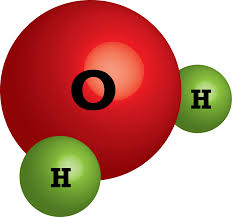
How many atoms are in this molecule?

a)

1

b)

2

c)

3

d)

4

20.
The mass of one proton is greater than the mass of one...
a)
neutron
b)
electron
21.
Which letter represents a proton?
a)
A
b)
B
c)
C
d)
D
22.
Which letter represents a neutron?
a)
A
b)
B
c)
C
d)
D
23.
Which letter represents an electron?
a)
A
b)
B
c)
C
d)
D
24.
Which letter represents the nucleus?
a)
A
b)
B
c)
D
d)
E
25.

What is the small, DENSE REGION consisting of protons and neutrons at the CENTER of an atom?

a)

Molecules

b)

Nucleus

c)

Subatomic particle

d)

Atoms

26.
True or False - Protons and Neutrons have about the same mass.
a)
True - They have about the same mass
b)
False - They do not have about the same mass
27.
Which two subatomic particles make up the nucleus of an atom?
a)
Protons and Electrons
b)
Neutrons and Electrons
c)
Electrons and Protons
d)
Protons and Neutrons
28.
Where are the Electrons found in the structure of an atom?
a)
In the nucleus
b)

In the electron cloud

29.

At what part of the atom is the arrow pointing?

a)

nucleus

b)

energy shell

c)

electron

d)

proton

30.

The mass of an atom is

a)

equal to the number of protons

b)

the protons + electrons

c)

the protons + neutrons

d)

the protons + neutrons + electrons

31.

In what part of an atom can the protons and neutrons be found?

a)

nucleus

b)

neutrine

c)

electron cloud

d)

proton cloud

32.

How many electrons are present in this Carbon atom?

a)

4

b)

5

c)

6

d)

7

33.

How many electrons does Copper (Cu) have?

a)

29

b)

64

c)

35

d)

58

34.

How many electrons does Barium (Ba) have?

a)

56

b)

81

c)

137

d)

218

35.

How many protons are in Carbon (C)?

a)

6

b)

12

c)

1

d)

18

36.

How many neutrons does Sodium (Na) have?

a)

11

b)

23

c)

34

d)

12

37.

What is the atomic mass of Fluorine?

a)

9

b)

18

c)

17

d)

19

38.
These particles orbit around the nucleus of an atom.  What are they called?
a)
electrons
b)
protons
c)
neutrons
d)
photons
39.

How many neutrons are in potassium?

a)

39

b)

19

c)

20

d)

58

40.
What is the atomic number?
a)
12
b)
6
c)
C
d)
18
41.
What is the atomic mass of Neon?
a)
10
b)
20.18
c)
10.18
d)

20.8

42.
What is this number representing?
a)
Number of protons
b)
Number of Protons and Electrons
c)
Number of Protons and Neutrons
d)
Number of Electrons, Protons and Neutrons
43.
What does this number represent?
a)
Number of protons
b)
Number of neutrons
c)
Number of electrons
d)
Number of protons and neutrons
44.

What is at the center of every atom?

a)

An electron

b)

A compound

c)

A molecule

d)

A nucleus

45.
What is the role of an electron in an atom?
a)
Electrons live inside the nucleus and carry a neutral charge.
b)
Electrons circle the nucleus and have a positive charge.
c)
Electrons circle the nucleus and have a negative charge.
d)
Electrons live inside the nucleus and have a negative charge.
46.
In an atom, what is the number of protons equal to?
a)
The number of electrons.
b)
The number of neutrons.
c)
The number of molecules.
d)
The number of nuclei.
47.

What are the 2 main parts of the atom

a)

nucleus, electron cloud

b)

proton, neutron

c)

electron cloud, proton

d)

Electron cloud ,neutron

48.

Which part of the atom stores the protons and neutrons

a)

proton cloud

b)

neutron cloud

c)

electron coud

d)

The nucleus

49.

what part of the atom stores the negative particles?

a)

neutron cloud

b)

proton cloud

c)

electron cloud

d)

nuclear cloud

50.

Which subatomic particles are the smallest?

a)

Neutrons

b)

Protons

c)

Electrons

d)

Atoms