Font size
 Worksheets
Chemistry Midterm
Total questions: 83
Worksheet time: 2hrs 34mins
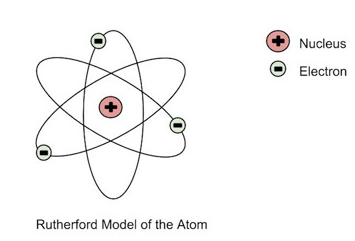
Which of the following make up parts of an atom?
neutron
proton
electron
ultron
Which of the following parts of an atom are positively charged?
neutron
proton
electron
nucleus
A charged atom is called a(n)...
electron.
ion.
proton.
acid.

How many protons does sulfur have?
32
16
48
12

How many electrons does sulfur have
16
32
48
12
These are found in the nucleus and have a neutral charge.
proton
electron
neutron
Subatomic particles with a negative charge
Electrons
Neutrons
Protons
Quarks


How many neutrons does a Hydrogen atom have?
1
2
3
0

How many neutrons does an Oxygen atom have?
8
16
24
7.999
In an atom, an orbital represents
the most probably location of a proton
the most probable location of an electron
the least probably location of a neutron
photons emitted as electrons move to lower energy levels
Which particle has a mass so small, it is considered to be 0 amu?
proton
hydrogen nucleus
neutron
electron


A phase change is a...
physical change
chemical change
During which phase change does a substance release energy?
condensation
evaporation
melting
sublimation
During which phase change does a substance absorb energy?
freezing
condensation
evaporation
deposition
Which phase change is endothermic?
condensation
deposition
melting
freezing

What is happening to the potential energy at interval AB?
increasing
decreasing
staying constant
What is happening to the kinetic energy at interval BC?
increasing
decreasing
staying constant
What is happening to the potential energy at interval BC?
increasing
decreasing
staying constant
Which particle diagram shows a solid?


At what time interval is the substance melting?
AB
BC
CD
DE
At what time interval is the substance evaporating?
AB
BC
CD
DE
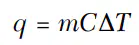
Which formula would you use to calculate the heat absorbed when ice is melted at its melting point?


Which formula would you use to calculate the heat absorbed when water is heated from 10°C to 20 °C?
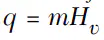
Which formula would you use to calculate the heat absorbed when water is boiled at 100°C?
Which formula would you use to calculate the heat released when water is frozen at 0°C?
Which formula would you use to calculate the heat released when water vapor condenses to a liquid?
During a flame test, sodium chloride produces an intense yellow flame. This yellow color is produced when electrons in excited atoms
are gained by the atoms
are lost by the atoms
move to higher energy states within the atoms
move to lower energy states within the atoms


Based on the information in the table, which two atoms are isotopes of the same element?
A and D
A and Z
X and D
X and Z
Which two notations represent different isotopes of the same element?


The unknown emissions spectra belongs to the element
Hydrogen
Mercury
Neon
Helium
Which energy level of Calcium has the most energy?
1st
2nd
3rd
4th


Most elements on the periodic table are classified as ____________.
Gases
Metalloids
Metals
Nonmetals

Which accurately describes nonmetals?
Poor conductors of electricity
Often used in computer parts
Both malleable and ductile
Both dull and brittle


146C --> 0-1e + ________

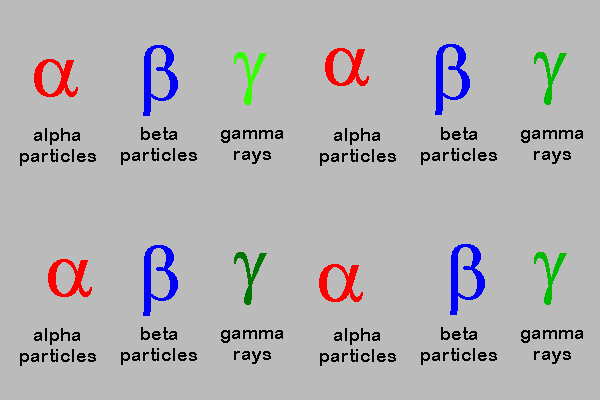
In order of most to least penetrating radiation we have
Alpha , Beta, Gamma
Beta , Gamma , Alpha
Gamma, Beta, Alpha
Gamma, Alpha, Beta
Which reaction represents fusion?




Which reaction represents fission?





What type of nuclear reaction does this equation represent?
Fission
Fusion
Natural Decay
Artificial Transmutation
What does the unit atmosphere, atm, measure?
Pressure
Temperature
Volume
Moles

What is the Standard for Temperature and Pressure?
273 K and 1 atm
273 C and 1 kPa
273 F and 1 mmHg
273 K and 1 Torr
What does the unit Kelvin, K, measure?
Pressure
Volume
Mass
Temperature
What does the unit Liters, L, measure?
Volume
Pressure
Temperature
Moles

Which of the following set of conditions would allow a gas to behave ideally?
(HINT: Remember that gases like to spread far apart! Which conditions would allow the molecules to easily spread apart?)
High Temperature, Low Pressure
High Temperature, High Pressure
Low Temperature, High Pressure
Low Temperature, Low Pressure
A hypothetical gas that perfectly fits all the assumptions of the kinetic molecular theory is known as
real gas
ideal gas
imaginary gas
perfect gas
Which among the following is NOT true regarding the Kinetic Molecular Theory of gases?
Gases particles move in straight lines.
Gas particles are closely packed and their motion is orderly.
Gas particles are in constant motion.
Gas particles do not attract or repel each other.
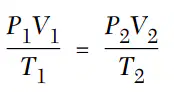
You see this question on your midterm, "If a gas at 25.0 °C occupies 3.60 liters at a pressure of 1.00 atm, what will be its volume at a pressure of 2.50 atm?"
Which equation from your reference table should you use?