Worksheets
SB1 Test review
Total questions: 75
Worksheet time: 1hrs 7mins
A carbohydrate is a macromolecule that is used to...
give cells/systems energy.
build cell parts.
give cells/systems long term energy storage.
help cells with chemical processes.
When reading the ingredients on a nutrition facts label carbohydrates are written as a type of
food additive
enzyme
sugar
protein
Example(s) of Lipids are...
Sugar
Olive Oil
Butter
Bread
A lipid is a macromolecule that is used to...
give cells/systems energy.
build cell parts.
give cells/systems long term energy storage.
help cells with chemical processes.
hormones


Features of plant cells that clearly make them different from animal cells are -
larger and fewer chromosomes.
rigid cell wall and chloroplasts.
more cytoplasm and smaller vacuoles.
changing size and indefinite shape.
Features of plant cells that clearly make them different from animal cells are -
larger and fewer chromosomes.
rigid cell wall and chloroplasts.
more cytoplasm and smaller vacuoles.
changing size and indefinite shape.
Based upon what you just learned about the chloroplast and mitochondria, which do you believe is more important?
Mitochondria because it actually makes the ATP (energy we can use).
Chloroplast because it gets the energy from the sun (energy we can't use)
Both are equally important because the chloroplast captures energy we can't use and sends it to the mitochondria to make ATP which is energy we can use.
True or False, the nucleus of the cell holds DNA.
True
False
True or false, the mitochondria is found ONLY in animal cells.
True
False
Large Central Vacuole
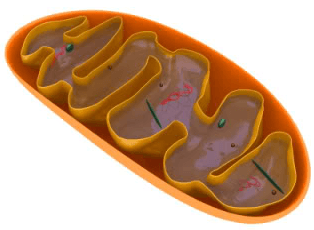
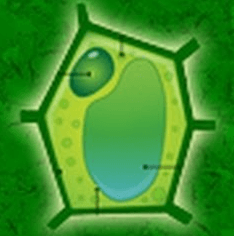
Which organelle contains DNA and controls the cell?
Cell membrane
nucleus
nucleolus
lysosme
Which organelle controls what goes in and out of the cell?
nucleus
nucleolus
cell membrane
nuclear membrane
This pigment is found in chloroplasts.
rhodopsin
chlorophyll
thylakoid
stroma
Proteins are produced at this organelle.
golgi body
ribosome
cytoskeleton
cilia
this organelle makes ATP.
chloroplast
mitochondria
ribosome
nucleolus
Both Eukaryotic and Prokaryotic cells have __________.
ribosomes
nucleus
ribosomes and a nucleus.
Prokaryotic cells do not have…….
membrane bound organelles
cell membrane
DNA
genetic material
The process of how things move in and out of the cell through the cell membrane is (a)
The two broad categories of cell transport are ...........
(select all correct answers)
passive transport
road transport
food transport
active transport
In passive transport, .............
energy is required
energy is not required
In active transport, .............
energy is required
energy is not required
What is your observation after the 5 minutes?
What is your conclusion?
What is the definition of OSMOSIS?
Diffusion of water through a selectively permeable membrane
Molecular structure that surrounds the cell and controls what enters and leaves the cell
Movement of molecules across the cell membrane against the concentration gradient
Movement of molecules across the cell membrane from an area of high concentration to low concentration
What is the definition of LIPID BILAYER?
Molecular structure that surrounds the cell and controls what enters and leaves the cell
Movement of molecules across the cell membrane against the concentration gradient
Diffusion of water through a selectively permeable membrane
Movement of molecules across the cell membrane from an area of high concentration to low concentration
What is the definition of ACTIVE TRANSPORT?
Movement of molecules across the cell membrane against the concentration gradient
Diffusion of water through a selectively permeable membrane
Molecular structure that surrounds the cell and controls what enters and leaves the cell
Movement of molecules across the cell membrane from an area of high concentration to low concentration

Identify the following structure
Phospholipid
Cell
Cell membrane
Protein

What is the name of 'A' found on the structure below
Lipid Bilayer (cell membrane)
Protein
Phosphate hydrophilic heads
Lipid hydrophobic tails

What is the name of 'B' found on the structure below
Protein
Lipic bilayer
Phosphate hydrophilic heads
Lipid hydrophobic heads

What is the name of 'C' found on the structure below
Phosphate hydrophilic heads
Lipid hydrophobic tails
Lipid bilayer
protein

What is the name of 'D' found on the structure below
Lipid hydrophobic tails
Protein
Lipid bi layer
Phosphate hydrophilic heads
Which answer correctly describes the lipid bilayer?
lipids are hydrophobic; phosphates are hydrophobic
lipids are hydrophilic; phosphates are hydrophilic
lipids are hydrophobic; phosphates are hydrophilic
lipids are hydrophilic; phosphates are hydrophobic
Why would the cell need energy to move molecules across the membrane?
the molecule is going against the concentration gradient
the molecule is to large to pass through the membrane
the lipid membrane requires energy anytime something is moving across the membrane
In passive diffusion, substances always move...
from an area of higher concentration to an area of lower concentration
from an area with more of the molecules to an area with fewer of the molecules
from an area of lower concentration to an area of higher concentration
from an area with fewer of the molecules to an area with more of the molecules
What is the definition of FACILITATED DIFFUSION?
Movement of molecules across the cell membrane from an area of high concentration to low concentration
Diffusion of water through a selectively permeable membrane
Movement of molecules across the cell membrane against the concentration gradient
Molecular structure that surrounds the cell and controls what enters and leaves the cell

The following cells have been placed in different solutions.
Make a prediction of what will happen.
(check all that are correct)
Isotonic-- the cell will maintain size
hypotonic-- the cell will increase in size
hypertonic-- the cell will decrease in size
In 2007, a young mom in Sacramento died after participating in a water-drinking contest. The goal was outlast others and not use the restroom while the participants continued to drink 8 oz of water every 15 minutes. She did win the contest, but complained as she got home about pain. Later that day, she died.
Explain using the following words, what could have taken place at the cellular level.
Osmosis
CellMembrane
WaterSolute
Hyptertonic
Hypotonic
Solvent
Equilibrium or Homeostasis