
Font size
 Worksheets
Bio Unit 6 Genetics Test HON
Total questions: 41
Worksheet time: 1hrs 1mins
Why are pea plants a good model for studying genetics?
Choose TWO
They produce few offspring
They take a long time to reproduce

Characteristics such as seed color are determined by (a)
Yellow and green seed colors are determined by (b)
The allele for round seeds is (c) to the allele for wrinkled.

What percentage of the parent generation was green?
(a)
0
100
no way to tell

What is it called when alleles separate into gametes?
(a)
integration
fertilization
inheritance

What is the probability of a green offspring in this cross?
(a)
0/4
(0)
1/4
2/4
(1/2)
4/4
(1)
genetic makeup
GG
gg
Gg
physical trait
yellow
green

What type of inheritance pattern is shown here?
(a)
Incomplete dominance

A calico cat shows both the traits for orange fur and black fur. What kind of allele expression is this?
(a)
Incomplete dominance


What type of inheritance is determined by multiple genes and there can be a range of traits?
(a)
Codominance
Incomplete dominance

A geneticist crossed pure breeding black mice (BB) with pure breeding brown mice (bb). All the mice in the F1 generation had black coats. When these mice were crossed, they yielded 961 black-coated mice and 317 brown-coated mice. The Punnett square describes this cross. The numbers 1 to 4 are shown instead of the genotypes for the offspring. Which of the genotypes, if any, is MOST likely to occur in the F2 generation?
(a)
BB
bb
All are equally likely.
In pea plants, height is determined by an allele for tallness (T) that is dominant over an allele for shortness (t). What is the probability that a gamete, selected at random, would carry the short allele in a cross of heterozygous tall pea plants (Tt x Tt)? (a)
1/8
1/4
3/4
The inheritance of biological characteristics is determined by individual units called (a) , which are passed from parents to offspring. Where two or more (b) of the gene for a single trait exist, some alleles may be (c) and others may be recessive.

This Punnett square shows flower color inheritance in snapdragons in the F1 generation. This trait shows incomplete dominance. What is the expected ratio of red flowers to pink flowers to white flowers in the F2 generation? (a)
9 red: 3 pink: 1 white
4 red: 1 white
(a) Coat color in rabbits is expressed in four different phenotypes, and controlled by a single gene.
(b) Leaves on a tree can have different sizes and shapes depending on the amount of light they receive.
(a) The F1 generation produced by a cross between red-flowered (RR) and white-flowered (rr) plants consists of pink-colored flowers (Rr).
(b) When a certain variety of black chicken is crossed with a white chicken, all of the offspring are checkered. Black and white feathers are produced in the offspring.
male and female reproductive cells combine to form a new cell
(a)
genetics
allele
gamete
probability
haploid sex cell
(a)
genetics
allele
fertilization
probability
sequence of DNA that codes for a characteristic
(a)
segregation
trait
hybrid
principle of dominance
having 2 identical alleles for a gene
(a)
heterozygous
phenotype
genotype
independent assortment

Which is shown in the picture?
(a)
incomplete dominance
codominance
multiple alleles
polygenic trait

Which is shown in this picture?
(a)
Punnett square
incomplete dominance
codominance
polygenic trait
offspring of crosses between parents with different characteristics
(a)
segregation
trait
gene
principle of dominance

In the punnett square, what is the probability for white fur? (a)

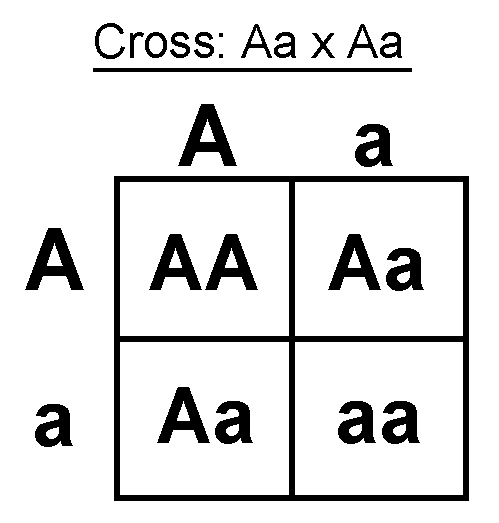
What is the probability & phenotype of the offspring? (A-Brown hair; a-blond hair)
(a)
50% Brown Hair and 50% Blond Hair
25 % Brown Hair and 75% Blond Hair
0% Brown Hair and 100% Blond Hair

What goes in box 1?
(a)
AABB
aabb
AaBB

Based off this Punnett square, what fraction of the offspring will have wrinkled, yellow seeds?
(a)
9/16
1/16
16/16

Match the following vocabulary words with their definitions
Genetics
The Scientific study of heredity
Heredity
The process in which characteristics are passed down from parents to offspring.
Trait
An organism's characteristics.
Genotype
The specific genetic make up or "code" for an individual.
Phenotype
The total physical appearance for an individual.
How many chromosomes does each human sex cell have?
(a)
46
92
What is shared between chromosomes in the crossing over phase?
(a)
gametes
energy
proteins
In which type of cell division does crossing over occur?
(a)
mitosis
During meiosis, if an organism has 10 chromosomes, how many will the new daughter cells have?
(a)
10
8
2
Select the TWO images that show stages of meiosis:


How many pairs of autosomes are shown?
(a)
23
44
46

Does the following karyotype show a nerve cell or a reproductive cell? Why?
(a)
Who is more likely to have an X-linked trait?
(a)
Females
Both males and females

Colorblindness is more common in males than in females because the allele for colorblindness is (a) and located on the (b) chromosome
Y
dominant
X or Y

The trait that this pedigree maps is most likely
(a)
dominant
x-linked
codiminant

The trait that this pedigree is used to map is most likely
(a)
recessive
codominant
polygenic

