wayground logo

Free Printable Worksheets

Font size

S
M
L
XL
Worksheets

Electricity and Magnetism REVIEW

Total questions: 100

Worksheet time: 2hrs 40mins

Name
Class
Date
1.
The force or push that causes electric charges to move is called _________.
a)
resistance
b)
voltage difference
2.
Electric charges always flow from ___________ areas to __________ areas.
a)
positive, negative
b)
negative, positive
3.
A material through which electrons do NOT flow easily is a(n) ______________.
a)
insulator
b)
conductor
4.
Which of the following statements about electric charge is true?
a)
Objects must be touching on another to exert electrical force.
b)
Electrical forces act at a distance.
c)
Air cannot conduct electricity; it is conducted only by solid materials.
5.
Mr. Robinson and his class are conducting an experiment. The class needs to choose a good insulator. Which of the following could be used as an insulator?
a)
plastic plate
b)
silver spoon
6.
Which of the following will increase the resistance of a wire?
a)
using a thicker/wider wire
b)
increasing the temperature of the wire
7.
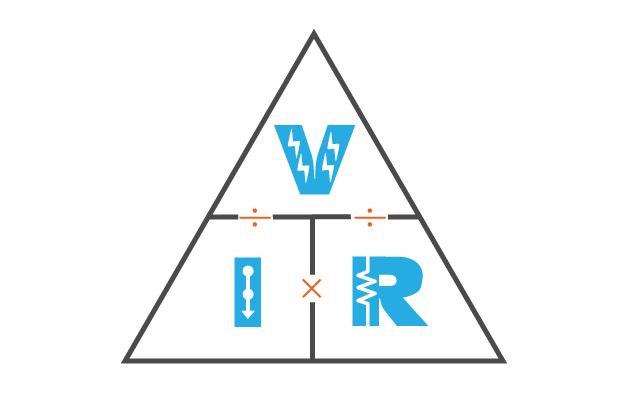
What is the current produced by a 9-volt battery flowing through a resistance of 0.2 ohms? I= V/R
a)
1.8 amps
b)
45 amps
8.
Which two areas of physical science are closely related to the development of electric motors and generators?
a)
electricity and sound
b)
electricity and magnetism
9.
Which of the following will decrease the strength of the magnetic field around a wire?
a)
using less loops around the iron core
b)
increasing the current flowing through the wire
10.
Silver has a resistance of 0.0198 ohms. What voltage would produce a current of 100 amps? V=IR
a)
1.98 V
b)
0.000198 V
11.
This contains a piece of metal that melts if it gets too hot in order to open a circuit.
a)
conductor
b)
fuse
12.
What does the symbol labeled #1 represent?
a)
light
b)
resistor
13.
What does the symbol labeled #2 represent?
a)
light
b)
batteries
14.
Circuit _____ is wired in parallel, and circuit _____ is wired in series.
a)
A; B
b)
B; A
15.
Circuit _____ represents the way homes are usually wired.
a)
A
b)
B
16.
Circuit ________ is the type of circuit that causes an entire string of lights to go out when one of the bulbs burns out.
a)
A
b)
B
17.
The function of a generator is to change
a)
chemical energy to electrical energy
b)
mechanical energy to electrical energy
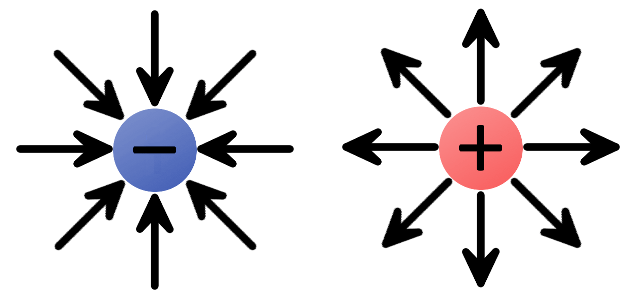
18.
This exerts a force that causes other electric charges to move.
a)
electrical poles
b)
electrical fields
19.
Which circuit below contains the greatest voltage?
a)
A circuit with a current of 10 amps and a resistance of 10 ohms
b)
A circuit with a current of 20 amps and a resistance of 16 ohms
c)
A circuit with a current of 25 amps and a resistance of 16 ohms
20.
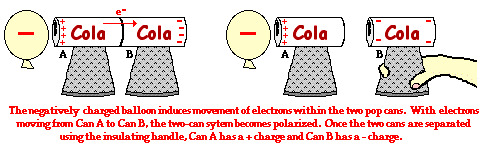
What process is the method by which a neutral object obtains an electrical charge?
a)
induction
b)
conduction
21.
Which symbol would represent a device that can easily turn the circuit on or off?
a)
A
b)
B
c)
C
d)
D
22.
The Law of Conservation of Charge states that
a)
charge cannot be created and destroyed but it can be transferred.
b)
charge cannot be created and destroyed and it cannot be transferred.
23.
Which of the following statements is true about the circuit?
a)
There are 2 batteries, 2 switches, and 3 resistors.
b)
There is 1 battery, 2 switches, and 3 resistors.
c)
There are 3 batteries and 3 resistors.
24.
Positively charged particles in an atom
a)
Proton
b)
Neutron
c)
Electron
25.
Negatively charged particles in an atom
a)
Proton
b)
Neutron
c)
Electron
26.
Particles in the atom that have no charge
a)
Proton
b)
Neutron
c)
Electron
27.
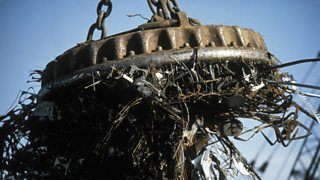
When non-magnetic materials become attracted to magnets
a)
Ferromagnetism
b)
Electromagnets
28.
Temporary magnet made by placing a piece of iron inside a current carrying coil of wire.
a)
Ferromagnetism
b)
Electromagnets
29.
A device that detects electric charge on an object
a)
Electroscope
b)
Voltmeter
30.
A device that measures the voltage difference in a circuit
a)
Electroscope
b)
Voltmeter
31.
Providing a path that allows electric charges to travel directly into the Earth rather than traveling through a building.
a)
Lightening
b)
Grounding
32.
Circuit that has only one pathway for current to travel through
a)
Series circuit
b)
Parallel circuit
33.
Circuit that has more than one pathway for current to travel through
a)
Series circuit
b)
Parallel circuit
34.
Opposite charges __________ and like charges ____________.
a)
attract, repel
b)
repel, attract
35.
Electric charges flow from ___________ voltage to ___________ voltage.
a)
high to low
b)
low to high
36.
To increase the current, you should ___________ voltage and ___________ resistance.
a)
increase, decrease
b)
decrease, increase
37.
Charges an act at a distance by exerting an ______________ ________ which is an example of charging by __________________.
a)
electric field, conduction
b)
electric field, induction
38.

An outlet has a current of 10 amperes and a resistance of 14 ohms. Find the voltage difference. V=IR

(a)  

39.

Find the current in a circuit with a total resistance of 9 ohms and a battery with 180 V of potential difference. I=V/R

(a)  

40.

What is the device shown?

a)

Electromagnet

b)

Solenoid

c)

Generator

d)

Motor

41.

Which kind of circuit only has one path for electricity to flow?

a)

Series

b)

Parallel

c)

Series and Parallel

42.

Which kind of circuit has more than one path for electricity to flow?

a)

Series

b)

Parallel

c)

Series and Parallel

43.

If a bulb is not working in a series circuit, what happens to the other bulbs?

a)

none will work

b)

the rest will work

44.

If a bulb is not working in a parallel circuit, what happens to the other bulbs?

a)

none will work

b)

the rest will work

45.

When a current flows through a wire, it creates a _______ around the wire.

a)

magnetic field

b)

magnetic pole

c)

compass

d)

attraction

46.

Which would NOT increase the strength of the magnetic field around a solenoid?

a)

Adding more coils of wire

b)

Adding an iron core

c)

Connecting it to a battery

d)

Reversing its orientation

47.

Which three materials would allow you to build an electromagnet?

a)

Battery, Wire, Nail

b)

Battery, Tape, Paper

c)

Wire, Nail, Paper Clip

d)

Sandpaper, Tape, Wire

48.

All of the following would cause a series circuit to stop working EXCEPT _______.

a)

Open switch

b)

Burned out bulb

c)

A cut wire

d)

Closed switch

49.

An electric current does NOT exist in ______ circuit.

a)

a closed

b)

a series

c)

a parallel

d)

an open

50.

Does adding loops of wire to a solenoid increase or decrease its strength?

a)

Increase

b)

Decrease

c)

Both

d)

Neither

51.

What happens when a compass is moved near a strong magnet?

a)

it points north

b)

it points toward the magnet

c)

it spins in circles

d)

it doesn't move

52.

What makes electromagnets different from regular magnets?

a)

they can be switched off and on

b)

they use less energy

c)

they are more user-friendly

d)

they do not pollute the environment

53.

The Law of Conservation of Charge states ______

a)

charge can be created and destroyed but NOT transferred

b)

charge cannot be created and destroyed but it can be transferred

c)

charge cannot be created and destroyed and it cannot be transferred

d)

none of these

54.

What symbol is this?

a)

light

b)

switch

c)

resistor

d)

battery

55.

What symbol is this?

a)

light

b)

switch

c)

resistor

d)

battery

56.

What symbol is this?

a)

light

b)

switch

c)

resistor

d)

battery

57.

What is the unit of resistance?

a)

Ohm

b)

Watt

c)

Volt

d)

Ampere

58.

Which material has the highest conductivity?

a)

Copper

b)

Aluminum

c)

Iron

d)

Lead

59.

Why are electrical cords covered in plastic or rubber?

a)

because plastic and rubber are insulators which keeps us safe

b)

because it looks nicer

c)

because plastic and wire help conduct electricity

d)

because wires are color coded based on voltage

60.

A series circuit will continue to work if one of the light bulbs is unscrewed.

a)

true

b)

false

61.

These magnets will...

a)

attract

b)

repel

c)

nothing will happen

62.

What device changes mechanical kinetic energy into electrical energy?

a)

electric motor

b)

insulator

c)

electromagnet

d)

generator

63.
What is the purpose of a switch in an electric circuit?
a)
to allow the circuit to be opened or closed
b)
to change the direction of the current
c)
to provide a push for the current
d)
to increase the electric power to the load
64.
Each time a lightbulb is added to a series circuit, the other bulbs in the circuit 
a)
get brighter
b)
get dimmer
c)
stay the same brightness
d)
release more heat
65.
Where is the strongest attraction force of the magnet?
a)
at the poles
b)
in the middle
c)
above the magnet
d)
below the magnet
66.

Which of the following represents Ohm’s law?

a)

I = V / R

b)

V = I x R

c)

R = V x I

d)

V = I / R

67.

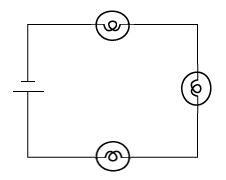
The picture shows an electrical circuit. This circuit is a series circuit because:

a)

It has 3 light bulbs.

b)

The same current flows through all three light bulbs.

c)

It uses a single battery.

d)

The electrical current has more than one path to flow through

68.
Two north poles will attract.
a)
True
b)
False
69.
A north pole and a south pole will attract.
a)
True
b)
False
70.
What would we call a nail that can pick up a paperclip because it is touching a magnet?
a)
temporary magnet
b)
poles
c)
force
d)
detector
71.
The strongest part of a magnet is...
a)
the bars.
b)
the force field.
c)
the poles. 
d)
the middle.
72.
If you cut a magnet in half, what happens to the poles?
a)
One half gets the North Pole, the other half gets the South Pole
b)
Both halves get only a North Pole
c)
Both halves get only a South Pole
d)
Both halves get a North pole and a South Pole
73.
What do the lines around this magnet represent?
a)
North Pole
b)
South Pole
c)
Magnetic Declination
d)
Magnetic Field
74.

An object with equal amounts of positive and negative charge is electrically....

a)

neutral

b)

charged

c)

positive

d)

negative

75.

If two atoms, each with a different charge (+ and -), were brought near each other, they would....

a)

attract each other

b)

repel each other

c)

create static discharge

d)

have on effect on each other

76.
This is an example of...
a)
crazy hair
b)
static electricity
c)
lightning
d)
insulator
77.

An object that has gained electrons is....

a)

electrically neutral

b)

negatively charged

c)

positively charged

78.

Where is the strongest force of a magnet present?

a)

the ends

b)

the middle

c)

its equal everywhere

79.

The negatively charged particle in an atom is a(n):

a)

Electriciton

b)

Electron

c)

Proton

d)

Neutron

80.

What particle moves in wires, light bulbs, and other electrical components?

a)

Proton

b)

Neutrons

c)

Electrons

d)

Atoms

81.

A temporary magnet that only works when electricity is passed through wires surrounding an iron core is called:

a)

electromagnet

b)

galvanometer

c)

induction

d)

super conductor magnet

82.

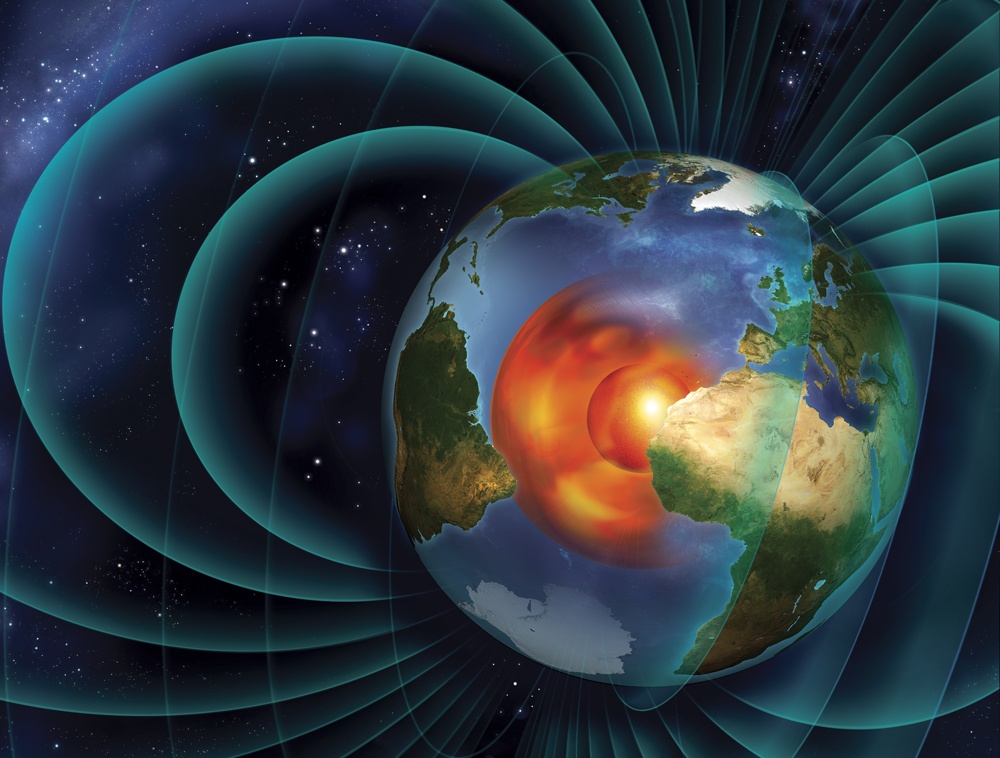
What creates a magnetic field?

a)

charged particles that do not move

b)

moving electric charges

c)

gravity

d)

an isolated magnetic pole

83.

How many paths through which charge can flow would be shown in a circuit diagram of a series circuit?

a)

two or more

b)

one

c)

none, the circuit is open

d)

more information is needed

84.

If a neutral metal comb is held near an object with a negative charge, the comb will become charged by....

a)

static discharge

b)

contact

c)

friction

d)

induction

85.

Walking across a carpet is a perfect example of charge being transferred by...

a)

contact

b)

induction

c)

static electricity

d)

friction

86.
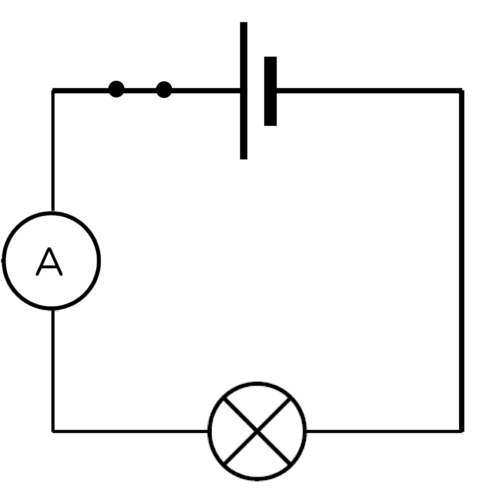
What type of circuit is shown below?
a)
open circuit
b)
closed circuit
87.
Will the bulb light or not?
a)
yes
b)
no
88.
Will the bulb light or not?
a)
yes
b)
no
89.

What are the units for resistance?

a)

Amperes (A)

b)

Volts (V)

c)

Ohms (Ω)

d)

Watts (W)

90.

What is the name for a positive charge?

a)

Proton

b)

Neutron

c)

Electron

d)

Newton

91.

For this parallel circuit, the battery has a voltage of 120 V. What voltage would lightbulb #1 have?

a)

120 V

b)

120 A

c)

40 V

d)

40 A

92.

What area(s) on a magnet have the strongest magnetic field?

a)

North pole

b)

North AND South poles

c)

South pole

d)

The middle of the magnet

93.

What is the total resistance in this series circuit?

a)

3 Ω3\ \Omega  

b)

1 Ω1\ \Omega  

c)

9 Ω9\ \Omega  

94.

The magnetism of electromagnets and permanent magnets is caused by

a)

stationary electrons

b)

moving electrons

c)

moving protons

95.

The voltage across each resistor in this parallel circuit is

a)

3 V

b)

9 V

c)

27 V

96.

An inflated balloon has been rubbed against a person's hair and is touched to a neutral wall and remains attached. Which diagram best represents the charge distribution on the balloon and the wall?

a)
b)
c)
97.

The motion (movement) of charges in wires, motors, light bulbs and other devices is called electric

a)

power

b)

voltage

c)

current

98.

What is the main function of a generator?

a)

to transform electrical energy into magnetic energy

b)

to transform electrical energy into mechanical energy

c)

to transform magnetic energy into electrical energy

d)

to transform mechanical energy into electrical energy

99.

What is the resistance of an electrical device that allows a current of 10 amperes with 120 Volts?

a)

12 Ohms

b)

110 Ohms

c)

130 Ohms

d)

1200 Ohms

100.

You rubbed a balloon against your hair and touch it to a wall. The balloon stuck to the wall.  The balloon stuck to the wall because of the

a)

static electrical forces between the particles of the balloon.

b)

magnetic forces between the particles of the balloon.

c)

static electrical forces between the particles of the balloon and the particles of the wall.

d)

magnetic forces between the particles of the balloon and the particles of the wall.