
Font size
 Worksheets
A&P Blood
Total questions: 91
Worksheet time: 53mins

What type of cells are predominantly visible in this blood smear image under the microscope?
Epithelial cells
Neurons
Red blood cells
Muscle cells

Which cells in the blood smear are responsible for immune response and are fewer in number compared to the predominant cell type?
Platelets
Red blood cells
White blood cells
Fibroblasts

What is the primary function of the transport system of the body as depicted in the image?
To provide energy for cell division
To transport O2 to cells and remove CO2 from cells
To produce nutrients within the cells
To eliminate all wastes from the body at once
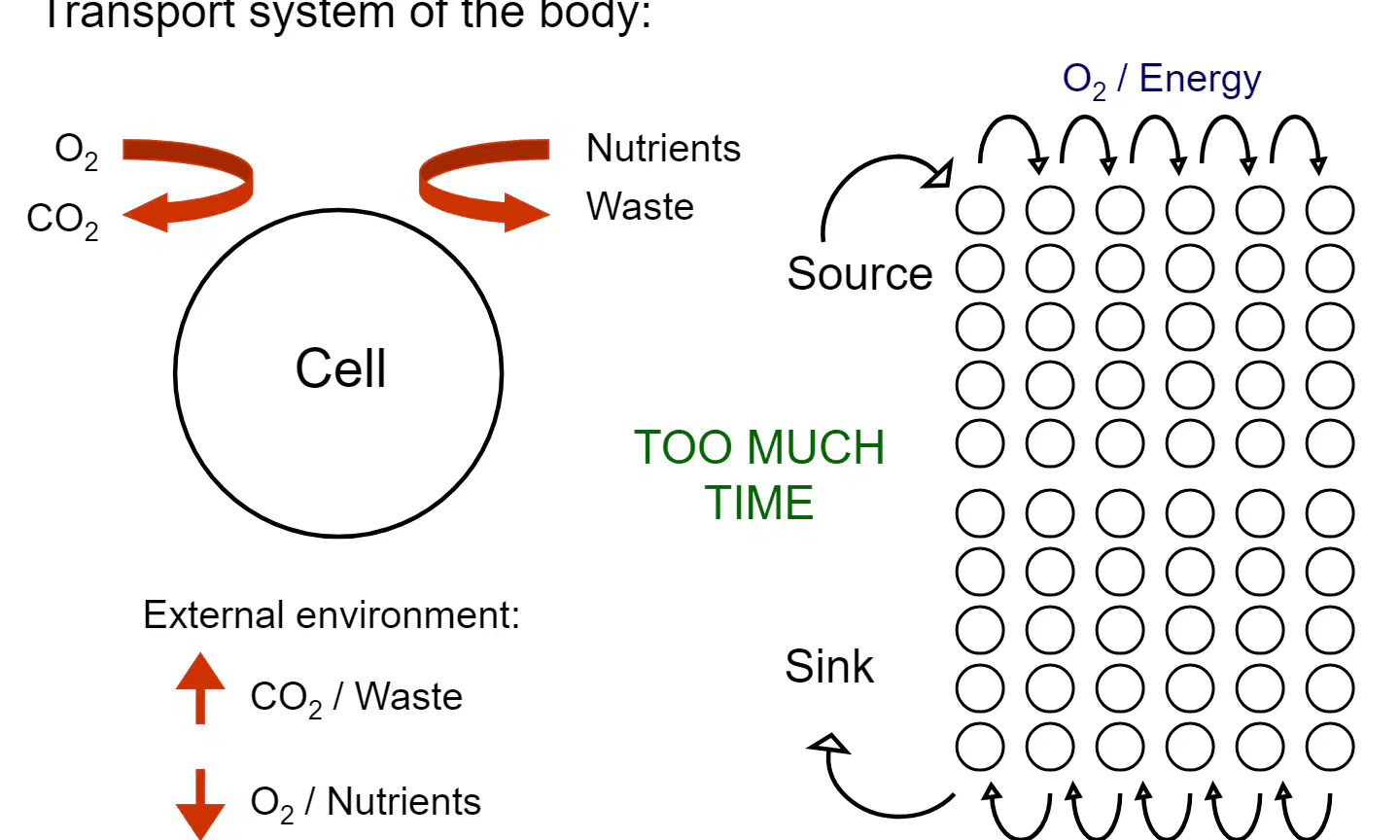
According to the diagram, what does the cell take in from the external environment?
CO2 / Waste
O2 / Nutrients
O2 / Energy
Nutrients / Waste

What does the cell release into the external environment as per the image?
O2 / Nutrients
CO2 / Waste
O2 / Energy
Nutrients / Waste
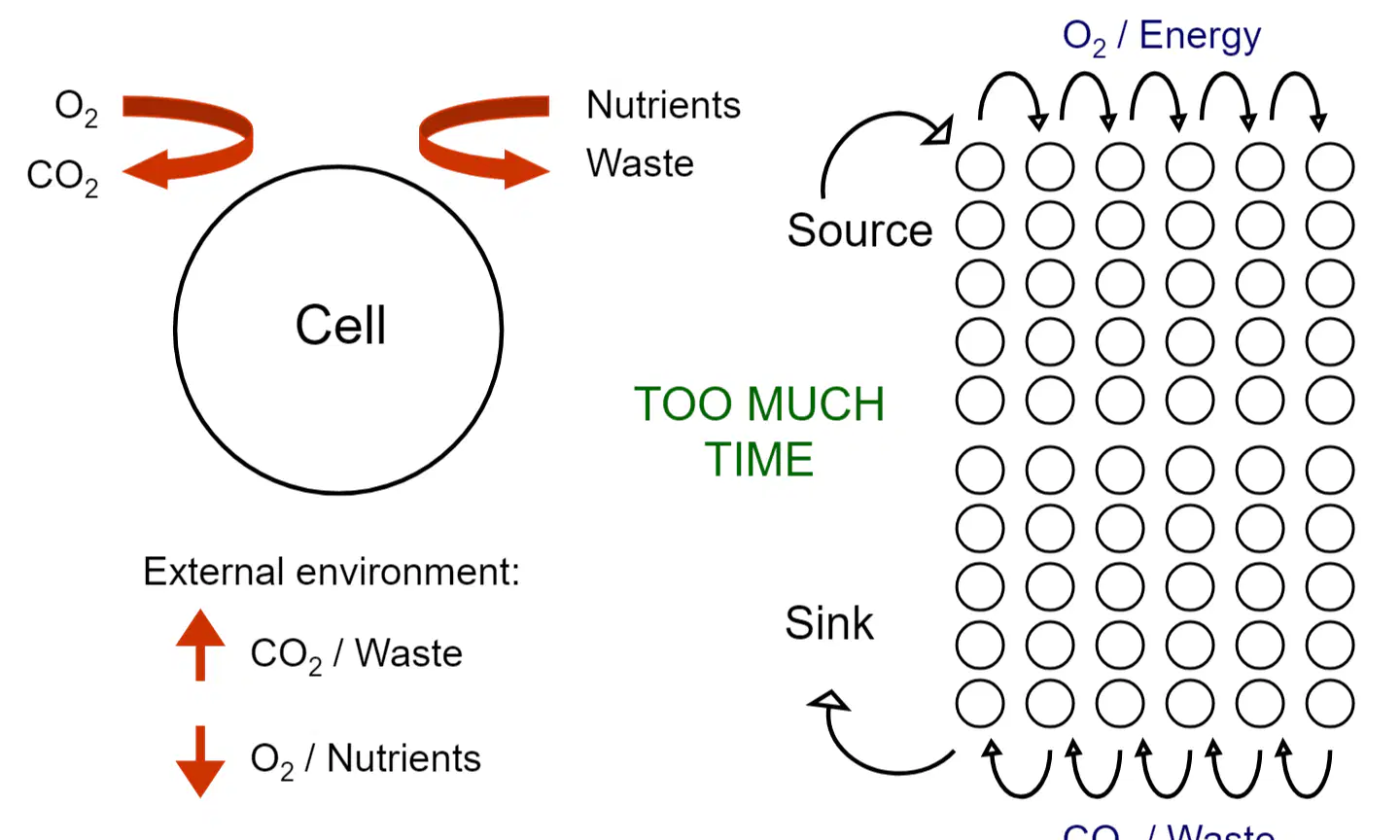
What does the term "TOO MUCH TIME" in the diagram likely refer to?
The time required for cell division
The time it takes for nutrients to reach the cell
The time it takes for waste products to accumulate in the cell
The efficiency of the transport system in the body

What is the primary function of the transport system in the body as depicted in the image?
To provide structural support to the body
To transport gases and nutrients to and from cells
To initiate chemical reactions within cells
To protect the body from external harm

According to the diagram, what role does the heart play in the body's transport system?
It acts as a filter for waste products
It serves as a storage for nutrients
It functions as the pump that drives the transport system
It is the primary source of CO2 in the body

What does the term 'Sink' refer to in the context of the body's transport system as shown in the diagram?
The destination for oxygen and nutrients
The source of energy for cells
The origin of blood circulation
The destination for CO2 and waste products

In the diagram, which direction does oxygen (O2) travel in relation to the cell?
Away from the cell
Into the cell
In a circular motion around the cell
It remains stationary around the cell

What is exchanged at the cellular level as illustrated in the diagram?
Oxygen is exchanged for carbon dioxide
Nutrients are exchanged for waste products
Energy is exchanged for oxygen
Both A and B are correct
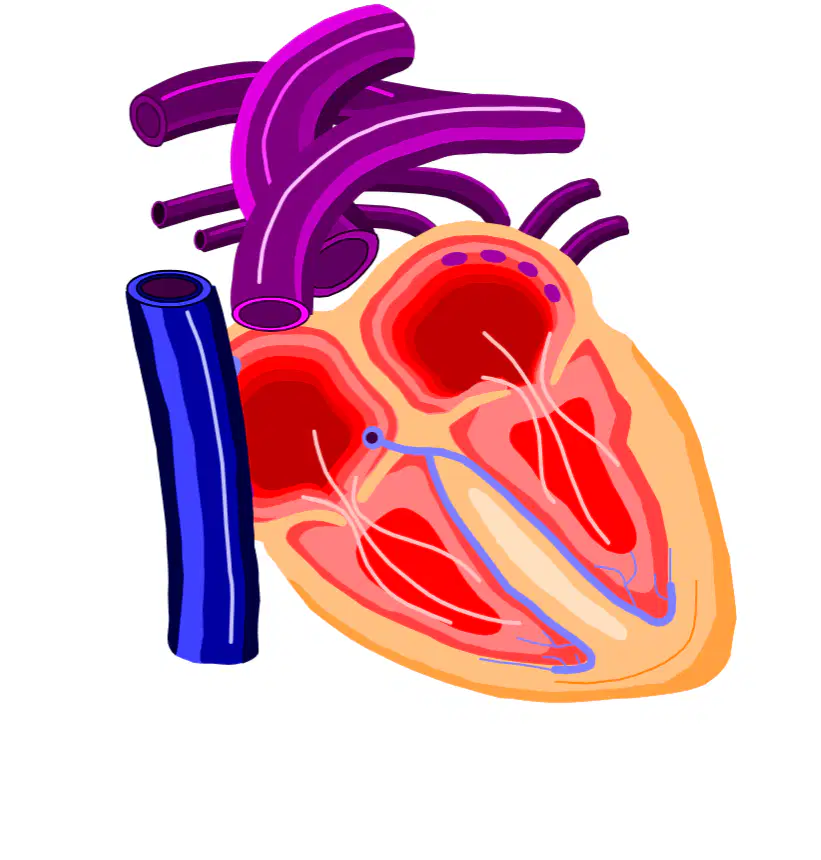
Which components are part of the cardiovascular system?
Blood
Heart
Blood Vessels
Lungs
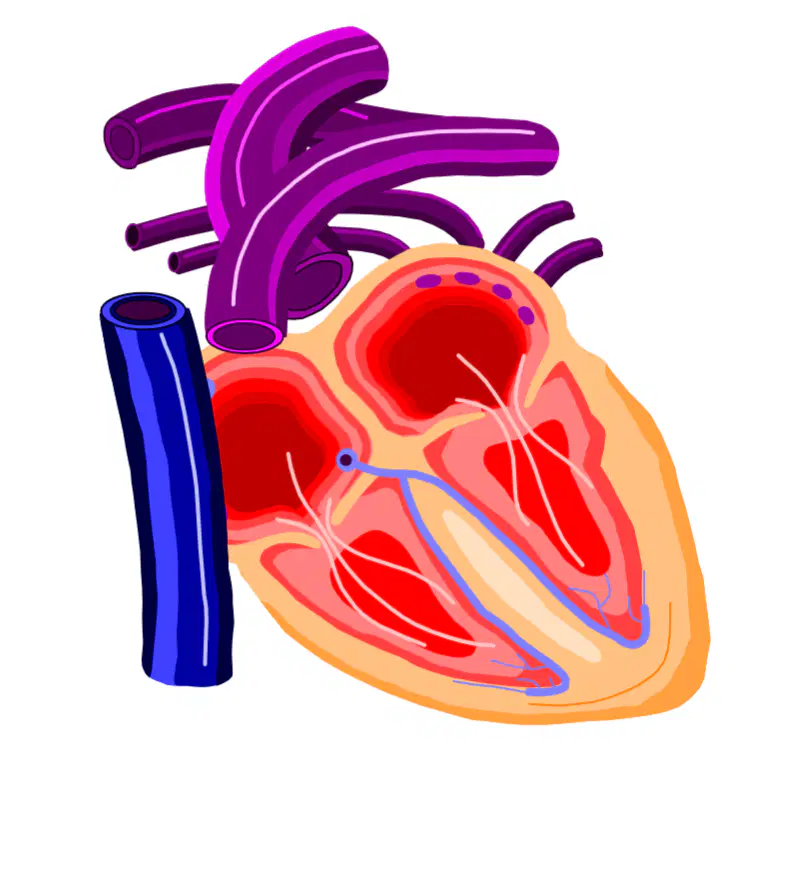
What is NOT a component of the cardiovascular system according to the image?
Blood
Heart
Blood Vessels
Lungs
What type of tissue is blood classified as?
Epithelial tissue
Connective tissue
Muscle tissue
Nervous tissue
What is the pH range of blood?
6.35-6.45
7.00-7.30
7.35-7.45
7.55-7.65
Approximately what percentage of body weight does blood constitute?
5%
8%
10%
12%
Which of the following is NOT a function of blood?
Distribution of oxygen/nutrients
Regulation of body temperature
Protection against blood loss
Synthesis of digestive enzymes
What is the approximate volume of blood in an average adult human body?
2-3 liters
4-6 liters
7-9 liters
10-12 liters
What is the temperature of blood compared to body temperature?
The same as body temperature
Slightly lower than body temperature
Slightly higher than body temperature
Much higher than body temperature
Which of the following is a regulatory function of blood?
Transporting metabolic wastes
Preventing infection
Maintaining fluid volumes
Delivering oxygen/nutrients
What is the nickname given to the function of blood as described in the document?
River of Dreams
River of Life
Stream of Consciousness
Ocean of Health
What are the formed elements of blood?
Plasma
Erythrocytes, Leukocytes, Platelets
Buffy coat
Hematocrit
What does the term 'hematocrit' refer to?
The percentage of plasma in the blood
The percentage of platelets in the blood
The percentage of whole blood containing RBC's
The percentage of leukocytes in the blood
What is the approximate percentage of plasma in the blood?
Less than 45%
About 55%
About 1%
More than 55%
What does the 'buffy coat' in a blood sample consist of?
Erythrocytes and plasma
Leukocytes and erythrocytes
Leukocytes and platelets
Platelets and plasma
What is the approximate percentage of erythrocytes in the blood?
Less than 45%
About 55%
About 1%
About 45%
What is plasma primarily composed of?
Living cells
Non-cellular fluid matrix with dissolved proteins
Leukocytes and platelets
Red blood cells
What is the primary function of albumin in the blood plasma?
Transport proteins and antibodies
Maintain osmotic pressure
Plasma minus clotting proteins
Distribute materials and heat
What percentage of blood plasma is water?
60%
35%
90%
8%
Which of the following is NOT a component of blood plasma?
Globulins
Clotting Proteins
Albumin
Hemoglobin
What is serum in the context of blood components?
Plasma minus electrolytes
Plasma plus clotting proteins
Plasma minus clotting proteins
Plasma plus nitrogenous solutes
Which of the following is a type of electrolyte found in blood plasma?
Glucose
Na+
Urea
O2
What is the approximate size of erythrocytes (Red Blood Cells - RBCs)?
1 µm
7 µm
12 µm
20 µm
What shape are erythrocytes (Red Blood Cells)?
Spherical
Rod-shaped
Biconcave
Irregular
Are erythrocytes nucleated or anucleate?
Nucleated
Anucleate
Multinucleated
Partially nucleated
What is the primary function of hemoglobin in erythrocytes?
Nutrient transport
Waste removal
Gas transport
Immune defense
How many molecules of oxygen can one hemoglobin molecule transport?
2 molecules O2
4 molecules O2
6 molecules O2
8 molecules O2
What components make up hemoglobin?
Heme + Globin
Heme + Plasma
Globin + Platelets
Heme + White blood cells
What is the main function of the iron-containing heme group in hemoglobin?
It provides structural support to the hemoglobin molecule.
It binds to oxygen and facilitates its transport in the blood.
It acts as an enzyme to speed up chemical reactions in the blood.
It serves as a storage for genetic information within red blood cells.
How many polypeptide chains are there in a hemoglobin molecule?
Two alpha and two beta chains
Four alpha chains
Four beta chains
One alpha and one beta chain
What element is at the center of the iron-containing heme group?
Carbon
Oxygen
Iron
Nitrogen
What is the primary component of erythrocytes (Red Blood Cells - RBCs)?
Water
Plasma
Hemoglobin
Platelets
Why do erythrocytes lack mitochondria?
To carry more oxygen
To increase their size
To decrease their lifespan
To increase efficiency by not burning oxygen
What is the advantage of the small size and shape of erythrocytes?
It decreases surface area to volume ratio
It allows for a larger surface area to volume ratio
It contains less hemoglobin
It increases the need for mitochondria
Approximately how many hemoglobin molecules are there in one red blood cell?
25 million hemoglobin molecules
250 thousand hemoglobin molecules
250 million hemoglobin molecules
2.5 billion hemoglobin molecules
What is the process of red blood cell formation called?
Hematopoiesis
Erythropoiesis
Leukopoiesis
Thrombopoiesis
Approximately how many red blood cells (RBCs) are produced per second in the human body?
200,000 RBCs
2 million RBCs
20 million RBCs
200 million RBCs
Where does erythropoiesis occur?
In the liver
In the spleen
In red bone marrow
In the lymph nodes
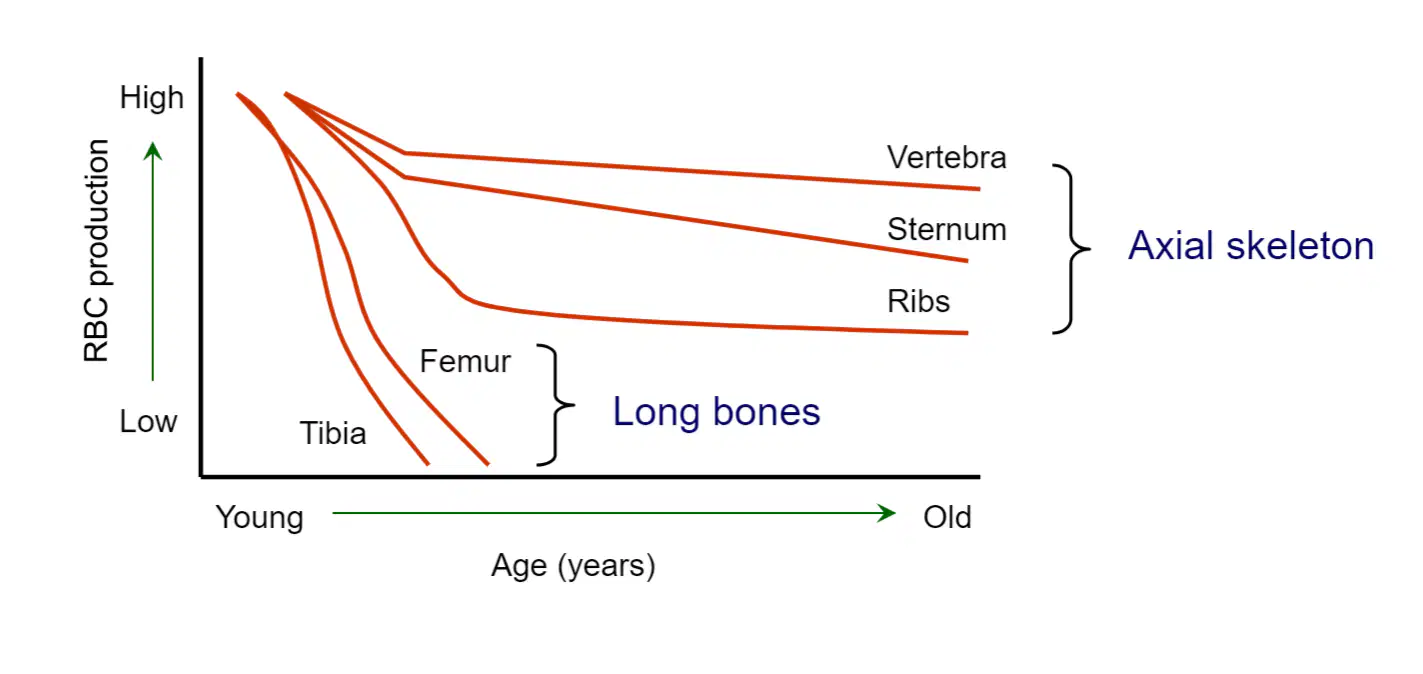
According to the diagram, which bones show a decrease in red blood cell production with age?
What is the lifespan of a red blood cell (RBC)?
50-70 days
100-120 days
150-180 days
200-220 days
What is the name of the immature red blood cells that synthesize hemoglobin?
Hemocytoblast
Myeloid Stem Cell
Erythroblast
Normoblast
Where are waste products from RBC breakdown disposed of?
In the urine (urea)
In the sweat (sodium chloride)
In the bile (bilirubin)
In the lungs (carbon dioxide)
What is the name of the cell that ejects its nucleus to become a reticulocyte?
Hemocytoblast
Myeloid Stem Cell
Erythroblast
Normoblast
What is the term for the process of red blood cell production?
Hemostasis
Erythropoiesis
Leukopoiesis
Thrombopoiesis
Which organ is primarily responsible for breaking down old or damaged red blood cells?
Heart
Spleen/Liver
Kidneys
Pancreas
What is the consequence of having a low balance of RBCs?
Increased energy levels
Tissue hypoxia
Improved DNA synthesis
Decreased blood viscosity
Which vitamins are crucial for RBC development?
Vitamin C and D
Vitamin A and E
Vitamin B12 and folic acid
Vitamin K and B6
What is the primary role of iron in erythrocytes?
Calcium regulation
Hemoglobin synthesis
Blood clotting
Immune function
Where is erythropoietin mainly produced?
Heart and spleen
Kidney and liver
Brain and pancreas
Lungs and stomach
What are the two major effects of EPO (erythropoietin)?
Decrease in mitotic divisions of stem cells and erythroblasts & decrease in hemoglobin synthesis rate
Increase in mitotic divisions of stem cells and erythroblasts & increase in hemoglobin synthesis rate
Increase in mitotic divisions of stem cells and erythroblasts & decrease in hemoglobin synthesis rate
Decrease in mitotic divisions of stem cells and erythroblasts & increase in hemoglobin synthesis rate

What condition stimulates the bone marrow to produce more erythrocytes according to the diagram?
Increased O2 level in blood
Reduced O2 level in blood
RBCs mature more rapidly
Kidney releases erythropoietin

What is the response of the kidneys when the oxygen level in the blood is reduced?
Kidneys release erythropoietin
Kidneys absorb more erythropoietin
Kidneys produce more RBCs directly
Kidneys stimulate the bone marrow to release erythropoietin

What happens to the rate of erythrocyte maturation when the oxygen level in the blood increases?
RBCs mature more slowly
RBCs mature more rapidly
No change in RBC maturation rate
RBC maturation stops

Which of the following is NOT a cause of hypoxia as indicated in the diagram?
RBC loss
Low O2
Exercise
High O2
What happens when the oxygen level in the blood increases?
Kidneys release erythropoietin
Erythropoietin stimulates bone marrow
Red blood cells mature more rapidly
Red blood cells mature more slowly
What is the response of the kidneys when the oxygen level in the blood is reduced?
Kidneys release erythropoietin
Erythropoietin stimulates bone marrow
Red blood cells mature more rapidly
Red blood cells mature more slowly
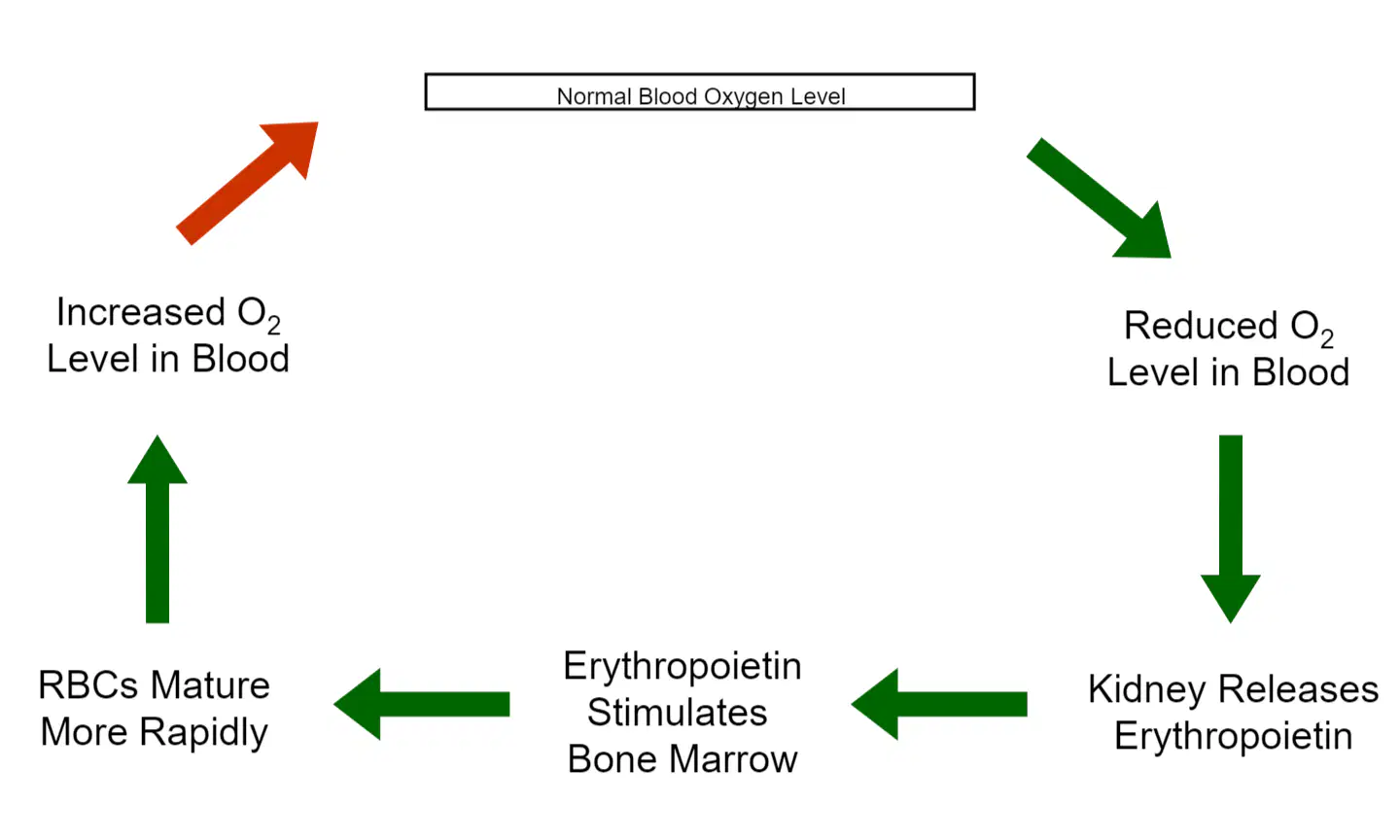
What is the role of erythropoietin in the body according to the diagram?
It reduces the oxygen level in the blood
It increases the oxygen level in the blood
It stimulates bone marrow
It matures red blood cells
What stimulates the kidneys to produce erythropoietin?
High oxygen levels in blood
Low oxygen levels in blood
High carbon dioxide levels in blood
Low carbon dioxide levels in blood
Where does erythropoiesis occur?
In the liver
In the spleen
In the red bone marrow
In the kidneys
What happens to aged and damaged red blood cells?
They are stored in the liver
They are excreted directly from the bloodstream
They are engulfed by macrophages in the liver, spleen, and bone marrow
They are recycled back into the bloodstream
What is the fate of iron after the breakdown of hemoglobin?
It is excreted in urine
It is stored as ferritin and hemosiderin
It is converted into bilirubin
It is used directly for new erythrocyte synthesis
How is bilirubin excreted from the body?
Through the skin
In the urine
In the feces
In the saliva
Which vitamin is necessary for erythrocyte synthesis?
Vitamin C
Vitamin D
Vitamin B12
Vitamin E
What stimulates the kidneys to produce erythropoietin in the lifecycle of RBCs?
High oxygen levels in blood
Erythropoietin and necessary raw materials in blood
Low oxygen levels in blood
The presence of new erythrocytes in the bloodstream
After erythropoietin levels rise in the blood, what is the next step in the lifecycle of RBCs?
New erythrocytes enter the bloodstream
Erythropoietin and necessary raw materials in blood promote erythropoiesis in red bone marrow
Aged and damaged RBCs are engulfed by macrophages
Raw materials are made available in blood for erythrocyte synthesis
How long do new erythrocytes function in the bloodstream before they are aged and damaged?
About 120 days
About 90 days
About 150 days
About 180 days
What happens to aged and damaged RBCs in the lifecycle of RBCs?
They are recycled back into the bloodstream
They are stored in the liver for future use
They are engulfed by macrophages of liver, spleen, and bone marrow; the hemoglobin is broken down
They are converted into white blood cells
What is a common cause of anemia related to nutrient deficiency?
High altitude living
Bone marrow cancer
Iron / B12 deficiency
Blood doping
Which disorder is characterized by an increased number of red blood cells (RBCs)?
Anemia
Polycythemia
Hemoglobinopathy
Thalassemia
What is a consequence of polycythemia?
Decreased oxygen carrying capacity
Decreased hemoglobin
Increased risk of bone marrow cancer
Abnormal hemoglobin
Which of the following is an example of an abnormal hemoglobin disorder?
Iron deficiency
Sickle-cell anemia
High altitude living
Blood loss
What is a non-natural cause of polycythemia?
Marrow destruction
Blood doping (artificial)
Iron deficiency
B12 deficiency
What antigens are present on the surface of Type A blood cells?
Surface antigen B
Surface antigen A
Neither A nor B surface antigens
Both A and B surface antigens
Which blood type is known as the Universal Recipient?
Type A
Type B
Type AB
Type O
What antibodies are present in the plasma of Type O blood?
Neither anti-A nor B antibodies
Anti-A antibody
Anti-B antibody
Both anti-A and anti-B antibodies
Which blood type is considered the Universal Donor?
Type A
Type B
Type AB
Type O
What antibodies are found in the plasma of Type B blood?
Anti-A antibody
Anti-B antibody
Neither anti-A nor B antibodies
Both anti-A and anti-B antibodies
What determines the Rh blood group?
Presence of multiple glycoproteins
Presence / absence of 1 glycoprotein
Presence of anti-Rh antibodies
The number of red blood cells
What can be a consequence of the fetus being Rh+ and the mother being Rh-?
No potential health issues
Improved immunity in the newborn
Hemolytic disease of the newborn
Enhanced blood oxygenation in the fetus
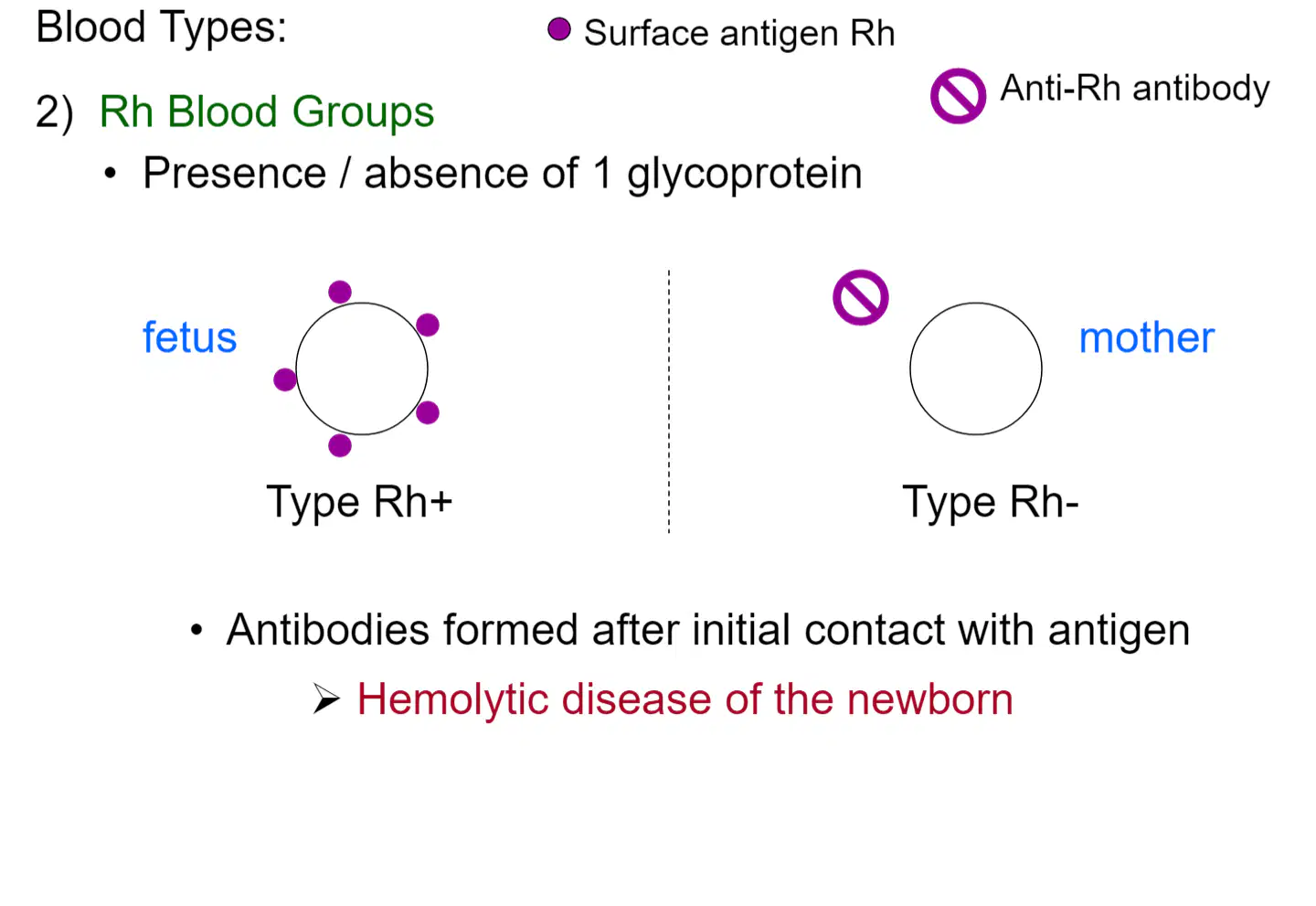
What is indicated by the presence of surface antigen Rh on red blood cells?

What does the absence of surface antigen Rh on red blood cells signify?

