wayground logo

Free Printable Worksheets

Font size

S
M
L
XL
Worksheets

Biology Final 2024

Total questions: 86

Worksheet time: 1hrs 9mins

Name
Class
Date
1.

What step does every scientific experiment begin with?

a)

hypothesis

b)

question/problem

c)

procedures

d)

conclusion

2.

What is the purpose of the analysis step in the scientific method?

a)

To make an observation

b)

To formulate a hypothesis

c)

To interpret the data and determine if the hypothesis is supported

d)

To conduct an experiment

3.

The steps in the Scientific Method in order are:

a)

research, experiment, hypothesis, question, analysis, conclusion

b)

hypothesis, experiment, question, analysis, research, conclusion

c)

question, research, hypothesis, experiment, analysis, conclusion

d)

analysis, question, research, experiment, hypothesis, conclusion

4.

Mitosis is the stage of the cell cycle during which ____.

a)

the cell's nucleus divides into two new nuclei.

b)

the cell divides into two new cells.

c)

the cell's DNA is replicated.

d)

the cell's cytoplasm divides.

5.

During what stage of the cell cycle does replication occur?

a)

interphase

b)

cytokinesis

c)

prophase

d)

mitosis

6.

What happens during cytokinesis of an animal cell?

a)

Each organelle divides into two parts.

b)

A new round of mitosis begins.

c)

Two new daughter cells are formed.

d)

A cell plate forms.

7.

Chromatids are...

a)

identical daughter cells.

b)

doubled rods of condensed chromatin.

c)

pigments that absorb the energy in sunlight.

d)

identical strands of chromosomes.

8.

The longest phase of the cell cycle is...

a)

prophase

b)

interphase

c)

metaphase

d)

mitosis

9.

The structures that become tightly packed during cell division and contain DNA are

a)

centromeres

b)

centrioles

c)

chromosomes

d)

spindle fibers

10.

Which stage of mitosis do the chromosomes line up the middle?

a)

anaphase

b)

metaphase

c)

prophase

d)

telophase

11.

Which stage of mitosis is visible here?

a)

anaphase

b)

prophase

c)

telophase

d)

metaphase

12.

Which stage is visible?

a)

anaphase

b)

prophase

c)

telophase

d)

metaphase

13.

Identify the stage.

a)

prophase

b)

anaphase

c)

metaphase

d)

telophase

14.
Which of the following shows the correct order for mitosis
a)
Prophase, telophase, anaphase, metaphase
b)
telophase, metaphase, anaphase, prophase
c)
prophase, metaphase, anaphase, telophase
d)
prophase, metaphase, telophase, anaphase
15.
What stage is this?
a)
Prophase
b)
Metaphase
c)
Anaphase
d)
Telophase
16.
What is the role of the spindle during mitosis?
a)
it changes the chromatin to chromosome
b)
duplicate the DNA
c)
breaks down the membrane
d)
separates the chromatids.
17.
What is the purpose of mitosis?
a)
To increase the surface area of a cell
b)
To allow cells to divide for growth, repair, and renewal
c)
For increasing genetic variation within a species
d)
To allow for DNA replication and protein synthesis
18.

Cells spend most of their lives in which phase?

a)

Interphase

b)

Prophase

c)

Telophase

d)

Metaphase

19.

What are chromosomes?

a)

They attach to the DNA and pull it to the sides

b)

They contain mitochondria

c)

They contain ribosomes

d)

DNA packaged into threadlike structures

20.

How many chromosomes to do most human cells have?

a)

2

b)

46

c)

92

d)

Identical to your age

21.
Fruit fly body cells have 8 chromosomes. After mitosis, you would expect a resulting fruit fly daughter cell to have ...
a)
16 chromosomes.
b)
46 chromosomes.
c)
8 chromosomes.
d)
4 chromosomes.
22.
Structure B is pointing to the _____. 
a)
chromosome
b)
centromere
c)
DNA
d)
chromatid
23.
Structure C is pointing to one ____. 
a)
sister chromatid
b)
chromosome
c)
centromere
d)
gene
24.
What is the name of the structure labeled X?
a)
Centriole
b)
Centrosome
c)
Chromatid
d)
Chromosome 
25.
Where does a cell contain its genetic material?
a)
nucleus
b)
nucleolus
c)
cytoskeleton
d)
chloroplasts
26.

What is the gender of this person?

a)

Male

b)

Female

27.

What is a karyotype?

a)

An image that shows all of the DNA within an organism

b)

An image that shows the chromosomes from a single cell within a single organism

c)

The entire genetic sequence of humans

28.

How many CHROMOSOME PAIRS does this dog have?

a)

29

b)

39

c)

49

29.
The brain or "control center" of the cell. 
a)
Mitochondria
b)
Cell Membrane
c)
Cytoplasm
d)
Nucleus
30.
The watery liquid that fills the cell: 
a)
Chromatin
b)
Nucleolus
c)
Cytoplasm
d)
Cell Membrane
31.
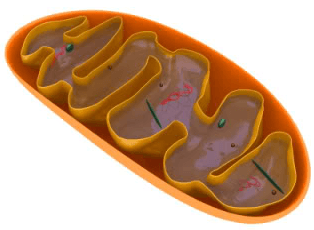
The "power plant" of the cell that produces energy. 
a)
Mitochondria
b)
Cytoplasm
c)
Centrioles
d)
Lysosomes
32.
Tiny holes that allow nutrients to enter the nucleus:
a)
Cytoplasm
b)
Mitochondria
c)
Flagellum
d)
Nuclear Pores
33.
"Garbage collectors" of the cell that remove waste: 
a)
Cell Membrane
b)
Centrioles
c)
Lysosomes
d)
Nucleus
34.
Protective outermost layer of the cell: 
a)
Cell Membrane
b)
Nucleus
c)
Chromatin
d)
Microtubules 
35.
Makes protein for the cell: 
a)
Nucleus
b)
Ribosomes
c)
Cytoplasm
d)
Cell Membrane
36.
Creates fat for storing energy: 
a)
DNA
b)
Centrioles
c)
Lysosomes
d)
Smooth Endoplasmic Reticulum
37.
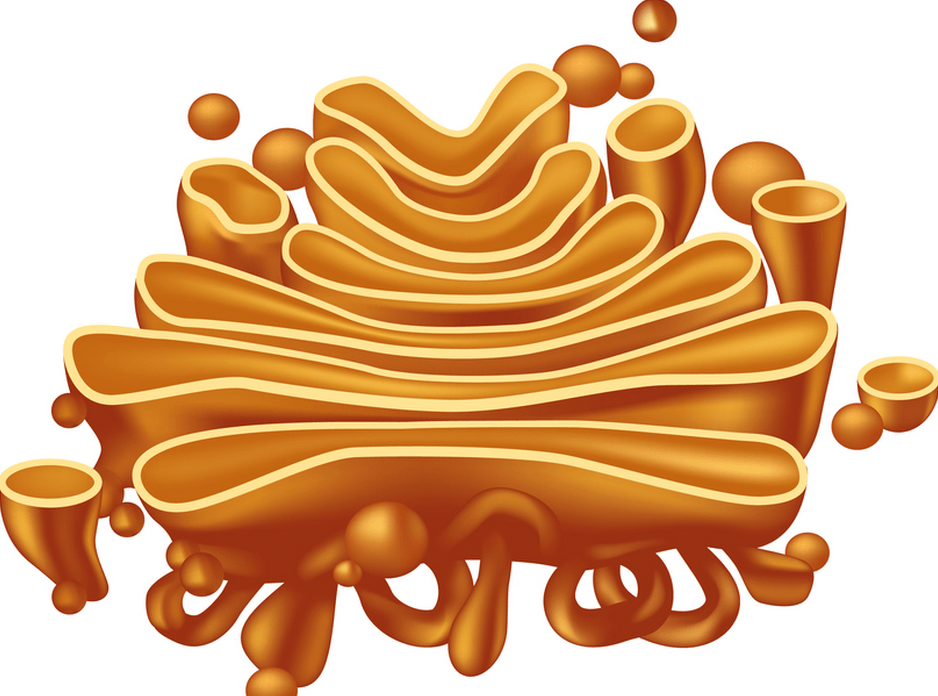
"Post office" of the cell that packages proteins and fats: 
a)
Rough ER
b)
Smooth ER
c)
Golgi Apparatus
d)
Lysosome
38.
Rigid, outermost layer of the plant cell
a)
nucleus
b)
cell membrane
c)
cell wall
d)
cytoplasm
39.
Functions in energy production, known as the energy factory of the cell
a)
mitochondria
b)
chloroplast
c)
vacuole
d)
cytoplasm
40.
Contains chlorophyll and is where photosynthesis takes place. Found in plant cells only.
a)
mitochondria
b)
chloroplast
c)
vacuole
d)
cytoplasm
41.
Semi-permeable layer around the cell that encloses the contents of the cell
a)
nucleus
b)
cell membrane
c)
cell wall
d)
chloroplast
42.
I am found in plant cells. I am rigid, strong & stiff. I give support to the plant cell.  I give the cell it's box shape
a)
cell membrane
b)
cell wall
c)
chlorophyll
d)
mitochondria
43.
I am the "power house" of the cell. I make most of the energy!
a)
mitochondria
b)
vacuole
c)
lysosome
d)
nuceus
44.
Which organelle is only found in a plant cell? 
a)
nucleus
b)
chloroplast
c)
mitochondria
d)
cell membrane
45.
Which of the following is directly involved in the transportation of materials inside/within the cell?
a)
Endoplasmic Reticulum
b)
Vacuole
c)
Lysosome
d)
Mitochondria
46.
I am a protein packaging and shipping machine! Who am I?
a)
vacuole
b)
ribosome
c)
mitochondrion
d)
golgi apparatus
47.
You might think of me as the trash collector, but recycler is maybe more accurate. What am I?
a)
mitochondria
b)
lysosome
c)
vacuole
d)
ribosome
48.
What is found in both plant and animal cells but is much larger in plant cells?
a)
Nucleus
b)
Mitochondria
c)
Chloroplast
d)
Vacuole
49.
Where are proteins made?
a)
Golgi body
b)
Mitoichondria
c)
Chromosomes
d)
Ribosomes
50.
This organelle takes food and turns it into ENERGY for plant and animal cells.
a)
Chloroplast
b)
Mitochondria
c)
Lysosome
d)
Ribosome
51.
What are tiny organelles that convert glucose into ATP?
a)
Ribosomes
b)
Vesicles
c)
Cytoskeleton
d)
Mitochondria
52.

Identify the structure that is indicated by the arrow in the image.

a)

cell wall

b)

central vacuole

c)

chloroplast

d)

nucleus

53.

Identify the structure that is labeled "C" in the image.

a)

central vacuole

b)

nucleus

c)

chloroplast

d)

mitochondria

e)

cell membrane

54.

What is the difference between mitochondria and chloroplast?

a)

Mitochondria produces energy and chloroplasts breaks down energy

b)

There is no difference. They are the same.

c)

Mitochondria breaks down energy from food and chloroplasts produce energy from sunlight.

d)

Mitochondria contains DNA and chloroplasts are green

55.

Cell organelles work together to maintain

a)

homeostasis

b)

eukarya

c)

prokarya

d)

organisms

56.
What type of cell has a nucleus? 
a)
eukaryotic
b)
prokaryotic 
57.
The picture illustrates a
a)
Prokaryotic Plant Cell
b)
Prokaryotic Animal Cell
c)
Eukaryotic Plant Cell
d)
Eukaryotic Animal Cell
58.
Controls what enters/leaves a cell
a)
cell membrane
b)
Nuclear membrane
c)
cell wall
d)
cytoplasm
59.
What am I?
a)
cell wall
b)
mitochondria
c)
cytoplasm
d)
chloroplast
60.
What am I?
a)
Nucleus
b)
Golgi Body
c)
Mitochondrion
d)
Plasma Membrane
61.

Holly has an unknown substance in a beaker. She wants to determine the relative pH of the unknown substance. She places a piece of blue litmus paper into the substance, and the litmus paper stays blue.

The substance in the beaker

a)

is a base

b)

is an acid

c)

have neutral pH

d)

doesn't have pH

62.

Human blood has a pH between 7.35 and 7.45. Which of the following best describes human blood?

a)

strongly acidic

b)

slightly acidic

c)

strongly basic

d)

slightly basic

63.

What would be considered the weakest base?

a)

8

b)

7.8

c)

11.6

d)

14

64.

Pure water has a pH of 7. Pure water _______.

a)

is a base

b)

is a neutral substance

c)

could be either an acid or a base

d)

is an acid

65.

pH is the measure of the concentration of ______.

a)

Acids

b)

H+ ion

c)

OH- ion

d)

Base

66.

If a solution is basic which ion will be more present?

a)

H+

b)

K+

c)

OH-

d)

H-

67.

Stronger acids have a pH closer to...

a)

7

b)

14

c)

0

d)

9

68.

Which of the following word pairs correctly completes the sentence below?

_______ are corrosive substances characterized as having a strong smell, a sour taste, and a _______.

a)

acid pH less than 7

b)

acid pH greater than 7

c)

base pH less than 7

d)

base pH greater than 7

69.

A sour taste is a characteristic of:

a)

acid

b)

base

c)

neutral

d)

pH scale

70.

The pH scale is a range from:

a)

1-7

b)

1-5

c)

0-14

d)

1-14

71.

Which of the following is true about acids and bases?

a)

The lower the pH #, the stronger the acid

b)

the higher the pH #, the stronger the acid

c)

The lower the pH #, the more neutral the acid

d)

The higher the pH #, the weaker the base

72.

Is the following compound an acid or a base?


HCl

a)

Acid

b)

Base

73.

The building up or breaking down of materials is called ____.

a)

homeostasis

b)

metabolism

c)

multicellular

d)

stimulus

74.

It is hot outside. You start sweating. In this case, the hot weather is the...

a)

stimulus

b)

metabolism

c)

homeostasis

75.

Which of these is not true about all organisms?

a)

all living things have many cells

b)

all living things obtain and use energy

c)

all living things reproduce

76.

Which statement was NOT included in cell theory?

a)

All living things are composed of cells.

b)

Living cells come only from other living cells.

c)

Each cell contains a cell membrane, cytoplasm, nucleus, mitochondria, and endoplasmic reticulum.

d)

Cells are the smallest structure of living things that can perform the functions necessary for life.

77.

Who discovered and named cells while looking at cork?

a)

Captain Hook

b)

Robert Hooke

c)

Matthais Schleiden

d)

Rudolf Virchow

78.
A cell is...
a)
the basic unit of structure and function in living organism
b)
an organism
c)
a basic part of everything that we see
d)
found only in animals, not plants
79.
Which of the following are NOT found in animal cells
a)
chloroplasts and cytoplasm
b)
chloroplasts and cell wall
c)
cell wall and cell membrane
d)
mitochondria and nucleus
80.

Which of the following converts food into energy for the cell?

a)

vacuole

b)

mitochondria

c)

cytoplasm

d)

cell membrane

81.

What is something that Prokaryotes and Eukaryote both have in common?

a)

small in size

b)

bacteria

c)

have DNA

d)

complex cells

82.

Nucleolus is found inside the nucleus, of Eukaryotes only, and makes _____.

a)

ribosomes

b)

cilia

c)

flagella

d)

prokaryotes

83.

Centrioles are found only in animal cells. They ____.

a)

Help with cell division

b)

make the ribosomes

c)

carry out chemical reactions and transports materials

d)

are used for locamotion

84.

Which type of cell?

a)

Prokaryote

b)

Eukaryote

85.

Where is the DNA found in a prokaryotic cell?

a)

In the nucleus

b)

In the mitochondria

c)

Floating around in the cytoplasm

d)

In the ribosome

86.
Unicellular means
a)
single-celled
b)
unicycle
c)
multi-celled
d)
united cells