
 Worksheets
Revision Edexcel
Total questions: 125
Worksheet time: 2hrs 47mins
A train begins a journey from a station and travels 60 km in a time of 20 minutes.
What is the average speed of the train?
A. 3.0 m/s
B. 5.0 m/s
C. 50 m/s
D. 60 m/s
A
B
C
D
What is the potential energy of a 3kg ball that is on the ground?
0 J
3 J
9.8 J
29.4 J
Which statement illustrates work done?
A weightlifter holds a barbell above her head.
A teacher applies a force to a wall and becomes exhausted.
A rolling marble hits a note card and moves it across a table.
A waiter carries a tray full of meals across a dining room at a constant speed.

What is the energy possessed by the cart?
potential energy
kinetic energy
mostly potential
mostly kinetic
Which of the following is defined as an energy transfer?
kinetic energy
work
potential energy
chemical energy

A ball is dropped from a table-top. Air resistance may be ignored
A
B
C
D

A
B
C
D

A
B
C
D

A
B
C
D

A
B
C
D
The force of gravity is dependent on an object's ________.
mass
volume
temperature
speed
Newton's second law states that greater the mass the more _________ will be needed to move the object.
power
force
distance
speed
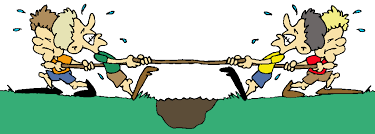

James weighs 200 N and sits 1 m from the pivot. Jane weighs 100 N. How far from the pivot must Jane be to balance the beam?
0.5 m
1 m
2 m
4 m

What is the amplitude of the wave?
(a)

What is the wavelength of the wave?
(a)
A water wave has a wavelength of 20cm and a speed of 100cm/s.
What is the frequency of the wave?
(a)
Ripples on the surface of a pond have a frequency of 10Hz. One ripple travels 80cm in a time of 5.0s.
Calculate the wavelength of the ripples.
(a)
Which of the following describe the law of conservation of energy? (Multiple answers)
Energy can be created but cannot be destroyed.
Energy cannot be created or destroyed.
Energy can only be transferred from one store to another.
Energy cannot be transferred.
What is the energy of a moving object called?
Kinetic energy
Elastic potential energy
Gravitational potential energy
Electrostatic energy
Thermal energy
What is the energy stored in objects in high positions?
Chemical energy
Nuclear energy
Gravitational potential energy
Magnetic energy
Thermal energy
What is the energy stored in the nucleus of an atom called?
Chemical energy
Nuclear energy
Gravitational potential energy
Magnetic energy
Thermal energy
What is the energy stored in hot objects?
Chemical energy
Nuclear energy
Gravitational potential energy
Magnetic energy
Thermal energy
What is the energy stored in electrical forces between charges?
Kinetic energy
Elastic potential energy
Gravitational potential energy
Electrostatic energy
Thermal energy
What is the energy stored in magnetic forces between magnetic poles?
Chemical energy
Nuclear energy
Gravitational potential energy
Magnetic energy
Thermal energy
What is the energy stored in stretched, squashed, twisted objects?
Kinetic energy
Elastic potential energy
Gravitational potential energy
Electrostatic energy
Thermal energy
What is the energy stored in food, fuel, muscles, batteries?
Chemical energy
Nuclear energy
Gravitational potential energy
Magnetic energy
Thermal energy
Energy can be transferred by which of the following:
(Multiple answers)
Mechanically - by a force
Electrically
Chemically
Kinetically
By heating
Energy can be transferred by which of the following:
(Multiple answers)
By light
Elastically
Magnetically
By sound
Potentially

State the type of energy which the egg gains as it falls.
(a)
State the type of energy stored in the egg before it is released.
(a)
A student stands on the ground with an egg in his hand. He throws the egg vertically upwards. Describe the energy changes of the egg during this. (Ignore air resistance)
Kinetic to potential
Chemical to kinetic to potential
Kinetic to mechanical to potential
Potential to kinetic
A student throws an egg vertically upwards. Describe the energy stored in the egg when the egg rises to a height of 10 m.
Kinetic energy
Chemical energy
Gravitational potential energy
Elastic potential energy
In an electric motor only some of the electrical energy is transferred into kinetic energy. State how the remaining electrical energy could be transferred.
(Multiple answers)
Transferred to chemical energy
Transferred by sound
Transferred by heating to thermal energy of the surroundings
Transferred to potential energy
What are the units for measuring energy?
(a)
What does speed x time equal?
velocity
Distance travelled
acceleration
stopping distance
Choose the correct equation for acceleration (2 apply)
acceleration = change in velocity / time
acceleration = change in velocity x time
acceleration = force / mass
acceleration = force x mass
Choose the correct equation for weight
weight = gravity/ mass
weight = mass × gravitational field strength
weight = mass + gravity
Choose the correct equation for efficiency
efficiency = total power input x useful power output
efficiency = useful power output x total power input
efficiency = useful power output / total power input
efficiency = total power input / useful power output
What is the equation to calculate work done?
work done = force x power
work done = force x energy
work done = force x time
work done = force x distance
What is the equation to calculate wave speed?
wave speed = frequency x wavelength
wave speed = frequency x amplitude
wave speed = frequency x time
wave speed = time x wavelength
What is the equation to calculate speed?
speed = acceleration
time
speed = distance
time
speed = acceleration
distance
speed = distance
acceleration
What is the equation to calculate density?
density = mass
time
density = time
volume
density = mass
volume
density = force
volume
What is the equation to calculate kinetic energy?
kinetic energy = 0.5 x mass x (velocity)2
kinetic energy = height x mass
kinetic energy = force x mass
kinetic energy = velocity x mass
State and equation that links gravitational potential energy, mass and gravitational field strength and height.
mass = gravitational potential energy x gravitational field strength/height
gravitational field strength= height / mass x gravitational potential energy
gravitational potential energy = mass x gravitational field strength x height
height = gravitational field strength / mass / gravitational potential energy
State and equation that links power, work done and time.
time = power x workdone
power = work done / time
work done = power / time
power = work done x time
state and equation that links power, potential difference and current
power = potential difference/ current
power = current / potential difference
power = current x potential difference
current = potential difference x power
State the equation that links charge flow, current and time
current = time x charge flow
time = current x charge flow
charge flow = current x time
charge flow = current / time
State the equation that links current, resistance, potential difference
current = resistance x potential difference
potential difference = current x resistance
resistance = current x potential difference
potential difference = current / resistance
State the equation that links power, current and resistance
resistance = current x power
power = current2 x resistance
power2 = current x resistance
power = current x resistance2
State the equation that links energy, charge and potential difference
energy = charge x potential difference
energy = charge / potential difference
energy = potential difference / charge
charge = energy x potential difference
Which equation links mass, acceleration and Force?
force = mass x acceleration
force = work done / distance travelled
force = moment / distance
force = magnetic flux density x current x length
the equation for elastic potential is:
elastic potential energy = 0.5 × spring constant × extension2
true or false
true
false
Which solution is more concentrated?
Solution 1:
500 mL of water
100 g of salt
Solution 2:
500 mL of water
90 g of salt
Solution 1
Solution 2
They have the same concentration
I have no idea
Concentration is
the amount of solute in the solvent
the amount of solvent in the solute
density
particle size
What is the formula for kinetic energy?
KE=21mv2
KE=2mv2
KE=mv2
v=m2KE
What is the formula for gravitational potential energy?
mGPE=hg
mgGPE=h
hGPE=gm
gGPE=mgh
Which of these is not a formula for power?
work done = power × time
power=timework done
time=powerenergy
power × energy = time
What is the efficiency of a kettle if it converts 2000 W of power into 400 W of useful thermal energy?
(a)
What is the current if 5400 C of charge pass through per hour?
(a)
What is the resistance of a resistor if it has a potential difference of 12 V across it when a current of 2 A flows?
(a)
Which of these is not a formula for power?
P=IV
P=I2R
P=tE
P=V2R
How much current needs to flow through a 5 ohm resistor to deliver 20 W of power?
(a)
What is the potential difference of a battery if it delivers 20 W of power with a current of 1.2 A?
(a)
A charge of 5 C passes through a potential difference of 5 V. How much energy was delivered?
(a)
How much energy in MJ is delivered by a 10 kW electric shower in 15 minutes?
(a)

0.5 cm3g
2.0 cm3g
8.0 cm3g
10 cm3g
Which formula is not on the data sheet?
pV=constant
ΔE=mcΔθ
Ee=21ke2
Q=It
How much energy is needed to melt 1 kg of ice? (latent heat of ice = 334 kJ/kg, specific heat capacity of ice=2 kJ/kg)
2 kJ
668 kJ
0.5 kJ
334 kJ
How much energy is needed to heat 1 kg of ice from -10oC to become 1kg of water at 0oC
(latent heat of ice = 334 kJ/kg,
specific heat capacity of ice=2 kJ/kg)
354 kJ
314 kJ
20 kJ
334 kJ

Why is a pointer attached to the spring?
To make it look more professional
To make it a fair test
To ensure the total length of the spring can be measured accurately
To keep the ruler level

How can you tell the relationship between weight is directly proportional to the extension between 0N and 1N
The graph is straight in this range of readings
The graph goes through the origin
The graph curves after this point
The graph is straight and goes through the origin.
When investigating insulation properties of different materials the dependent variable is:
Type of material
Temperature of water
Volume of water
Number of layers of material
When investigating insulation properties of number of layers of a material the independent variable is:
Type of material
Temperature of water
Volume of water
Number of layers of material
Not having the thermometer fully in the water increases which type of error?
Human error
Random error
Systematic error
What is the correct definition of denstiy?
The amount of mass per area
The weight per unit volume
The amount of matter in an object
The mass per unit volume
Which of the following is the least dense?
Air
Liquid
Aluminium
Copper
In order to find the density of a regular object you must (check all that apply)
Find the volume
Calculate the weight
Measure the mass
Place it in a measuring cylinder
Divide the mass by volume
Which of the given statements is true regarding ammeter and voltmeter?
A. Ammeter is connected in series with the required device, Voltmeter in parallel
B. Both ammeter and voltmeter are connected in series with required device
C. The voltmeter is connected in series with the device, Ammeter in parallel
D. They can be connected in any way
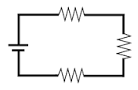
is the opposition to the flow of charges in a material.
Resistance
Voltage
Time
Current
What would happen if in a circuit the voltage is increase?
The time would increase
The current would increase
The current would decrease
The current would stay the same
Voltage divided by Resistance
(V / R)
Current
Power
Ohms
Watts
Question 1: Scatter Graphs
Full Marks
3/4 marks
1/2 marks
O marks
Question 2: Prime Factors
Full marks
1 Mark
0 Marks
Question 3: Multiplying Decimals
Full Marks
2 Marks
1 Mark
0 Marks
Question 4: Simplifying Algebra, Forming Equations
Full Marks
2 Marks
1 Mark
0 Marks
Question 5: Pythagoras' Theorem
Full Marks
3/4 Marks
1/2 Marks
0 Marks
Question 6: Equation of a line, parallel lines
Full Marks
1 mark
0 marks
Question 7: Reverse Mean
Full Marks
2 Marks
1 Mark
0 Marks
Question 8: Standard Form
Full marks
2 marks
1 mark
0 marks
Question 9: Reverse percentages
Full marks
1 mark
0 marks
Question 10: Expanding Triple Brackets
Full marks
2 marks
1 mark
0 marks
Question 11: Quadratic Graphs
Full marks
2 marks
1 marks
0 marks
Question 12: negative and fractional indices
Full marks
2/3 marks
1 mark
0 marks
Question 13: Direct and inverse proportion
Full marks
2/3 marks
1 mark
0 marks

A ball falls from rest through the air towards the ground.
The diagram shows two forces acting on the ball.
As the ball falls, the air resistance increases.
Which statement is correct?
The acceleration of the ball decreases
The acceleration of the ball increases
The speed of the ball decreases
The gravitational acceleration of the ball decreases
A compressed spring projects a ball horizontally in a vacuum chamber.
On the Earth, the ball reaches the chamber floor 4.0 m in front of the spring.
An identical experiment is done on the Moon. The gravitational field strength is lower on the Moon than on the Earth. The experimental results on the Moon are compared with those on the Earth.
Which statement is correct?
The horizontal speed is greater on the Moon and the ball hits the floor 4.0 m in front of the spring.
The horizontal speed is greater on the Moon and the ball hits the floor more than 4.0 m in front of the spring.
The horizontal speed is the same on the Moon and the ball hits the floor 4.0 m in front of the spring.
The horizontal speed is the same on the Moon and the ball hits the floor more than 4.0 m in front of the spring.

Diagram 1 shows a piece of flexible material that contains many pockets of air. Diagram 2 shows the same piece of flexible material after it has been compressed so that its volume decreases.
What happens to the mass and to the weight of the flexible material when it is compressed?
mass increases, weight no change
mass increases, weight increases
mass no change, weight increases
mass no change, weight no change

A car travels along a horizontal road at constant speed. Three horizontal forces act on the car. The diagram shows two of these forces.
What is the size and the direction of the third horizontal force acting on the car?
1200 N backwards
1200 N forwards
1800 N backwards
1800 N forwards

A car is driven round a bend in the road at a constant speed.
What is the direction of the resultant force on the car when it is going round the bend?
parallel to the motion and in the same direction as the motion
parallel to the motion and in the opposite direction to the motion
perpendicular to the motion and towards the inside of the bend
perpendicular to the motion and towards the outside of the bend

Diagram 1 shows a solid, rectangular-sided block.
Diagram 2 shows the same block from the front and from the side.
Metre rules have been shown close to the edges of the block. What is the volume of the block?
120 cm3
168 cm3
264 cm3
1155 cm3
Which statement about acceleration is correct?
It is related to the changing speed of an object.
It is the distance an object travels in one second.
It is the force acting on an object divided by the distance it travels in one second.
It is the force acting on an object when it is near to the Earth.
A rectangular gymnasium is 50 m long, 25 m wide and 8.0 m high. The density of air is 1.2 kg / m3 . What is the best estimate of the mass of air in the gymnasium?
0.00012 kg
100 kg
8300 kg
12 000kg
The diameter of a copper wire is thought to be approximately 0.3 mm. Which instrument should be used to obtain a more accurate measurement of the diameter of the wire?
measuring tape
metre rule
micrometer
ruler
Which is a unit of acceleration?
g/ cm3
m / s
m / s2
N/ m
An object is released from rest and falls to Earth. During its fall, the object is affected by air resistance. The air resistance eventually reaches a constant value.
Which description about successive stages of the motion of the object is correct?
constant acceleration, then constant deceleration
constant deceleration, then zero acceleration
decreasing acceleration, then constant deceleration
decreasing acceleration, then zero acceleration
A concrete post is carried up a very high mountain. At the top of the mountain, the gravitational field is slightly weaker than at the bottom. What is the effect of this weaker field on the mass and on the weight of the post at the top of the mountain?
mass is less, weight is less
mass is less, weight is unchanged
mass is unchanged, weight is less
mass is unchanged, weight is unchanged

The diagram shows a cuboid block made from a metal of density 2.5g/ cm3 .
What is the mass of the block?
8.0 g
16g
50g
100g

The diagram shows an object moving at a constant speed in a circular path in the direction shown. A force acts on the object to keep it in the circular path. In which labelled direction does this force act, when the object is in the position shown?
A
B
C
D

The graph shows how the distance travelled by a vehicle changes with time.
Which row describes the speed of the vehicle in each section of the graph?
P to Q : constant
Q to R : zero
R to S : constant
P to Q : constant
Q to R : zero
R to S : decreasing
P to Q : increasing
Q to R : constant
R to S : decreasing
P to Q : increasing
Q to R : zero
R to S : constant
A stone falls freely from the top of a cliff. Air resistance may be ignored. Which graph shows how the acceleration of the stone varies with time as it falls?


A car travels along a horizontal road in a straight line. The driver presses the accelerator to increase the speed of the car. The speed-time graph for the car is shown.
What is the acceleration of the car?
0.50 m / s2
1.00 m / s2
1.50 m / s2
2.00 m / s2

The diagrams show an empty rectangular box, and the same box filled with liquid. The box has a mass of 60g when empty. When filled with liquid, the total mass of the box and the liquid is 300g.
The density of the liquid is 1.2 g/ cm3 . What is the volume of the liquid in the box?
50 cm3
200 cm3
250 cm3
300 cm3

A spaceship approaches the Earth from deep space. Near the Earth, a force on the spaceship causes it to have weight. This causes it to change its speed and direction. Which type of force causes the spaceship’s weight, and which property of the spaceship resists its change in speed and direction?
A
B
C
D

Two runners take part in a race. The graph shows how the speed of each runner changes with time.
What does the graph show about the runners at time t ?
Both runners are moving at the same speed.
Runner 1 has zero acceleration.
Runner 1 is overtaking runner 2.
Runner 2 is slowing down.

